
In the oil and gas industry, every pipeline connection must be strong, stable, and able to perform under demanding operating conditions. From remote drilling fields to large-scale transmission networks, pipeline integrity directly affects safety, efficiency, and long-term maintenance costs. This is why HDPE pipe welding has become an essential joining method for many modern energy projects. Compared with mechanical connections, fused joints create a continuous pipeline structure that can better resist pressure changes, vibration, soil movement, and corrosion-related failures.
HDPE, or high-density polyethylene, is widely valued for its flexibility, chemical resistance, and long service life. In oil and gas applications, it is often used for water lines, drainage systems, temporary site piping, slurry transport, and some utility networks supporting operations around the facility. When these pipes are joined correctly, the welded connection can be as dependable as the pipe itself. That is why proper fusion equipment, process control, and operator skill are so important in this sector.
Key advantage: fused HDPE joints eliminate gaskets, bolts, and threaded fittings, which means fewer leak points and less maintenance over the life of the system.
Why the Oil and Gas Industry Uses HDPE Pipe Welding
Oil and gas projects usually involve harsh environments. Pipelines may face extreme temperatures, uneven terrain, ground settlement, chemical exposure, and continuous operational stress. In such conditions, traditional jointing methods may loosen over time. HDPE pipe welding solves many of these challenges by creating a homogeneous bond between pipe sections. The result is a fused pipeline with excellent sealing performance and dependable strength.
This welding method is especially useful in non-hydrocarbon service lines around oil and gas sites. Examples include produced water transfer, seawater intake and discharge systems, fire water lines, and site drainage. Because HDPE is corrosion-resistant, it is also a practical choice in areas where metal piping would require costly protection or frequent replacement. For contractors, the ability to install a durable line with lower lifecycle cost is a major advantage.
Important: HDPE pipe welding is not about simply joining two pipes together. It is about building a consistent, pressure-resistant network that supports safe and efficient operation in mission-critical energy environments.
Common Welding Methods Used for HDPE in Energy Projects
The two most common techniques in HDPE pipeline construction are butt fusion and electrofusion. Butt fusion is widely used for straight pipe runs and larger diameters. The process involves heating the pipe ends, pressing them together under controlled force, and allowing the joint to cool into a single continuous piece. When executed correctly, the welded seam becomes highly reliable and suitable for demanding field conditions.
Electrofusion is often chosen where space is limited, for repair work, or for fitting connections such as tees, elbows, and couplers. It uses embedded heating elements inside the fitting to create a fused bond. In oil and gas facilities, both methods can be important depending on pipeline layout, diameter, and installation environment.
Tip: choosing the right welding method depends on pipe size, project location, installation speed, and the required level of joint accessibility.
Where HDPE Pipe Welding Is Applied in Oil and Gas
HDPE welding supports a wide range of auxiliary and support systems in the oil and gas industry. It is not limited to one single application. Instead, it plays a role in multiple sections of a project where flexibility, corrosion resistance, and low maintenance are critical.
Typical uses include:
• Produced water handling and transfer
• Fire water distribution systems
• Temporary site piping and utility lines
• Drainage and wastewater management
• Slurry transport in mining-linked oilfield operations
In upstream facilities, HDPE may be used for water-related systems that support drilling or processing. In midstream environments, it can assist with site utilities and secondary transport lines. In downstream sites, it may serve drainage, wastewater, and industrial utility functions. Across all these scenarios, the welding quality determines whether the line will remain reliable under daily operational pressure.
Why Butt Fusion Is So Important
Butt fusion is often the preferred technique for field installation because it creates a strong, leak-resistant joint without additional connector components. The process is especially valuable on long pipeline routes where minimizing weak points is essential. A properly fused joint can support the same pressure and performance expectations as the parent pipe, which makes it highly suitable for industrial service.
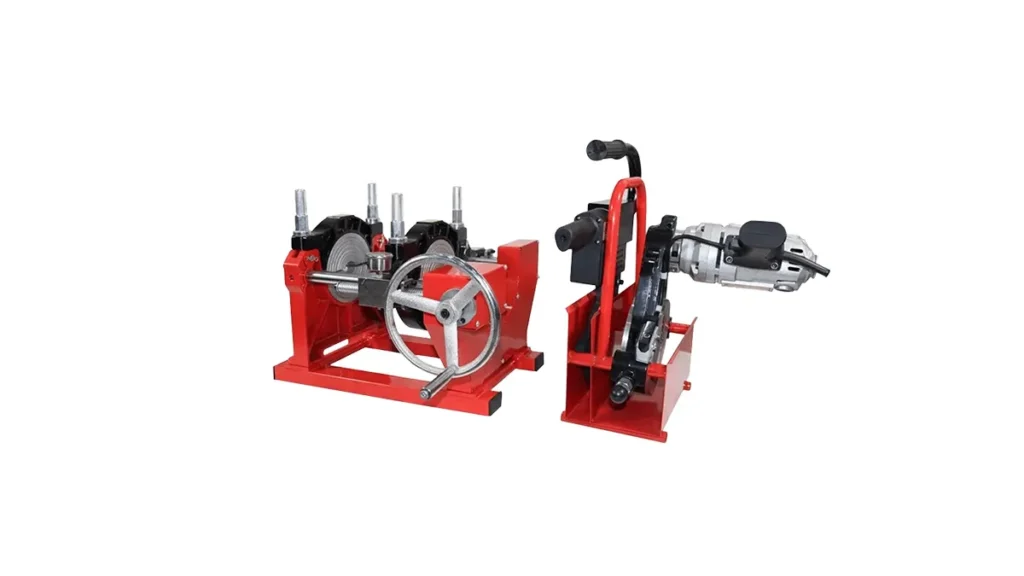
The equipment used in butt fusion must provide precise temperature control, stable hydraulic pressure, and accurate alignment. If any of these factors are inconsistent, the welded seam may be compromised. For this reason, contractors often select a reliable butt fusion machine that can maintain repeatable welding quality across different pipe sizes and site conditions.
Operator note: even advanced equipment cannot compensate for poor surface preparation, incorrect alignment, or rushed cooling time. Quality starts before the heating process begins.
Advantages of HDPE Welding in Harsh Energy Environments
One of the biggest strengths of HDPE pipe welding is corrosion resistance. Unlike metal piping, HDPE does not rust, and it performs well in environments where moisture, salt, chemicals, or aggressive soil conditions are present. This is a major reason why many project teams consider it for support systems around oil and gas sites.
Another major benefit is flexibility. Ground movement, vibration, and settlement are common in energy projects, especially in remote areas. HDPE has the ability to absorb movement better than many rigid materials. When fused properly, the pipeline remains continuous and less likely to fail at the joints.
HDPE is also lightweight, which simplifies transport and installation. This is helpful in projects where access is difficult and labor efficiency matters. Fewer heavy lifting requirements can reduce installation time and overall project complexity. In many cases, this can also help lower logistics costs.
Cost benefit: the combination of corrosion resistance, reduced maintenance, and efficient installation makes HDPE welding a strong long-term investment for supporting infrastructure.
Equipment Quality and Process Control Matter
To achieve dependable results, the welding equipment must be designed for accuracy and durability. In professional pipeline work, machine performance is not a minor detail; it directly impacts joint strength and safety. Temperature accuracy, pressure stability, and clamp alignment all affect the quality of the weld.
This is why experienced contractors value manufacturers with proven technical capability. A dependable welding system helps ensure that each joint is consistent from the first section to the last. If a project involves multiple crew members or different shifts, standardized machine behavior becomes even more important. Consistency reduces the chance of human error and supports better overall productivity.
For global contractors and distributors, working with an established manufacturer can also improve project planning. For example, JQ-Fusion provides HDPE pipe welding solutions including manual, hydraulic, and CNC automatic systems, making it easier to match equipment to project size and complexity. Their experience in energy, water, and industrial pipeline applications reflects the practical needs of field operations.
How Contractors Improve Welding Results
Successful HDPE welding in oil and gas projects depends on disciplined procedures. The pipe ends must be clean, square, and properly prepared. The operator must verify that the machine is calibrated correctly. Heating time, pressure application, and cooling time should follow the required specifications without shortcuts. Even small deviations can affect weld quality.
Best practice: record each weld, confirm settings before every cycle, and train operators to recognize visual signs of a proper fusion bead.
Good project teams also invest in training and inspection. This includes checking alignment, monitoring heating plate condition, and maintaining clean machine components. On large job sites, these habits help prevent rework and reduce downtime. A well-trained crew using reliable equipment can produce consistent fusion results even under demanding field conditions.
The Role of Customization in Real Projects
Oil and gas projects are rarely identical. Pipe sizes, worksite conditions, voltage requirements, and operational preferences can vary significantly from one region to another. That is why OEM and ODM customization is valuable. Customized welding machines can be adapted to specific diameters, power standards, branding needs, and functional requirements.
For contractors managing international projects, this flexibility supports smoother deployment. It allows teams to select equipment that fits local operating conditions rather than forcing the project to adapt to generic machinery. This is especially useful for distributors who need to serve different market segments with one reliable product line.
Practical advantage: customized welding solutions can improve efficiency, reduce installation mistakes, and help teams meet project-specific technical requirements.
Why Reliable Supply and Support Are Essential
In the oil and gas industry, delays can be expensive. Equipment availability, spare parts support, and after-sales service all influence project success. When a welding machine is part of a critical installation schedule, technical support must be responsive and practical. Fast shipping and stable stock also matter because urgent changes are common in field work.
This is why many buyers look for manufacturers with strong global support capability. In addition to dependable equipment, they need guidance on installation, machine selection, and operational training. With proper support, teams can reduce downtime, improve safety, and complete pipeline work more efficiently.
FAQ
Q1: Is HDPE pipe welding suitable for high-pressure oil and gas service?
HDPE welding is widely used for many support and utility systems in oil and gas projects. Suitability depends on the application, design pressure, pipe specification, and project standards.
Q2: What is the main advantage of butt fusion over mechanical joints?
Butt fusion creates a continuous, leak-resistant joint without gaskets or bolts, which reduces weak points and lowers maintenance needs.
Q3: Why is machine quality important in HDPE welding?
Stable temperature, pressure, and alignment are necessary to produce consistent fusion joints. Poor equipment control can lead to weak or uneven welds.
Q4: Can HDPE piping reduce maintenance costs in industrial sites?
Yes. HDPE is corrosion-resistant and durable, so it can help reduce repair frequency and long-term maintenance expenses.
Q5: What should buyers look for in a welding machine supplier?
Buyers should look for experience, stable product quality, customization capability, technical support, and proven performance in global projects.



