
High-pressure pipeline welding is one of the most demanding tasks in modern pipeline construction. When the system must carry water, gas, slurry, chemicals, or industrial media under intense pressure, the weld is not just a connection point — it is the safety barrier that protects the entire project. A weak weld can lead to leakage, service interruption, environmental damage, or even serious accidents. That is why choosing the right welding method matters as much as choosing the right pipe material.
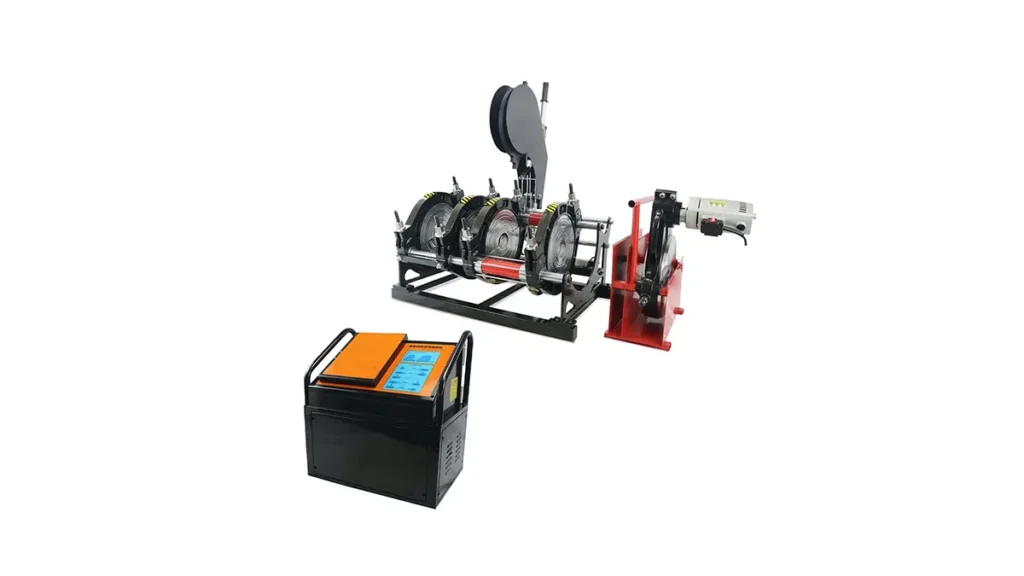
In practical field applications, the best method is rarely decided by price alone. It depends on pipe diameter, wall thickness, material type, working pressure, site conditions, required productivity, operator skill, and the long-term reliability expected from the line. For polyethylene and related thermoplastic pipelines, butt fusion welding remains one of the most trusted solutions because it creates a continuous joint with strength close to the pipe itself. For projects that demand consistent quality, many contractors compare different automation levels and machine configurations before selecting a system. If you are exploring equipment options, a reliable butt fusion machine can significantly improve weld consistency and project efficiency.
At the core of any successful high-pressure pipeline project is repeatability. The welding method must deliver the same joint quality hundreds or thousands of times, even when conditions change. Temperature control, alignment accuracy, hydraulic pressure stability, and operator procedure all affect the final result. This is why professional pipeline contractors pay close attention to welding equipment, training, and inspection standards before starting work.
1. Why Welding Method Selection Is Critical for High-Pressure Pipelines
High-pressure pipelines operate under constant internal stress. Over time, thermal cycles, vibration, soil movement, and fluid surges can challenge the integrity of every joint. The welding method must therefore provide more than simple adhesion; it must ensure structural continuity, pressure resistance, and long-term durability.
Key point: In high-pressure service, weld quality directly influences pipeline safety, maintenance cost, and system lifespan. A strong method reduces failure risk and improves operational stability.
For thermoplastic pressure lines, especially HDPE systems, fusion-based techniques are preferred because they join the materials at a molecular level. Unlike mechanical connectors, fusion welds eliminate many leakage paths and can perform extremely well when installed correctly. In contrast, low-cost shortcuts or inconsistent procedures often create hidden defects that only appear after commissioning.
2. Butt Fusion Welding: The Most Common Choice for HDPE High-Pressure Pipelines
Butt fusion welding is widely regarded as the standard method for joining HDPE pipes in water supply networks, gas distribution systems, mining lines, and industrial pipeline projects. The process uses a heating plate to soften the two pipe ends, then applies controlled pressure to fuse them together after the heater is removed. When performed correctly, the joint becomes a single continuous body with excellent pressure resistance.
Advantages of butt fusion welding:
✔ Strong joint integrity with high tensile and burst performance
✔ Low leakage risk due to homogeneous fusion
✔ Suitable for large-diameter and thick-wall pipes
✔ Cost-effective over long pipeline routes
✔ Excellent performance in buried and outdoor installations
The quality of the weld depends heavily on the machine and the operator. Manual models may be suitable for smaller projects, but hydraulic and CNC automatic systems provide better control when pressure requirements are strict. A stable clamping system keeps the pipes aligned, while an accurate heating plate ensures uniform melt depth. Without these controls, even experienced welders may produce inconsistent joints.
For demanding projects, many engineers prefer automated or semi-automated equipment because it reduces human error. This is especially important where dozens of welds must meet the same acceptance criteria. In such cases, a well-calibrated machine is not just a tool — it is a quality control system.
3. Electrofusion Welding: Best for Complex Locations and Repair Work
Electrofusion welding is another important method for high-pressure pipeline systems, especially where working space is limited or where branches, tie-ins, and repair sections must be installed with precision. In this process, fittings with embedded heating coils are energized to melt the pipe surface and fitting interface, creating a secure bond.
Electrofusion is often chosen for urban pipeline construction, retrofit projects, and locations where access is difficult. It is also useful for connecting pipes of different configurations, such as elbows, tees, saddles, and transitions. Because the fittings are pre-engineered, the process can be highly reliable when surface preparation and fitting compatibility are controlled.
Important note: Electrofusion is highly sensitive to contamination, scraping quality, and correct electrical parameters. Proper cleaning and preparation are essential for pressure-rated performance.
While electrofusion is not always the first choice for long straight runs, it is extremely valuable in areas where butt fusion equipment cannot easily operate. It often complements butt fusion in a complete pipeline program rather than replacing it entirely.
4. Manual, Hydraulic, and CNC Automatic Welding Systems Compared
Different welding methods require different levels of machine control. The best option depends on project scale and the tolerance for variation in weld quality.
Manual butt fusion machines are commonly used for smaller pipe sizes or simple job sites. They are affordable and easy to move, but their performance depends more on operator discipline. They can work well when the project is straightforward and the team is experienced.
Hydraulic butt fusion machines offer stronger and more stable pressure control. They are better suited for medium and large-diameter pipes, where fusion force must be accurate and repeatable. These systems are favored in water and gas projects because they balance cost, efficiency, and reliability.
CNC automatic butt fusion machines provide the highest level of process control. They monitor fusion stages, temperature, pressure, timing, and alignment with precision. For large infrastructure projects or highly regulated systems, CNC automation can reduce variability and improve documentation.
Each machine type has a role. The challenge is choosing the one that matches the pipe specification, pressure class, and site environment. For contractors handling international projects, machine flexibility is often as important as raw performance.
5. What Makes a Weld Reliable in High-Pressure Service?
A reliable weld is not the result of one single factor. It is the outcome of a controlled process. The most important elements include pipe end preparation, heating temperature, bead formation, alignment, pressure application, cooling time, and inspection.
Checklist for reliable fusion welding:
• Clean pipe surfaces thoroughly
• Use calibrated heating equipment
• Maintain correct fusion temperature
• Keep pipes perfectly aligned
• Apply the proper fusion pressure
• Allow full cooling before handling
• Record and inspect each weld
Even a highly advanced machine cannot compensate for poor preparation. Dust, moisture, misalignment, or rushed cooling can weaken the final connection. In real-world pressure pipelines, the safest approach is to combine dependable equipment with well-trained operators and strict field supervision.
Inspection is also essential. Visual bead assessment, dimensional checks, and, when required, non-destructive or pressure testing help confirm that the welded joint meets project standards. This quality-control layer separates professional pipeline work from guesswork.
6. Best Welding Method by Project Type
Different pipeline environments call for different joining solutions. A method that works perfectly on a long rural water line may not be ideal for a compact industrial plant or a repair section in a crowded city corridor.
Water supply systems: Butt fusion is often the first choice because of its leak-free performance and long service life.
Gas distribution networks: Butt fusion and electrofusion are both common, depending on pipe size, location, and regulatory requirements.
Mining and slurry lines: Butt fusion is favored for large-diameter HDPE pipelines exposed to abrasion and pressure.
Industrial installations: A combination of butt fusion, electrofusion, and special fittings may be needed depending on the layout and operating media.
In many real projects, the “best” method is the one that balances joint strength, installation speed, operator skill, and compliance with project specifications.
7. Why Equipment Quality Matters as Much as the Welding Method
The chosen welding method can only perform as well as the equipment that supports it. A high-quality welding machine provides stable heating, accurate pressure control, reliable clamping, and consistent cycle timing. That consistency is what turns a welding procedure into a dependable production process.
JQ-Fusion focuses on HDPE pipe welding solutions for global projects, including manual, hydraulic, and CNC automatic systems. With more than 20 years of experience, the company supports contractors who need durable equipment for varied applications. Its product range includes hydraulic butt fusion welding machines, automatic butt fusion welding machines, electrofusion welding machines, and multi-angle pipe fitting welding machines.
For projects requiring customized voltage, branding, machine structure, or function-specific configurations, OEM and ODM capability can be a major advantage. In international work, flexibility often saves time and simplifies procurement. A machine supplier that understands these needs can help reduce downtime and improve deployment speed.
In addition, global contractors benefit from technical support, shipping efficiency, and stock availability. When a project has a tight deadline, the ability to source a suitable machine quickly can directly affect the construction schedule. That is why many teams value suppliers that combine engineering support with practical logistics capability.
8. Common Mistakes to Avoid in High-Pressure Pipeline Welding
Even experienced teams can make mistakes when schedules are tight or field conditions are difficult. Some of the most common problems include using incorrect heating temperatures, failing to clean pipe ends properly, removing the heater too slowly or too quickly, and applying pressure before the melt stage is ready.
Another frequent issue is underestimating cooling time. A weld that looks complete on the outside may still be weak internally if it is disturbed too early. This is especially dangerous in high-pressure service because the pipeline may pass initial checks but fail later under load.
Using incompatible fittings, poor-quality raw materials, or uncalibrated machines also creates risk. In professional pipeline work, small mistakes can lead to large consequences. Strong quality systems and disciplined field practices are the best defense.
9. Final Thoughts on Choosing the Best Method
So, what are the best high pressure pipeline welding methods? For most HDPE pressure pipelines, butt fusion welding is the primary solution because it offers excellent strength, simplicity, and long-term reliability. For complex connections, repairs, and restricted spaces, electrofusion is an essential complement. The final choice should reflect the project’s pressure requirements, pipe size, installation environment, and quality expectations.
When the method is matched correctly to the application and supported by the right machine, the result is a pipeline that performs safely for years. That is why the best approach is not simply “weld and move on,” but “control the entire process from preparation to inspection.”
For contractors, distributors, and project owners, investing in dependable equipment and proper training is one of the most effective ways to protect pipeline integrity. In high-pressure systems, the weld is not the last step — it is the foundation of long-term performance.
Frequently Asked Questions
Q1: Is butt fusion the strongest method for HDPE high-pressure pipelines?
A1: In most cases, yes. Butt fusion creates a homogeneous joint that is highly suitable for pressurized HDPE lines when the process is controlled correctly.
Q2: When should electrofusion be used instead of butt fusion?
A2: Electrofusion is ideal for confined spaces, repairs, branches, and tie-ins where butt fusion equipment is difficult to use.
Q3: What is the biggest cause of weld failure in pressure pipelines?
A3: Common causes include poor surface preparation, incorrect temperature, misalignment, contamination, and insufficient cooling time.
Q4: Do automatic welding machines improve quality?
A4: Yes. CNC automatic machines can reduce human error, improve consistency, and support quality documentation, especially in large projects.
Q5: How can contractors improve welding reliability on site?
A5: Use calibrated equipment, train operators properly, follow strict procedures, and inspect every weld before the pipeline is put into service.



