
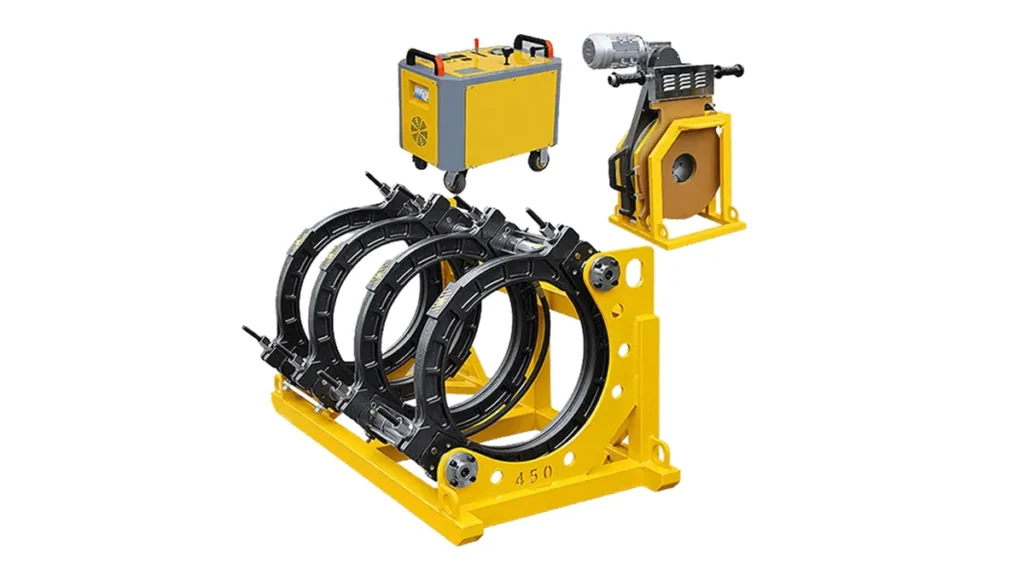
Choosing the right HDPE jointing machine is critical for creating durable, leak-free pipe networks. Whether you’re planning water supply, gas distribution, mining, or industrial pipeline projects, the welding method, machine type, and operation control directly affect joint strength, long-term reliability, and installation speed.
Why the Right Welding Solution Matters
HDPE pipes require consistent heating and pressure to form homogeneous butt fusion joints. A poor choice of equipment can lead to weak welds, increased rework, and higher life-cycle costs. Selecting the correct machine reduces field failures and ensures compliance with industry standards.
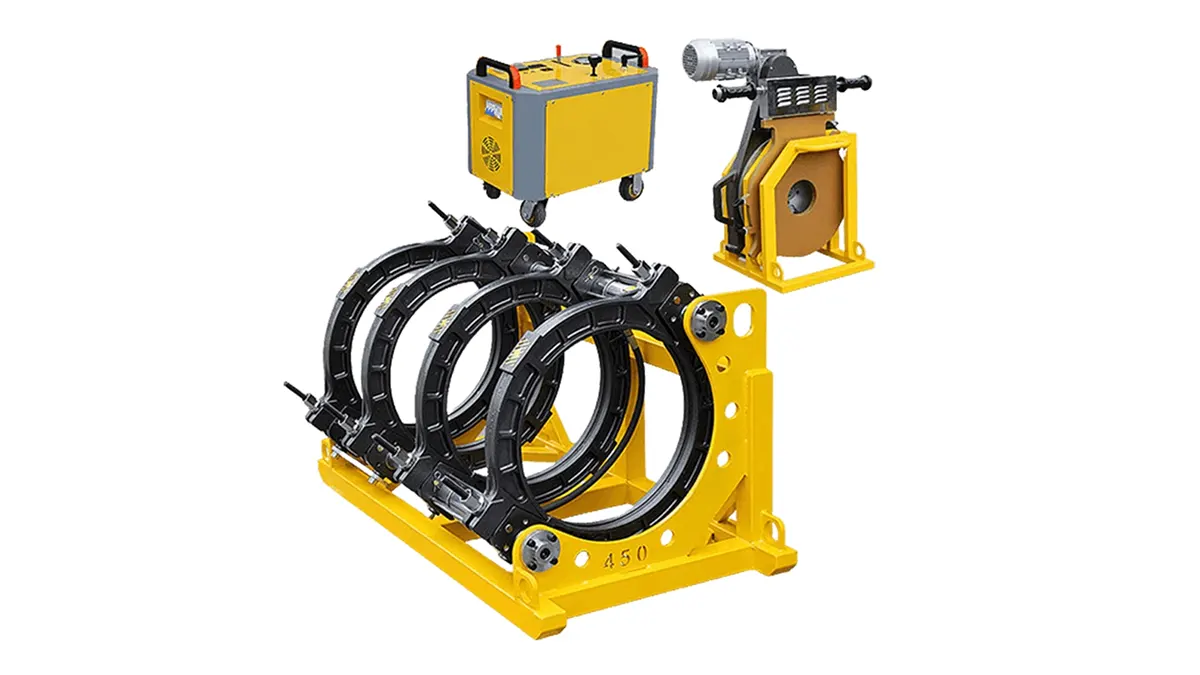
Key Factors to Consider
- Pipe diameter range — Match machine capacity to the smallest and largest pipes you will weld.
- Site conditions — Portability matters for remote or confined jobs; heavy hydraulic frames suit fixed-yard fabrication.
- Production volume — Manual units are cost-effective for low volume; automatic/CNC machines increase throughput and repeatability.
- Skill level available — Automatic machines reduce operator variability; manual units require experienced welders to meet standards.
- Control & traceability — Digital controllers and welding logs are essential for large infrastructure projects and for QA documentation.
Common Welding Methods for HDPE
The three primary butt fusion types are manual, hydraulic, and automatic (CNC). Each has trade-offs in cost, speed, and repeatability:
| Machine Type | Best For | Pros | Cons |
|---|---|---|---|
| Manual Butt Fusion | Small jobs, tight budgets | Low price, portable, simple maintenance | Operator-dependent, slower |
| Hydraulic Butt Fusion | Medium to large pipelines | Stable pressure control, suitable for larger diameters | Heavier, requires hydraulic power |
| Automatic / CNC Butt Fusion | High-volume, precision-critical projects | High repeatability, digital logging, faster cycle times | Higher initial cost, requires trained technicians |
Performance Specs to Compare
When evaluating models, check these technical details and how they affect weld quality and productivity:
- Clamping system type and alignment accuracy — misalignment causes weak joints.
- Maximum pressure/force — critical for larger diameter fusion.
- Heater plate design and temperature uniformity — affects melt bead quality.
- Control system features — programmable cycles, data export, alarms.
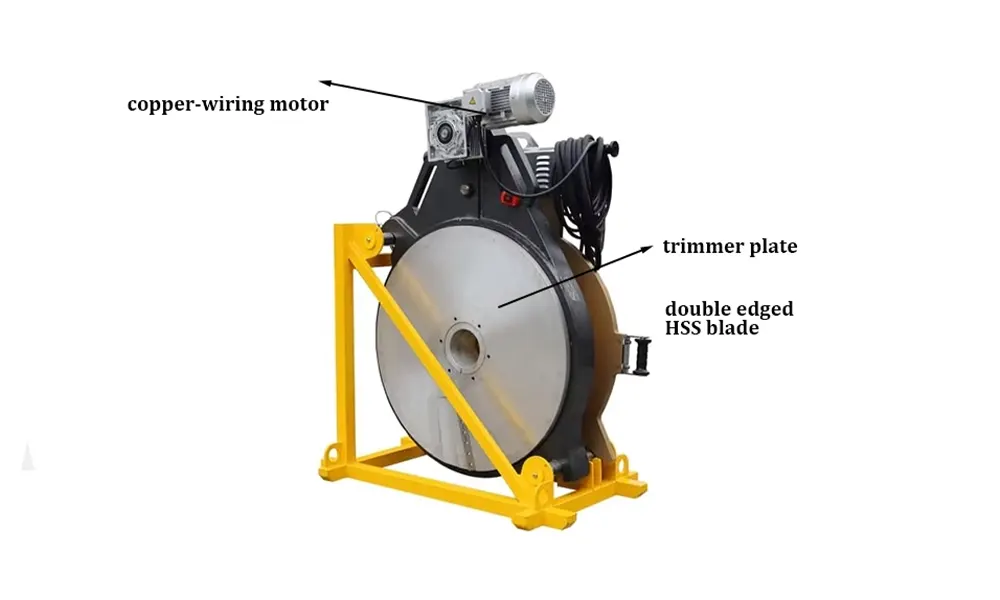
- Accessories availability — facing tools, mills/trimmers, transport frames.
Practical Buying Checklist
Use this checklist to shortlist machines that fit your projects:
- Matched pipe size range and future growth potential.
- Ease of transport, setup time, and site assembly needs.
- Service and spare parts availability in your operating region.
- Training and user interface simplicity for on-site crews.
- Warranty, calibration options, and digital traceability tools.
Installation & Operator Tips for Strong Joints
Even the best machine needs correct procedure to deliver durable connections:
- Clean pipe ends thoroughly and verify square faces after facing.
- Follow recommended heater temperature and fusion pressure for material grade.
- Use proper soak, heating, and cooling times — rushing cooling is a common cause of failure.
- Log each weld (temperature, pressure, time) for QA and future troubleshooting.
Frequently Asked Questions
Q: Which machine gives the best long-term value?
A: For infrastructure with high QA demands, automatic/CNC machines often deliver the best total value due to consistent weld quality and data logging.
Q: Can manual machines handle large diameters?
A: Some manual frames support larger pipes, but hydraulic or automated systems provide superior pressure control for large-diameter joints.
For reliable manufacturing, responsive service, and a wide range of butt fusion models suited to different project scales, consider reputable suppliers who provide training and spare parts support. Visit JQ-Fusion to explore manual, hydraulic, and automatic HDPE welding solutions.



