
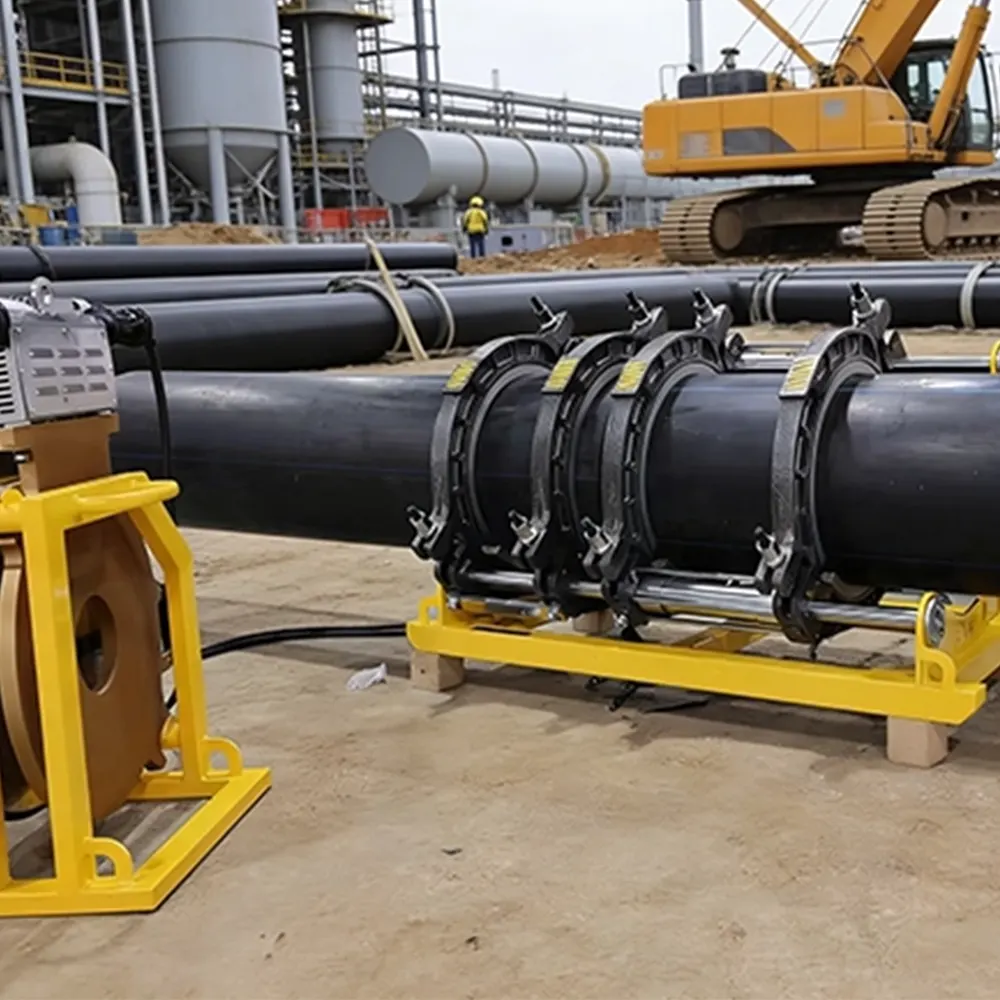
HDPE pipeline projects are widely chosen for water supply, gas distribution, mining, and industrial applications because they are durable, corrosion-resistant, and cost-effective over the long term. However, project success does not depend on material choice alone. To achieve better performance and lower costs, contractors must optimize every stage of the pipeline workflow, from equipment selection and weld quality to logistics, training, and maintenance. When these elements are managed carefully, an HDPE pipeline project can deliver stronger joints, fewer delays, lower labor waste, and a much better return on investment.
One of the most important factors is choosing the right welding process and the right equipment for the job. Butt fusion joining is the preferred method for many HDPE projects because it creates a continuous and reliable pipe system with high joint strength. A high-quality butt fusion machine helps control heating, pressure, and alignment, which directly affects weld consistency and long-term pipeline performance. When welding is stable, the project spends less on repairs, rework, and system downtime.
1. Start with the Right Equipment Strategy
Equipment selection is not just a procurement task; it is a performance decision. A project that uses the wrong machine model may face poor alignment, unstable temperature control, or limited pipe-size compatibility. These problems can slow down installation and increase the possibility of joint failure. For smaller projects, manual or hydraulic models may be sufficient, while larger or more demanding operations often benefit from CNC automatic systems that improve repeatability and reduce operator error.
Key point: choose welding equipment based on pipe diameter, project scale, operator skill level, and required production speed. The best machine is the one that fits the project, not the one with the most features.
When contractors work with a manufacturer that offers a full product range, they can match machine type to project needs more accurately. JQ-Fusion, for example, provides manual, hydraulic, and CNC automatic solutions for different pipe diameters and project environments. This flexibility helps reduce unnecessary spending while improving execution quality.
2. Improve Weld Quality to Reduce Hidden Costs
Poor weld quality is one of the most expensive problems in an HDPE pipeline project. A weak joint can lead to leakage, pressure loss, shutdowns, and expensive field repairs. To avoid these issues, the welding process should be tightly controlled. Heating plate temperature, pressure stability, and pipe alignment must all remain within acceptable parameters. Even small deviations can create costly problems later.
Reliable machinery makes quality control easier. Modern production technology and strict factory testing help ensure that each machine performs consistently in real project conditions. Manufacturers with strong quality systems usually test temperature accuracy, hydraulic pressure stability, and clamp alignment before shipment. These checks are essential because they help contractors avoid machine-related failures on site.
Tip: if the welding machine is stable, the operator can focus on pipe preparation and timing instead of correcting equipment problems. That saves both labor and material costs.
3. Standardize Pipeline Installation Procedures
A standardized workflow can significantly improve efficiency. Every crew member should follow the same process for pipe cutting, cleaning, clamping, heating, joining, and cooling. When procedures vary from team to team, productivity falls and the risk of defective welds rises. Clear job standards make it easier to train workers and maintain output quality across different sites.
Standardization is especially important in projects with multiple crews or changing work shifts. In those environments, the best way to maintain performance is to reduce guesswork. A detailed operating method, combined with a dependable welding machine, creates a repeatable system that saves time and avoids waste. This is one reason experienced contractors pay close attention to machine interface design, pressure control, and operational simplicity.
4. Use Customization to Match Project Conditions
Not all HDPE pipeline projects are the same. Some are built in remote mining areas, some serve municipal water systems, and others operate in harsh industrial environments. Because working conditions vary, customization can play a major role in performance optimization. Customized machine size, voltage, color, design, branding, and project-specific configurations can improve usability and fit the actual jobsite environment better.
Important: OEM and ODM options are not only for branding. They can also improve operational efficiency by adapting equipment to local standards, climate conditions, and contractor preferences.
For companies managing large or specialized projects, working with a manufacturer that offers flexible customization can reduce friction at every stage. It is easier to deploy equipment that already fits the project rather than modify a generic model later.
5. Control Procurement, Inventory, and Delivery Time
Project cost is affected not only by welding quality but also by supply chain efficiency. Delays in machine delivery, spare parts availability, or consumable supply can interrupt the construction schedule and increase labor expenses. To optimize performance, contractors should plan equipment procurement early and work with suppliers that maintain strong inventory and fast shipping capability.
A well-organized inventory system reduces downtime because key models are available when needed. In urgent projects, fast delivery can be the difference between staying on schedule and facing expensive delays. Reliable global logistics support is therefore a practical cost-saving measure, not just a convenience.
6. Invest in Training and Technical Support
Even advanced equipment will underperform if the team does not know how to use it correctly. Training improves weld consistency, reduces mistakes, and helps operators respond to problems before they become costly. Contractors should make sure their teams understand machine setup, temperature control, pressure adjustment, maintenance checks, and basic troubleshooting.
Technical support also matters after the machine is delivered. Fast response from the supplier can prevent small issues from becoming major project setbacks. A supplier that offers full support from selection to after-sales service gives contractors a stronger foundation for long-term performance.
7. Choose Suppliers with Proven Manufacturing Capability
A trustworthy manufacturer can lower project costs in several ways: better machine durability, fewer defects, faster delivery, and stronger technical guidance. Companies with modern production lines and precision machining equipment are more likely to produce stable and reliable machines. That reliability translates into fewer breakdowns and lower lifecycle cost.
JQ-Fusion is one example of a manufacturer focused on HDPE pipe welding solutions for global pipeline projects. With more than 20 years of experience, the company supports water supply, gas distribution, mining, and industrial pipeline applications. Its product range includes hydraulic butt fusion welding machine, automatic butt fusion welding machine, electrofusion welding machine, and multi-angle pipe fitting welding machine. Such a broad range allows contractors to select the most suitable solution for each project stage.
8. Apply Quality Assurance at Every Stage
Quality assurance should begin before the machine reaches the jobsite and continue through installation and operation. Testing certificates, inspection records, and compliance documentation help verify that the equipment is ready for use. Certified products that meet international standards give project owners greater confidence and reduce the risk of compliance issues later.
In major infrastructure projects, this kind of assurance is essential. A failure in one section of a pipeline can affect the whole system. That is why project teams should treat certification and factory testing as core cost-control tools. Preventing failure is always cheaper than repairing it.
9. Build a Long-Term Cost Model, Not a Short-Term Purchase Plan
The cheapest machine is not always the most economical choice. A short-term purchase plan may save money upfront but create higher costs through repairs, downtime, and poor productivity. A long-term cost model looks at the full picture: purchase price, operator efficiency, maintenance needs, spare parts support, expected service life, and welding consistency.
This is especially important for contractors working across multiple projects. A durable machine with stable output can be reused many times, spreading the investment over a longer period and lowering the cost per project. Over time, that approach delivers better financial results than repeatedly buying lower-grade equipment.
Takeaway: optimizing an HDPE pipeline project means improving quality, speed, and reliability at the same time. Lower cost comes from fewer errors, less downtime, and better equipment utilization.
10. Put Performance and Cost Control Together
The best HDPE pipeline projects are built on a balanced strategy. Performance and cost control should not be treated as separate goals. When welding equipment is accurate, support is responsive, training is strong, and project planning is organized, the entire installation becomes more efficient. That efficiency lowers labor cost, reduces rework, and improves final pipeline quality.
Contractors who want better outcomes should focus on three essentials: reliable equipment, consistent process control, and strong supplier support. These three elements work together to protect the project budget while improving performance in real working conditions.
Frequently Asked Questions
Q1: What is the main advantage of butt fusion in HDPE projects?
It creates a strong, continuous joint with excellent leak resistance, making it ideal for long-term pipeline reliability.
Q2: How can a contractor reduce welding-related failures?
By using properly calibrated equipment, training operators well, and maintaining strict control over temperature, pressure, and alignment.
Q3: Why does supplier support matter so much?
Because fast technical help, stable inventory, and efficient shipping reduce delays and keep the project on schedule.
Q4: Is a more expensive machine always better?
No. The best choice is the machine that matches the project requirements, pipe sizes, and operational conditions while offering dependable long-term performance.
Q5: What should be prioritized to lower total project cost?
Prioritize weld quality, machine reliability, operator training, and logistics planning, because these factors have the biggest impact on total lifecycle cost.



