
When an HDPE welding project is planned well, the welding itself is only part of the challenge. The real difference between a long-lasting pipeline and a costly failure often comes down to risk management. From material handling and site preparation to operator training and machine calibration, every step carries potential risks that can affect joint quality, project timeline, and overall safety. That is why contractors, distributors, and project managers need a clear approach to risk control before the first pipe is heated.
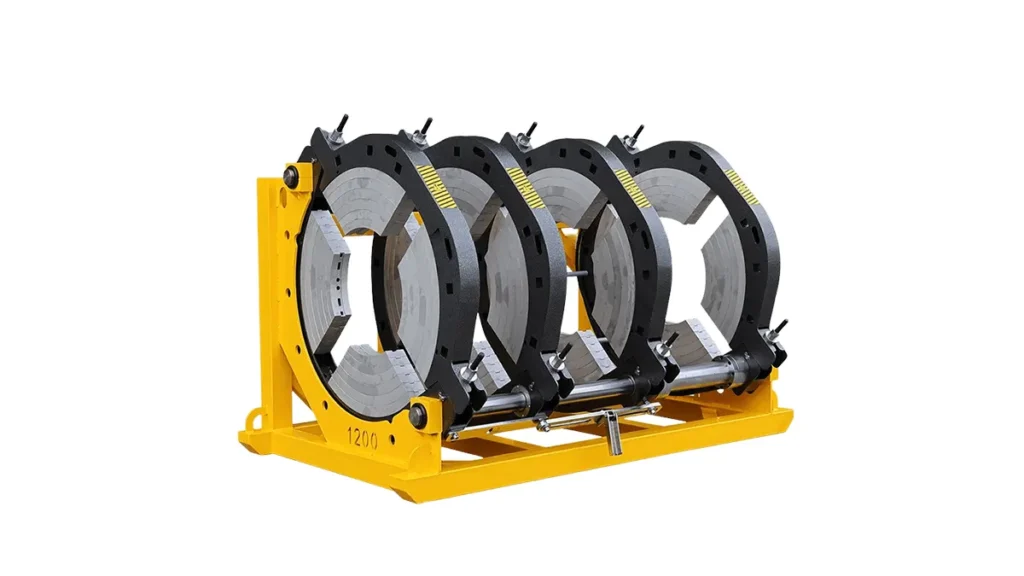
HDPE piping systems are widely used in water supply, gas distribution, mining, and industrial installations because they are flexible, corrosion-resistant, and dependable. But these advantages can only be fully realized when the fusion process is controlled with precision. A small deviation in temperature, pressure, or alignment may weaken the weld and create problems later. For that reason, effective project planning must combine technical discipline, equipment reliability, and on-site supervision. If your project depends on consistent fusion quality, using a trusted butt fusion machine is one of the most important decisions you can make.
1. Understand the Main Risks Before Work Begins
Risk management starts with identifying the threats that can interrupt or damage the welding process. In an HDPE welding project, the most common risks include poor pipe preparation, incorrect machine settings, unstable power supply, contamination on fusion surfaces, and weather conditions that affect temperature control. These risks may appear small at first, but they can quickly lead to weak joints, rejected welds, or full rework.
Project teams should create a simple but detailed risk register before construction starts. This register can list each risk, its likely impact, the probability of occurrence, and the person responsible for control measures. A well-prepared team does not wait for a defect to appear. Instead, it predicts where problems might happen and sets preventive actions in advance.
Important: The most expensive HDPE welding failures are usually not caused by one major mistake, but by several minor risks that are ignored during preparation.
2. Choose the Right Welding Equipment for the Project
Equipment selection is one of the strongest risk-control measures in any fusion project. A machine that does not match the pipe diameter, pressure requirement, or working environment can create inconsistent welds and unnecessary delays. For small jobs, manual or hydraulic machines may be enough. For larger and more demanding projects, CNC automatic systems can improve repeatability and reduce operator error.
Reliable manufacturing quality also matters. JQ-Fusion, a professional manufacturer with over 20 years of experience, supplies manual, hydraulic, and CNC automatic butt fusion solutions for different pipeline needs. Their production and testing focus on temperature accuracy, hydraulic pressure stability, and clamp alignment, which are all critical for minimizing welding risk. When equipment is designed and tested with care, the project gains both efficiency and safety.
- Match the machine to the pipe size and project scope.
- Check whether the equipment supports the required voltage and site conditions.
- Confirm that spare parts and technical support are available before mobilization.
3. Control Material Quality and Storage Conditions
Even the best welding machine cannot compensate for damaged or contaminated pipe materials. HDPE pipes and fittings should be stored correctly, protected from direct sunlight when necessary, and kept away from dust, mud, oil, or other contaminants. Surface contamination can prevent proper fusion and create weak bonds that may not fail immediately but can fail under pressure later.
Before welding starts, the team should inspect every pipe section and fitting for scratches, deformation, moisture, and dirt. Material traceability is also important, especially for large industrial or utility projects. Keeping records of batch numbers, supplier information, and inspection results helps identify problems quickly if a defect is found.
Tip: Clean surfaces are not optional in HDPE welding. They are a basic requirement for a strong fusion joint.
4. Train Operators and Assign Clear Responsibility
Operator error remains one of the most common causes of welding defects. A machine may be highly advanced, but the outcome still depends on the person using it. That is why training is a core part of risk management. Operators should understand heating time, alignment requirements, pressure control, bead formation, and cooling time. They should also know how to respond when conditions change on site.
Training should not be a one-time event. Refresher sessions, toolbox talks, and equipment demonstrations help maintain consistency across the team. In projects with multiple welders, assigning a clear role structure can reduce confusion. One person should be responsible for surface preparation, another for machine setup, and another for inspection. This division improves accountability and lowers the chance of missed steps.
Strong teams do not rely on experience alone. They rely on repeatable procedures, verified settings, and disciplined execution.
5. Monitor Temperature, Pressure, and Timing Carefully
HDPE fusion is a controlled thermal process, so precision matters at every stage. If heating plates are too hot or not hot enough, the pipe surfaces will not melt correctly. If pressure is too high or too low, the bead can become irregular. If cooling time is shortened, the joint may be disturbed before it fully stabilizes. Each of these errors can reduce joint strength.
To reduce risk, teams should use calibrated gauges, check machine settings before each weld, and record key parameters for traceability. Automated machines can help improve consistency, especially when multiple joints must meet the same standard. However, even with automation, supervision is still necessary. Monitoring should include visual inspection of the bead, confirmation of alignment, and verification that all process steps follow the project specification.
6. Prepare the Site for Safe and Stable Operation
Site conditions can strongly influence welding quality. Uneven ground, wind, rain, extreme heat, and poor access all increase operational risk. A stable fusion setup requires enough working space, proper pipe support, and a clean area for preparation and assembly. If the site is not suitable, the project team should create temporary protection such as tents, shelters, or leveling platforms.
Safety is also part of risk management. Operators should wear suitable protective equipment and keep clear pathways around the machine. The site must be organized to prevent trips, accidental movement of pipes, or damage to electrical and hydraulic components. In large-scale installations, site discipline is often just as important as welding skill.
Key point: A controlled work area improves both safety and weld quality. Poor site setup creates avoidable project risk.
7. Build a Quality Inspection and Documentation System
A welding project becomes much safer when every step is documented. Inspection records help verify that the correct procedures were followed and make it easier to identify trends if a problem occurs. Documentation may include machine calibration logs, operator names, material details, weather conditions, weld numbers, and inspection results.
Quality control should happen both during and after welding. Visual inspection can confirm bead formation, alignment, and surface condition. In critical projects, additional testing may be required according to project standards. When documentation is complete, project managers can review progress with confidence and respond quickly to any issue. This also supports future maintenance and asset management.
For contractors working on water, gas, mining, or industrial pipeline systems, consistent quality records are often part of contractual requirements. A disciplined documentation system therefore protects not only the weld, but also the project reputation.
8. Work with a Supplier That Supports Project Success
Risk management is easier when equipment suppliers provide more than just machines. Technical guidance, customization, testing, and fast delivery all reduce project uncertainty. JQ-Fusion supports global pipeline projects with stable welding performance, OEM and ODM customization, and professional technical service. Their products are manufactured with strict quality control and are designed for reliable use in a variety of site conditions.
For contractors, a dependable supplier can improve project planning in several ways: machine selection becomes simpler, spare part support becomes clearer, and technical troubleshooting becomes faster. When the supplier understands the demands of HDPE pipeline work, the project team gains a stronger foundation for risk reduction.
You can review their product categories such as Hydraulic Butt Fusion Welding Machine, Automatic Butt Fusion Welding Machine, Electrofusion Welding Machine, and Multi-Angle Pipe Fitting Welding Machine to choose the right solution for different pipeline tasks.
9. Apply a Practical Risk Management Workflow
Effective risk management does not need to be complicated. A practical workflow can keep the project organized and reduce the chance of failure. The process usually begins with planning, then moves to inspection, setup, welding, verification, and record keeping. At each stage, the team checks for hazards and confirms that the previous step has been completed properly.
For example, before welding begins, the team can verify that the pipe ends are clean, the machine is calibrated, the weather is acceptable, and the operator is ready. During the weld, they can check heating, pressure, and timing. After the weld, they can confirm bead consistency and cooling stability. This simple sequence makes it easier to control the work and avoid expensive mistakes.
Best practice: Treat every weld as a controlled process, not a routine task. Small checks at each stage prevent large problems later.
10. Use Continuous Improvement After Each Project Stage
Risk management should not end when the first weld is completed. Every project stage provides useful feedback. If the team notices a repeated issue, such as uneven bead formation or slow cooling due to site conditions, that information should be used to improve the next phase. Continuous improvement helps teams become more efficient and reduces repeat risk.
Project closeout meetings are especially valuable. They allow managers, welders, inspectors, and suppliers to discuss what worked well and what needs adjustment. Over time, this builds a stronger process and a more capable team. In large infrastructure work, this discipline can lead to better productivity, higher joint reliability, and fewer unexpected delays.
Frequently Asked Questions
Q1: What is the biggest risk in an HDPE welding project?
A: The biggest risk is usually poor joint quality caused by incorrect setup, contamination, or unstable welding conditions.
Q2: How can I reduce welding defects on site?
A: Use properly trained operators, clean pipe surfaces, calibrated equipment, and a controlled working area.
Q3: Is automatic fusion equipment better for risk control?
A: Automatic systems can reduce operator error and improve consistency, especially on larger or repeated welding jobs.
Q4: Why is documentation important in fusion welding?
A: Documentation helps track process quality, identify issues quickly, and prove compliance with project requirements.
Q5: How do I choose the right butt fusion machine?
A: Consider pipe diameter, project scale, power supply, site conditions, and the level of automation needed for consistent performance.



