
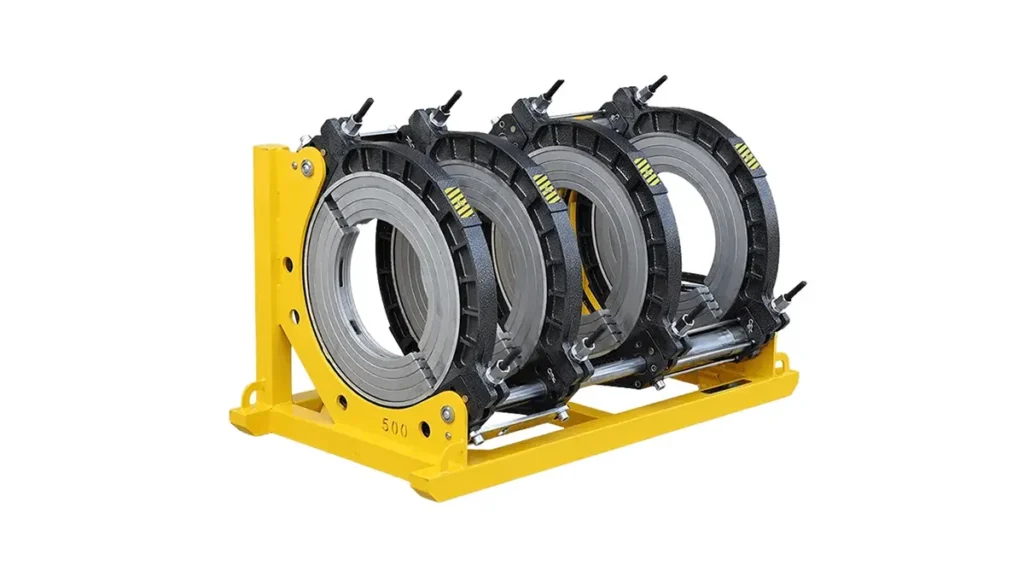
The ROI of a fusion welding machine is not just about the price of the equipment. It is about how much value the machine creates across the full life cycle of a pipeline project. For contractors, distributors, and industrial buyers, a fusion welding machine can reduce labor time, improve weld quality, lower rework costs, and support long-term project reliability. When measured correctly, the return on investment often becomes clear very quickly.
A fusion welding machine is designed to join thermoplastic pipes with strong, uniform, and leak-resistant joints. In HDPE pipeline construction, this process is essential for water supply systems, gas distribution networks, mining projects, and industrial installations. Companies like JQ-Fusion, with over 20 years of industry experience, have built equipment that supports these demands with stable performance and strong durability. If you want to understand the economics behind a butt fusion machine, the key is to evaluate both direct and indirect returns.
What ROI Means in Fusion Welding
ROI, or return on investment, measures how much profit or operational benefit a machine generates compared with its cost. In fusion welding, ROI is influenced by several factors: project speed, weld consistency, operator efficiency, maintenance needs, and machine lifespan. A lower-cost machine may seem attractive at first, but if it creates inconsistent welds or frequent downtime, the total return can be much lower than expected.
A better way to think about ROI is to compare the machine’s purchase cost with the savings and revenue it helps create over time. For example, a machine that reduces one worker-hour per weld, minimizes pipe failure, and shortens project timelines can save thousands of dollars in a single contract. Over months or years, those savings can exceed the original investment many times over.
Key idea: the real ROI of a fusion welding machine is not only purchase price, but also time saved, weld quality improved, and project risk reduced.
Main Cost Factors That Affect ROI
To calculate ROI accurately, buyers should look at the total cost of ownership. This includes the machine itself, training, maintenance, consumables, energy use, and possible repair costs. A professional manufacturer usually helps reduce hidden costs by offering stable equipment, reliable technical support, and durable components.
JQ-Fusion focuses on manufacturing manual, hydraulic, and CNC automatic butt fusion welding machines for a wide range of pipe diameters. This flexibility matters because different projects have different demands. A small municipal water project may need a simpler machine, while a large gas pipeline project may require automation for speed and precision.
Typical ROI cost drivers include:
- Initial purchase price
- Training and operator learning curve
- Maintenance and spare parts
- Downtime during repairs
- Weld failure and rework costs
- Delivery delays and project penalties
How a Fusion Welding Machine Creates Value
The biggest value of a fusion welding machine comes from weld quality. When the heating cycle, pressure control, and alignment are stable, the welds become stronger and more consistent. This lowers the chance of joint failure and reduces expensive corrective work. In industries where pipeline integrity is critical, this reliability has direct financial value.
Another major source of value is productivity. Modern hydraulic and automatic machines can speed up the fusion process while maintaining accuracy. That means more joints completed per day, fewer labor hours per project, and faster handover to the client. For contractors working under tight deadlines, this efficiency can be the difference between profit and loss.
In addition, a durable machine supports long-term use. JQ-Fusion emphasizes strict quality control, including temperature accuracy, hydraulic pressure stability, and clamp alignment inspection. These features reduce breakdowns and help extend equipment life, which improves ROI over multiple projects.
ROI advantage: fewer weld defects + faster workflow + longer service life = stronger long-term returns.
Where the Savings Come From
Savings from a fusion welding machine usually appear in five areas. First, labor savings occur when the machine reduces manual adjustment and shortens each welding cycle. Second, rework savings come from fewer defective joints. Third, project savings happen when deadlines are met without costly extensions. Fourth, logistics savings may appear when a supplier offers fast shipping and ready stock. Fifth, operational savings result from lower maintenance and reduced machine downtime.
For large pipeline contractors, these savings can be substantial. A machine that enables stable, repeatable welding can help avoid expensive leaks or pipeline repairs later. In sectors like gas distribution and mining, where safety and continuity are critical, the cost of one bad weld can be far greater than the cost of the machine itself.
Why Manufacturer Quality Matters
ROI is closely tied to manufacturer quality. A well-built machine from an experienced factory is more likely to perform consistently in difficult project environments. JQ-Fusion offers modern production lines, precision machining equipment, and OEM & ODM customization services, allowing customers to match the machine to their project requirements and market position.
This matters because not all projects need the same configuration. Some buyers need custom voltage, branding, or color. Others need functional upgrades or a specific machine size. A supplier that can provide tailored solutions helps the buyer avoid overpaying for unnecessary features while still getting the performance needed for the job.
Manufacturing strengths that improve ROI: advanced production lines, strict quality testing, customization, fast delivery, and reliable after-sales support.
A Simple ROI Scenario
Imagine a contractor purchasing a hydraulic butt fusion machine for repeated HDPE pipe installation. If the machine helps complete more welds per day, reduces two repair incidents, and shortens the project schedule by several days, the financial benefit may quickly exceed the original investment. Add reduced labor hours, lower travel costs for rework crews, and fewer customer complaints, and the return becomes even stronger.
Now consider a distributor. A machine from a trusted brand with strong certifications and global market recognition may be easier to sell, easier to support, and more profitable over time. JQ-Fusion products are manufactured in compliance with international standards and certified by SGS, which can strengthen buyer confidence and improve market value. In many cases, certification itself supports ROI by reducing sales friction and increasing trust.
Who Benefits Most from Fusion Welding Investment
Fusion welding equipment creates the strongest ROI for companies that handle frequent pipeline work. Contractors with continuous project flow benefit from faster turnaround and lower labor cost. Distributors benefit from strong product demand and market credibility. Industrial users benefit from long-term reliability and lower shutdown risk. In each case, the investment is more valuable when the machine is used often and maintained properly.
For buyers working in water supply systems, gas distribution networks, mining projects, and industrial pipeline installations, the machine becomes a production asset rather than just a tool. That asset can support repeated revenue generation, project success, and stronger client relationships. JQ-Fusion’s butt fusion machine range is designed with this long-term value in mind.
How to Improve ROI Before You Buy
Before purchasing, buyers should compare machine types carefully. A manual model may be sufficient for smaller jobs, while hydraulic or automatic systems may deliver better ROI on larger or more demanding projects. The key is to match the equipment to actual workload, not just to budget.
It is also wise to review after-sales support, training availability, and spare part access. A machine that is easy to maintain and supported by a responsive supplier will usually produce better long-term returns. Fast delivery and technical guidance are especially important when project timelines are tight.
Smart buying rule: choose the machine that best fits your project size, production frequency, and technical requirements.
Final Takeaway
The ROI of a fusion welding machine is strongest when the equipment is reliable, efficient, and matched to real project needs. A high-quality machine does more than join pipes. It saves time, lowers risk, reduces waste, and supports better business performance over many jobs. For serious contractors and distributors, the investment should be judged by long-term output rather than initial price alone.
With advanced manufacturing, strict quality control, customization support, and stable global service, JQ-Fusion offers solutions that can help buyers maximize value. Whether you need manual, hydraulic, or CNC automatic systems, the right machine can become a profitable, dependable asset for years to come.
FAQs
Q1: How do I calculate the ROI of a fusion welding machine?
Compare the total cost of the machine, training, maintenance, and operation against the savings from faster work, fewer defects, and lower labor costs.
Q2: Is a more expensive machine always better for ROI?
Not always. The best ROI comes from choosing a machine that fits your project size, usage frequency, and technical requirements.
Q3: What features improve ROI the most?
Stable temperature control, accurate pressure performance, durable clamps, easy maintenance, and reliable technical support often improve ROI the most.
Q4: Why does supplier support matter for ROI?
Strong support reduces downtime, speeds up problem solving, and helps keep projects on schedule, which directly improves financial returns.
Q5: Can fusion welding equipment help reduce project risk?
Yes. Consistent weld quality and dependable machine performance reduce the risk of leaks, repairs, and costly project delays.



