
When planning a piping system, one of the most important decisions is how to join the pipes. The connection method affects not only the strength and reliability of the system, but also installation speed, maintenance cost, long-term performance, and overall project efficiency. Two common options are fusion welding and flange connection. Each has clear advantages, but the best choice depends on the application, pipe material, operating pressure, and future maintenance needs.
For modern HDPE and thermoplastic pipeline projects, fusion welding has become a preferred method because it creates a seamless, leak-resistant joint. Flange connections, on the other hand, are still widely used where disassembly, inspection, or equipment integration is required. If you are trying to choose the right method for water supply, gas distribution, mining, or industrial pipelines, understanding the differences between these two connection types is essential.
Key point: Fusion welding is usually better for permanent, high-integrity pipelines, while flange connections are often better for sections that may need future disassembly or frequent equipment replacement.
What Is Fusion Welding?
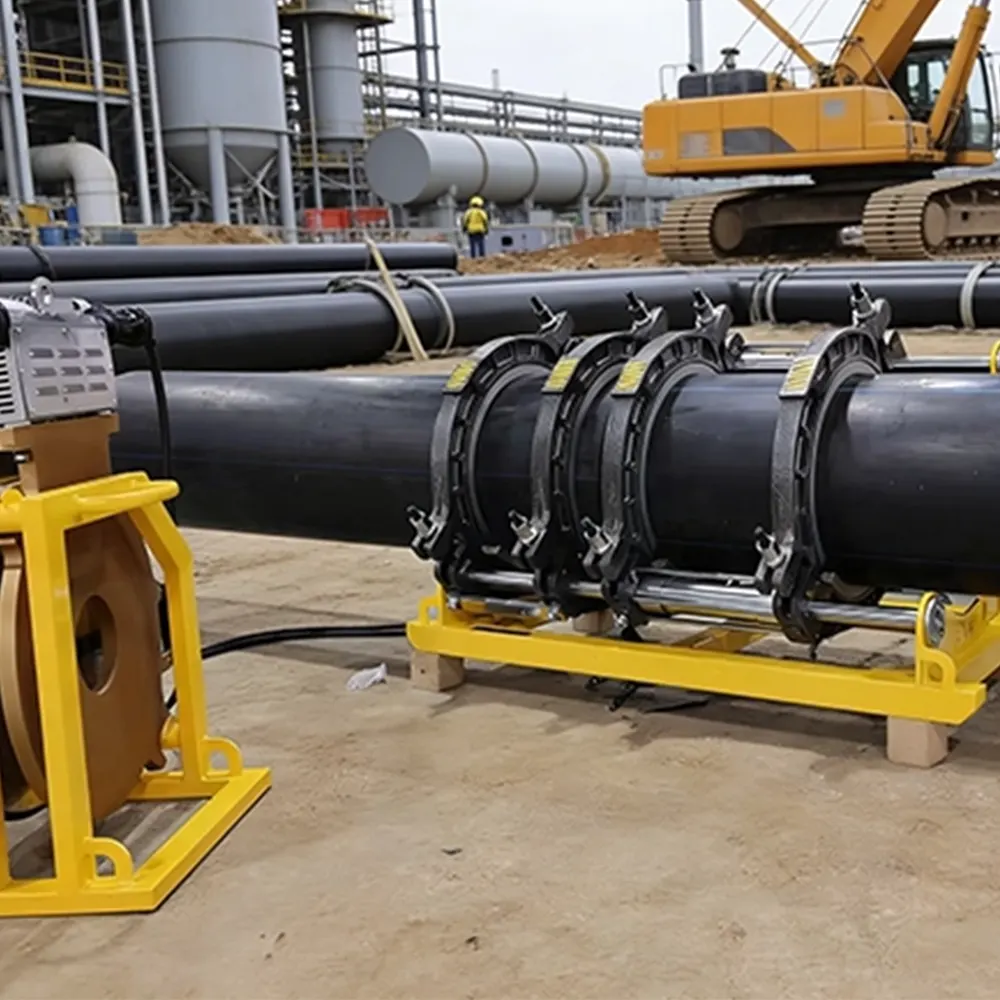
Fusion welding is a pipe joining method that uses heat and pressure to melt the ends of the pipes or fittings and then fuse them into a single continuous structure. Once the joint cools, it becomes as strong as the pipe itself. In HDPE systems, this process is commonly performed using a butt fusion machine, which precisely controls heating, alignment, and pressure during the welding cycle.
There are several fusion methods, including butt fusion, socket fusion, and electrofusion. Among them, butt fusion is one of the most widely used for medium and large-diameter pipelines because it produces a strong, uniform joint with excellent sealing performance. This makes it especially suitable for water transmission, gas lines, and industrial systems where leakage is unacceptable.
Advantages of fusion welding: high joint strength, leak-free sealing, corrosion resistance, and low maintenance over the life of the pipeline.
What Is a Flange Connection?
A flange connection joins two pipe sections or a pipe and equipment using flanges, bolts, and a sealing gasket. Unlike fusion welding, the connection is not permanent. It can be disassembled later, which makes maintenance, replacement, and inspection much easier. This is one reason flanges are widely used around pumps, valves, tanks, filters, and other equipment that may need regular servicing.
Flange systems are often chosen where flexibility matters more than absolute permanence. For example, in plants or utility systems where components may be upgraded or removed, flanges provide practical convenience. However, because they rely on a gasket and bolt tension to maintain sealing, they may require more periodic checks than fused joints.
Important note: A flange connection is service-friendly, but it is generally more vulnerable to loosening, gasket wear, and leakage if installation or maintenance is not done correctly.
Fusion Welding vs Flange Connection: Core Differences
To decide which method is better, it helps to compare them across several practical factors. The right answer is not the same for every project. Instead, it depends on how the pipeline will be used, how often it will be serviced, and what level of reliability is required.
| Factor | Fusion Welding | Flange Connection |
|---|---|---|
| Joint Strength | Very high, often comparable to the pipe body | Strong, but depends on bolts and gasket condition |
| Leak Resistance | Excellent | Good, but more sensitive to installation quality |
| Maintenance | Low | Easy to disassemble and service |
| Installation Speed | Fast once equipment is ready | Quick for small systems, but requires bolt tightening |
| Best Use | Permanent pipelines | Equipment tie-ins and serviceable sections |
When Fusion Welding Is the Better Choice
Fusion welding is usually the best option when the pipeline is designed for long-term service and cannot tolerate leaks. This is common in underground water networks, gas distribution systems, mining slurry lines, and many industrial applications. In these environments, a strong, continuous connection reduces the risk of failure and lowers maintenance costs over time.
Another major advantage is structural consistency. A fused joint does not depend on bolts, gaskets, or external clamps, so there are fewer components that can fail. This simplifies system design and improves reliability in demanding operating conditions. For contractors working on large-scale projects, that can translate into fewer callbacks, lower labor costs, and greater customer satisfaction.
Best fit for fusion welding: permanent installations, buried pipelines, high-pressure lines, and systems where leak prevention is a top priority.
When a Flange Connection Makes More Sense
Flange connections are often the better choice when flexibility is more important than permanence. If a section of the system needs to be removed for cleaning, repair, or replacement, a flange makes the work much easier. This is especially useful near pumps, valves, meters, and tanks, where equipment may be changed more frequently than the pipe itself.
Flanges are also useful when joining different types of components or when connecting pipe systems to metal equipment. In these cases, the ability to take the connection apart can save time and reduce future downtime. However, users must pay attention to gasket quality, bolt torque, and alignment to avoid leakage or uneven stress.
Practical tip: If the system will be opened repeatedly for service, a flange connection can be more economical than cutting and re-fusing pipe sections later.
How Project Environment Affects the Decision
The operating environment plays a major role in choosing between fusion welding and flange connection. For example, in water supply networks that run underground and must operate for decades, fusion welding is often preferred because it reduces the chance of hidden leaks. In gas projects, safety and sealing performance become even more important, making fused joints highly attractive.
In contrast, above-ground industrial systems may benefit from flanges because access is easier and maintenance activity is more frequent. If a pump station or processing line needs regular inspection, a flange allows fast disassembly without specialized cutting or rewelding. For this reason, many projects use both methods in different parts of the same system.
That mixed approach is often the smartest solution. A pipeline may use fusion welding for long straight runs and flanges at key equipment interfaces. This combination balances reliability with maintainability, giving the project the best of both worlds.
Equipment Quality Matters for Fusion Welding
Even though fusion welding is highly effective, the final joint quality depends heavily on the welding machine and the skill of the operator. A good machine must control temperature accurately, maintain stable hydraulic pressure, and keep pipe alignment precise throughout the process. Poor equipment or inconsistent operation can weaken the joint and reduce performance.
That is why many contractors choose reliable manufacturers with strong production capability and technical support. JQ-Fusion, for example, focuses on butt fusion solutions for different pipe diameters and project needs. Their product range includes manual, hydraulic, and CNC automatic models designed for HDPE pipe welding applications. For contractors who want dependable results, choosing a stable and well-tested machine is just as important as choosing the connection method itself.
Remember: A high-quality fusion joint starts with proper machine control, strict quality testing, and correct on-site operation.
Why Many Contractors Prefer Fusion Welding for HDPE Systems
HDPE piping is widely used because it is lightweight, corrosion-resistant, and suitable for a wide range of water, gas, and industrial applications. In these systems, fusion welding offers a clean and durable way to create a continuous pipeline with excellent sealing performance. Since the pipe material itself is thermoplastic, the joint becomes part of the pipe structure after fusion, helping the whole system behave more uniformly under pressure.
Contractors also appreciate the long-term cost savings. Although the initial welding equipment and training may require investment, the system typically needs less maintenance over time. Fewer joints means fewer potential leak points, which can lower repair costs and reduce downtime. This is particularly valuable in remote or difficult-to-access project areas.
For more information about dependable HDPE welding solutions, you can explore professional equipment options from experienced manufacturers that support water, gas, mining, and industrial projects worldwide.
Factors to Consider Before Making the Final Choice
Before selecting fusion welding or flange connection, ask a few practical questions. Will the pipeline remain in place for many years without frequent changes? Is leak prevention more important than disassembly? Will the system be buried, exposed, or connected to moving equipment? Do you have the right tools, trained workers, and maintenance plan?
If the answer points toward a permanent, high-performance system, fusion welding is likely the better choice. If the answer points toward future service access or component replacement, flanges may be more appropriate. In many real projects, the best approach is not choosing one method exclusively, but using each where it performs best.
Decision rule: choose fusion welding for durability and sealing, and choose flange connections for accessibility and maintenance convenience.
Conclusion
Fusion welding and flange connections each solve different engineering problems. Fusion welding offers exceptional strength, leak resistance, and long-term reliability, making it ideal for permanent pipelines and high-demand applications. Flange connections offer disassembly and service convenience, making them a practical solution for equipment interfaces and maintenance-heavy systems. The best choice depends on project goals, operating conditions, and future service requirements.
For many HDPE pipeline projects, fusion welding is the stronger long-term answer, especially when using reliable equipment and correct operating procedures. For systems that must be opened and serviced often, flanges remain a valuable option. In practice, the smartest piping design often combines both methods to maximize performance and flexibility.
FAQ
1. Is fusion welding stronger than a flange connection?
Yes. In most HDPE applications, a properly executed fusion weld creates a joint that is nearly as strong as the pipe itself. Flange connections are strong too, but they rely on bolts and gaskets, which can wear over time.
2. Which option is better for leak prevention?
Fusion welding is usually better for leak prevention because it forms a continuous, sealed joint without gaskets or bolts.
3. Are flange connections easier to maintain?
Yes. Flange connections can be disassembled more easily, which makes inspection, repair, and equipment replacement simpler.
4. Can both methods be used in the same system?
Absolutely. Many pipelines use fusion welding for long runs and flanges near pumps, valves, or equipment that may need regular servicing.
5. What should I choose for a long-term underground pipeline?
For most long-term underground pipelines, fusion welding is the better choice because it provides durability, leak resistance, and low maintenance.



