
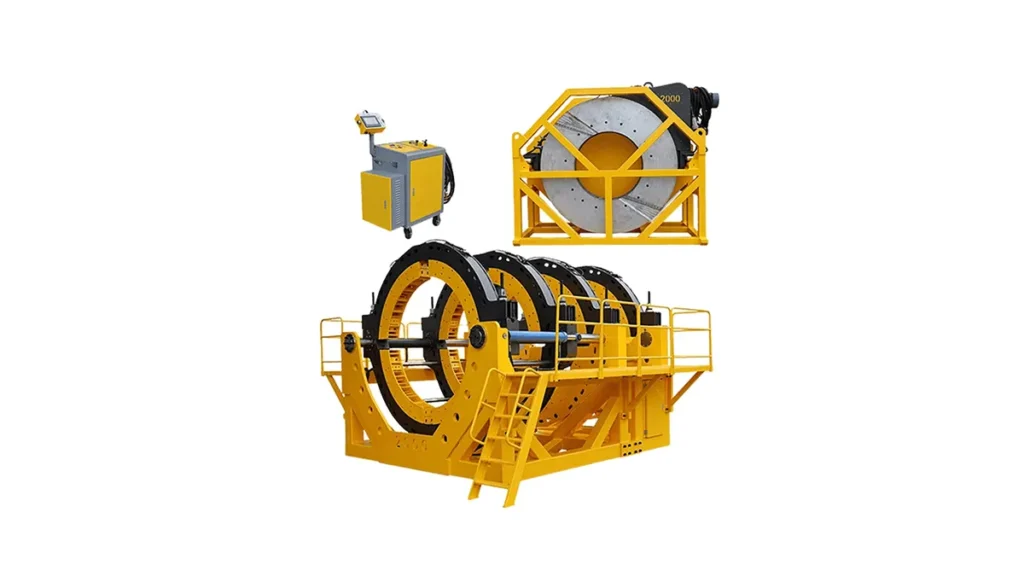
When engineers, contractors, and distributors compare modern plastic pipe joining methods, one question often comes up: butt fusion machine solutions or socket fusion methods—which is better for the job? The answer is not always the same, because the best method depends on pipe diameter, material, project scale, installation environment, and long-term performance expectations. In large pipeline projects, the joining method can directly affect system reliability, maintenance cost, and construction efficiency. That is why choosing between butt fusion and socket fusion should never be based on habit alone. It should be based on application, technical requirements, and installation quality.
Both butt fusion and socket fusion are widely used for joining thermoplastic pipes, especially HDPE piping systems. They create strong, leak-resistant joints when performed correctly, and both are valued for eliminating the need for mechanical connectors that can loosen over time. Still, their welding principles and practical use cases are very different. Butt fusion is known for high-strength, seamless joining of larger pipes, while socket fusion is often preferred for smaller-diameter systems and tighter installation spaces. Understanding those differences can help project teams select the most efficient and cost-effective joining strategy.
What Is Butt Fusion?
Butt fusion is a welding process used to join two pipe ends by heating them until they reach a molten state and then pressing them together under controlled pressure. The result is a single continuous pipe with a fused joint that is often as strong as, or stronger than, the pipe itself. This method is commonly used for HDPE pipe systems in water supply, gas distribution, mining, and industrial pipelines where strength and durability are essential. The process requires precise temperature control, alignment, and pressure management to ensure a clean and uniform bond.
Key advantage: butt fusion creates a smooth internal bore with minimal flow resistance, making it ideal for long-distance pipelines and high-demand systems.
What Is Socket Fusion?
Socket fusion is another thermal joining method, but it works differently. In socket fusion, the pipe end and the fitting socket are both heated using a specialized tool, and then the pipe is inserted into the fitting to create the joint. This method is commonly used for smaller-diameter pipes and fitting-based systems where elbows, tees, and couplings are frequently needed. Socket fusion is often seen in plumbing, branch lines, and compact installations where space is limited and pipe sizes are manageable.
Because socket fusion uses fittings, it can be easier to perform in small systems, but it also introduces more points where flow restriction may occur. It is generally not the first choice for large-diameter pipelines or systems that require the most efficient internal flow characteristics. However, for many indoor, residential, or small commercial applications, socket fusion remains practical and reliable.
Core Differences Between Butt Fusion and Socket Fusion
The biggest difference lies in the joint structure. Butt fusion joins pipe ends directly, while socket fusion joins a pipe to a fitting socket. This difference affects everything from installation speed to cost, equipment needs, and the final performance of the pipeline. Butt fusion is more suitable for larger pipe sizes because it can maintain a continuous pipe profile and reduce pressure loss. Socket fusion, on the other hand, is more convenient for smaller pipe diameters and fitting-intensive systems.
✔ Strength: Butt fusion usually delivers higher joint strength for large pipes.
✔ Flexibility: Socket fusion works well where many fittings are needed.
✔ Flow efficiency: Butt fusion provides a smoother inner surface with less obstruction.
✔ Project scale: Butt fusion is usually preferred for larger infrastructure projects.
Which Method Is Better for Large Projects?
For large-scale infrastructure, butt fusion is usually the better option. Water transmission lines, gas pipelines, mining systems, and industrial piping often require long, continuous runs with minimal leakage risk. Butt fusion is well suited for these conditions because it creates a high-integrity joint and supports a broad range of pipe diameters. It also reduces dependency on fittings, which can lower the number of possible weak points in the system.
In large projects, even a small improvement in welding consistency can lead to major savings in maintenance and downtime. This is where a reliable butt fusion machine becomes valuable. High-quality equipment helps control temperature, alignment, and hydraulic pressure, all of which are essential for producing stable welds in demanding field conditions.
Important: Butt fusion is especially effective when the project requires high pressure resistance, long service life, and uniform joint performance across multiple pipe sections.
When Socket Fusion Makes More Sense
Socket fusion is often a better fit for smaller systems, especially when pipe diameters are limited and fittings are required throughout the layout. It is commonly used in residential plumbing, compact commercial piping, and branch networks where the pipe direction changes frequently. Because the equipment is usually smaller and the procedure can be straightforward, socket fusion may be more convenient for certain installers, especially in confined spaces.
Another advantage is that socket fusion can be effective where direct pipe alignment is difficult to maintain over longer distances. Since the fitting guides the joint, it may simplify the connection process in smaller installations. Still, users must pay close attention to heating time, insertion depth, and cooling period to prevent weak joints or deformation.
Equipment and Skill Requirements
Butt fusion generally demands more robust machinery, stronger clamping systems, and tighter process control. Operators need to ensure pipe faces are trimmed correctly, heated evenly, and joined under accurate pressure. For this reason, butt fusion often requires trained personnel and dependable welding equipment. In contrast, socket fusion equipment is simpler and may be easier to handle for smaller jobs, but it still requires care and consistency.
Modern manufacturers such as JQ-Fusion support the industry by offering manual, hydraulic, and CNC automatic systems designed for different project needs. Their equipment is widely applied in water supply networks, gas distribution systems, mining sites, and industrial pipelines. With quality testing and customization options, they help users match the welding method to the project rather than forcing the project to fit the machine.
Tip: If your project involves repeated large-diameter welding, stable hydraulic pressure and clamp alignment become critical factors in machine selection.
Cost Comparison: Short-Term vs Long-Term Value
At first glance, socket fusion may seem more economical because the equipment can be smaller and the applications are often less demanding. However, when the project scale increases, butt fusion can deliver better long-term value. Its ability to create strong, seamless joints can reduce repair needs and improve overall pipeline reliability. For large installations, fewer fittings and better flow efficiency may also contribute to lower lifecycle costs.
Cost should therefore be evaluated in context. A lower initial investment does not always mean a lower total project cost. In systems where durability, pressure performance, and long service life matter most, butt fusion often provides stronger value over time. Socket fusion remains a smart choice for smaller or more localized applications, especially when space and installation simplicity are priorities.
Quality Control Matters More Than Method Alone
No fusion method can compensate for poor workmanship. Whether using butt fusion or socket fusion, the final result depends on proper temperature control, clean pipe surfaces, correct alignment, and sufficient cooling time. A well-trained operator using reliable equipment will almost always outperform a poorly controlled process, even if the method itself is suitable.
That is why professional manufacturers emphasize strict testing and quality control. JQ-Fusion, for example, highlights temperature accuracy, hydraulic pressure stability, and clamp alignment inspection as part of its quality assurance process. These factors help ensure that each weld performs consistently in real-world environments. In pipeline construction, consistency is not a luxury; it is a requirement.
How to Choose the Right Method
If you are deciding between butt fusion and socket fusion, start with the pipe diameter. Large pipes almost always favor butt fusion because the method is built for direct, high-strength joining. Next, consider the project type. Long-distance water lines, gas networks, and industrial pipelines usually benefit from butt fusion. Smaller branch systems, indoor plumbing, and fitting-heavy layouts may be better suited to socket fusion.
Also consider the available workspace, operator skill level, budget, and long-term performance target. If your project values speed, compact tooling, and simpler connection patterns, socket fusion may be the practical answer. If your project values strength, flow efficiency, and large-scale reliability, butt fusion is usually the better investment.
Why Manufacturers and Contractors Prefer Butt Fusion for HDPE Pipelines
HDPE piping has become a preferred solution in many sectors because of its corrosion resistance, flexibility, and long service life. To fully benefit from those properties, the joining method must maintain the integrity of the system. Butt fusion is often chosen because it allows the pipe material itself to form the bond, producing a highly durable connection. It also supports customization across different project requirements, which is valuable for contractors managing diverse field conditions.
JQ-Fusion’s product range includes hydraulic butt fusion welding machines, automatic butt fusion welding machines, electrofusion welding machines, and multi-angle pipe fitting welding machines. This broad range reflects the reality that no single tool fits every installation. For many global projects, the right machine and the right method can improve welding stability, reduce labor pressure, and support faster project completion.
Practical insight: For contractors, choosing the correct welding method can improve not only joint quality but also labor efficiency, logistics planning, and project delivery speed.
Final Verdict: Which Pipe Joining Method Is Better?
The better method depends on the job. Butt fusion is generally superior for large-diameter, high-performance, and long-distance pipeline systems. It offers excellent joint strength, minimal flow restriction, and strong long-term reliability. Socket fusion is better suited to smaller pipes, compact installations, and systems with many fittings. Both are useful, but they solve different problems.
If the project is critical and scale is large, butt fusion is usually the first recommendation. If the project is smaller and requires frequent directional changes, socket fusion may be the more practical option. The key is to match the method to the application rather than assuming one approach is universally best.
FAQ
Q1: Is butt fusion stronger than socket fusion?
Yes, in most large-pipe applications butt fusion provides stronger and more uniform joints because it joins pipe ends directly without introducing socket fittings.
Q2: Can socket fusion be used for large-diameter pipes?
It is generally not the preferred choice for large-diameter systems. Butt fusion is more suitable because it handles bigger pipes more efficiently and maintains better flow characteristics.
Q3: Which method is easier for beginners?
Socket fusion may feel simpler for small systems, but both methods require proper training, correct heating, and careful handling to achieve reliable results.
Q4: Which joining method is better for HDPE water pipelines?
For most HDPE water pipelines, butt fusion is preferred, especially when the system involves larger diameters, higher pressure, or long-distance transportation.
Q5: What is the most important factor in successful fusion welding?
Temperature control, alignment, and operator discipline are crucial. Good equipment helps, but correct procedure is what produces dependable joints.



