
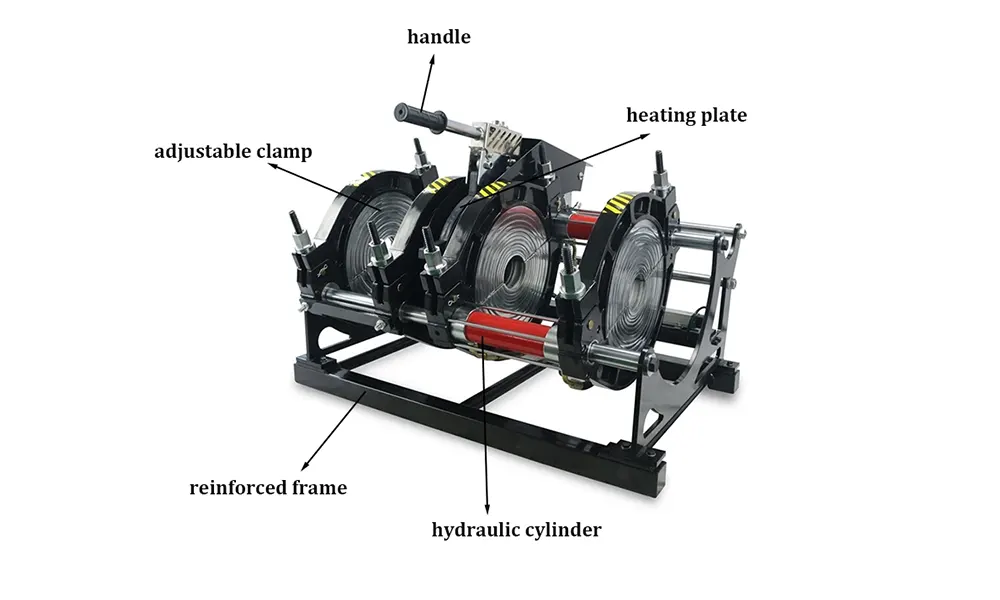
Pipe welding leaks are among the most frustrating problems in pipeline construction and maintenance. A joint may look clean from the outside, yet still fail under pressure, temperature changes, vibration, or long-term service. For contractors, distributors, and plant operators, a leak is more than a small defect—it can lead to product loss, shutdowns, safety risks, and expensive rework. Understanding butt fusion machine selection, welding process control, and inspection methods is the first step toward preventing these failures and improving project reliability.
In HDPE and other thermoplastic pipeline systems, leak-free performance depends on a proper fusion process. When the pipe ends are not aligned correctly, the heating plate temperature is unstable, the pressure is inconsistent, or the cooling time is too short, the final joint may appear acceptable but contain internal weakness. That is why professional equipment, trained operators, and strict quality control are essential in every welding project.
Key point: Most pipe welding leaks do not happen by accident. They are usually caused by a combination of poor preparation, incorrect parameters, operator error, contaminated pipe surfaces, or unsuitable equipment. The good news is that each of these problems can be identified and corrected.
Why Does Pipe Welding Leak?
Pipe welding leaks are typically the result of a weak fusion zone. In butt fusion welding, both pipe ends are heated to the correct melting condition, then pressed together under controlled force. If any stage is off, the polymer molecules cannot fully bond. Even a small defect in the joint area can become a leak path once the pipeline is pressurized.
One common reason is poor pipe preparation. Before welding, the pipe ends must be clean, square, and free from oxidation, dust, oil, moisture, or scratches. If the surface is not properly faced and cleaned, the fusion layer may not bond evenly. Another common issue is incorrect heating plate temperature. If the plate is too cold, fusion is incomplete; if it is too hot, the material can degrade and weaken the joint.
Alignment is another major factor. When the pipe ends are not held accurately in the clamps, uneven pressure creates a distorted weld bead and internal stress. Over time, this stress can lead to cracking, seepage, or complete joint failure. The same risk exists when the fusion pressure is too high or too low. Too much pressure can push molten material away and thin the weld zone, while too little pressure can leave gaps inside the joint.
Important: A leak may not appear immediately after welding. Some defects only show up after the line is buried, temperature changes occur, or system pressure increases. That is why inspection and test procedures matter as much as the welding itself.
The Most Common Causes of Welding Leaks
1. Contaminated Pipe Surfaces
Contamination is one of the simplest but most damaging causes of pipe welding leakage. Moisture, grease, sand, and dust create a barrier between fused surfaces. Even tiny particles can prevent molecular bonding. In field conditions, especially in water supply, gas distribution, and mining projects, environmental contamination is often the first issue to check.
2. Wrong Heating Temperature
Temperature control is critical. A stable heating plate ensures the pipe ends reach the correct fusion condition. If the machine cannot maintain consistent heat, the weld may be under-fused or overheated. This is why professional equipment with accurate temperature control is highly important for reliable performance.
3. Insufficient Cooling Time
Many operators underestimate cooling time. Once the pipe ends are fused and joined, the material needs time to stabilize before the clamps are removed or the line is moved. Premature handling can damage the joint structure and create hidden cracks that later become leaks.
4. Misalignment During Clamping
Even a well-heated weld can fail if the pipe ends are not aligned. The final joint must be concentric and balanced. Poor clamp alignment leads to uneven wall thickness, stress concentration, and unreliable sealing performance. This is especially risky on larger-diameter pipelines where force and precision must be controlled carefully.
5. Inconsistent Hydraulic Pressure
Hydraulic pressure stability directly affects fusion quality. If pressure fluctuates during heating, joining, or holding phases, the molten material may not flow and bond correctly. That is why many professional contractors prefer a machine with reliable hydraulic control and repeatable process settings.
Inspection tip: When a leak occurs, do not only examine the visible crack or seepage point. Review the full welding record, including pipe cleaning, facing, temperature, pressure, cooling time, and operator actions. The real cause is often found earlier in the process.
Best Solutions to Prevent Pipe Welding Leaks
Use the Right Welding Equipment
Reliable equipment is the foundation of leak-free welding. A stable machine with accurate temperature control, strong clamping, and consistent hydraulic performance reduces operator error and improves joint quality. In many projects, upgrading to a professional-grade system is the fastest way to reduce leakage problems.
For example, different project needs may require manual, hydraulic, or CNC automatic solutions. A well-matched machine supports better control for pipe sizes, site conditions, and welding standards. This is especially valuable for global contractors handling water, gas, mining, and industrial installations.
Best practice: Choose equipment based on pipe diameter, project volume, operator skill level, and required precision. A machine that is suitable for one job may be inefficient or risky for another.
Prepare the Pipe Ends Correctly
Before welding, cut, face, clean, and inspect the pipe ends carefully. Remove the oxidized layer and make sure the surfaces are smooth and dry. A clean joint area improves fusion strength and reduces the chance of hidden leakage channels.
Follow Exact Welding Parameters
Every pipe material and diameter has a recommended fusion time, pressure, and temperature. Operators should not guess or “adjust by experience” unless they are following approved standards. Using the correct parameters consistently is one of the simplest ways to avoid weak joints.
Train Operators Thoroughly
Even advanced equipment cannot compensate for poor technique. Skilled operators understand how to center the pipes, monitor pressure, manage temperature, and respect cooling time. Training should also cover defect recognition, machine setup, and emergency correction procedures.
Perform Quality Checks and Pressure Tests
After welding, every pipeline section should be inspected and tested according to project requirements. Pressure testing helps confirm whether the joint can withstand service conditions. Visual checks should also confirm bead shape, alignment, and consistency. Detecting problems early is far cheaper than repairing a buried or operating line.
Why Professional Butt Fusion Equipment Matters
High-quality butt fusion equipment improves welding stability, especially on large or critical pipelines. Modern manufacturing, precision machining, and strict testing help ensure the machine performs reliably under real project conditions. When a machine is built for accurate heating, stable pressure, and proper clamp alignment, the likelihood of leakage drops significantly.
Professional manufacturers also support OEM and ODM customization, which is useful for distributors and project contractors who need tailored voltage, color, branding, or functional design. This flexibility can improve market competitiveness and make the machine more suitable for specific regional standards.
JQ-Fusion, for example, focuses on HDPE pipe welding solutions for global pipeline projects. With experience in manual, hydraulic, and CNC automatic systems, the company supports different application demands and pipe diameters. For buyers seeking reliable production capacity, strong technical support, and international shipping capability, working with an experienced manufacturer can reduce project risk and improve end-user satisfaction.
Practical insight: Leak prevention is not only about welding technique. It also depends on equipment consistency, after-sales support, spare parts availability, and the ability to solve problems quickly when field conditions change.
How to Reduce Leak Risk in Real Projects
A successful pipeline project needs a complete workflow. Start with correct material selection, then confirm machine readiness, operator training, and environmental conditions. Keep the work area clean and protected from wind, rain, and dust whenever possible. Record key welding data so each joint can be traced if a problem occurs later.
It is also helpful to standardize the process across teams and job sites. When every operator follows the same preparation and inspection routine, weld quality becomes more predictable. That consistency is especially important in large infrastructure projects where many joints are completed over several days or weeks.
For contractors managing multiple projects, inventory reliability and fast delivery are also important. Delays in equipment supply can create schedule pressure, which sometimes leads to rushed welding and poor results. Choosing a supplier with strong stock support can help protect project timelines and reduce downtime.
FAQ
Q1: What is the most common reason for pipe welding leaks?
Contaminated surfaces, incorrect temperature, poor alignment, and wrong pressure are the most common causes. In many cases, several of these factors appear together.
Q2: Can a leaking weld be repaired?
Yes, but the repair method depends on the pipe material, leak location, and severity of the defect. In many situations, the damaged joint must be cut out and re-welded for safe performance.
Q3: How can I tell if the weld quality is good?
Check bead appearance, alignment, consistency, cooling behavior, and test results. A good weld should be uniform, properly formed, and able to pass pressure testing.
Q4: Does better equipment really reduce leakage risk?
Yes. Stable temperature control, reliable hydraulic pressure, and accurate clamping make it much easier to produce consistent, leak-free joints.
Q5: What should I prioritize first to solve pipe welding leaks?
Start with surface preparation, machine calibration, and operator training. These three steps solve many of the most common leak problems in the field.



