
When a pipeline project moves from planning to execution, one question quickly becomes central: how much will the installation cost, and where does the money actually go? The answer is rarely simple. Pipeline installation is not just the price of pipe and labor. It includes engineering, welding, excavation, inspection, transportation, safety measures, and equipment selection. For contractors, engineers, and project owners, understanding the full cost breakdown is essential for budgeting accurately and avoiding expensive surprises later.
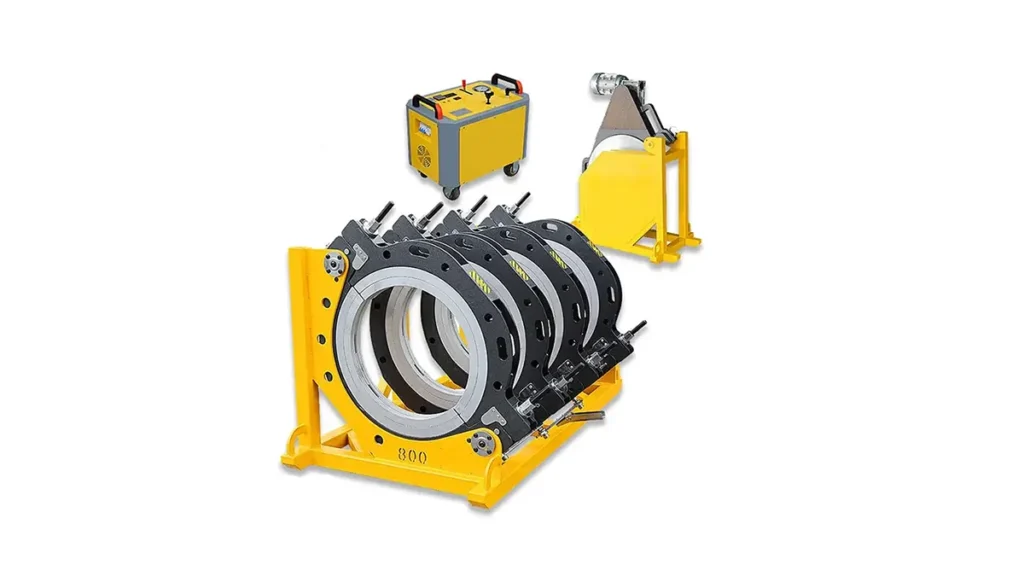
In most cases, the total cost depends on the pipe material, diameter, project length, site conditions, welding method, labor rates, and local regulations. For example, a water supply pipeline in open terrain may be much more affordable than a gas distribution line in a dense urban area. Similarly, using the right welding equipment can reduce rework, improve efficiency, and lower long-term operating costs. That is why many projects carefully evaluate welding systems such as a butt fusion machine before construction begins.
What Does Pipeline Installation Cost Include?
The total installation cost usually combines several major categories. The first is material cost, which includes pipes, fittings, valves, connectors, and sealing components. This is often the most visible part of the budget, but it is only one piece of the puzzle. The second major category is labor cost, which covers welding crews, supervisors, machine operators, safety staff, and quality inspectors.
Another important component is equipment cost. Depending on the pipeline type, this may include trenching machines, lifting tools, alignment devices, generators, and welding systems. For thermoplastic pipelines, the choice of fusion equipment is critical. A stable and precise welding system helps ensure strong joints and can reduce the risk of future maintenance. In large-scale industrial and municipal projects, this can have a significant impact on total lifecycle cost.
Transportation and logistics are also part of the budget. Heavy pipes, fittings, and machinery often require specialized delivery arrangements. In remote locations, the cost of moving materials to the job site can be surprisingly high. Add to that permitting, inspection, testing, and environmental compliance, and the total project budget begins to grow rapidly.
★ Key point: Pipeline installation cost is not a single number. It is a combination of materials, labor, machinery, logistics, and compliance expenses.
Average Pipeline Installation Cost Breakdown
Although actual costs vary widely by region and project type, the following breakdown gives a practical overview of how budgets are usually distributed:
Materials: 30%–45% of total cost
Labor: 20%–30% of total cost
Equipment and machinery: 10%–20% of total cost
Testing and inspection: 5%–10% of total cost
Transportation, permits, and overhead: 10%–20% of total cost
For example, a straightforward HDPE water pipeline may fall in a lower range if the site is accessible and the trenching conditions are simple. In contrast, a gas pipeline in rocky soil or a mining project in a remote region may cost substantially more because of harder construction conditions and stricter safety requirements. Long-distance pipelines also require more joints, more inspections, and more opportunities for scheduling delays.
One way to reduce waste is to improve the efficiency of the joining process. This is where professional fusion equipment becomes valuable. A reliable machine can improve alignment, control temperature and pressure, and produce consistent joints with less manual error. Companies like JQ-Fusion focus on reliable butt fusion solutions for a variety of pipeline projects, helping contractors achieve stable results across different pipe diameters and working environments.
Key Factors That Change the Final Cost
Several technical and environmental factors can make the final cost much higher or lower than the original estimate. The first is pipe diameter. Larger pipes require more material, larger equipment, more labor, and longer welding cycles. The second is pipe material. HDPE, steel, PVC, and other materials each come with different installation methods and price structures.
Site conditions are equally important. Flat, open land is easier and cheaper to work with than mountainous, muddy, or congested urban areas. If the trench must cross roads, rivers, railways, or environmentally sensitive zones, the project may need extra engineering approvals and special construction methods. In some cases, horizontal directional drilling or other trenchless methods are used, which can significantly increase the cost but reduce surface disruption.
Labor cost also varies by country and region. Areas with higher wages or limited technical labor supply generally have more expensive installation budgets. In addition, experienced welders and inspectors may command premium rates, especially when the project requires strict quality assurance. Safety requirements can also add cost through training, protective gear, monitoring, and standby emergency resources.
Tip: If your project uses thermoplastic pipe systems, selecting the right welding method early can save both time and money during construction.
Why Welding Equipment Has a Big Impact on Cost
Welding is a central part of many pipeline installations, especially in HDPE and other thermoplastic systems. The quality of each joint affects the safety, durability, and service life of the entire line. If welding performance is unstable, the project may face leaks, repairs, downtime, and expensive rework.
That is why many contractors prefer modern fusion systems with accurate temperature control, stable hydraulic pressure, and precise clamp alignment. These features help produce repeatable welds and reduce operator mistakes. For projects requiring consistent output, automatic and hydraulic fusion machines can improve efficiency and reduce long-term labor costs.
JQ-Fusion offers a broad product range, including hydraulic butt fusion welding machines, automatic butt fusion welding machines, electrofusion welding machines, and multi-angle pipe fitting welding machines. Their manufacturing approach focuses on strict quality control, OEM and ODM customization, and stable global support. For contractors handling multiple project types, this flexibility can be valuable because equipment can be adapted to specific voltage, branding, size, and functional requirements.
In practical terms, investing in better equipment may raise the initial purchase cost, but it can lower installation cost per meter by improving productivity and reducing defects. This is especially true on projects with large pipe volumes, tight deadlines, or strict inspection standards.
How to Estimate Your Own Project Budget
To estimate a pipeline installation budget, start by defining the project scope as clearly as possible. Identify the total length of pipeline, the diameter, the material, the number of fittings, and the site conditions. Then calculate the cost of materials, labor, machinery, transport, and testing separately. This method makes the estimate easier to review and adjust.
Next, include a contingency allowance. Many professionals add 10% to 15% for unexpected issues such as weather delays, redesigns, unstable soil, supply chain disruptions, or permit changes. In complex projects, a higher contingency may be necessary. It is also important to compare multiple supplier quotations, because equipment quality and service support can vary widely.
For organizations planning international or multi-site pipeline work, supplier reliability matters just as much as price. A manufacturer with long industry experience, strong technical support, and fast delivery can help reduce delays. JQ-Fusion, for example, emphasizes manufacturing consistency, testing, customization, and global shipping support. These factors can simplify procurement and reduce hidden expenses caused by poor equipment performance or slow after-sales response.
When assessing total cost, do not look only at the upfront price. Consider the full lifecycle value: installation speed, joint reliability, maintenance requirements, and the risk of future failure. A slightly more expensive machine or better technical solution may produce lower total ownership cost over the life of the pipeline.
Important: A lower upfront installation quote is not always the lowest real cost. Poor welding quality, delays, or rework can make a cheap project much more expensive later.
Practical Ways to Reduce Installation Cost
There are several effective ways to control costs without sacrificing quality. First, choose the right materials and installation method for the actual project conditions. Overengineering can raise costs unnecessarily, while underengineering can create future failures. Second, plan logistics carefully so materials arrive on time and equipment is not left idle.
Third, use trained operators and reliable equipment. In many projects, a stable welding process reduces the number of defective joints and cuts down on rework. Fourth, standardize procurement where possible. Ordering compatible parts and equipment from one source can improve coordination and reduce compatibility issues. Fifth, schedule work efficiently to avoid repeated mobilization and demobilization costs.
Another useful strategy is to compare different machine types based on project scale. A manual machine may be suitable for smaller jobs, while a hydraulic or CNC automatic model may be more efficient for larger and more demanding projects. The right choice depends on pipeline size, construction volume, quality requirements, and budget expectations.
JQ-Fusion’s manufacturing capability and customization services are designed for these kinds of project decisions. By tailoring machine configuration, voltage, branding, and functionality, contractors can better match equipment to jobsite needs and avoid paying for unnecessary features.
Common Mistakes That Increase Pipeline Costs
One common mistake is focusing only on the unit price of pipe or equipment. Buyers sometimes ignore hidden expenses such as accessories, transport, training, or inspection requirements. Another mistake is choosing equipment without considering technical support and spare parts availability. If the machine fails during construction and replacement parts are delayed, the project can lose valuable time.
A third mistake is underestimating the difficulty of the site. Mud, slopes, traffic control, weather, and underground obstacles can all increase labor and machinery hours. A fourth mistake is skipping proper testing. This may appear to save money initially, but it often leads to more expensive failures after commissioning. Finally, some projects do not plan for growth. If the pipeline is expected to expand later, early equipment choices should support future requirements whenever possible.
The best budget is a realistic budget. It should reflect real conditions, not just ideal assumptions.
How JQ-Fusion Supports Cost-Efficient Pipeline Projects
For contractors and distributors working in global pipeline markets, equipment reliability is directly tied to project cost control. JQ-Fusion is a professional manufacturer specializing in HDPE pipe welding machines and butt fusion solutions for water supply systems, gas distribution networks, mining projects, and industrial pipeline installations. With more than 20 years of industry experience, the company supports projects with stable welding performance, strict testing, and customizable equipment options.
Its production capability includes modern manufacturing lines, precision machining equipment, and comprehensive quality control checks such as temperature accuracy, hydraulic pressure stability, and clamp alignment inspection. These measures help ensure consistent performance in real projects. In addition, OEM and ODM customization can help clients build machines suited to local market demands, which is useful for distributors and contractors seeking tailored solutions.
For buyers evaluating installation cost, this matters because reliable equipment reduces downtime, prevents welding defects, and supports smooth project execution. In a competitive market, those advantages can be more valuable than a low initial purchase price.
FAQ: Pipeline Installation Cost
Q1: What is the biggest factor in pipeline installation cost?
Material, labor, and site conditions usually have the largest impact, but the exact balance depends on the project type and location.
Q2: Is HDPE pipeline installation cheaper than steel?
Often yes, especially when fusion welding is efficient and corrosion protection requirements are lower. However, total cost still depends on diameter, length, and site difficulty.
Q3: Why does welding equipment affect total cost?
Better equipment can improve joint quality, reduce rework, save labor time, and increase construction efficiency, which lowers the overall project cost.
Q4: Should I include contingency in my budget?
Yes. A contingency allowance helps cover unexpected issues such as weather delays, material changes, permit revisions, or difficult ground conditions.
Q5: How can I lower installation cost without reducing quality?
Use accurate planning, choose suitable materials, invest in reliable equipment, train operators properly, and work with suppliers that provide strong technical support.



