
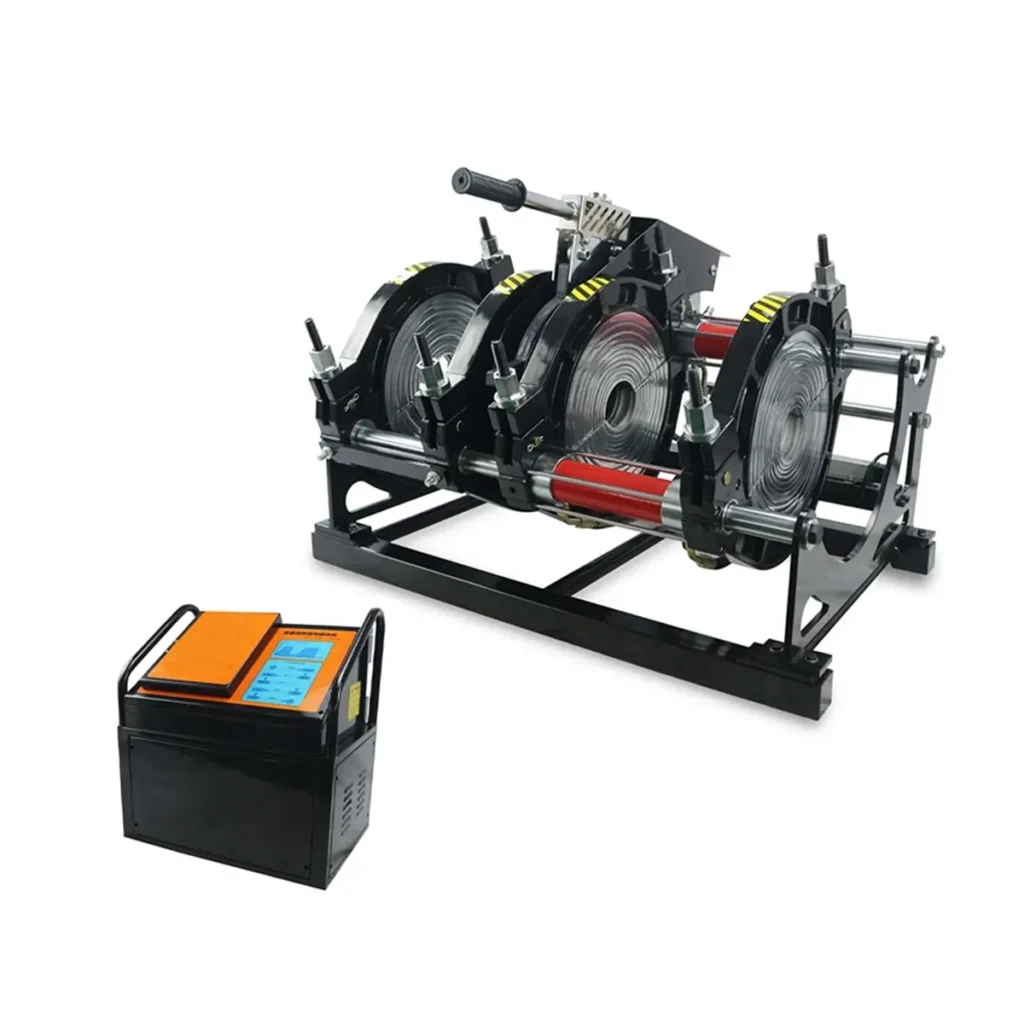
PE integrated welding machines are the backbone of modern HDPE pipeline installation, combining precision, repeatability, and durability to ensure leak-free joints across water, gas, mining, and industrial systems. This guide covers machine types, selection tips, step-by-step fusion workflow, maintenance, and buying considerations to help contractors, engineers, and procurement teams choose and operate equipment for efficient pipe fusion and installation.
What Is a PE Integrated Welding Machine?
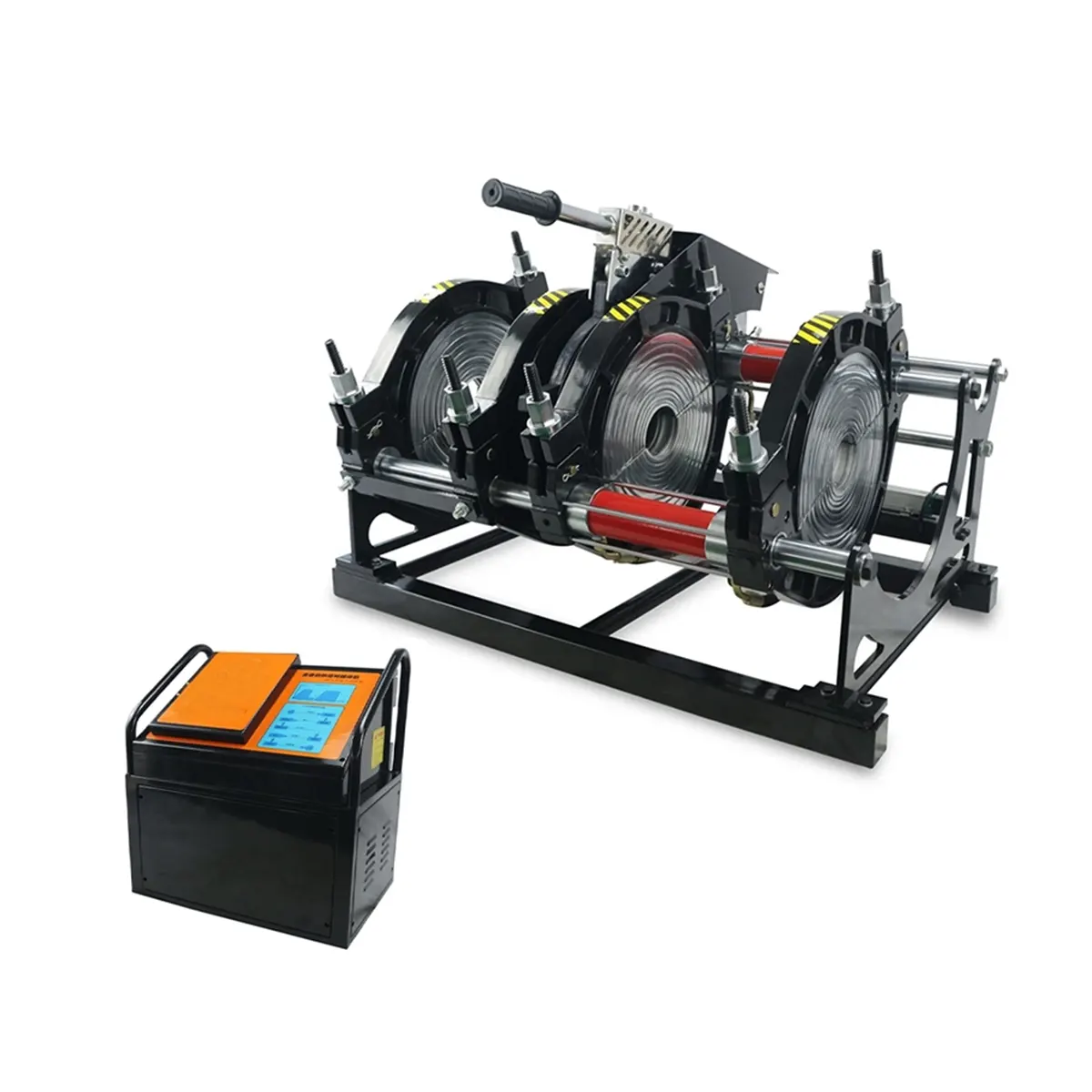
PE integrated welding machines (butt fusion units) are specialized systems that align, heat, and join polyethylene (PE/HDPE) pipe ends using controlled pressure and temperature. Integrated systems can range from compact manual frames to fully automated CNC-controlled units that manage the entire fusion cycle, logging parameters for quality assurance.
Core Benefits
Reliability: Uniform heating and precise pressure control reduce joint failures. Speed: Automated sequences shorten on-site cycle time. Traceability: Some units record welding parameters for QA and regulatory compliance. These advantages translate directly into lower lifecycle costs and fewer rework incidents.
Types of PE Welding Machines
Choosing the right machine depends on pipe diameter, project scale, and automation preference:
- Manual Butt Fusion Frames — cost-effective for small jobs and remote sites; require experienced operators.
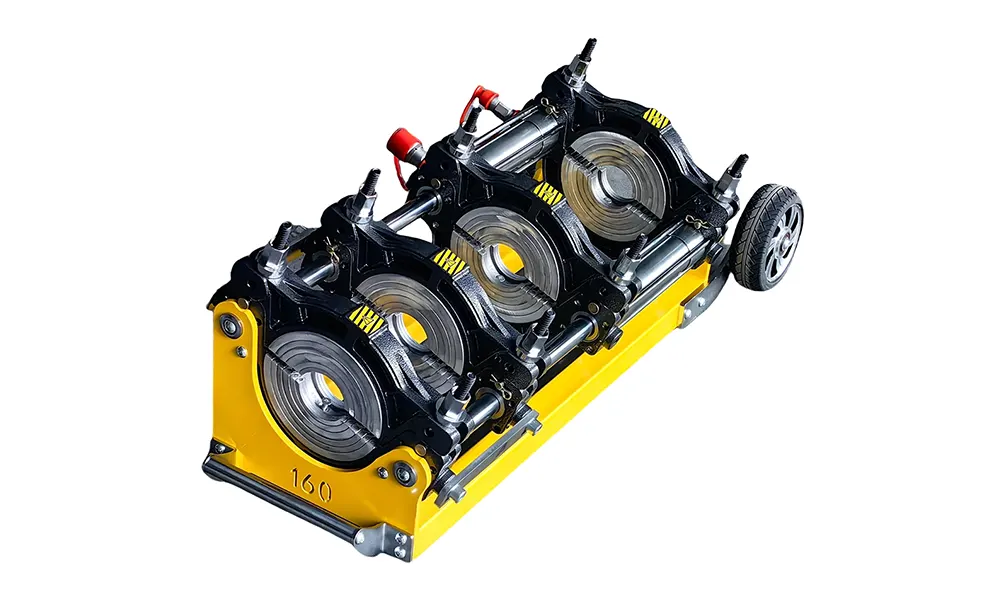
- Hydraulic Butt Fusion Machines — deliver consistent pressure for larger diameters and semi-automated workflows.
- Automatic / CNC Butt Fusion Machines — ideal for high-volume or precision projects; programmable cycles and data logging.
Quick Model Comparison
| Model | Pipe Range (mm) | Type | Key Feature |
|---|---|---|---|
| JQA160 | 20–160 | Automatic | Compact, touchscreen control |
| JQH160 | 20–160 | Hydraulic | Stable pressure for fieldwork |
| JQA630 | 90–630 | Automatic | High-precision for large-diameter pipelines |
Step-by-Step Butt Fusion Workflow
Follow these core steps for consistent weld quality:
- Preparation — Clean pipe ends, inspect for damage, and align pipes in the clamps.
- Facing — Use a trimmer to square pipe ends; ensure smooth, flat surfaces.
- Heating — Place heater plate between pipe ends and monitor temperature until the proper melt window is achieved.
- Fusion — Remove heater, bring pipe ends together, and apply specified pressure for the recommended cooling time.
- Cooling & Inspection — Allow the joint to cool undisturbed; inspect bead uniformity and measure joint strength where required.
Operator Tips for Better Welds
Consistent welds come from disciplined processes: keep heater plates clean, control ambient wind/dust, use calibrated pressure gauges, and follow material-specific heating times. Record fusion parameters for quality control and client records.
Maintenance and On-Site Service
Routine checks prevent downtime: inspect hydraulic lines, verify heater element resistance, lubricate moving parts, and replace worn clamps or faces. For field-critical projects, keep a spare heater plate and a basic tool kit. Regular calibration of temperature sensors and pressure transducers ensures repeatable results.
Safety Best Practices
Wear appropriate PPE (gloves, eye protection), isolate the heating element when not in use, and follow lockout-tagout procedures for hydraulic systems. Ensure operators are trained in both machine operation and emergency shut-down procedures.
Troubleshooting Common Issues
Warped heater plate — check leveling and replace worn plate. Incomplete fusion — verify facing quality and correct heating time. Excessive flash — reduce fusion pressure or adjust approach speed. If alarms or inconsistent readings appear, stop and inspect sensors and hydraulic integrity.
How to Choose the Right Machine
Match machine capacity to your largest pipe diameter, select automation level based on production volume, and prioritize parts availability and local service. Consider total cost of ownership: energy consumption, spare parts pricing, and training resources all add up.
Procurement Checklist
- Specified pipe diameter range and SDR compatibility.
- On-site mobility vs. fixed-frame requirement.
- Available power and hydraulic supply.
- Documentation and data logging features for compliance.
- Warranty, spare parts, and technical support availability.
When to Upgrade to Automatic Systems
Upgrade if you need higher throughput, consistent process recording, or are welding in environments where operator variation drives rework. Automatic machines reduce operator dependency and speed up complex fusion sequences.
About JQ-Fusion
JQ-Fusion is a professional manufacturer specializing in HDPE pipe welding machines, offering manual, hydraulic, and CNC automatic butt fusion machines across a broad range of pipe sizes for water supply, gas, mining, and industrial pipelines. Visit https://jq-fusionwelding.com/ for product details and support.
Final Notes
Investing in the right PE integrated welding machine pays off through fewer failures, faster installs, and documented quality. Combine the right equipment with trained operators, regular maintenance, and data-driven QA to maximize pipeline performance and project ROI.



