
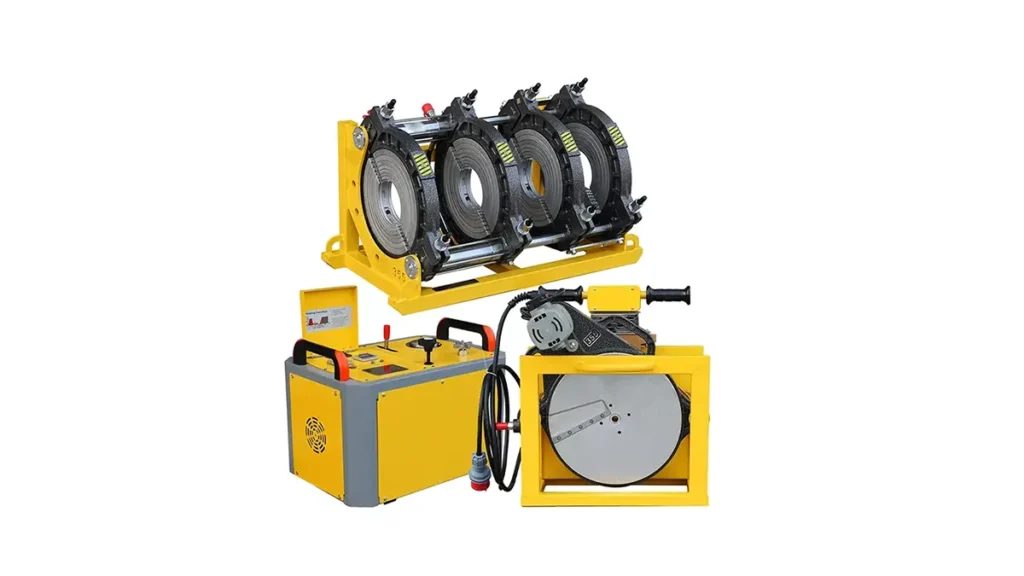
HDPE pipe welding is one of the most important joining methods in modern industrial piping systems. When pipelines must carry water, gas, slurry, chemicals, or other demanding media, the joint quality matters as much as the pipe itself. A properly welded HDPE line can offer long service life, strong leak resistance, and excellent performance under pressure. That is why industries around the world rely on a controlled butt fusion process instead of mechanical joining methods that may weaken over time.
In industrial use, HDPE pipe welding is not simply about heating two pipe ends and pressing them together. It is a precise process that depends on pipe preparation, clean surfaces, accurate alignment, stable temperature control, correct pressure, and enough cooling time. Whether the project is a mine, a water transmission line, a gas distribution network, or a factory utility system, the same basic principle applies: create a homogeneous joint that behaves like a continuous pipe.
The most common method for large-diameter HDPE pipelines is butt fusion welding. This method uses a heating plate to soften the pipe ends, then fuses them together under controlled pressure. The result is a strong, uniform joint that can match the pipe body in durability when performed correctly. For contractors, distributors, and project managers, understanding how this process works is essential for planning reliable installations and reducing maintenance risk.
Key point: HDPE welding quality depends more on process control than on speed. Every step, from cutting to cooling, affects the final strength of the joint.
What Makes HDPE Pipe Welding Suitable for Industry?
HDPE, or high-density polyethylene, is valued in industrial applications because it is lightweight, corrosion-resistant, chemically stable, and flexible enough to handle ground movement. Compared with metal pipelines, HDPE pipes are less vulnerable to rust and internal scaling. This makes them especially attractive for water supply systems, mine drainage, chemical transport, and process piping.
Industrial sites often require long-distance piping networks with few weak points. Traditional threaded or flanged connections can increase leak risk and maintenance complexity. By contrast, a correctly fused HDPE joint forms a continuous molecular bond. This is the main reason butt fusion is preferred for demanding applications.
Another advantage is that the welding process can be standardized across a wide range of pipe diameters. Small utility lines and large infrastructure lines both benefit from the same core fusion principle, although the machine type and pressure settings may differ. For this reason, companies that invest in a reliable butt fusion machine can support multiple project types with one core joining technology.
The Basic Principle Behind Butt Fusion Welding
Butt fusion welding works by heating the ends of two HDPE pipes until the material reaches a soft, plastic state. At that stage, the pipe ends are brought together under a controlled force. The softened surfaces blend and cool into a single solid structure. Unlike adhesive or threaded joints, the fused connection does not rely on an external connector; the pipe material itself becomes the joint.
This process is successful only when the pipe ends are cut squarely, aligned accurately, and kept clean. Even a small amount of contamination, such as dust, moisture, or grease, can weaken the weld. Industrial environments can be harsh, so welders must be disciplined about surface preparation and machine setup.
In large infrastructure projects, fusion quality is also influenced by machine stability. That is why many contractors use automatic or hydraulic systems instead of relying only on manual force. A stable machine helps maintain pressure consistency, temperature accuracy, and alignment, which directly improves the final weld.
Step 1: Preparing the Pipe Ends
The welding process begins with accurate pipe preparation. The pipe sections must be cut to the correct length and checked for roundness, cleanliness, and wall condition. If the pipe end is damaged or deformed, the technician may need to trim it before proceeding.
Next, the pipe ends are placed into the welding machine clamps. The clamps hold the pipes firmly and keep them aligned. Proper alignment is essential because an offset joint can create stress concentration and reduce performance under pressure.
Once clamped, the pipe ends are faced using a facing tool. This removes a thin layer of material and creates two clean, parallel surfaces. Facing also ensures that both ends meet evenly during fusion. In industrial work, this step is one of the most important quality checks because it determines whether the welding surfaces are truly ready.
Checklist for preparation:
• Clean pipe surfaces
• Square and even cuts
• Stable clamping
• Correct pipe alignment
• No visible damage at the joint area
Step 2: Heating the Pipe Ends
After facing, the heating plate is inserted between the pipe ends. The plate surface is heated to the required fusion temperature, and both pipe ends are pressed against it with controlled force. Heat softens the material and forms a uniform melt layer on each end.
This stage must be carefully timed. If heating is too short, the material may not soften enough, causing a weak bond. If heating is too long, the pipe can overheat, leading to degraded material properties or excessive melt flow. The operator must follow the machine’s recommended temperature and heating cycle for the specific pipe size and wall thickness.
In industrial projects, environmental conditions can also affect heating performance. Cold weather, wind, or uneven work surfaces may slow heat transfer or disrupt stability. For this reason, high-quality machines with reliable heating control are often preferred, especially in outdoor construction.
Step 3: Changeover and Fusion
When the pipe ends have reached the correct melt state, the heating plate is removed quickly and cleanly. This moment is called changeover. It must be done fast to avoid heat loss and contamination. The softened pipe ends are then brought together and pressed under the required fusion pressure.
During this stage, a bead forms around the joint. The bead is a visible sign that material has flowed together properly. The size and symmetry of the bead can help operators evaluate weld quality, although visual inspection alone is not enough for critical projects.
Pressure control is especially important here. Too little pressure can leave gaps or incomplete fusion. Too much pressure may force excessive molten material out of the joint and reduce bond quality. Industrial machines are designed to maintain stable pressure so the operator can focus on the fusion sequence rather than manually guessing the force.
Important: A good butt fusion joint should show balanced bead formation, correct alignment, and no visible contamination at the weld line.
Step 4: Cooling and Joint Stabilization
After fusion, the joint must remain clamped and undisturbed while it cools. Cooling is not a passive afterthought; it is part of the weld formation process. The polymer structure solidifies during this period, and movement can weaken the bond.
Cooling time depends on pipe diameter, wall thickness, ambient conditions, and machine specifications. Large industrial pipes generally need longer cooling periods than small utility lines. Even if the bead appears solid on the outside, the inside may still be stabilizing. Releasing pressure too early can cause joint failure later in service.
For this reason, experienced welders treat cooling as a mandatory stage, not a delay. In high-value projects, patience here protects the entire pipeline investment.
Manual, Hydraulic, and CNC Welding Systems
Industrial HDPE welding equipment is commonly available in manual, hydraulic, and CNC automatic versions. Each type serves different project requirements and budget levels.
Manual machines are often used for smaller projects or basic applications where pipe size is limited and operations are straightforward. They require more operator involvement and are usually more affordable.
Hydraulic machines are widely used in industrial and municipal projects because they improve clamping force, pressure consistency, and efficiency. They are suitable for medium to large pipe sizes and provide better control than purely manual systems.
CNC automatic machines offer the highest level of precision and repeatability. They can automatically control heating, changeover, pressure, and cooling cycles. This is especially useful for large infrastructure projects where weld consistency and documentation are critical.
For contractors working across multiple job sites, choosing the right machine type can save time and reduce rework. Companies like JQ-Fusion, with more than 20 years of experience in HDPE pipe welding machines, support different configurations for water supply systems, gas distribution, mining projects, and industrial pipeline installations.
Why Machine Quality Matters in Industrial Projects
HDPE welding may look simple from a distance, but industrial reliability depends heavily on machine quality. A machine with unstable heating or weak clamping can create poor joints even when the operator is skilled. This is why contractors often evaluate temperature accuracy, hydraulic stability, clamp alignment, and build durability before purchase.
Quality control is particularly important in large-scale projects where a single defective weld can lead to costly downtime. Modern manufacturers use strict testing procedures to verify performance before shipment. That includes temperature checks, pressure stability tests, and alignment inspections.
When the equipment is well-made, welders can work faster without sacrificing quality. This improves project schedules and reduces the risk of installation errors. Strong equipment support also matters after delivery, especially when teams need technical guidance or replacement parts.
Industrial Applications of HDPE Pipe Welding
HDPE pipe welding is used across many industrial sectors. In water supply systems, it helps build long-distance transmission lines that resist corrosion and leakage. In gas distribution, the integrity of each weld is vital for safety and performance. In mining, HDPE pipelines transport slurry, drainage, and process water under difficult conditions.
Industrial manufacturing plants also use HDPE for utility lines, chemical handling, cooling systems, and wastewater transport. Because the material is resistant to many corrosive substances, it is suitable for environments where metal pipes may degrade quickly.
Another major advantage is installation flexibility. HDPE pipes can be fused into long continuous strings before being placed in trenches or on supports, reducing the number of field joints and simplifying deployment.
Common industrial benefits:
• Leak-resistant joints
• Corrosion resistance
• Long service life
• Lower maintenance costs
• Good adaptability for underground and exposed systems
Customization and Support for Different Projects
Not every project needs the same welding setup. Pipe diameter, site environment, voltage requirements, branding needs, and production goals can all affect machine selection. That is why OEM and ODM customization is valuable for distributors and contractors who serve different markets.
Customization can include machine size, color, control design, voltage specification, and special configurations for project-specific work. For large buyers, this flexibility helps create a competitive edge while ensuring that the equipment matches local field conditions.
Reliable technical support also matters. From choosing the right machine to setting up the first weld, professional guidance can prevent avoidable mistakes. This is especially useful for new teams or international projects where training and logistics must be handled efficiently.
How to Improve Welding Success Rate
There are several practical ways to improve HDPE welding results in industrial environments. First, keep the pipe ends clean and protected from dust and moisture. Second, use the correct machine settings for the pipe size and material grade. Third, verify alignment before heating begins. Fourth, do not rush the cooling stage.
It is also wise to train operators regularly. Even a good machine cannot compensate for poor handling. A skilled team understands how to identify irregular bead formation, manage ambient conditions, and follow the fusion cycle consistently.
Finally, keep detailed records when the project requires traceability. Recording welding parameters can help with quality assurance, inspection, and future maintenance planning.
Final Thoughts
HDPE pipe welding for industrial use is a disciplined process that combines material science, machine accuracy, and operator skill. The butt fusion method remains one of the best solutions for large and demanding pipeline systems because it creates strong, leak-resistant, and durable joints. When preparation, heating, fusion, and cooling are performed correctly, the result is a pipeline that can perform reliably for many years.
For businesses involved in water, gas, mining, or industrial infrastructure, selecting the right equipment is just as important as selecting the right pipe. A dependable welding machine, supported by proper training and quality control, can improve productivity and reduce risk across the entire project lifecycle.
FAQ
1. What is the most common method for HDPE pipe welding in industrial use?
Butt fusion is the most common method for industrial HDPE pipe welding because it creates a strong, continuous joint with excellent leak resistance.
2. Why is cooling time important after fusion?
Cooling allows the fused polymer to solidify properly. If the joint is moved too soon, the weld strength can be reduced.
3. Can HDPE pipes be welded in cold weather?
Yes, but cold weather can affect heating and cooling performance, so operators should follow adjusted procedures and use stable equipment.
4. What industries use HDPE pipe welding the most?
Water supply, gas distribution, mining, chemical transport, and industrial utility systems are among the main users of HDPE welded pipelines.
5. How can I improve weld quality on site?
Use clean pipe ends, correct alignment, proper machine settings, and full cooling time. Regular operator training also improves results.



