
Pipeline welding is one of the most critical stages in construction projects, especially when the system must deliver long-term strength, leak resistance, and operational safety. Whether the project involves water transmission, gas distribution, mining infrastructure, or industrial pipeline networks, the welding solution you choose directly affects installation efficiency, joint quality, and maintenance costs. For contractors, developers, and distributors, understanding the best pipeline welding solutions is not just a technical decision, but also a business one.
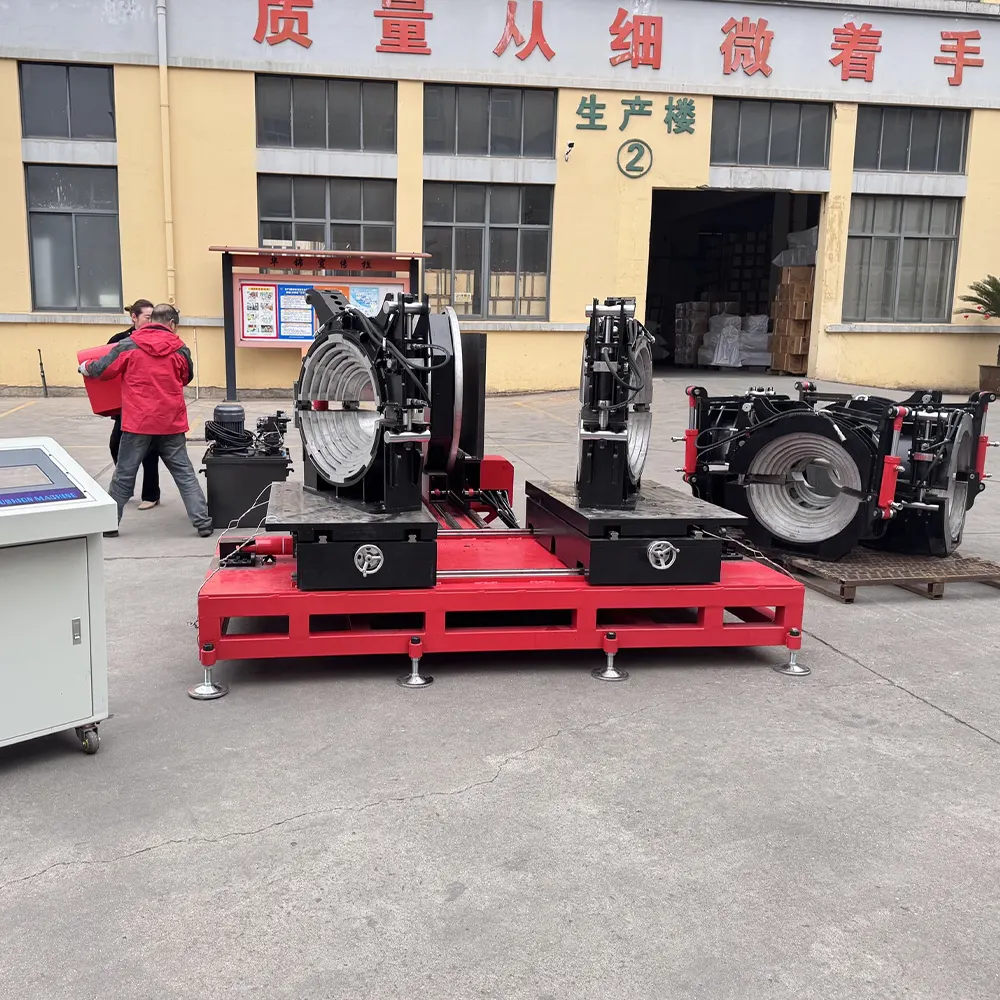
Among the many available methods, butt fusion welding has become a highly trusted solution for HDPE pipeline installation. It creates a seamless joint by heating the pipe ends and pressing them together under controlled pressure, producing a strong and uniform connection. For construction projects that require durable and consistent welding results, a reliable butt fusion machine can significantly improve both productivity and welding quality.
Why Pipeline Welding Quality Matters in Construction
In construction, pipeline systems often operate under pressure, underground stress, changing temperatures, and varying soil conditions. A weak or poorly aligned weld can lead to leakage, failure, costly repairs, and project delays. That is why welding equipment must deliver stable heating, accurate pressure control, and precise alignment.
Key point: the best pipeline welding solution is not always the most expensive one. It is the one that balances joint strength, operator efficiency, project scale, and long-term reliability.
For modern construction projects, HDPE pipelines are widely selected because they are corrosion-resistant, flexible, and suitable for a variety of applications. To fully benefit from these pipe materials, contractors need welding equipment that can handle different pipe diameters and project demands without sacrificing consistency.
Main Pipeline Welding Solutions Used in Construction
1. Butt Fusion Welding
Butt fusion welding is one of the most widely used solutions for HDPE pipe installation. It works by heating both pipe ends to a specific temperature and then joining them under controlled pressure. The result is a strong, permanent joint with excellent leak resistance.
Best for: water supply systems, gas networks, mining lines, irrigation projects, and industrial pipeline installations.
This method is especially suitable for projects requiring large-diameter pipes and long service life. With the right machine, operators can achieve repeatable results and reduce human error. JQ-Fusion, a professional manufacturer with over 20 years of experience, offers manual, hydraulic, and CNC automatic solutions designed for global pipeline projects.
2. Electrofusion Welding
Electrofusion welding uses fittings with built-in heating elements to join pipe sections. When electrical current passes through the fitting, the material melts and forms a bond with the pipe. This solution is often used in smaller spaces or repair work where butt fusion access may be limited.
It is a practical choice for complex site conditions, but it depends heavily on proper fitting preparation, surface cleaning, and electrical control. For projects that require reliable joining in restricted environments, electrofusion can be a valuable complement to butt fusion methods.
3. Multi-Angle Pipe Fitting Welding
Multi-angle pipe fitting welding is useful when construction designs involve bends, custom angles, or special joint requirements. This solution helps contractors handle complex layouts while maintaining structural strength and proper alignment.
Important: custom configurations are often necessary for non-standard pipeline routes, especially in industrial projects and large infrastructure works.
What Makes Butt Fusion the Preferred Construction Solution
Contractors often choose butt fusion because it offers a balanced combination of strength, speed, and ease of use. Unlike mechanical joints that may loosen over time, a correctly fused HDPE joint becomes as strong as, or stronger than, the pipe itself. This reduces leakage risks and improves overall system integrity.
JQ-Fusion focuses on the development and production of manual, hydraulic, and CNC automatic butt fusion welding machines. These solutions cover a wide range of pipe diameters, making them suitable for both small utility projects and large-scale infrastructure installations. Their machines are widely used in water supply systems, gas distribution networks, mining projects, and industrial pipeline installations worldwide.
A dependable welding machine should provide stable temperature accuracy, hydraulic pressure stability, and proper clamp alignment. These factors help ensure that each weld meets project requirements and reduces the chance of defects. JQ-Fusion’s strict quality control process includes comprehensive testing before delivery, supporting consistent welding performance in real projects.
How to Select the Best Welding Machine for a Project
The best machine depends on pipe size, material type, project scale, and jobsite conditions. A small municipal pipeline may only need a compact and efficient machine, while a large industrial project may require an automated system for higher productivity and tighter quality control.
- Pipe diameter range: ensure the machine can cover current and future project sizes.
- Automation level: manual, hydraulic, and CNC automatic models offer different levels of efficiency and precision.
- Site conditions: portability and ease of setup matter for remote or changing job sites.
- Operator skill: choose equipment that matches the training level of the team.
- After-sales support: technical guidance and spare parts availability can reduce downtime.
For many contractors, flexibility is essential. JQ-Fusion provides OEM and ODM customization services, including machine size, voltage, color, design, branding, and project-specific configurations. This helps clients build their own market advantage while meeting exact project needs.
Advantages of Choosing a Professional Manufacturer
Selecting a professional manufacturer can significantly improve project outcomes. A company with advanced production lines, precision machining equipment, and experienced technicians is more likely to deliver stable product quality and efficient support. JQ-Fusion emphasizes advanced manufacturing technology, strict quality control, and reliable global support.
Why this matters: a high-quality machine does more than improve welding. It helps reduce project delays, lowers repair costs, and supports safer long-term pipeline operation.
The company’s factory and manufacturing capability also play an important role. With strong engineering capability and a large inventory of key models, JQ-Fusion can support fast delivery for both small and bulk orders. This is especially useful for contractors working under tight schedules.
Project Applications Where Butt Fusion Performs Best
Different construction sectors require different welding strategies, but butt fusion remains one of the most reliable across many applications. It is commonly used in:
• Water supply systems: for durable and hygienic pipeline connections.
• Gas distribution networks: where leak resistance and joint strength are essential.
• Mining projects: where pipelines face pressure, abrasion, and harsh conditions.
• Industrial installations: where system reliability and uptime are critical.
Because these applications often require high performance and long service life, the welding machine must be engineered to maintain precision over repeated use. That is why products certified by SGS and manufactured to international standards are often preferred by global buyers.
How JQ-Fusion Supports Global Construction Needs
JQ-Fusion is committed to delivering high-quality, durable, and customizable welding equipment to contractors and distributors around the world. Their support includes product selection guidance, installation assistance, and after-sales service, helping customers move from purchase to project execution with confidence.
With fast response, efficient logistics, and professional technical guidance, the company helps reduce project risk and improve delivery timelines. Their product range includes hydraulic butt fusion welding machines, automatic butt fusion welding machines, electrofusion welding machines, and multi-angle pipe fitting welding machines, covering a wide spectrum of construction requirements.
Best Practices for Achieving Reliable Pipeline Welds
Even the best equipment needs proper operation. To achieve consistent weld quality, construction teams should follow a disciplined workflow. Pipe ends should be clean and aligned, heating time must match the material specifications, and pressure must be maintained accurately during the joining process.
- Inspect equipment before every shift.
- Keep pipe surfaces clean and dry.
- Follow the correct heating and cooling cycle.
- Use trained operators whenever possible.
- Record welding parameters for quality tracking.
These steps may seem simple, but they make a significant difference in the final weld. When combined with a dependable machine, they create the foundation for safe and durable pipeline construction.
Conclusion: Choosing the Right Solution for Long-Term Success
The best pipeline welding solution for construction projects depends on the material, pipe size, project environment, and performance expectations. For most HDPE applications, butt fusion welding remains the leading choice because it offers excellent strength, efficiency, and reliability. Electrofusion and multi-angle welding also have important roles in specialized scenarios, especially where access or design complexity is a concern.
By choosing a professional supplier like JQ-Fusion, contractors gain access to advanced manufacturing, strict quality assurance, customization support, and proven global experience. In demanding construction environments, these advantages can make the difference between a good pipeline system and a great one.
Frequently Asked Questions
Q1: What is the most reliable pipeline welding method for HDPE projects?
Butt fusion welding is widely considered the most reliable method because it creates a strong, seamless joint with excellent leak resistance.
Q2: When should electrofusion welding be used?
Electrofusion is often used in limited spaces, repair work, or complex site conditions where butt fusion equipment cannot easily operate.
Q3: What should contractors look for in a welding machine supplier?
Contractors should look for stable product quality, certification, technical support, customization capability, and reliable delivery service.
Q4: Why is quality control important in pipeline welding equipment?
Quality control ensures stable temperature, pressure, and alignment performance, which are all essential for producing strong and consistent welds.
Q5: Can welding machines be customized for different projects?
Yes. Many manufacturers, including JQ-Fusion, offer OEM and ODM customization for voltage, size, design, branding, and project-specific functions.



