
The HDPE pipe welding standards you follow can make the difference between a pipeline that performs for decades and one that fails early. In water supply, gas distribution, mining, and industrial projects, the joint quality is not just a technical detail; it is the foundation of safety, durability, and long-term efficiency. For that reason, every contractor, engineer, and installer should understand the rules, procedures, and inspection points that define a reliable fusion joint.
HDPE pipe welding is usually associated with butt fusion, electrofusion, and other approved joining methods, but the core principle remains the same: the pipe ends must be heated, aligned, joined, and cooled under strict control. Standards exist to ensure this process is repeatable and traceable, regardless of location or project size. If the equipment, operator skill, or procedure is inconsistent, the final weld may look acceptable while hiding internal weakness.
One of the most important standards-related ideas is that welding quality begins before the machine starts. Pipe material verification, surface cleaning, environmental control, and machine calibration all influence the final result. This is why professional projects often specify approved procedures, certified operators, and documented inspection records. When teams treat standards as part of the workflow rather than an afterthought, welding defects can be reduced significantly.
In most international projects, the applicable standard depends on the pipe material, end use, and regional regulations. Common references include ISO, ASTM, and DVS-based guidance, along with project-specific engineering requirements. These standards typically define heating time, fusion pressure, cooling time, bead formation, alignment tolerance, and acceptance criteria. The goal is simple: every fusion joint should perform like an integral part of the pipe, not a weak connection.
Key point: a proper HDPE weld is not judged by appearance alone. It must meet the required parameters for temperature, pressure, alignment, and cooling time. A beautiful-looking bead does not guarantee a safe weld if the process was not controlled correctly.
1. Understand the Core Standards That Govern HDPE Pipe Welding
HDPE pipe welding standards are designed to make sure every joint is structurally sound and suitable for its intended service conditions. In practice, the standards define how the pipes should be prepared, how the welding machine should operate, and how the completed weld should be inspected. For butt fusion welding, this means the pipe ends are faced, heated on a controlled plate, fused under pressure, and allowed to cool without movement.
Different countries and industries may reference different documents, but the underlying requirements are similar. They all emphasize repeatability, traceability, and quality assurance. For example, a project in a municipal water network may require a different documentation package than a mining slurry line, yet both will still require correct fusion procedures and qualified equipment.
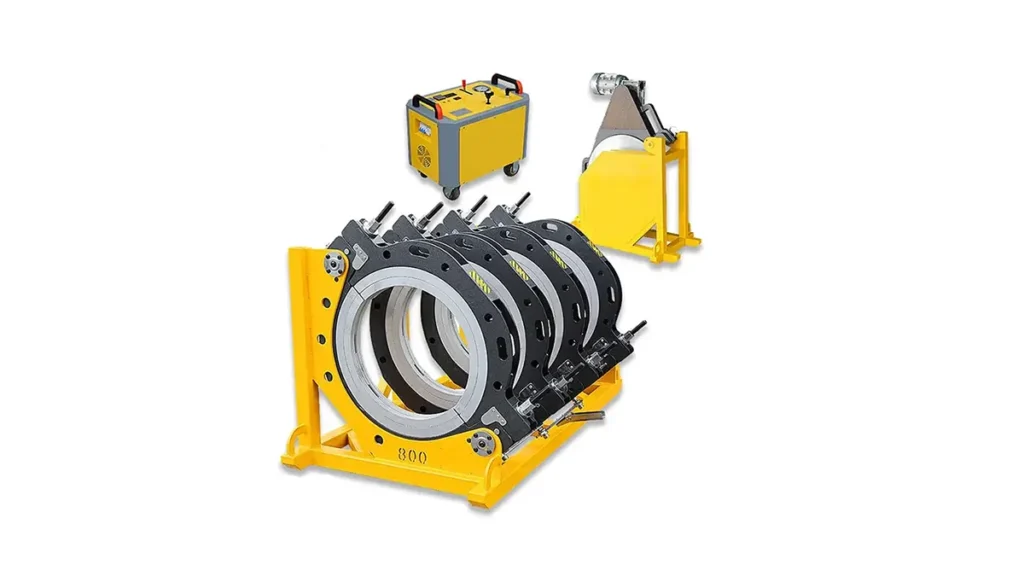
When companies select equipment and training partners, they often look for manufacturers with proven experience and compliance-driven production. A professional butt fusion machine supplier can help ensure that the welding process aligns with project standards from the very beginning.
2. Follow the Essential Steps Required Before Welding
Before the first weld is made, several preparatory steps must be completed. These steps are often overlooked by inexperienced teams, but they are directly linked to compliance. The pipe ends should be checked for ovality, wall thickness, cleanliness, and damage. Any contamination such as dust, grease, moisture, or oxidation must be removed from the fusion area.
The welding machine also needs to be verified. Clamp alignment, hydraulic pressure stability, heating plate temperature, and facing tool condition should all be inspected before production begins. If the machine is not properly maintained, even a skilled operator may struggle to produce acceptable welds.
Important: do not begin welding until the pipe material, machine settings, and environmental conditions have been checked. A few minutes of preparation can prevent costly joint failures later.
3. Control Temperature, Pressure, and Timing with Precision
Three variables dominate HDPE butt fusion quality: temperature, pressure, and time. The heating plate must reach the correct surface temperature and remain stable throughout the process. If the plate is too cool, the pipe ends may not melt enough; if it is too hot, the material can degrade or become unstable.
Pressure must also be carefully controlled. During heating, the pipe ends are brought into contact with the plate using the proper force. During fusion, pressure is applied to join the softened ends together. During cooling, the joint must remain immobile so the molecular chain structure can solidify correctly.
Timing is equally critical. Every pipe diameter and wall thickness has its own heating, changeover, and cooling sequence. Operators should never “estimate” timing on site. Instead, they should use the approved welding procedure or machine chart. In modern projects, CNC automatic systems are often preferred because they reduce human error and improve consistency.
4. Keep Alignment and Surface Preparation Under Strict Control
Even if temperature and pressure are correct, poor alignment can still compromise the weld. The two pipe ends must be clamped securely and positioned so the faces meet squarely. Misalignment can create stress points that weaken the line over time, especially in systems exposed to internal pressure, ground movement, or vibration.
Surface preparation is equally important. The facing process should remove oxidation and create clean, parallel surfaces ready for fusion. After facing, operators should avoid touching the prepared areas with bare hands or exposing them to dirt and moisture. In many cases, even a small amount of contamination can interfere with proper bonding.
Best practice: keep the prepared pipe ends protected from wind, rain, dust, and direct handling. Environmental control matters more than many teams realize.
5. Use Approved Equipment and Document Every Weld
Standards are not only about procedure; they are also about equipment quality. A machine that cannot maintain stable pressure, uniform heating, or reliable alignment cannot support compliant welding. That is why manufacturers with strict testing processes are preferred on professional projects. At JQ-Fusion, quality control includes temperature accuracy checks, hydraulic pressure testing, and clamp alignment inspection to help ensure stable field performance.
Documentation is another major requirement in standard-compliant work. Weld records often include pipe specification, operator name, machine model, welding parameters, ambient conditions, and inspection results. This traceability helps contractors demonstrate quality to project owners and provides a valuable reference if a field issue ever occurs.
Many global contractors also value flexible OEM and ODM support, especially when project requirements differ by region. Customized machine size, voltage, branding, and design options can help teams match local site conditions more effectively while still following the relevant standards.
6. Train Operators to Recognize Acceptable and Unacceptable Welds
Experienced operators do more than follow a checklist. They can identify warning signs before they become failures. For example, an uneven bead, excessive melt-out, contamination at the fusion line, or visible misalignment may signal a process problem. Training helps technicians recognize these issues early and take corrective action.
Qualified training programs should cover machine operation, parameter selection, defect recognition, maintenance, and safety. In many projects, operator certification is required before field welding begins. This is not only a regulatory matter; it is a practical way to improve productivity and reduce rework.
When teams understand the relationship between theory and field practice, they can make better decisions under pressure. This is especially important in remote or large-scale projects where delays are expensive and access to replacement pipe may be limited.
7. Match the Welding Method to the Project Requirement
Not every HDPE joining job uses the same method. Butt fusion is widely used for long straight pipeline sections because it creates a strong, continuous joint. Electrofusion may be better suited to repair work, restricted spaces, or smaller branch connections. Multi-angle pipe fitting welding can support specialized layouts where standard straight-line fusion is not enough.
Choosing the right method is part of standards compliance because the method must suit the pipe size, service conditions, and project design. The wrong joining process can increase the risk of leakage or installation delays. For this reason, contractors should evaluate the full system before selecting equipment and procedures.
Tip: if your project includes multiple pipe diameters, variable site conditions, or urgent delivery needs, work with a supplier that offers hydraulic, automatic, and electrofusion options under one product range.
8. Inspect the Final Joint and Record the Results
After welding, the joint should be inspected according to the project standard. Visual inspection is the first step, but it is not always enough. Teams may also use dimensional checks, destructive testing on sample joints, or other approved verification methods depending on the project scope. The aim is to confirm that the weld meets the expected profile and performance requirements.
Cooling time should never be shortened to speed up production. Moving or stressing the joint too early can create internal defects that are difficult to detect immediately. Once the weld has cooled and passed inspection, the record should be stored in the project file for traceability.
For larger projects, inspection data can be used to spot trends. If certain welders, machines, or conditions repeatedly produce issues, the team can correct the root cause instead of treating each defect as an isolated event.
9. Why Equipment Quality Matters as Much as the Standard
Even when the procedure is correct, poor equipment can undermine the result. A reliable machine should maintain stable performance over long working hours, handle repeated heating cycles, and support accurate clamping and pressure control. In global pipeline projects, durability and consistency matter because downtime can be extremely costly.
Manufacturers with strong engineering capability and long industry experience often provide better support for standard-compliant welding. JQ-Fusion, for example, focuses on butt fusion solutions for water supply systems, gas distribution networks, mining projects, and industrial pipeline installations worldwide. Their product range includes hydraulic butt fusion welding machines, automatic butt fusion welding machines, electrofusion welding machines, and multi-angle pipe fitting welding machines, all designed to support different project needs.
Reliable stock supply, fast delivery, and professional technical support also help contractors stay on schedule. In practice, standards compliance is easier to maintain when the machine supplier understands both the technical and operational realities of the jobsite.
10. Common Mistakes That Can Lead to Non-Compliance
Several mistakes appear again and again on HDPE pipe welding sites. The first is skipping pre-weld checks. The second is relying on visual judgment instead of approved parameters. The third is using a machine that has not been calibrated or maintained properly. Another frequent issue is rushing the cooling stage, which can damage an otherwise acceptable joint.
Operator shortcuts are also dangerous. Adjusting pressure by guesswork, ignoring contamination, or welding in severe weather without protection can all lead to failure. Standards are intended to eliminate guesswork, so the more a team depends on habit instead of documented procedure, the higher the risk.
Projects that enforce a disciplined workflow usually produce stronger, more consistent results. This is why large contractors often insist on detailed method statements, training records, and machine calibration logs before field work begins.
11. How to Build a Standards-Driven Welding Workflow
A standards-driven workflow starts with planning. Before arrival on site, the team should confirm pipe specifications, method selection, machine capacity, power requirements, and inspection criteria. On site, operators should follow a set sequence: inspect, clean, align, heat, fuse, cool, and record. Every step should be traceable and repeatable.
Quality assurance should not be a separate task performed after the job. Instead, it should be part of the normal process. That means assigning responsibility, defining acceptable limits, and using equipment that can reliably support those limits. When teams do this consistently, the standard becomes a practical tool rather than a document sitting in a folder.
Companies that invest in both equipment and training often see the highest return. Better machines reduce errors, while better training ensures the machine is used correctly. Together, they create the stable welding performance that modern pipeline projects demand.
Conclusion
HDPE pipe welding standards exist to protect the integrity of the pipeline, the safety of the project, and the reputation of everyone involved. From pipe preparation and machine calibration to temperature control, alignment, cooling, and inspection, every detail matters. A strong weld is the result of discipline, proper equipment, and adherence to approved procedures.
For contractors and distributors working across diverse markets, choosing a professional partner can simplify compliance and improve productivity. With advanced manufacturing technology, strict quality control, OEM & ODM customization, and reliable global support, experienced suppliers help teams meet project requirements with confidence.
Frequently Asked Questions
Q1: What is the most important rule in HDPE pipe welding?
The most important rule is to follow the approved welding parameters exactly, including temperature, pressure, alignment, and cooling time.
Q2: Why is butt fusion so widely used for HDPE pipes?
Butt fusion creates a strong, continuous joint that performs well in long-distance pipeline systems such as water, gas, and industrial lines.
Q3: Can a weld pass visual inspection but still fail?
Yes. A weld may look acceptable on the outside while still having internal defects caused by incorrect pressure, temperature, or contamination.
Q4: Why is operator training necessary if the machine is automatic?
Even automatic machines require correct setup, monitoring, and documentation. Training ensures the operator can use the equipment properly and respond to site conditions.
Q5: How can a contractor improve compliance on-site?
By using calibrated equipment, following the standard procedure, documenting every weld, and maintaining strict control over preparation and cooling.



