
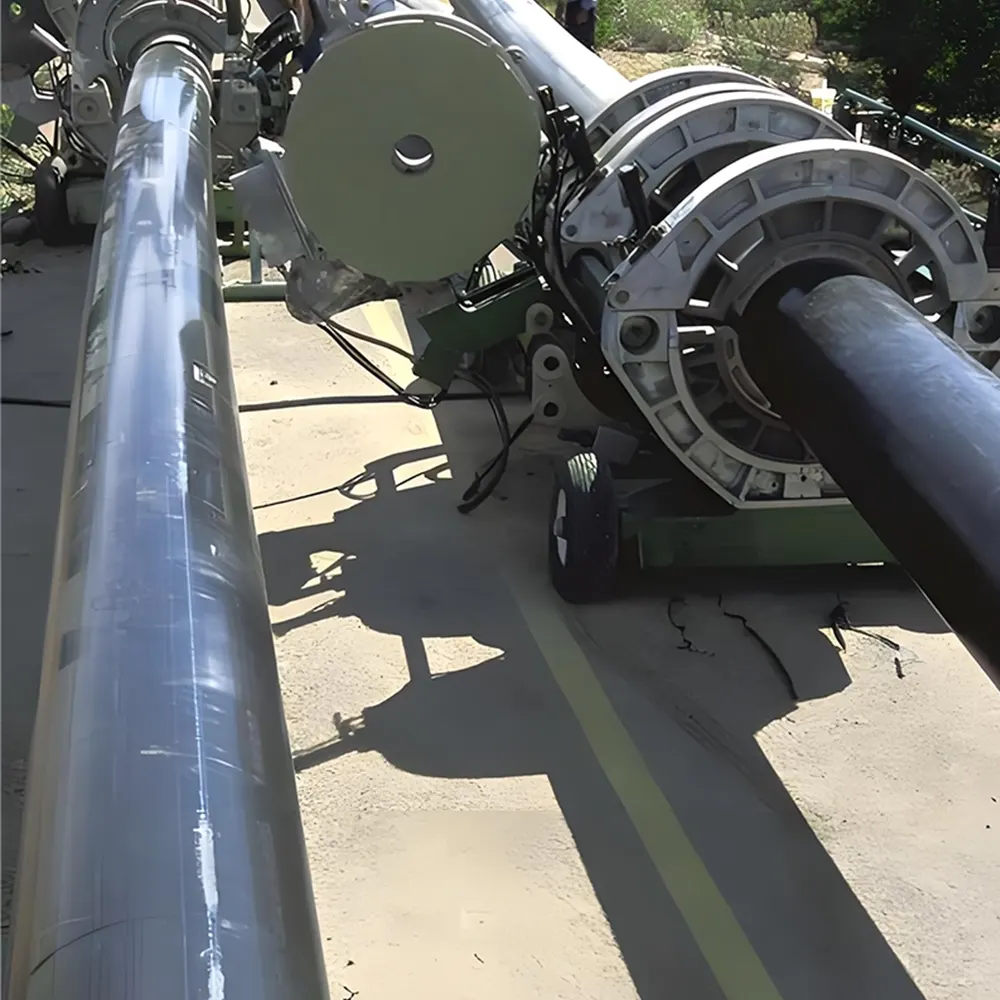
In modern pipeline construction, the quality of an electrofusion joint can determine whether a system performs safely for decades or fails under pressure far too soon. Electrofusion welding is widely used for HDPE and other thermoplastic pipe systems because it creates clean, consistent, and highly dependable connections when the process is controlled correctly. For contractors, engineers, and distributors, understanding the key welding parameters is not just a technical requirement—it is the foundation of durable infrastructure. When every step is managed with care, the finished joint can resist leakage, stress, and environmental challenges in demanding water, gas, mining, and industrial applications.
Electrofusion welding works by using a fitting with embedded heating coils. Once electrical current passes through the coils, the inside surface of the fitting and the outside surface of the pipe melt together to form a strong molecular bond. Unlike many mechanical joining methods, this process depends on precise control of several variables. If one parameter is wrong, the result may still look acceptable on the outside while hidden defects remain inside the joint. That is why professional teams place so much emphasis on preparation, traceability, and machine accuracy, especially when comparing different joining methods such as a butt fusion machine and electrofusion equipment for project-specific needs.
Key idea: a strong electrofusion joint is not created by the fitting alone. It is created by the combination of correct pipe preparation, proper alignment, accurate fusion parameters, and disciplined cooling time. When these factors are controlled together, the joint becomes stable, reliable, and suitable for long-term service.
1. Pipe and Fitting Preparation
The first and most important parameter is not electrical at all—it is preparation. The pipe surface must be clean, dry, and properly scraped before the fitting is installed. Oxidized layers, dirt, moisture, grease, and improper ovality can all interfere with fusion. Even a high-quality machine cannot compensate for poor surface condition. In practice, technicians should measure, mark, scrape, and clean with consistency. The prepared area must match the fitting insertion depth so that heat transfer occurs across the intended bonding zone only.
Good preparation also includes cutting the pipe square and checking that the pipe ends are not damaged. If the pipe is oval, deformed, or contaminated by storage conditions, the final joint may suffer from uneven pressure distribution. For this reason, many professional suppliers emphasize quality control and technical support, because successful fusion begins long before the power is turned on.
2. Pipe Alignment and Clamping Pressure
Correct alignment is essential because the fused area must stay in close contact throughout heating and cooling. If the pipe and fitting move during the cycle, the molten material may shift unevenly and create weak zones. Clamping systems should hold the pipe securely without damaging it. The alignment should remain stable from start to finish, especially for larger diameters where minor movement can create major stress in the joint.
Important: the clamping force must be enough to prevent movement, but not so high that it distorts the pipe. A balanced clamp setup helps the heating coil melt the surfaces evenly and ensures uniform material flow during fusion.
3. Fusion Voltage and Current Accuracy
Electrofusion fittings are designed to operate within a specific electrical range. The machine must supply the exact voltage and current recommended by the fitting manufacturer. Too little energy may leave the surfaces partially fused, while too much energy may overheat the material, causing burn marks, excessive melt flow, or internal damage. Accurate electrical control is especially important in field conditions where ambient temperature and power quality can vary.
Professional fusion machines often include automatic recognition systems or barcode scanning that help reduce user error. These systems record fitting data and set the correct parameters quickly. This is especially valuable in large infrastructure projects where repeatability matters. When electrical output is stable, operators can maintain consistent results across many joints and working conditions.
4. Heating Time and Fusion Cycle Control
Heating time determines how long the embedded coil energizes the fitting. This parameter is calculated by the fitting manufacturer and depends on pipe size, wall thickness, material type, and fitting design. A proper fusion cycle must allow sufficient melting without overheating the joint. In many cases, operators assume that longer heating means a stronger joint, but that is not true. Overheating can push molten polymer into areas where it should not go, reducing structural quality.
Modern equipment may display a countdown or automatic shutoff to help maintain the proper cycle. This reduces manual mistakes and helps teams work efficiently. In high-volume projects, stable cycle control can improve productivity while keeping welding quality consistent from the first joint to the last.
5. Ambient Temperature and Environmental Conditions
Environmental conditions have a major effect on fusion performance. Cold weather can slow heating and cooling behavior, while hot weather can accelerate surface softening. Wind, rain, dust, and direct sunlight may also interfere with the process. Because of this, technicians should always follow the fitting manufacturer’s guidance for temperature correction or protection measures.
When working outdoors, it is often necessary to use shelters, tents, or wind barriers. Pipe ends should remain dry and clean before insertion, and the joint should not be exposed to uncontrolled environmental stress during fusion. Reliable joint performance depends on discipline in the field, not just technical equipment.
6. Cooling Time and Joint Stability
Cooling time is one of the most neglected parameters, yet it is critical for final strength. During cooling, the molten material solidifies and locks the pipe and fitting together. If the joint is moved too early, internal stress or micro-gaps may form. This can weaken the bond even if the heating phase was correct. Operators should follow the required cooling time without exception, and the pipe should remain immobilized until the joint is fully stable.
Practical rule: never rush the cooling stage to save time. In field construction, many failures are caused not by poor fusion, but by premature handling after fusion. Patience at this stage protects the entire pipeline system.
7. Surface Scraping Depth and Cleanliness
The scraping depth must remove oxidation evenly without reducing pipe wall integrity. If the operator scrapes too little, the oxide layer remains and weakens the bond. If the scraping is uneven, the fitting may heat some areas more than others. Cleanliness after scraping is also critical. Hands, tools, and cloths should not re-contaminate the prepared surface. A clean joint area is one of the simplest ways to improve weld reliability.
Many experienced teams apply a strict no-touch rule after scraping. They also minimize the time between cleaning and fusion so the surface remains fresh. This discipline is especially useful in projects where hundreds of joints must be completed under time pressure.
8. Traceability and Parameter Recording
Traceability is a professional standard in many infrastructure projects. Recording operator name, fitting batch number, pipe diameter, voltage, time, and ambient conditions helps teams verify quality later. It also supports accountability if a problem appears during inspection. Well-documented fusion records make maintenance and auditing much easier, particularly in gas and water networks where safety expectations are high.
Many modern electrofusion systems support digital logging or printable reports. This makes quality management more efficient and helps project teams prove compliance with specifications. In large-scale construction, good records are often as valuable as the weld itself because they demonstrate that the process was controlled correctly.
9. Machine Quality and Operator Skill
Even with perfect parameters, poor machine quality can introduce instability. A dependable fusion machine should maintain accurate output, stable connectors, and clear user interfaces. Reliable equipment reduces the risk of human error and helps operators focus on the joint rather than troubleshooting. In industries where uptime matters, robust machine design makes a major difference.
Operator skill is equally important. Training should cover pipe preparation, fitting installation, cycle management, inspection methods, and troubleshooting. A skilled operator can recognize warning signs such as surface contamination, connector issues, or abnormal melt behavior. Manufacturers with strong technical support and training resources often help customers achieve better welding results in the field.
10. Inspection After Fusion
After cooling, the joint should be inspected visually and, when required, tested according to project standards. A successful joint usually shows uniform melt indicators, correct bead formation, and no visible movement or distortion. However, visual appearance alone is not always enough. In critical applications, pressure testing, traceability checks, and quality audits may be necessary to confirm performance.
Inspection closes the quality loop. It verifies whether the selected parameters, equipment, and operator practices were effective. When projects use rigorous inspection routines, they reduce long-term maintenance costs and increase confidence in the installed pipeline system.
Why Reliable Equipment and Support Matter
In real-world pipeline projects, the best welding result comes from combining correct parameters with reliable equipment and responsive support. That is why many contractors prefer suppliers with proven experience, strict quality control, and flexible customization. A professional manufacturer can provide machines suited to different pipe sizes, voltages, and project environments, while also offering technical guidance for installation and use.
For companies managing diverse projects, access to dependable machines and fast delivery can greatly reduce downtime. Whether the application involves water supply, gas distribution, mining, or industrial installation, the value of stable performance remains the same. Strong joints protect the system, reduce leak risk, and support long-term project success.
Highlight: high-quality welding is not only about the fusion process. It also depends on equipment consistency, project training, and after-sales support. These elements work together to deliver strong and reliable pipe joints in demanding field conditions.
Conclusion
Electrofusion welding can produce exceptionally strong pipe joints when every key parameter is controlled with precision. Pipe preparation, alignment, voltage, heating time, environmental protection, cooling, and traceability all influence final performance. None of these factors should be treated as secondary. Together, they determine whether the joint becomes a dependable part of the pipeline or a future point of failure. For contractors and project managers, mastering these parameters means better safety, lower maintenance, and greater confidence in every installation.
Frequently Asked Questions
Q1: What is the most important factor in electrofusion welding?
The most important factor is proper pipe preparation, including cleaning, scraping, and alignment. Without a clean and correctly prepared surface, even the best machine cannot create a dependable joint.
Q2: Can I shorten the cooling time to speed up installation?
No. Cooling time must be followed exactly as specified. Moving the joint too early can create stress, weaken the bond, and reduce the long-term reliability of the connection.
Q3: Why does ambient temperature matter so much?
Temperature affects how quickly the fitting heats and cools. Cold, hot, windy, or wet conditions can all change the fusion behavior, so field protection and manufacturer guidance are essential.
Q4: How do I know if a joint is properly fused?
A properly fused joint usually shows consistent melt indicators and no visible movement or distortion. In critical applications, inspection and testing should be performed according to project requirements.
Q5: Is machine quality important if the operator is experienced?
Yes. Operator skill matters, but stable and accurate equipment is still necessary. A reliable machine reduces error, improves repeatability, and supports consistent welding quality across the project.



