
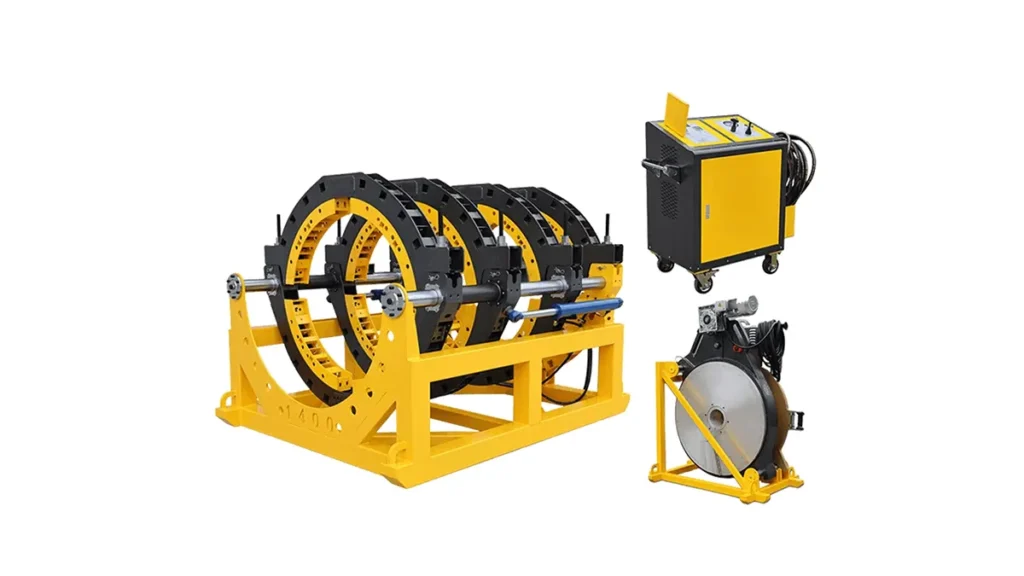
When a pipeline project depends on strong, leak-free joints, the welding method matters just as much as the pipe itself. For HDPE pipelines, one of the most trusted solutions is the butt fusion machine, especially the hydraulic type, because it delivers stable clamping pressure, accurate heating, and consistent fusion quality across a wide range of pipe sizes. Whether the job is a water supply network, a gas distribution line, a mining site, or an industrial plant, understanding how a hydraulic HDPE pipe welding machine works can help you choose the right equipment and avoid costly rework later.
The core idea behind HDPE butt fusion welding is simple: two pipe ends are heated to the correct temperature, pressed together under controlled force, and allowed to cool into a single continuous pipe. What makes the hydraulic version more advanced is the use of hydraulic pressure to control movement, alignment, and fusion force. This is especially valuable when the pipe diameter is large, the wall thickness is significant, or the project requires repeated welding with the same quality standard.
Key advantage: a hydraulic system reduces manual inconsistency and helps operators produce stronger, more uniform welds with less effort.
What a Hydraulic HDPE Pipe Welding Machine Actually Does
The machine is designed to join HDPE pipes by heating the pipe ends and fusing them under precisely controlled pressure. In practical terms, it handles four major tasks: clamping the pipes, facing the ends to create a flat surface, heating the ends with a hot plate, and joining them together during the cooling cycle. The hydraulic unit powers the movement of the clamps and applies force in a stable way, which is why the machine is often preferred on demanding construction sites.
Unlike basic manual systems, hydraulic models are better suited for larger pipe diameters and more intensive project schedules. When a project involves many repeated welds, even a small variation in pressure can affect final joint strength. A hydraulic butt fusion machine helps eliminate that risk by keeping the pressure steady throughout the process.
Main Working Components
1. Clamp frame: holds both pipe ends in exact alignment.
2. Hydraulic unit: controls movement and applies fusion pressure.
3. Facing tool: trims pipe ends so they are smooth and square.
4. Heating plate: heats the pipe faces to the required fusion temperature.
5. Control system: helps the operator monitor temperature, pressure, and timing.
Important: accurate pipe alignment is not optional. If the ends are misaligned before heating, the final weld can develop weak spots or internal stress.
Step-by-Step: How the Welding Process Works
Step 1: Positioning and clamping. The operator places the two HDPE pipe sections into the machine’s clamp system. The ends must be centered and aligned so the fusion surface is even. Hydraulic clamping holds the pipes securely, which is particularly useful for larger diameters where manual force would be difficult to maintain.
Step 2: Facing the pipe ends. Before heating begins, the facing tool removes a thin layer from each pipe end. This creates a clean, parallel surface and eliminates dirt, oxidation, and minor damage. The result is a better fusion interface and improved weld quality.
Step 3: Heating. The hot plate is inserted between the pipe ends, and both sides are pressed against it under controlled pressure. The heating plate brings the material to the right melt condition. For HDPE, this step must be carefully timed because overheating can weaken the pipe, while underheating can prevent full fusion.
Step 4: Changeover. Once the pipe ends reach the correct melt stage, the hot plate is removed quickly. The open time between removing the plate and joining the pipe ends must be short, because the surfaces begin to cool immediately.
Step 5: Fusion under hydraulic pressure. The pipes are pushed together with a controlled fusion force. This pressure creates a bead at the joint and ensures molten material flows together correctly. A stable hydraulic system is crucial here because uneven force can create a poor bond.
Step 6: Cooling and holding. The joint is held in place until it cools and gains structural strength. This stage should never be rushed. A good weld depends not only on heating and pressure, but also on giving the material enough time to stabilize.
Pro tip: successful fusion is not about force alone. It is about matching temperature, pressure, timing, and alignment in one consistent process.
Why Hydraulic Machines Are Often the Best Choice
Hydraulic HDPE welding machines are popular because they offer better control and improved repeatability. For contractors, that means less dependence on operator strength and fewer variations from one weld to the next. For distributors and project managers, it means a more professional result that can meet demanding installation standards.
These machines are especially suitable for projects that require medium to large pipe diameters, long-distance pipeline installation, and continuous field work. When paired with proper training and maintenance, a hydraulic system can significantly improve productivity and reduce the chance of failure in the field.
A well-designed hydraulic unit also improves workflow efficiency because the operator can focus more on process control and less on physical effort.
Hydraulic Machine Benefits at a Glance
✔ More stable fusion pressure
✔ Better alignment for large pipes
✔ Higher weld consistency
✔ Lower labor intensity
✔ Suitable for demanding field applications
Which One Is Best for Your Project?
The best machine depends on the project scale, pipe size range, labor availability, and required precision. If you are working on small-diameter pipes, short-term jobs, or a budget-sensitive installation, a manual machine may still be practical. However, if the project needs consistent results, larger pipe sizes, or faster welding cycles, a hydraulic model usually offers better long-term value.
For infrastructure contractors, municipal water projects, and industrial pipelines, choosing a hydraulic butt fusion machine is often the smarter decision because it reduces operator dependence and supports more reliable output. For companies that want automation, a CNC automatic model may be ideal, but it usually comes with a higher investment and more advanced control requirements.
In short, manual machines are best when simplicity and low cost matter most. Hydraulic machines are best when stability and performance matter most. CNC automatic machines are best when production efficiency and high-level process control are the top priorities.
Quick Selection Guide
Choose manual if: the pipe size is small, the budget is limited, and the welding volume is low.
Choose hydraulic if: you need strong consistency, larger pipe compatibility, and easier operation.
Choose CNC automatic if: you want advanced automation, highly repeatable results, and faster workflow management.
Where JQ-Fusion Fits Into the Decision
For buyers looking for a dependable manufacturer, JQ-Fusion offers professional butt fusion solutions with more than 20 years of experience in HDPE pipe welding machines. Their product range includes manual, hydraulic, and CNC automatic welding machines, making it easier for contractors and distributors to match equipment to real project needs. The company focuses on stable performance, strict testing, and customizable machine configurations for different markets.
JQ-Fusion supports global pipeline work in water supply systems, gas distribution networks, mining projects, and industrial installations. Their factory capability, quality control, and OEM/ODM flexibility make them a practical choice for businesses that need both reliability and brand adaptability. You can learn more through their official website.
For procurement teams, it is also helpful that the machines are built with global project demands in mind. That means voltage options, branding, machine color, and technical configuration can be adjusted to suit local market needs. If your company is expanding into new regions, this kind of flexibility can be a strong competitive advantage.
Why this matters: the right supplier does more than ship equipment. It helps ensure your welding process is supported by the correct machine, training, and after-sales guidance.
What to Check Before You Buy
Before purchasing any welding machine, review the pipe diameter range, pressure control accuracy, heating plate performance, and clamp structure. It is also wise to confirm whether the manufacturer offers spare parts, technical training, and warranty support. These details can have a bigger effect on project success than the purchase price alone.
In addition, check whether the machine is suitable for the specific HDPE pipe standards used in your market. Compatibility matters, especially on regulated projects where welding quality must be documented. If you are comparing suppliers, ask for testing details and certification support. JQ-Fusion states that its products are certified by SGS and manufactured in compliance with international standards, which can simplify procurement decisions for global buyers.
For more product details and factory capability, you can also visit https://jq-fusionwelding.com/ and review the available welding solutions.
Maintenance and Operator Care
Even the best machine will perform poorly without proper maintenance. The hot plate should be kept clean, the hydraulic system should be checked for pressure stability, and the clamp alignment should be inspected regularly. Operators should also be trained to follow the correct heating time and cooling time for each pipe size.
Good maintenance extends the machine’s service life and protects weld quality over time. In a busy project environment, this can prevent delays and reduce the risk of expensive repair work. A reliable machine plus a trained operator is the most effective combination for consistent pipeline construction.
If your project runs across multiple sites or requires frequent relocation, portability and durability should also be part of the buying decision.
Final Thoughts
A hydraulic HDPE pipe welding machine works by combining precise clamping, controlled heating, and stable fusion pressure to create strong, lasting pipe joints. Compared with manual systems, it offers greater consistency and better performance for medium to large projects. Compared with fully automatic options, it remains a more practical and cost-effective choice for many contractors who want dependable results without unnecessary complexity.
If your goal is to improve welding quality, reduce operator variation, and handle a broader range of pipe sizes, the hydraulic model is often the best fit. When sourced from an experienced manufacturer like JQ-Fusion, it can become a reliable asset for water, gas, mining, and industrial pipeline work.
FAQs
Q1: What is the main purpose of a hydraulic HDPE pipe welding machine?
The main purpose is to join HDPE pipes through controlled heat and pressure, producing a strong fused joint suitable for long-term pipeline use.
Q2: Is a hydraulic butt fusion machine better than a manual one?
Yes, for larger pipes and projects that require consistent weld quality, hydraulic machines usually perform better because they provide stable pressure and easier operation.
Q3: What industries use HDPE butt fusion machines most often?
They are widely used in water supply systems, gas distribution, mining projects, and industrial pipeline installations.
Q4: How do I choose the right welding machine for my project?
Consider pipe diameter, project size, budget, required precision, and whether you need manual, hydraulic, or CNC automatic control.
Q5: Why is JQ-Fusion a good option for buyers?
JQ-Fusion has over 20 years of experience, offers multiple machine types, supports customization, and provides technical support for global customers.



