
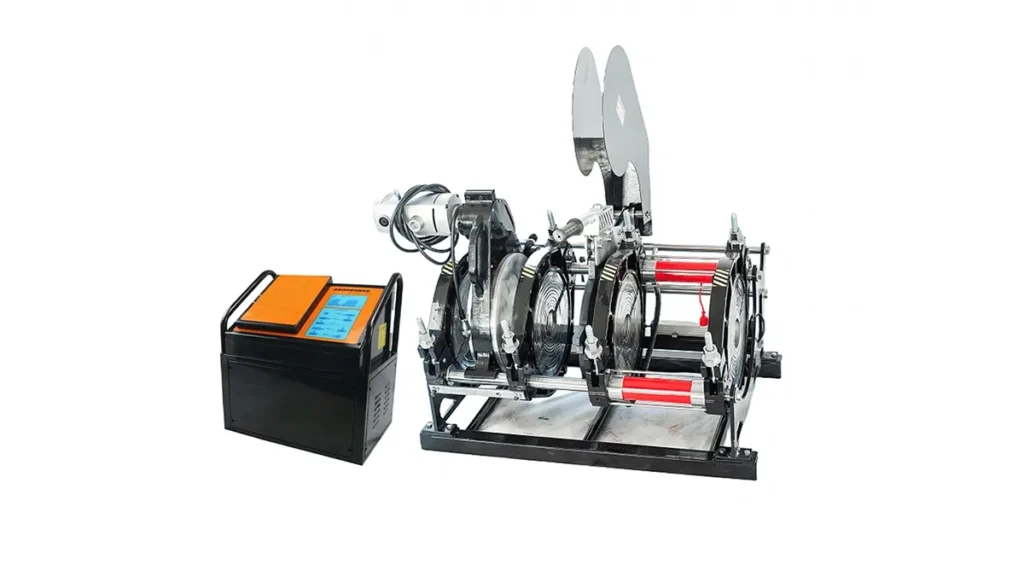
HDPE water supply pipe butt fusion welding is a proven method for creating leak-free, long-lasting joints in polyethylene pipeline systems. This guide covers machine types, core features, step-by-step workflow, inspection criteria, and maintenance best practices to help contractors, utilities, and pipeline installers select and operate the right butt fusion equipment.
Types of HDPE Butt Fusion Welding Machines
Understanding machine categories helps match equipment to project scale and technical requirements. The three main types are manual, hydraulic, and automatic/CNC butt fusion machines.
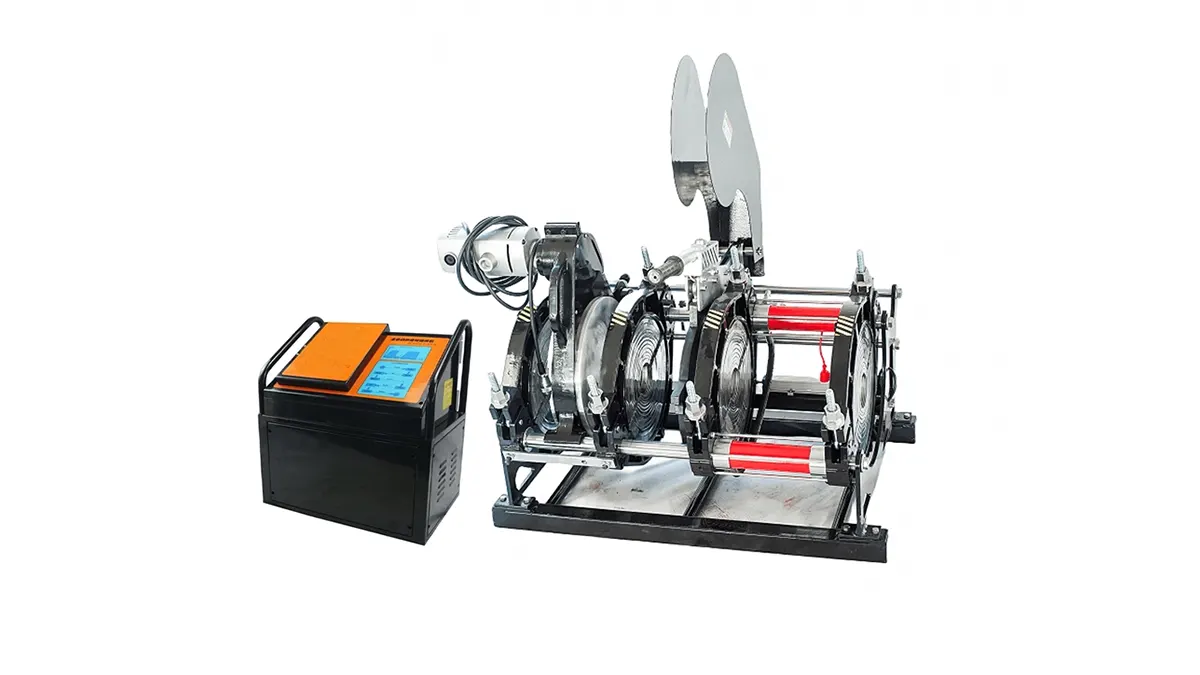
Quick comparison
| Machine Type | Best For | Pros | Cons |
|---|---|---|---|
| Manual | Small jobs, tight budgets | Low cost, portable | Operator-dependent quality |
| Hydraulic | Medium to large pipelines | Stable force control, reliable clamping | Heavier, needs service |
| Automatic / CNC | High-volume, critical infrastructure | Repeatable, data-logged welds | Higher upfront cost |
Key Features to Look For
- Clamping system: stable, adjustable grips for consistent alignment.
- Heating plate quality: uniform temperature distribution and quick heat-up.
- Force control: precise axial pressure—hydraulic systems or electronic control on automatic units.
- Traceability: data logging and programmable weld cycles for critical projects.
- Portability & setup: foldable frames or wheeled cases for field deployment.
Typical specifications (example)
| Parameter | Common Range |
|---|---|
| Pipe diameter | 20 mm – 2250 mm |
| Heating plate temp. | 200°C – 260°C |
| Axial force | Manual to 50+ kN |
| Control modes | Time/temp/force & auto cycles |
Butt Fusion Step-by-Step Workflow
Consistent results depend on correct preparation and process control. Below is a concise workflow adapted for field conditions.
- Inspect and clean pipe ends; remove damaged sections and ensure square faces.
- Align and clamp pipe ends securely in the machine frame.
- Trim facing surfaces with a proper facing tool until smooth and perpendicular.
- Bring the heating plate between faces and apply uniform heat until melt beads appear according to pipe SDR and diameter.
- Remove heater and quickly apply controlled axial force to create the fusion bead; follow cooling time per standard.
- After cooling, perform visual and destructive/non-destructive tests as required.

Weld inspection checklist
- Bead uniformity and flash: consistent around the circumference.
- No burns, gaps, or cold joints visible.
- Correct cooling time observed before handling.
- Documentation: operator, machine model, parameters, and environmental conditions logged.
Common Defects & Troubleshooting
| Defect | Cause | Fix |
|---|---|---|
| Cold joint | Insufficient heat or premature pressure | Increase temperature/time; ensure full melt bead before fusion |
| Overheated / burn | Excessive temperature or contact time | Lower temperature, verify heater calibration |
| Misalignment | Loose clamps or poor setup | Re-clamp with correct fixtures, re-fuse if required |
Maintenance, Safety & Training
Regular preventive maintenance ensures consistent performance: check hydraulic oil, clean heating plates, calibrate sensors, and inspect clamps. Safety measures include proper PPE, secure lifting procedures for large diameters, and ensuring heaters are handled with insulated tools. Investing in operator training reduces weld failures and increases productivity.
Choosing the right machine for water supply pipelines
- For municipal water networks with frequent joints and strict traceability, consider automatic machines with data logging.
- For remote or small-scale repairs, manual or compact hydraulic units provide portability and cost-effectiveness.
- Factor in service network and spare parts availability for fast turnaround during construction seasons.
For high-quality HDPE butt fusion welding equipment and tailored solutions, visit JQ-Fusion to review models and technical support for water supply, gas, mining, and industrial pipeline projects: https://jq-fusionwelding.com/



