
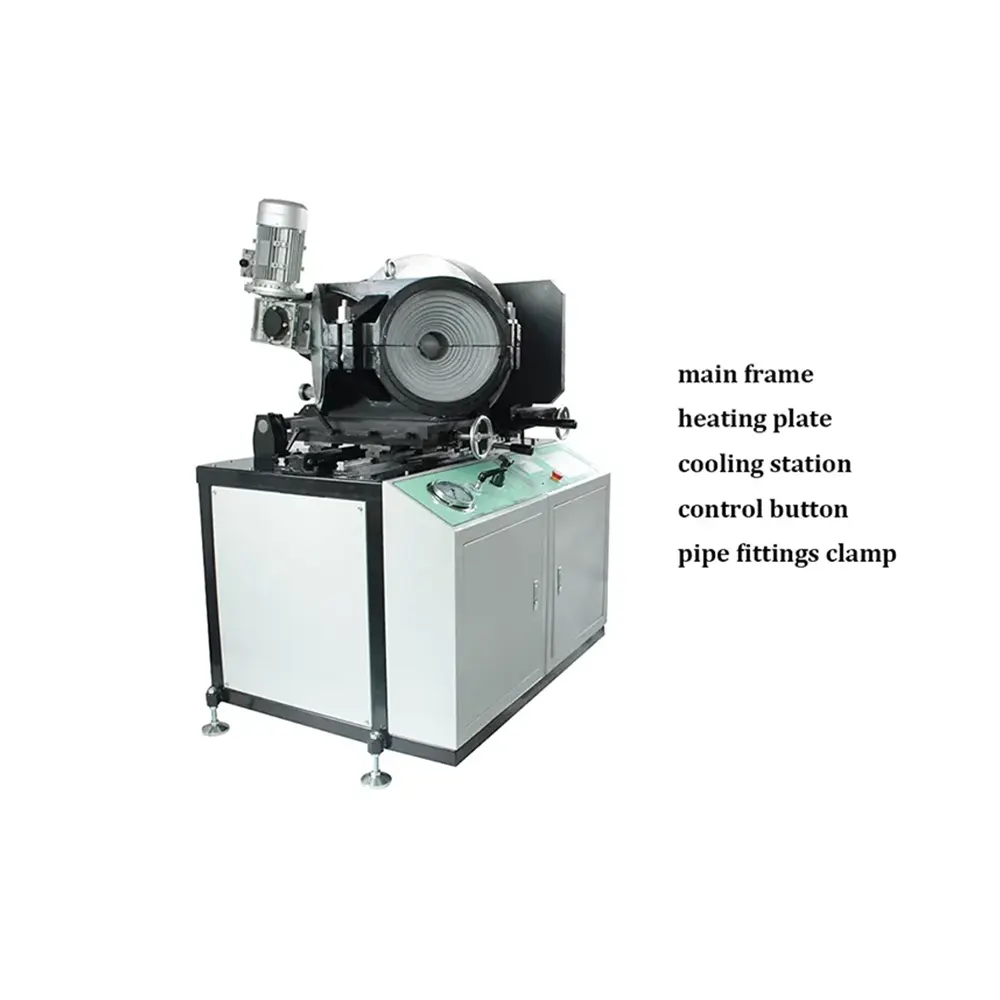
In the world of pipeline construction, particularly with materials like HDPE, the strength and longevity of the entire system hinge on the quality of each weld. While factors like temperature, pressure, and operator skill are frequently discussed, one critical element often underestimated is the precise alignment of the pipe welding clamp. Proper clamp alignment is not merely a preparatory step; it is the foundational guarantee for achieving strong, accurate, and leak-free welds.
The Foundation of a Perfect Weld: Alignment
Imagine trying to join two perfectly round pipes that are even slightly offset. The resulting weld will have stress points, material mismatch, and inherent weakness. The primary function of a welding clamp is to hold the pipe ends in perfect coaxial alignment—meaning their centerlines are exactly collinear—and to apply the necessary force for the fusion process. Any deviation at this stage is magnified in the finished joint.
Key Principle: A weld is only as good as the alignment of the materials before heat is ever applied. The clamp sets the stage for everything that follows.
Consequences of Poor Clamp Alignment
Ignoring or rushing the alignment process leads to a cascade of problems that compromise the pipeline’s integrity:
1. Weak and Brittle Joints: Misalignment creates uneven wall thickness in the weld bead. Thinner sections become stress concentrators and failure points under pressure or stress, leading to cracks and breaks.
2. Internal Bead Rollover Issues: During the fusion and push-up phase, misaligned pipes cause the molten material to form an irregular internal bead. This can create flow restrictions (increasing turbulence and pressure drop) and trap potential contaminants.
3. Visual Defects and Failed Inspections: Misalignment often results in a visibly crooked weld or an inconsistent bead roll. Such defects are immediate grounds for rejection in quality inspections, leading to costly cut-outs and rework.
4. Reduced Service Life and Leak Potential: A joint with alignment-induced stress is far more susceptible to fatigue failure, slow crack growth, and eventual leaks, especially in dynamic applications or under cyclic pressure loads.
⚠️ Critical Insight:
Many weld failures attributed to “operator error” or “material defect” can be traced back to an initial, uncorrected misalignment in the clamping stage. Investing time in perfect alignment is the most cost-effective insurance against future failures.
Achieving Precision: The Role of Equipment and Technique
Consistent, perfect alignment requires both the right tools and disciplined procedures. This is where the quality of the butt fusion machine itself becomes paramount. A high-quality machine is engineered for stability and precision.
Essential Features for Alignment in a Butt Fusion Machine:
► Rigid, Machined Clamp Assemblies: The clamp faces must be parallel and remain undistorted under high hydraulic pressure. Precision machining ensures this.
► Accurate Leveling and Alignment Systems: Built-in spirit levels, fine-adjustment screws, and reference markers allow operators to meticulously align both the machine and the pipe sections.
► Secure and Even Gripping: The clamp jaws must grip the pipe circumference uniformly without causing deformation or slippage during the critical fusion force application.
For professionals seeking reliability, partnering with an experienced manufacturer like JQ-Fusion, a specialist with over 20 years in designing and building butt fusion machine solutions, ensures the equipment itself supports, rather than hinders, the alignment process. Their focus on strict quality control includes clamp alignment inspection, guaranteeing that machines perform accurately in the field.
The Operator’s Checklist for Alignment:
1. Machine Setup: Ensure the fusion machine is on a stable, level surface. Use the machine’s built-in levels to confirm it is not tilted.
2. Pipe Preparation: Cut the pipe ends square and clean them. Any irregularity in the cut will defeat even the best clamp alignment.
3. Clamp and Align: Securely clamp the first pipe. Insert the second pipe and use alignment tools (straight edges, alignment pins, visual sighting) to adjust the second clamp until the pipe ends are perfectly coaxial and the gap between them is even all around.
4. Final Verification: Before heating, do a final visual and measurement check. The eye can often detect even small misalignments by sighting across the pipe tops and sides.
Beyond the Basics: Alignment in Specialized Applications
The importance of alignment is further amplified in challenging scenarios. For pipelines with diameter transitions, or when welding pre-fabricated fittings, the margin for error is virtually zero. Specialized equipment, such as multi-angle fitting welding machines, is designed to handle these complex alignments. The engineering behind such equipment, often available through customized solutions from manufacturers, prioritizes precise fixture and clamping mechanisms to manage unique geometries.
Furthermore, in large-diameter pipe projects, the forces involved are tremendous. A butt fusion machine for such applications must have an exceptionally robust frame and clamping system to prevent any flex or shift during the high-pressure fusion phase, which would instantly ruin alignment. This underscores the need for equipment from manufacturers with proven advanced manufacturing technology and a track record in global projects.
Frequently Asked Questions (FAQs)
1. Can minor clamp misalignment be corrected during the heating or fusion phase?
✗ No. Once the heating process begins, the material begins to melt. Attempting to correct alignment at this point will create wrinkles, uneven material distribution, and a fundamentally flawed joint. Alignment must be perfect and locked in before heating starts.
2. How often should I check the alignment accuracy of my butt fusion machine clamps?
Alignment should be verified at the start of each work shift and whenever the machine is set up on a new site. Additionally, follow the manufacturer’s recommended preventive maintenance schedule, which should include checking clamp face parallelism and alignment system calibration.
3. Does pipe ovality (out-of-roundness) affect clamp alignment?
✓ Yes, significantly. An oval pipe cannot be gripped uniformly in a round clamp, forcing it into a round shape and creating hidden stresses. It can also make visual alignment deceptive. Always check and, if possible, correct pipe ovality before attempting to clamp and weld.
4. Are automatic butt fusion machines better at ensuring alignment than manual ones?
Modern automatic butt fusion machines often incorporate digital alignment aids and controlled, programmable processes that reduce human error. However, the fundamental requirement for a rigid, well-maintained clamp applies to all machines. The operator’s role in initial setup and verification remains critical regardless of automation level.
5. What is the single most important step for a strong weld?
While every step in the fusion procedure is important, achieving and verifying perfect pipe alignment in the clamps before heating is the non-negotiable foundation. It is the step that ensures all subsequent parameters—heat, pressure, time—are applied to a geometrically correct joint.



