
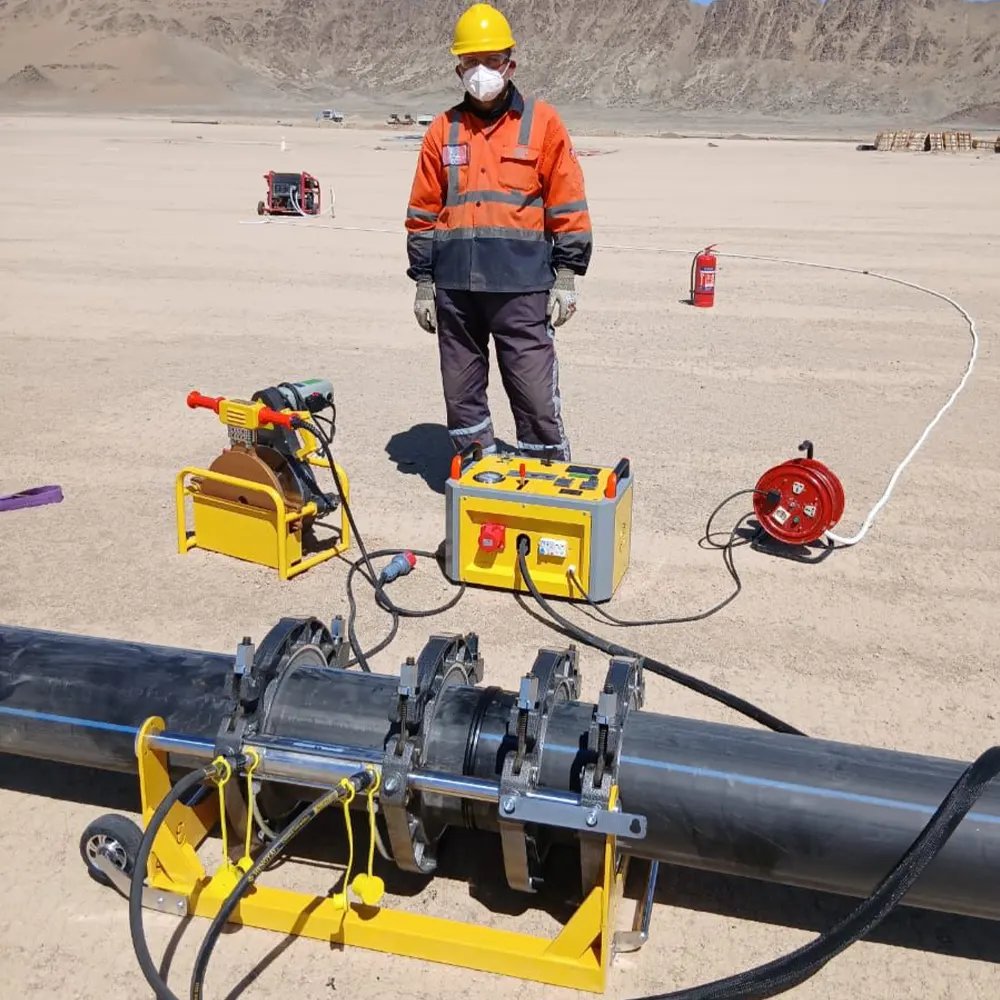
HDPE welding plays a critical role in modern pipeline construction, especially in water supply, gas distribution, mining, and industrial fluid transport. When the joint quality determines the safety and lifespan of the entire pipeline system, having a clear and practical standard operating procedure is not optional—it is essential. A well-structured SOP helps welders, supervisors, and project managers maintain consistent output, reduce defects, and ensure every joint meets project requirements.
The HDPE welding process is widely used because it creates strong, leak-resistant, and durable pipe connections. However, the quality of each weld depends on correct preparation, stable machine performance, clean operating conditions, and strict process control. For this reason, companies that work with fusion welding equipment often rely on proven procedures and trusted machines such as the butt fusion machine to improve reliability in field applications.
What Is HDPE Welding SOP?
An HDPE welding standard operating procedure is a step-by-step method that defines how to prepare, align, heat, join, cool, and inspect HDPE pipes and fittings. It gives operators a repeatable workflow so that each weld is completed under the same controlled conditions. This is especially important for large-scale pipeline projects where performance consistency matters as much as speed.
A proper SOP is not only a technical checklist. It also serves as a quality assurance tool, a training reference for new welders, and a safety guide for the team. In many projects, the SOP is adapted to the pipe diameter, wall thickness, environmental temperature, machine type, and local engineering requirements.
Key point: HDPE welding quality depends on temperature control, pipe alignment, clean fusion surfaces, and correct cooling time. Missing even one step can weaken the final joint.
Why a Standard Operating Procedure Matters
HDPE pipelines are often installed in environments where failure is costly and difficult to repair. A single poor joint may lead to leakage, pressure loss, service interruption, and expensive downtime. An SOP helps reduce these risks by making sure every operator follows the same approved process.
It also improves project efficiency. With a clear procedure, teams can work faster without sacrificing quality. Standardization reduces uncertainty, supports training, and makes it easier for supervisors to inspect work on site. In international projects, a documented SOP also helps contractors align with client expectations and engineering standards.
Benefits of a clear SOP: fewer welding defects, better consistency, safer operation, easier training, and higher confidence in long-term pipeline performance.
Main Types of HDPE Welding Methods
Before creating the SOP, it is important to understand the welding method being used. HDPE piping systems commonly use butt fusion, electrofusion, and socket fusion techniques. Among them, butt fusion is one of the most widely used for large-diameter pressure pipelines because it creates a continuous joint with excellent mechanical strength.
Electrofusion is often chosen for limited-space installations, repairs, or branch connections. Socket fusion is more common in smaller pipe systems. Each method has its own operating sequence, but the SOP concept remains the same: prepare properly, control parameters accurately, and inspect the finished joint carefully.
Preparation Before Welding
Successful welding begins before the heating plate is turned on. The first step is to confirm that the machine is suitable for the pipe size and project scope. Hydraulic machines, manual machines, and CNC automatic systems each have different operating advantages, but all of them require proper setup and calibration before use.
Operators should inspect the machine frame, clamps, trimmer, heater plate, and hydraulic system. Temperature accuracy must be verified, and all surfaces that contact the pipe should be clean. The pipes themselves must also be checked for damage, deformation, contamination, or out-of-round conditions. If the material is dirty or improperly cut, the fusion process may fail.
Site conditions are equally important. Wind, rain, dust, and extreme temperatures can affect heating and cooling performance. When necessary, protective shelters or controlled work areas should be used to stabilize the environment. A clean and organized workspace is a basic requirement for high-quality HDPE welding.
Standard HDPE Butt Fusion Operating Procedure
Although the exact values may vary by machine model and pipe specification, the typical butt fusion procedure follows a clear sequence. First, the pipe ends are securely clamped and aligned. Then the ends are faced with a trimmer to create smooth, even surfaces. This ensures that the two pipe ends can contact each other uniformly during fusion.
Next, the heater plate is cleaned and brought to the required temperature. The pipe ends are pressed against the heated plate for the prescribed heating time until a uniform melt bead forms. After heating, the heater plate is removed quickly and cleanly, and the molten pipe ends are joined under controlled pressure. The weld is then held steady during the cooling stage to preserve joint integrity.
During the entire process, pressure and timing must be closely monitored. If the heating time is too short, the joint may not fuse fully. If the heating time is too long, the material may degrade or over-melt. The same principle applies to cooling: moving the joint too early can introduce internal stress and reduce weld strength.
Important: The final weld should cool naturally under pressure for the recommended time before the pipe is handled or tested.
Core Control Points in the SOP
To keep welding quality stable, the SOP should highlight several control points. Temperature control is one of the most critical factors. The heating plate must maintain the correct operating range, and the thermometer or controller should be checked regularly. Pressure control is also essential because improper fusion pressure can create weak or distorted joints.
Pipe alignment must be precise. Even small misalignment can reduce the effective bonding area and create uneven stress in service. In addition, the pipe ends should always be free of oil, moisture, soil, and dust. Cleanliness has a direct impact on fusion quality, especially in outdoor construction sites.
Another important factor is operator skill. A machine can only perform well if the user understands the correct procedure. Training, supervision, and practical experience all contribute to better weld quality. For this reason, reliable manufacturers often provide technical support, installation guidance, and operational training to help customers improve site performance.
Safety Requirements During HDPE Welding
Safety is a central part of any SOP. Operators should wear protective gloves, safety shoes, and clothing suitable for hot work environments. When handling the heater plate or freshly welded pipe ends, contact with hot surfaces must be avoided. The workspace should also be kept clear of unnecessary tools and materials to reduce accidents.
Electrical safety is another concern, especially on job sites using powered hydraulic or automatic fusion machines. Cables, connectors, and power supplies should be inspected before operation. If abnormal noise, pressure fluctuations, or temperature instability is observed, the equipment should be stopped and checked immediately.
Good safety procedures protect both the crew and the project schedule. A safe job site is usually a more efficient job site because fewer interruptions occur during production.
How Machine Quality Affects the SOP
A well-written SOP is important, but the machine itself must also support accurate execution. Stable frame construction, reliable hydraulic control, and precise clamp alignment all help improve welding consistency. High-quality equipment is especially valuable in large projects where hundreds or thousands of joints must be completed under tight deadlines.
Manufacturers with strong engineering capability and quality control processes are often better able to provide dependable machines for global pipeline work. For example, suppliers that offer manual, hydraulic, and CNC automatic solutions can support different project scales and budgets while maintaining stable performance. This flexibility is useful for contractors, distributors, and engineering companies working across various regions.
In practice, a durable machine reduces the likelihood of process variation. That means the SOP becomes easier to implement, the weld quality becomes more predictable, and maintenance costs are lowered over time.
Operational advantage: reliable equipment helps turn the SOP from theory into repeatable field results.
Inspection After Welding
Once the joint has cooled properly, the weld should be inspected visually and, when required, by additional testing methods. A good weld typically shows uniform bead formation, proper alignment, and no signs of burning, voids, or contamination. The inspector should confirm that the joint matches the project acceptance criteria.
For critical pipelines, the SOP may also include documentation requirements such as welder ID, machine number, pipe size, ambient temperature, heating time, fusion pressure, and inspection result. These records are useful for quality traceability and future maintenance planning.
When a weld fails inspection, the joint must be evaluated according to project rules. In many cases, defective sections are cut out and re-welded using approved procedures. This is one more reason why accurate initial operation is so valuable: it saves material, labor, and time.
How to Improve SOP Implementation on Site
A procedure is only effective if the team follows it consistently. To improve implementation, companies should provide regular training, clear work instructions, and on-site supervision. Standard forms and checklists can help operators confirm each step before proceeding to the next one.
It is also useful to keep equipment maintenance records and calibration logs. When a welding machine is serviced properly, it performs more consistently and is less likely to create process errors. In large projects, combining technical discipline with strong logistics support can greatly improve delivery schedules and overall productivity.
For contractors and distributors, working with an experienced manufacturer can also make SOP implementation easier. Suppliers with customization capabilities can adapt machine size, voltage, branding, and project-specific functions to match customer needs. This improves usability and helps teams operate with greater confidence.
Practical Summary of HDPE Welding SOP
In simple terms, the best HDPE welding SOP is one that is clear, repeatable, and based on real site conditions. It should guide the operator from preparation to final inspection while emphasizing temperature, pressure, cleanliness, alignment, and cooling control. It should also include safety measures, maintenance requirements, and documentation rules.
When combined with dependable equipment and trained personnel, a good SOP can dramatically improve pipeline quality. This is why many project teams prefer manufacturers with strong technical support, stable stock supply, and proven experience in global markets. The goal is not just to complete a weld, but to complete it correctly every time.
FAQ
Q1: What is the most important factor in HDPE welding?
Temperature control, proper alignment, and clean pipe surfaces are among the most important factors because they directly affect joint strength.
Q2: Why is cooling time necessary after fusion?
Cooling time allows the joint to stabilize under pressure and helps prevent deformation, stress, or premature failure.
Q3: Can different HDPE welding machines follow the same SOP?
The overall workflow is similar, but exact parameters may vary depending on machine type, pipe size, and project specifications.
Q4: How can weld quality be improved on site?
Use calibrated machines, trained operators, clean materials, stable site conditions, and strict inspection after each weld.
Q5: Why is butt fusion popular for HDPE pipelines?
It creates a strong, continuous, and leak-resistant joint that performs well in demanding pressure pipeline applications.



