
When people search for the HDPE pipe welding temperature chart, they are usually looking for one thing: how to achieve a clean, strong, and reliable fusion joint without damaging the pipe material. In butt fusion welding, temperature control is not just a technical detail. It is the foundation of joint quality, leak resistance, and long-term pipeline safety. Whether the project involves water supply, gas distribution, mining, or industrial piping, correct temperature management directly affects welding consistency and service life.
HDPE pipes are widely used because they are flexible, corrosion-resistant, and durable. However, these advantages can only be fully realized when the fusion process is performed correctly. If the heating plate is too cold, the joint may not fuse completely. If it is too hot, the pipe surface can degrade, creating brittle or weak connections. That is why welding teams rely on a clear temperature chart, proper machine settings, and experienced operator judgment to keep each weld within the proper range.
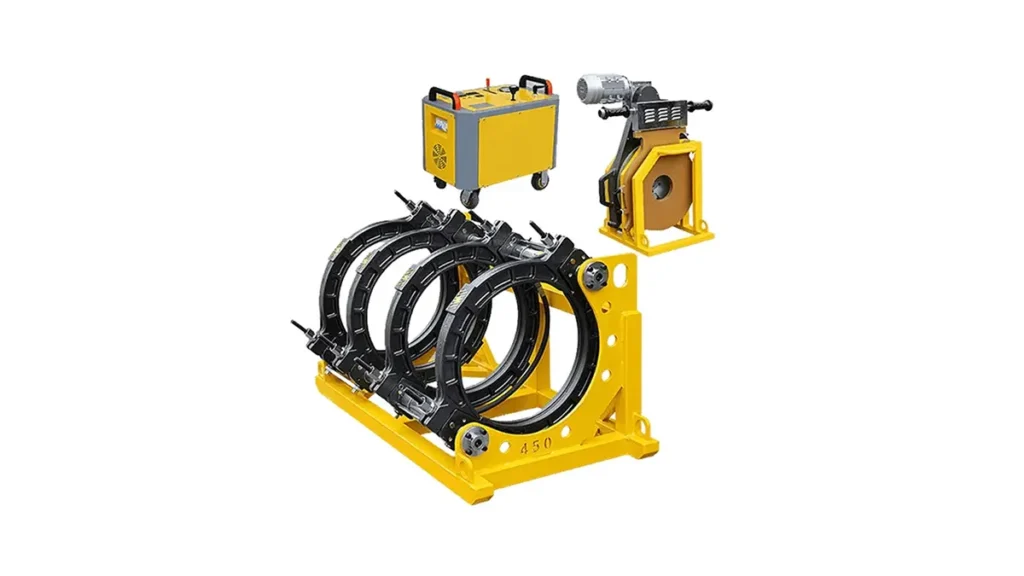
For contractors and distributors working with a professional butt fusion machine, understanding the relationship between temperature, pressure, heating time, and cooling time is essential. The right welding parameters help ensure stable results across different pipe sizes and project conditions.
What Is the Proper HDPE Pipe Welding Temperature?
The standard butt fusion heating plate temperature for HDPE pipes is generally 210°C to 230°C. In many real-world projects, 220°C is used as the common target setting. This range provides enough heat to soften the pipe ends evenly while avoiding thermal damage.
Important: the correct temperature is not only about the number shown on the heater. The actual surface temperature of the heating plate, ambient conditions, pipe wall thickness, and machine calibration all influence final welding quality.
The heating plate should be fully stabilized before welding begins. A machine that has not reached a steady operating temperature may cause uneven melting, which can result in weak bead formation or incomplete fusion. For this reason, operators should always preheat the plate, verify the temperature with a reliable thermometer if needed, and follow the machine manufacturer’s recommended welding procedure.
HDPE Pipe Welding Temperature Chart Reference
The following general chart can help operators understand how temperature relates to different welding stages. It should be used as a practical reference, not as a substitute for the machine manual or project specification.
Heating Plate Temperature: 210°C – 230°C
Recommended Target: 220°C
Pipe End Softening: Even and uniform across the full contact surface
Avoid: Temperatures below the recommended range or overheating above the safe limit
As pipe diameter increases, heating time and pressure requirements change, but the core temperature range remains similar in most standard butt fusion applications. The key is maintaining stable heat transfer. That is why high-performance machines with accurate temperature control are so valuable for large-scale projects.
Why Temperature Matters in Butt Fusion Welding
In butt fusion welding, HDPE pipe ends are heated until they soften, then pressed together under controlled pressure. If the temperature is correct, the softened surfaces merge into a single continuous joint after cooling. This process creates a connection that can be as strong as, or even stronger than, the original pipe wall.
Correct temperature delivers four major benefits:
✔ Strong fusion strength
✔ Reduced risk of leakage
✔ Cleaner bead formation
✔ Better long-term pipeline performance
If the temperature is too low, the pipe surfaces may only partially soften, and the molecular bond will be weak. If the temperature is too high, the material can burn, oxidize, or become excessively fluid. In both cases, the joint may fail under pressure or during long-term service. For this reason, temperature accuracy is one of the most important quality factors in HDPE welding.
How to Judge Whether the Temperature Is Right
Although the target temperature is usually set around 220°C, field conditions can still affect performance. Operators should observe the pipe end carefully during the heating cycle. A correctly heated surface will show a smooth, even softening pattern, and the melt bead will form uniformly when pressure is applied.
Useful signs of proper temperature include:
1. The pipe end becomes evenly softened without discoloration.
2. The molten surface looks glossy but not burned.
3. The fusion bead appears balanced on both sides after joining.
4. There is no excessive smoke, bubbling, or surface cracking.
These signs help experienced welders confirm that the machine is operating correctly. However, visual inspection alone is not enough for critical pipeline work. A properly calibrated welding machine and consistent process control are still necessary for dependable results.
Common Mistakes That Affect HDPE Welding Temperature
Many welding problems come from process mistakes rather than material defects. Some teams rely too heavily on experience and skip temperature checks, while others use the correct machine but fail to maintain stable working conditions. The following issues are especially common:
Mistake 1: Starting welding before the heating plate reaches stable temperature
Mistake 2: Ignoring temperature loss in windy or cold environments
Mistake 3: Using a damaged or dirty heating plate
Mistake 4: Applying pressure too early or too late
Mistake 5: Not following pipe size-specific heating and cooling times
These mistakes can be avoided through regular machine inspection, operator training, and project-specific welding procedures. For larger projects, the use of automatic or hydraulic systems often improves consistency because they reduce the chance of manual error.
Recommended Welding Practices for Better Fusion
To get the best results from HDPE butt fusion welding, the operator should focus on the complete process, not just the heater setting. Surface preparation, alignment, pressure control, and cooling all affect the final joint quality.
Best practices include:
• Clean and square the pipe ends before heating
• Confirm the machine is properly aligned
• Keep the heater surface clean and undamaged
• Use the correct fusion pressure for the pipe specification
• Allow full cooling time before handling or testing
These steps are especially important on site where weather, dust, or schedule pressure can interfere with good welding habits. By maintaining proper discipline, teams can greatly improve joint integrity and reduce rework.
How JQ-Fusion Supports Stable HDPE Pipe Welding
For projects that demand reliable welding performance, equipment quality matters as much as operator skill. JQ-Fusion specializes in HDPE pipe welding machines and provides butt fusion solutions designed for different project requirements. Their product range includes manual, hydraulic, and CNC automatic systems for a wide variety of pipe diameters.
Why this matters: a stable machine helps maintain the target temperature more accurately, which improves fusion consistency and reduces the risk of defective joints. This is especially important in water supply systems, gas distribution networks, mining applications, and industrial pipeline installations.
With more than 20 years of industry experience, JQ-Fusion focuses on durable equipment, strict quality control, and global technical support. Their manufacturing process includes testing for temperature accuracy, hydraulic pressure stability, and clamp alignment, all of which contribute to more dependable welding results. If you want to learn more about the company and its technical capabilities, you can visit the official site through the linked butt fusion machine solution page.
Temperature Control in Real Project Conditions
Real construction sites are rarely ideal. Low temperatures, strong wind, uneven power supply, and pipe material variation can all influence welding performance. Because of this, the nominal welding temperature chart should always be combined with practical site control.
For example, in cold weather, the heating plate may lose surface heat faster than expected, so operators may need to monitor temperature more closely. In high-temperature outdoor environments, the heater may stabilize differently, which can affect heating time. In both cases, accurate measurement and process discipline are essential.
Using a dependable machine with clear temperature feedback helps reduce these problems. Many contractors choose hydraulic or automatic systems because they provide better control over heating pressure and timing, which improves consistency on large projects.
Why a Stable Fusion Process Reduces Long-Term Risk
A well-fused HDPE joint is designed to last for many years under demanding conditions. When temperature, pressure, and cooling are all controlled correctly, the joint becomes part of a continuous pipeline system rather than a weak connection point. This is one of the main reasons HDPE piping is trusted in municipal and industrial infrastructure.
Reliable fusion quality also reduces maintenance costs. A joint failure can interrupt service, increase labor costs, and damage project reputation. By using the correct temperature chart and a well-maintained welding machine, contractors can significantly lower these risks.
Key takeaway: proper temperature is not just a welding setting. It is a core quality control factor that protects the entire pipeline investment.
Conclusion
Understanding the HDPE pipe welding temperature chart is essential for anyone involved in butt fusion welding. The commonly recommended range of 210°C to 230°C, with 220°C as a practical target, provides the heat needed for proper fusion without overheating the material. But temperature alone is not enough. Good surface preparation, accurate machine calibration, stable pressure, and correct cooling time all work together to create a reliable joint.
For contractors who want consistent performance, choosing a high-quality welding system is a smart investment. A well-designed machine supports temperature stability, improves fusion accuracy, and helps operators deliver dependable results across different job sites and pipe sizes. When the process is controlled properly, HDPE pipelines can provide excellent long-term service with strong, leak-resistant joints.
FAQ
1. What is the standard HDPE pipe welding temperature?
The standard heating plate temperature is usually between 210°C and 230°C, with 220°C commonly used for butt fusion welding.
2. Can the welding temperature change for different pipe sizes?
The general temperature range is similar, but heating time, pressure, and cooling time may vary depending on pipe diameter and wall thickness.
3. What happens if the temperature is too low?
If the temperature is too low, the pipe ends may not soften enough, which can create weak fusion and reduce joint strength.
4. What happens if the temperature is too high?
Overheating can burn or damage the pipe surface, causing brittle joints, poor bead formation, and possible weld failure.
5. How can I make sure the temperature is accurate?
Use a properly calibrated welding machine, allow the heater to stabilize, keep the plate clean, and follow the recommended fusion procedure for the pipe specification.



