
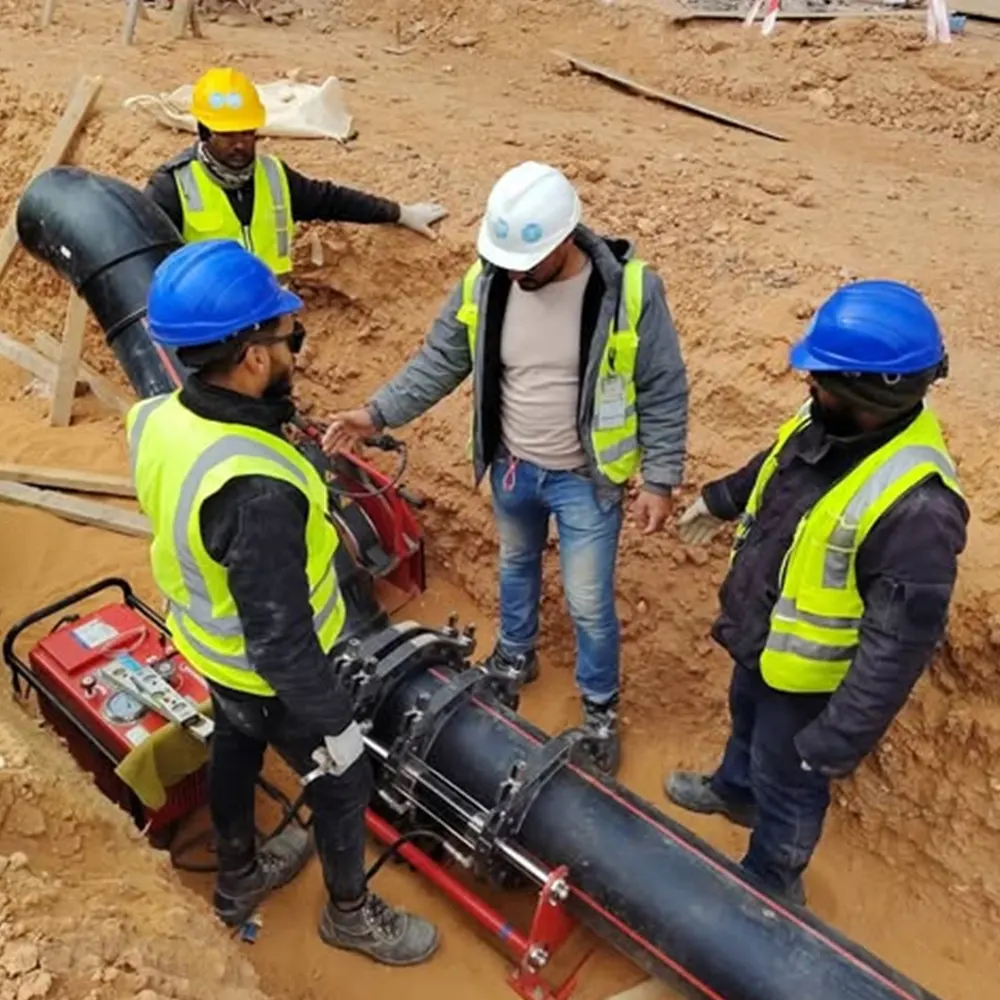
When contractors compare hydraulic welding machines and manual welding machines, the real question is not just which one works, but which one works better for the pipe size, project schedule, budget, and welding accuracy required on site. In butt fusion welding, the machine you choose directly affects joint quality, labor efficiency, and long-term pipeline reliability.
Both machine types are widely used in HDPE pipe installation, but they serve different working conditions. A manual machine relies on the operator’s physical control for clamping pressure and movement, while a hydraulic machine uses a hydraulic system to apply and maintain stable pressure during the fusion process. That single difference changes the entire welding experience, especially on larger diameter projects or jobs that demand consistency.
For companies looking for reliable pipeline equipment, selecting the right butt fusion machine can improve productivity and reduce costly welding errors. JQ-Fusion, a professional HDPE pipe welding machine manufacturer with over 20 years of experience, offers manual, hydraulic, and CNC automatic solutions for projects in water supply, gas distribution, mining, and industrial piping.
What Is a Manual Welding Machine?
A manual butt fusion welding machine is a mechanical welding tool that depends on the operator to control the clamping force and alignment of the pipes. It is usually designed for smaller pipe diameters and simpler project requirements. The operator manually adjusts the pressure, monitors the heating process, and completes the fusion cycle with direct physical control.
Key point: manual machines are often chosen when cost control, portability, and ease of operation matter more than automation and pressure precision.
Because of their simpler structure, manual machines are often easier to maintain and can be a practical solution for small contractors, field repairs, and low-volume installation work. They are also preferred in locations where power supply, hydraulic systems, or advanced equipment support may be limited.
What Is a Hydraulic Welding Machine?
A hydraulic butt fusion welding machine uses a hydraulic power system to control the movement and pressure of the clamping unit. This creates a more stable welding process, especially during heating, joining, and cooling. The hydraulic system helps reduce pressure fluctuation, improves alignment stability, and supports more uniform fusion results.
Hydraulic machines are especially valuable for medium and large diameter pipe projects where consistent pressure is critical. They are commonly used in long-distance pipeline construction, municipal water projects, gas transmission systems, and industrial installations where the welding quality must meet strict standards.
Important: hydraulic machines are designed to improve repeatability, reduce operator burden, and deliver more accurate fusion results under demanding jobsite conditions.
The Main Difference Between Hydraulic and Manual Welding Machines
The core difference lies in how pressure is applied and controlled. Manual machines require direct operator adjustment, while hydraulic machines use a hydraulic system to maintain more stable and precise pressure throughout the welding cycle. This affects the final weld consistency, labor intensity, and overall efficiency.
In practical terms, manual machines are more dependent on the operator’s skill. A well-trained worker can still achieve reliable welds, but the process leaves more room for human variation. Hydraulic machines reduce that variation by automating pressure control, which is one reason they are preferred for larger projects and professional construction teams.
⚙️ Simple comparison: manual = operator-driven pressure control; hydraulic = system-driven pressure control.
1. Pressure Control
Manual machines rely on hand or mechanical adjustment to create pressure. This means the operator must carefully manage each step to avoid inconsistent fusion. Hydraulic machines, on the other hand, maintain pressure more accurately through hydraulic force, which supports better stability during welding.
2. Welding Consistency
Hydraulic systems generally deliver more repeatable results because the pressure remains steady from start to finish. Manual machines can still produce excellent welds, but the quality may vary more depending on operator experience and jobsite conditions.
3. Suitable Pipe Sizes
Manual machines are typically better suited for small-diameter pipes and lighter-duty applications. Hydraulic machines are better for medium and large-diameter pipes, where higher force and stronger clamping stability are needed.
4. Labor Requirement
Manual welding requires more physical effort and closer operator attention. Hydraulic welding reduces labor burden because the system handles the pressure application more efficiently, allowing workers to focus on alignment, temperature, and timing.
5. Cost and Investment
Manual machines usually cost less and may be the better option for businesses with limited budgets. Hydraulic machines generally require a higher initial investment, but they can deliver better long-term value through improved productivity, reduced errors, and stronger weld reliability.
Which One Is Better for Different Projects?
The best choice depends on the actual job requirements. For simple pipe installation, repair work, or small projects, a manual machine may be enough. For infrastructure projects, industrial pipelines, or jobs with strict quality requirements, a hydraulic machine is usually the smarter investment.
For example, a contractor working on a rural water line may prefer a manual machine because it is easier to transport and more affordable. But a company building a large municipal gas pipeline will usually benefit more from the precision and stability of a hydraulic system.
Best practice: choose manual machines for smaller, lower-budget, and simpler jobs; choose hydraulic machines for larger, more demanding, and quality-sensitive projects.
Advantages of Manual Welding Machines
Manual welding machines offer several practical benefits for certain users and applications:
✔ Lower purchase cost compared with hydraulic systems
✔ Simpler structure and easier maintenance
✔ Lightweight and more convenient for field use
✔ Suitable for small pipe diameters and basic installations
✔ Good option for contractors needing portable equipment
Because of these advantages, manual machines are often used by smaller teams, maintenance crews, and businesses that want a dependable machine without a large upfront investment.
Advantages of Hydraulic Welding Machines
Hydraulic welding machines are preferred for professional pipeline work because they offer stronger performance and higher reliability:
✔ Stable and precise pressure control
✔ Better weld consistency and quality
✔ Reduced operator fatigue
✔ More suitable for large-diameter pipes
✔ Stronger performance on demanding projects
For contractors who need dependable output and efficient production, hydraulic systems often provide a clear advantage. They help reduce the risk of uneven fusion, which is especially important when the pipeline will operate under pressure for many years.
How JQ-Fusion Supports Different Welding Needs
JQ-Fusion focuses on manufacturing reliable HDPE pipe welding equipment for global markets. Their product range includes manual butt fusion welding machines, hydraulic butt fusion welding machines, and automatic butt fusion welding machines, giving customers more flexibility based on project size and budget.
With modern production lines, strict quality control, and testing for temperature accuracy, hydraulic pressure stability, and clamp alignment, the company aims to ensure stable welding performance in real-world applications. They also support OEM and ODM customization, including machine size, voltage, color, branding, and project-specific configurations.
🔧 Why this matters: a good welding machine is not just about joining pipes; it is about delivering reliable pipeline systems that can perform safely over time.
How to Choose the Right Machine
When deciding between hydraulic and manual machines, consider the following factors:
Pipe diameter: larger pipes usually require hydraulic support.
Project frequency: frequent projects often justify a hydraulic machine.
Budget: manual machines are cheaper upfront.
Operator skill: manual machines depend more on user experience.
Quality requirements: stricter standards favor hydraulic systems.
By matching the machine type to the project conditions, contractors can improve both productivity and welding reliability. In many cases, businesses eventually upgrade from manual to hydraulic equipment as their project scale grows.
Frequently Asked Questions
Q1: Is a hydraulic welding machine always better than a manual one?
No. Hydraulic machines are better for larger and more demanding jobs, but manual machines can be a smart choice for small projects, simple field work, and limited budgets.
Q2: Can manual machines produce strong welds?
Yes. With proper training, correct temperature control, and careful operation, manual machines can produce reliable welds, especially on smaller pipe sizes.
Q3: Are hydraulic machines difficult to use?
They are generally easier to manage during the welding cycle because the hydraulic system handles pressure control, but operators still need proper training for alignment, heating, and cooling procedures.
Q4: Which machine is more cost-effective?
Manual machines are more cost-effective at the purchase stage, while hydraulic machines may deliver better long-term value for companies with frequent or large-scale welding work.
Q5: What should I choose for a growing pipeline business?
If your projects are becoming larger and quality requirements are increasing, a hydraulic welding machine is often the better investment for long-term growth.
In summary, the difference between hydraulic and manual welding machines comes down to control, efficiency, scale, and precision. Manual machines are practical, affordable, and suitable for smaller jobs, while hydraulic machines are stronger, more consistent, and better for professional pipeline construction. The right choice depends on your project needs, but selecting the correct equipment is always an investment in weld quality and operational success.



