
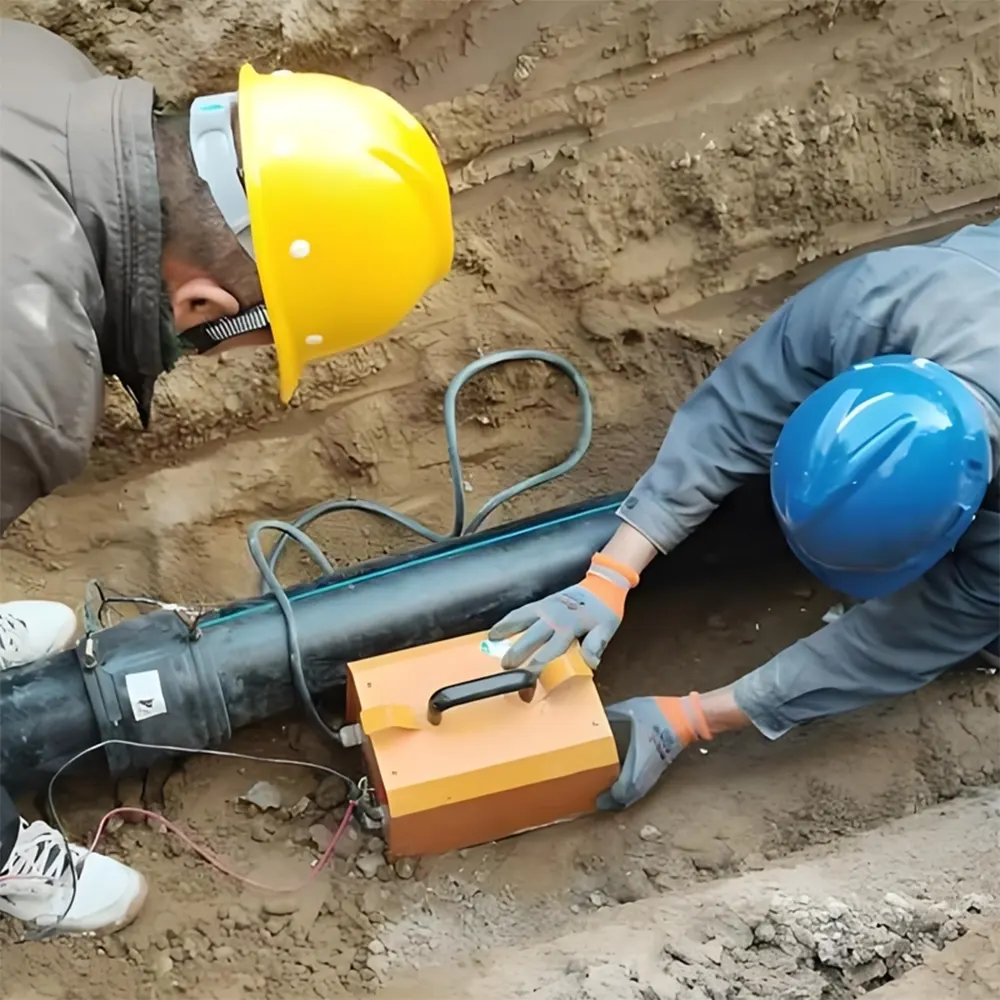
When professionals ask, “What Is the Correct Welding Procedure for Polyethylene Pipes?” they are usually looking for more than a simple step list. The correct answer depends on pipe material, diameter, wall thickness, ambient conditions, machine calibration, and disciplined process control. In polyethylene pipeline construction, a well-executed weld is not just a connection point; it is the most critical part of the entire system. A poor weld can lead to leakage, reduced pressure resistance, or expensive rework, while a correct weld can deliver decades of reliable service.
Polyethylene pipe welding is widely used in water supply, gas distribution, mining, and industrial pipelines because PE pipe offers excellent corrosion resistance, flexibility, and long-term durability. Among the available joining methods, butt fusion remains one of the most trusted techniques for creating a monolithic, high-strength joint. For this reason, contractors and operators rely on proper procedures, trained technicians, and dependable equipment to ensure every weld meets project requirements.
Key idea: the correct welding procedure is not only about heating and joining pipe ends. It includes preparation, alignment, temperature control, pressure management, cooling time, and inspection. Every step matters.
Understanding Polyethylene Pipe Welding
Polyethylene pipes are thermoplastic materials, meaning they can be softened by heat and fused together under controlled pressure. This characteristic makes fusion welding especially effective because it creates a bond that can be as strong as, or stronger than, the pipe itself. The most common method for large-diameter PE pipe is butt fusion, where two pipe ends are heated and pressed together to form a continuous, homogeneous joint.
For smaller fittings or special configurations, electrofusion can also be used. However, when the project involves straight pipeline sections and large diameters, butt fusion is usually preferred for its strength, efficiency, and cost-effectiveness. If you want to learn more about professional equipment options, you can visit this butt fusion machine resource for more information on machine types and applications.
The Correct Welding Procedure Step by Step
1. Confirm material compatibility — Make sure the pipes to be joined are made of compatible polyethylene grades and the same pressure class. Mixing unsuitable materials can weaken the fusion zone and reduce reliability.
The first step in any correct welding procedure is material verification. Operators should confirm the pipe SDR, diameter, wall thickness, resin type, and project specification before starting. Even if two pipes appear similar, hidden differences in material grade can affect melt behavior and fusion quality. This is why experienced crews always check markings and compare the pipe data against the job requirements.
2. Prepare the pipe ends properly — Cut the pipe squarely, remove dirt, moisture, oxidation, and any contamination from the joining surfaces. Clean preparation is essential for a strong weld.
Pipe preparation usually includes clamping the pipe ends in the fusion machine, facing the ends to create flat and parallel surfaces, and cleaning the exposed area. The operator must remove oxidation from the pipe face because oxidized layers prevent proper molecular bonding. A clean, straight, and aligned surface allows the heated ends to fuse evenly during the welding cycle.
At this stage, the work area should also be protected from dust, rain, strong wind, and excessive sunlight when possible. Environmental control is often overlooked, but it directly influences heating consistency and joint quality.
3. Align and clamp the pipes — The pipe ends must be held firmly and aligned accurately. Misalignment creates uneven stress and can shorten the life of the joint.
Correct alignment is one of the most important factors in polyethylene welding. The fusion machine should hold both pipe ends with equal pressure and maintain them on the same axis. Any offset or angular error may cause a weak weld bead or internal stress concentration. Proper clamping also prevents movement during heating and cooling, which is vital for consistency.
In many projects, using a professional machine improves repeatability and reduces operator error. Modern hydraulic and automatic systems are designed to maintain pressure stability and alignment accuracy, which is especially helpful for demanding pipeline installations.
Heating: The Heart of the Fusion Process
The heating phase is where the pipe ends are brought to the correct fusion temperature. The heated plate must be clean, stable, and set to the recommended temperature range according to the pipe manufacturer’s specification. Too little heat will not soften the pipe enough for molecular bonding. Too much heat can over-melt the surface and degrade joint quality.
Once the pipe ends contact the heated plate, a uniform melt bead should begin to form. The operator must watch for even heating on both sides. The heating time varies depending on pipe diameter, wall thickness, and ambient conditions. There is no universal single timing value for every project, which is why adherence to the approved welding chart is essential.
For better process control, many companies use advanced equipment with stable temperature regulation and pressure monitoring. This helps maintain consistent weld quality across multiple joints, especially on large-scale jobs.
Important Heating Guidelines
Clean hot plate surfaces before every weld. A contaminated plate can transfer dirt or residue to the pipe ends and weaken the fusion.
Follow the correct temperature range specified by the pipe manufacturer and welding procedure.
Avoid overheating, because excessive heat can create brittle or deformed joints.
Tip: stable temperature and accurate pressure control are often the difference between a dependable joint and a failed one. That is why equipment quality matters as much as operator skill.
Transition and Joining
After the heating phase, the pipe ends must be removed from the heater and joined immediately within the allowable transition time. This step should be completed quickly to avoid heat loss. The operator brings the heated ends together with controlled pressure so the molten surfaces merge into a single, continuous mass.
The initial joining pressure must be sufficient to form the bead, but not so high that molten material is forced out excessively. The goal is to create a balanced, full-contact fusion interface. Once the pipe ends are joined, the pressure is maintained according to the procedure until the joint begins to stabilize.
Visual inspection of the bead can provide useful clues. A uniform and symmetrical bead often indicates good heating and pressure balance, while irregular bead formation may suggest alignment or temperature issues. However, visual inspection alone is not enough; procedure compliance remains the real standard.
What a Good Fusion Bead Suggests
Even bead formation usually indicates proper heating and pressure control.
Symmetry on both sides suggests alignment is correct.
No visible contamination indicates the surfaces were properly cleaned before fusion.
Cooling Time and Joint Stabilization
Cooling is often underestimated, but it is just as important as heating. After joining, the pipe must remain undisturbed for the full cooling period specified by the procedure. Moving, bending, or pressurizing the joint too early can introduce internal stress and compromise the weld.
The cooling time depends on pipe size, wall thickness, and environmental conditions. In colder weather, cooling may happen differently than in warm conditions, but the fusion procedure should still be followed exactly. A properly cooled joint should have completed solidification before the line is handled or tested.
In practical field work, patience during cooling protects the entire project. Many joint failures are not caused by poor heating, but by premature movement before the fused material has stabilized.
Quality Control and Inspection
Every polyethylene weld should be inspected according to project standards and relevant codes. Inspection usually begins with a visual check of alignment, bead appearance, and overall symmetry. Beyond that, operators may record machine parameters such as heating temperature, fusion pressure, time, and cooling duration.
On larger projects, traceability is especially important. Recorded data helps prove that the weld was completed under controlled conditions. This is useful for quality assurance, maintenance planning, and final project acceptance. Machines that support documentation, automatic control, and repeatable settings can significantly improve site efficiency.
If your project requires stable, repeatable performance, selecting equipment from an experienced manufacturer can make the process easier. JQ-Fusion focuses on producing manual, hydraulic, and CNC automatic fusion systems for different pipeline needs, with solutions designed for water, gas, mining, and industrial applications.
A Practical Inspection Checklist
Check that the pipe ends were properly faced and cleaned.
Confirm the pipes remained aligned during the entire process.
Verify the bead is uniform and consistent.
Review the recorded welding parameters if available.
Ensure the joint cooled fully before any handling or testing.
Why Equipment Quality Matters
The correct welding procedure can only be executed well if the machine itself performs reliably. A fusion machine with poor temperature stability or weak hydraulic control can introduce variation even when the operator follows the procedure carefully. That is why professional contractors often choose robust equipment with accurate controls and durable construction.
JQ-Fusion is a professional manufacturer specializing in PE and HDPE pipe welding equipment, with more than 20 years of industry experience. Their product range includes hydraulic butt fusion welding machines, automatic butt fusion welding machines, electrofusion welding machines, and multi-angle pipe fitting welding machines. The company also provides OEM and ODM customization, strict quality control, fast delivery, and technical support for global customers.
Why this matters: a reliable butt fusion machine improves repeatability, reduces waste, and helps crews maintain quality across multiple welds, even under demanding site conditions.
Common Mistakes to Avoid
Skipping surface cleaning is one of the fastest ways to weaken a weld. Dust, moisture, and oxidation interfere with proper fusion.
Using incorrect heat settings can cause under-heating or overheating, both of which harm joint integrity.
Ignoring alignment creates stress points and uneven bead formation.
Rushing cooling time may lead to deformation or long-term failure.
Conclusion
The correct welding procedure for polyethylene pipes is a disciplined process built on preparation, accurate alignment, controlled heating, immediate joining, proper cooling, and thorough inspection. When each step is followed carefully, the result is a strong and durable joint suitable for demanding pipeline service. In modern construction, procedure and equipment work together: skilled operators need dependable machines, and dependable machines help ensure the procedure is executed correctly every time.
For global contractors, distributors, and pipeline installers, the goal is not only to make a weld, but to make a weld that performs reliably for years. That is why choosing the right process and the right equipment should always go hand in hand.
FAQ
1. What is the most common method for welding polyethylene pipes?
Butt fusion is one of the most common and trusted methods for large-diameter polyethylene pipe installations because it creates a strong, continuous joint.
2. Why is pipe cleaning so important before welding?
Cleaning removes dirt, moisture, and oxidation that can block proper molecular bonding and weaken the weld.
3. How do I know if the weld bead looks correct?
A good weld bead is usually uniform, symmetrical, and consistent on both sides, but it should still be verified against the welding procedure.
4. Can I move the pipe immediately after welding?
No. The joint must remain still during the full cooling period to avoid stress, deformation, or weld failure.
5. Do I need special equipment for polyethylene pipe welding?
Yes. A properly calibrated fusion machine is essential for accurate temperature, pressure, and alignment control.



