
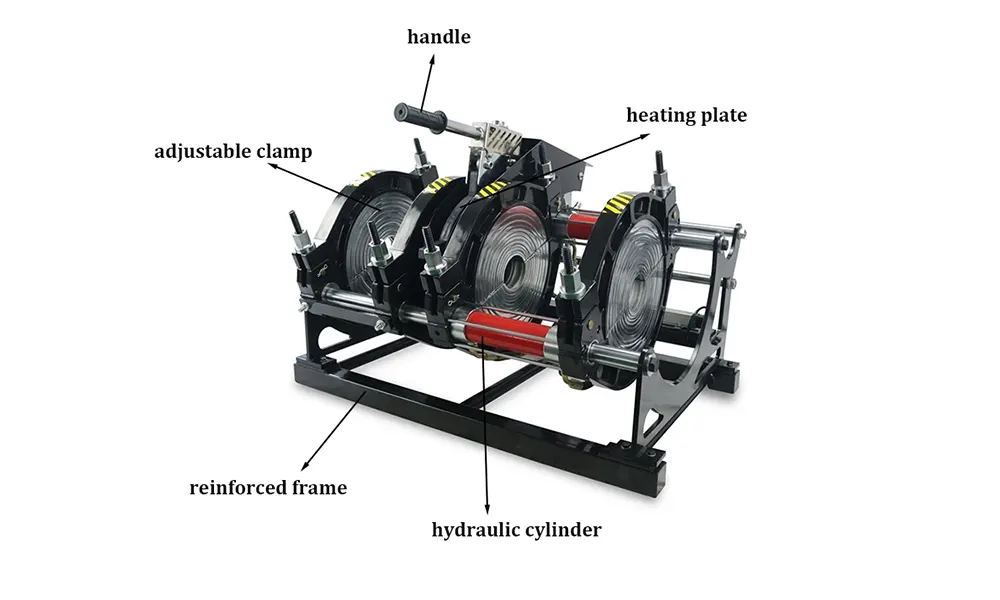
The capacity of a pipe welding machine is one of the most important factors to consider when selecting equipment for pipeline construction, fabrication workshops, and field installation projects. In simple terms, capacity refers to the range of pipe sizes, materials, wall thicknesses, and production demands that a machine can handle effectively. A machine with the right capacity helps ensure weld quality, improves efficiency, and reduces costly downtime. A machine with the wrong capacity, on the other hand, can lead to weak joints, inconsistent fusion, and unnecessary operating costs.
When buyers search for a welding solution, they often focus only on pipe diameter. However, capacity is broader than that. It also includes clamp force, heating plate performance, hydraulic stability, automation level, and the machine’s ability to maintain accurate alignment under pressure. For contractors handling water supply, gas distribution, mining pipelines, or industrial projects, understanding these technical limits is essential before making a purchase.
Modern pipe welding machines are designed to support different project scales. Some are compact and suitable for smaller pipe networks, while others are built for large-diameter, heavy-duty fusion work. This is why manufacturers like butt fusion machine suppliers offer manual, hydraulic, and CNC automatic models to match various job requirements. Choosing correctly means balancing performance, budget, and the future needs of your business.
Key idea: the best pipe welding machine is not always the largest one. It is the one that fits your pipe range, project type, production volume, and welding standards with the least compromise.
What Does Pipe Welding Machine Capacity Really Mean?
Capacity is the machine’s practical working range. It tells you what kind of pipes can be welded safely and consistently. In butt fusion applications, this typically includes the minimum and maximum pipe diameters the machine can clamp, heat, align, and fuse. It also covers the machine’s suitability for specific materials such as HDPE, where controlled temperature and pressure are critical to joint strength.
For example, a smaller unit may be ideal for municipal water lines or residential pipeline repairs, while a larger hydraulic or CNC system may be required for industrial projects involving thicker, wider pipes. Capacity should always be evaluated together with the welding standard you must meet. A machine might technically handle a pipe size, but if it cannot maintain stable heat or alignment, the result will not be acceptable.
Main Capacity Factors You Should Check
Pipe diameter range: the minimum and maximum pipe sizes the machine can weld.
Wall thickness compatibility: thicker pipes require more force, better heating accuracy, and stable pressure control.
Material type: HDPE, PP, and other thermoplastics may require different fusion conditions.
Hydraulic system strength: important for consistent clamping and fusion pressure on larger pipes.
Heating plate performance: temperature stability directly affects the quality of the fused joint.
Automation level: manual, hydraulic, and CNC models offer different levels of precision and output efficiency.
Types of Pipe Welding Machines and Their Capacity Differences
Pipe welding machines are not all designed for the same workload. Understanding the differences between machine types helps buyers avoid overpaying for unnecessary capacity or underinvesting in equipment that cannot support future growth.
Manual machines are usually suitable for smaller diameters and simple project conditions. They are economical and easy to operate, but they depend more on the operator’s skill.
Hydraulic machines are better for medium to large pipes because they provide more stable clamping and fusion pressure. This improves consistency and reduces operator fatigue.
CNC automatic machines are ideal when accuracy, efficiency, and repeatability matter most. They are often chosen for high-volume work and projects that require strict welding standards.
JQ-Fusion’s product range reflects this structure well, offering hydraulic butt fusion welding machines, automatic butt fusion welding machines, and other specialized equipment for different applications. This variety makes it easier for contractors and distributors to match the machine to the actual workload instead of guessing based on price alone.
How to Choose the Right Pipe Welding Machine Capacity
Selecting the right machine starts with a clear understanding of your project requirements. The first question is simple: what pipe sizes do you need to weld now, and what sizes may appear in future projects? A good rule is to choose a machine with enough range to cover your main use cases without becoming oversized for daily operation.
Next, consider the material and application environment. Underground water pipelines, gas distribution networks, mining systems, and industrial installations each have unique demands. Gas pipelines, for instance, often require tighter quality control and more reliable pressure stability than low-risk drainage applications. In those cases, a machine with stronger control systems may be worth the extra investment.
Another key factor is production volume. If your team completes a few joints per week, a manual or compact hydraulic machine may be enough. If you handle large contracts or repetitive welding tasks, automation can save time and reduce errors. High-volume operations usually benefit from faster cycle times, more precise alignment, and lower dependence on operator experience.
It is also important to assess voltage requirements, site conditions, and logistics. Some projects are in remote locations where power supply is unstable. In such cases, a machine with stable energy usage and durable components is easier to manage. For international buyers, custom options such as voltage, color, branding, and configuration can also make a big difference in practical use.
A Practical Selection Checklist
1. Confirm pipe diameter range. Make sure the machine covers your current and expected future sizes.
2. Check wall thickness compatibility. Bigger pipes are not the only issue; thicker walls demand stronger capability.
3. Review pressure and temperature control. Stable welding conditions are essential for joint quality.
4. Match the machine type to your workload. Manual for light use, hydraulic for general industrial work, CNC for precision and productivity.
5. Evaluate after-sales support. Training, spare parts, and technical guidance are part of the real value.
6. Consider future expansion. Buying slightly above current demand may save replacement costs later.
Why Build Quality Matters as Much as Capacity
Capacity alone does not guarantee performance. Two machines may claim the same pipe range, yet deliver very different outcomes because of differences in build quality. Precision machining, clamp alignment, hydraulic stability, and heating plate accuracy all affect how the machine performs in actual projects.
That is why reputable manufacturers invest in strict quality control. At JQ-Fusion, each machine undergoes comprehensive testing, including temperature accuracy, hydraulic pressure stability, and clamp alignment inspection. These checks help ensure that the stated capacity is not just a catalog number but a real working capability in the field.
Durability is especially important for contractors working in harsh environments. Dust, vibration, weather changes, and frequent transportation can all affect machine performance over time. A machine built with solid structure and reliable components will maintain fusion quality longer and reduce maintenance interruptions.
Important note: if a machine offers a wider pipe range but has weak alignment or unstable heat control, its effective capacity is lower than advertised.
The Role of Customization in Choosing Capacity
For many buyers, standard models are not always enough. OEM and ODM customization can help match the machine to specific project requirements. This may include changes to machine size, voltage, control systems, branding, or special functional upgrades.
Customization is especially useful for distributors and project contractors who work across multiple markets. A machine configured for one country may not suit another region’s power supply or pipe standards. By adjusting the machine design before purchase, buyers can reduce operational friction and improve user satisfaction.
JQ-Fusion supports flexible customization services, which is a major advantage for clients who need a machine tailored to real working conditions. Combined with large inventory and fast delivery, this makes it easier to respond to urgent project timelines without sacrificing performance.
Where Pipe Welding Machine Capacity Creates the Most Value
The right machine capacity has a direct impact on productivity and profitability. In water supply systems, it helps produce reliable joints that reduce future leakage risk. In gas distribution, it supports safety and regulatory compliance. In mining and industrial projects, it improves installation speed while maintaining structural strength.
Capacity also influences labor efficiency. A machine that is too small for the job forces operators to work around limitations, slowing the project and increasing the chance of error. A machine that is too large may waste capital, energy, and workshop space. Balanced capacity leads to smoother workflows and better cost control.
From a business perspective, buyers should think long term. The best equipment is not the cheapest one today, but the one that continues to produce dependable welds across many projects. That is why experienced contractors often choose suppliers with proven performance in global markets, strong technical support, and a broad product range.
If you need reliable equipment for different pipe welding demands, exploring models such as the butt fusion machine series can help you compare capacities more accurately and match them to your operational goals.
How JQ-Fusion Supports Different Capacity Needs
JQ-Fusion is built around the needs of international pipeline contractors and distributors. With over 20 years of industry experience, the company focuses on manufacturing reliable HDPE pipe welding machines that cover a wide range of diameters and project scales. Its equipment is widely used in water supply systems, gas distribution networks, mining projects, and industrial pipeline installations worldwide.
What makes this especially valuable is the combination of manufacturing capability and service support. Modern production lines, precision machining, and strict inspection processes help ensure stable performance. At the same time, fast response, professional technical guidance, and global logistics support make deployment easier for customers who need dependable delivery and practical after-sales assistance.
For buyers comparing capacity across different suppliers, this combination of engineering strength and support often matters more than a single specification sheet. A machine should not only fit the pipe diameter on paper; it should also perform reliably across real jobs, varied environments, and long service cycles.
Conclusion: Choose Capacity With the Whole Project in Mind
When choosing a pipe welding machine, capacity should be evaluated as a complete system requirement, not just a size number. Consider diameter range, wall thickness, pressure stability, heating performance, and production volume together. Then compare those needs with the machine type, build quality, customization options, and service support available from the manufacturer.
A well-chosen machine can improve weld quality, reduce labor pressure, and support growth across future projects. Whether you are handling small installations or large-scale pipeline construction, the right capacity helps you work more efficiently and deliver stronger results. In the end, the best choice is the one that fits your current projects while leaving room for tomorrow’s demands.
FAQ
Q1: What is the most important factor when choosing a pipe welding machine capacity?
A: The pipe diameter range is usually the starting point, but wall thickness, pressure stability, and project type are equally important.
Q2: Is a larger machine always better?
A: Not necessarily. A larger machine may be unnecessary for your workload and can increase cost, space usage, and operating complexity.
Q3: Should I choose manual, hydraulic, or CNC automatic equipment?
A: Choose based on workload and precision needs. Manual suits light-duty jobs, hydraulic fits general industrial use, and CNC is best for high accuracy and volume.
Q4: Why does build quality matter if the capacity range is the same?
A: Because stable alignment, temperature accuracy, and hydraulic control determine whether the machine can truly weld that range reliably.
Q5: Can customization help with capacity selection?
A: Yes. Custom voltage, configuration, and functional upgrades can make the machine fit your project conditions more effectively.



