
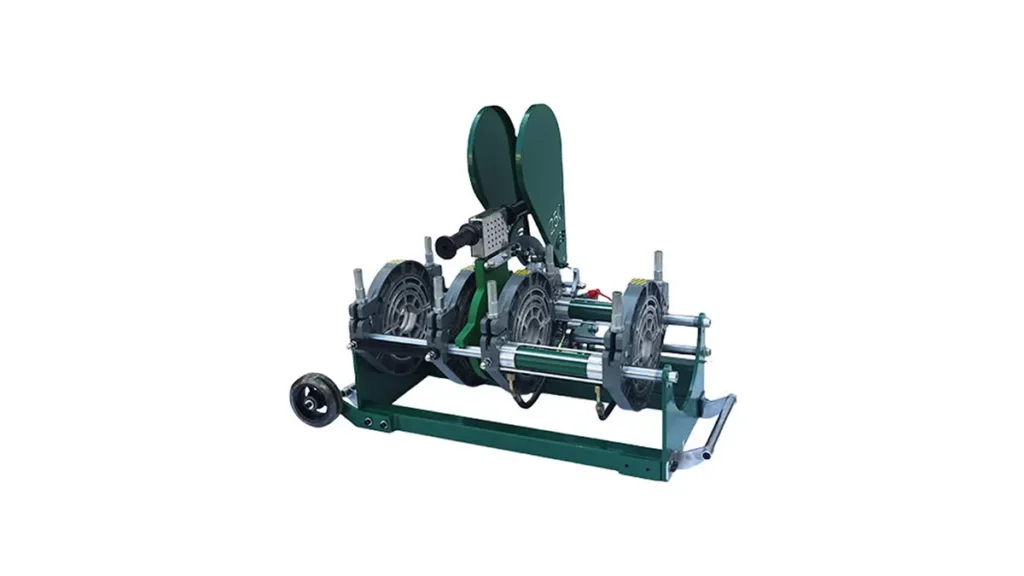
When utility companies plan, build, or repair critical pipeline networks, welding reliability is not optional. It directly affects water continuity, gas safety, project timelines, and long-term operating costs. For that reason, choosing the right butt fusion machine matters just as much as choosing the right pipe material. The best HDPE welding machine for utility companies is not simply the one with the most features; it is the one that delivers stable fusion quality, fits the project scale, supports field conditions, and helps crews work efficiently with confidence.
Key point: utility projects demand consistent weld integrity, because a single poor joint can create leaks, service interruptions, emergency repairs, and costly downtime. A dependable HDPE welding machine becomes a core asset, not just a tool.
What Utility Companies Need from an HDPE Welding Machine
Utility companies work across a wide range of environments. One day a crew may be installing new water distribution lines in a city street, and the next day they may be repairing a gas pipeline in a remote area. This means the best machine must perform well in different conditions, handle different pipe diameters, and be easy to transport and operate. In practice, utility teams usually look for four things: stable heating performance, precise clamp alignment, strong hydraulic pressure control, and dependable field durability.
A good machine also needs to support both experienced operators and technicians who may only use fusion equipment occasionally. When training time is limited, intuitive controls and clear operation procedures can reduce errors. This is why many utility companies prefer machines that balance automation with practical field usability.
Why HDPE Butt Fusion Is the Preferred Joining Method
HDPE piping systems are widely used in water supply, gas distribution, industrial pipelines, and mining projects because they are corrosion-resistant, lightweight, and durable. However, these advantages depend on proper joint quality. Butt fusion creates a seamless pipe connection by heating two pipe ends and pressing them together under controlled pressure. The result is a joint that can be as strong as, or stronger than, the pipe itself when completed correctly.
For utility companies, this matters because welded joints must withstand pressure changes, ground movement, temperature variation, and long service cycles. Unlike mechanical joints, butt fusion reduces the risk of gasket failure, loosening, or corrosion at connection points. That is why a high-quality butt fusion machine is often the foundation of a reliable HDPE pipeline program.
The Best Machine Type for Utility Companies
There is no single machine that fits every utility task, but the most practical choice for many companies is a hydraulic butt fusion welding machine with strong stability, wide pipe diameter coverage, and a dependable heating system. For smaller maintenance teams, a manual model may be enough for limited diameter ranges and low-frequency work. For larger municipal or contractor operations, a CNC automatic machine can improve efficiency and repeatability, especially on projects with many similar welds.
Recommended selection logic: choose manual machines for light-duty repairs, hydraulic machines for versatile field work, and CNC automatic machines for high-volume or highly controlled projects.
Manual Butt Fusion Machines
Manual machines are typically suitable for smaller pipes, basic site repairs, and budgets that require a lower initial investment. They are simple, compact, and easy to maintain. However, they rely more heavily on operator skill, which can affect consistency on demanding utility projects. They are best used where pipe sizes are limited and production volume is low.
Hydraulic Butt Fusion Machines
Hydraulic machines are often the strongest all-around option for utility companies. They provide better pressure control, easier handling of medium and large diameters, and improved consistency during long workdays. In water and gas networks, where weld quality must remain stable from joint to joint, hydraulic models are widely preferred. They are also a good match for teams that need dependable field performance without the complexity of full automation.
Automatic and CNC Butt Fusion Machines
Automatic and CNC machines are ideal when utility companies want precise process control, data consistency, and reduced dependency on operator judgment. These machines can be especially useful for large infrastructure projects, public utility expansions, and contractors working under strict inspection requirements. They help standardize the fusion process and may improve traceability in quality-sensitive applications.
Important Features to Evaluate Before Buying
Before selecting equipment, utility buyers should assess the machine against real project needs rather than marketing claims. The following features are especially important:
- Temperature stability: consistent heater performance supports uniform fusion quality.
- Hydraulic pressure accuracy: proper pressure control is essential for strong joints.
- Clamp alignment: accurate alignment reduces weld defects and rework.
- Pipe diameter range: the machine should match current and future project requirements.
- Portability: field crews need equipment that is practical to move and set up.
- Power compatibility: voltage and site power conditions should match the machine configuration.
Utility companies should also consider spare parts availability, maintenance simplicity, and technical support. A machine that is slightly cheaper but difficult to service can become expensive over time if it causes delays in the field.
Why JQ-Fusion Is a Strong Option for Utility Projects
JQ-Fusion specializes in HDPE pipe welding machines and has more than 20 years of industry experience. Its product line includes manual, hydraulic, and CNC automatic butt fusion welding machines, making it easier for utility companies to match equipment to project size and budget. The company’s machines are used in water supply systems, gas distribution networks, mining projects, and industrial pipeline installations around the world.
One of the biggest advantages of working with a manufacturer like JQ-Fusion is its focus on customization. Utility companies often need different pipe sizes, voltages, branding, or design features depending on the region and project type. Flexible OEM and ODM support can help distributors and contractors build a more competitive offering in their local markets.
Another key factor is quality control. Reliable welding equipment must undergo strict checks, including temperature accuracy, hydraulic pressure stability, and clamp alignment inspection. For utility work, that kind of testing is not a bonus; it is a basic requirement. It helps ensure that the machine performs reliably in real-world installations rather than only in ideal conditions.
Also important: JQ-Fusion supports global shipping, technical guidance, and fast response for customers who need project-ready equipment with minimal delay.
How to Match the Machine to the Application
Water utilities often need welding machines that support frequent installations and repairs in changing environments. In this case, a hydraulic model with stable pressure control is usually the best fit. Gas distribution projects may demand even tighter quality oversight, so automatic process control and accurate calibration become more valuable. Industrial and mining pipelines may require larger diameter coverage and stronger construction because the equipment may operate in harsher environments.
A good buying decision starts with a realistic assessment of the job site. Consider the pipe sizes you use most often, how often the machine will be transported, whether the crew needs quick setup, and how strict your inspection standards are. The right machine should make daily work easier, not more complicated.
Factory Capability, Delivery, and Support Matter Too
For utility companies, the machine itself is only part of the decision. Production capability, inventory levels, delivery speed, and after-sales support can be equally important. JQ-Fusion’s manufacturing setup includes advanced machinery, modern production lines, and experienced technicians, which helps maintain consistent product quality. A large inventory of key models also supports faster shipping and reduces the risk of project delays.
When utility projects are tied to public schedules or emergency repairs, waiting weeks for equipment can be unacceptable. That is why many buyers value suppliers that combine stable stock supply, technical support, and training assistance. These services help teams start work faster and keep operations moving.
What Makes a Machine “Best” for Utility Companies?
The best HDPE welding machine is the one that consistently produces strong joints, fits the work environment, and supports the company’s long-term operating strategy. For many utility companies, that means a hydraulic butt fusion machine from a manufacturer with proven quality control, customization options, and reliable support. For higher-volume operations, an automatic solution may be the smarter choice. For smaller teams, a manual machine may be enough if the diameter range and workload are modest.
In short, the ideal machine should reduce risk, improve efficiency, and help utility workers deliver safe infrastructure with confidence. That is the real standard, and it is why careful selection is worth the time.
Frequently Asked Questions
1. What type of HDPE welding machine is best for utility companies?
For most utility applications, a hydraulic butt fusion machine is the most practical choice because it offers stable pressure control, field durability, and broad diameter compatibility.
2. Is a manual machine enough for utility work?
It can be enough for small repairs or limited pipe sizes, but larger utility projects usually benefit from hydraulic or automatic equipment for better consistency.
3. Why is butt fusion preferred over other joining methods?
Butt fusion creates a strong, seamless connection that reduces leak risk and improves long-term pipeline reliability, which is essential for water and gas networks.
4. What should utility buyers check before purchasing?
They should review temperature accuracy, hydraulic stability, clamp alignment, pipe diameter range, power compatibility, and after-sales support.
5. Can one machine support both water and gas projects?
Yes, if the machine’s specifications match the pipe sizes, project standards, and welding requirements for both applications.
Final takeaway: the best HDPE welding machine for utility companies is one that combines stable welding performance, the right automation level, durable construction, and dependable manufacturer support. For many buyers, that means starting with a well-built hydraulic or CNC butt fusion machine designed for real pipeline work.



