
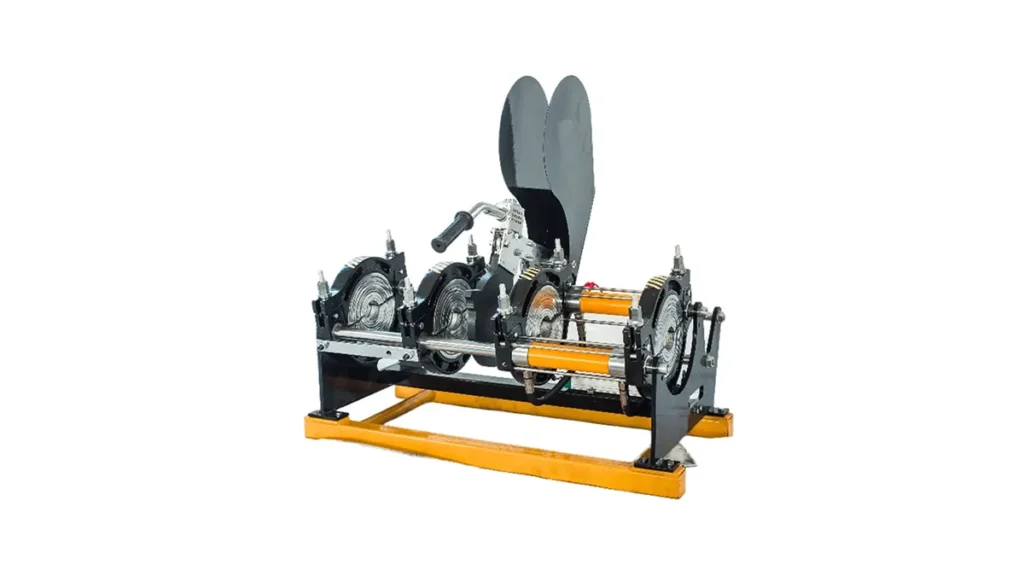
In gas pipeline construction, the quality of the welding joint determines far more than appearance or speed. It affects long-term sealing, pressure resistance, safety, and maintenance costs. When contractors search for the best butt fusion machine for HDPE gas line work, they are not just comparing equipment specifications. They are evaluating whether the machine can produce consistent, traceable, and code-compliant joints under real project conditions.
A strong HDPE welding case study should show more than a successful demo. It should prove how the machine performs on-site, how it handles different pipe diameters, how stable the heating and pressure control are, and how the crew benefits from easier operation and lower rework rates. For gas pipeline applications, the best case study is one that demonstrates reliability, repeatability, and field adaptability.
Why HDPE Butt Fusion Matters in Gas Pipeline Projects
HDPE pipelines have become a preferred choice for gas distribution networks because they are lightweight, corrosion-resistant, and flexible enough to handle ground movement better than many traditional materials. However, none of these advantages matter if the fusion joint is weak. The butt fusion process creates a homogenous connection by heating both pipe ends and pressing them together under controlled conditions. When done correctly, the joint can perform as a single continuous pipe.
This is why equipment selection is critical. A gas pipeline project needs a machine that can maintain stable heating plate temperature, accurate hydraulic pressure, proper clamp alignment, and repeatable timing across the full welding cycle. A well-designed HDPE welding case study should make these points visible through measurable outcomes, not just promotional claims.
Key takeaway: In gas applications, the best welding case study is the one that connects machine performance directly to pipeline safety, project efficiency, and long-term joint integrity.
What Makes a Welding Case Study Truly Valuable
A useful case study should answer practical questions that project managers, welders, and distributors care about. It should explain the pipe size range, the installation environment, the welding standards used, and the actual results achieved after testing. In gas pipeline applications, these details matter because the margin for error is extremely small.
The most convincing case studies often include:
✔ Project context: gas distribution, municipal network, industrial gas line, or rural transmission.
✔ Equipment type: manual, hydraulic, or CNC automatic butt fusion machine.
✔ Pipe diameter range: from small-diameter service lines to large-diameter mains.
✔ Quality verification: visual inspection, pressure testing, and documentation records.
✔ Productivity data: daily output, reduced error rate, and training efficiency.
When a case study includes these points, it becomes a real decision-making tool. That is especially important for international buyers comparing brands, because they need evidence that the machine can support different standards and operating environments.
A Practical Example of an HDPE Welding Case Study for Gas Lines
Imagine a gas distribution contractor responsible for laying HDPE pipe across a suburban expansion project. The project requires stable fusion quality, fast setup, and the ability to work across multiple pipe sizes without excessive downtime. The contractor chooses a hydraulic butt fusion machine because the job involves medium to large-diameter pipes and demands strong control over pressure and alignment.
Before the project starts, the welding team tests heating plate temperature accuracy, clamp movement, and hydraulic system stability. The machine is then used across several segments of the pipeline, and the results are monitored closely. Welds are checked for uniform bead formation, correct alignment, and consistency across different operators. After field testing, the contractor reports fewer reworks, shorter training time, and smoother inspection approval.
This is the kind of case study that answers the question: what is the best HDPE welding case study for gas pipeline applications? The best one is not the most complicated. It is the one that proves the machine can deliver dependable welds in real working conditions and support the quality expectations of gas infrastructure projects.
Important Performance Indicators to Highlight
A strong case study should always emphasize the measurable indicators that matter most in the field:
Temperature stability: ensures the heating plate stays within the required range during repeated operation.
Hydraulic pressure control: helps maintain even fusion pressure and prevent weak joints.
Clamp alignment: keeps pipe ends centered and reduces deformation during the process.
Cycle repeatability: allows multiple welders to achieve the same result consistently.
Field durability: supports demanding site conditions, including dust, temperature variation, and daily transport.
These indicators matter because gas pipeline welding is not a one-time lab event. The machine must perform reliably throughout the project timeline, often under pressure from deadlines and changing site conditions. A good case study makes these strengths visible and easy to verify.
Why JQ-Fusion Machines Fit Gas Pipeline Welding Needs
JQ-Fusion focuses on HDPE pipe welding machines designed for professional pipeline construction. With more than 20 years of industry experience, the company provides manual, hydraulic, and CNC automatic butt fusion machines for a wide range of pipe diameters. This makes the brand especially relevant for gas pipeline contractors who need different machine configurations depending on the project scale.
The value of a JQ-Fusion case study comes from the combination of manufacturing capability and real-world adaptability. Modern production lines, precision machining, and strict inspection procedures help ensure stable output. For gas applications, this is essential because welding reliability depends not only on operator skill but also on machine precision and repeatable mechanical performance.
JQ-Fusion also supports OEM and ODM customization, which is useful for distributors and contractors who need machine voltage options, color changes, branding, or project-specific configurations. In practical terms, that means a case study can show how a machine was adapted for a specific gas project rather than being presented as a one-size-fits-all solution.
Related strength: JQ-Fusion’s global support, technical guidance, and fast logistics can reduce project delays and improve on-site execution.
Product Range That Supports Different Pipeline Scenarios
For gas distribution and transmission work, different machine types serve different needs. A case study becomes more meaningful when it identifies why a specific product was selected for the project.
- Hydraulic Butt Fusion Welding Machine: suitable for stable, controlled welding on medium and large pipes.
- Automatic Butt Fusion Welding Machine: ideal when consistency, productivity, and reduced human error are priorities.
- Electrofusion Welding Machine: useful for certain jointing conditions and complex installation areas.
- Multi-Angle Pipe Fitting Welding Machine: helps handle special fittings and non-standard project requirements.
For contractors seeking a dependable solution, the best case study should show how the selected machine matched the pipe material, diameter, and installation environment. That practical alignment is often more valuable than a long list of technical claims.
How to Evaluate the Best Case Study for Your Project
When reviewing a welding case study, buyers should ask whether it reflects a real gas pipeline workflow. Look for installation photos in the original report, welding logs, pressure test records, operator training notes, and a clear description of machine configuration. A credible case study should also explain what challenges were solved, such as unstable site power, strict scheduling, or varied pipe sizes.
If a case study is too general, it may not help a buyer make a decision. But if it includes concrete project data, it becomes a useful benchmark. The most persuasive reports often show that a machine helped reduce heat loss, improved weld symmetry, and delivered consistent results across several shifts.
Buyer tip: The best HDPE welding case study is the one that closely matches your own pipe diameter, project scale, and quality requirements.
The Role of Quality Control and Certification
Gas pipeline projects demand high confidence in every weld. That is why quality control and certifications are so important in any case study. JQ-Fusion products are manufactured in compliance with international standards and certified by SGS, which adds an extra layer of trust for global buyers.
A strong case study should show how equipment testing supports this quality promise. For example, temperature verification confirms heating accuracy, hydraulic pressure testing confirms system stability, and clamp alignment inspection confirms consistent geometry. These checks are especially important when the end user is a gas utility or contractor that must follow strict inspection procedures.
When these quality controls are documented in a case study, buyers can better understand the connection between machine design and pipeline safety. That connection is what separates a good marketing example from a truly valuable engineering reference.
Conclusion: What the Best Case Study Should Prove
The best HDPE welding case study for gas pipeline applications is the one that proves the machine can deliver consistent, safe, and efficient joints in real project conditions. It should show more than equipment features. It should demonstrate measurable field results, such as reduced rework, better alignment, stable welding quality, and easier training for operators.
For buyers evaluating a butt fusion machine, the most important question is whether the machine can support the demands of gas pipeline work today and remain dependable over time. A well-documented case study from JQ-Fusion can answer that question clearly by connecting product performance with project outcomes.
Final summary: In gas pipeline applications, the best welding case study is practical, measurable, and directly tied to safety, consistency, and field productivity.
Frequently Asked Questions
1. Why is butt fusion preferred for HDPE gas pipelines?
Because it creates a strong, continuous joint with excellent sealing performance, which is essential for gas transport safety and long-term reliability.
2. What should a good HDPE welding case study include?
It should include project background, pipe size, machine type, welding parameters, inspection results, and measurable productivity or quality improvements.
3. Which machine type is best for gas pipeline projects?
It depends on the project scale. Hydraulic machines are common for controlled field work, while automatic machines are preferred when consistency and efficiency are the top priorities.
4. How do I know if a welding machine is suitable for my project?
Check the pipe diameter range, voltage compatibility, pressure control, heating accuracy, and whether the manufacturer can provide technical support and customization.
5. Why choose JQ-Fusion for HDPE welding equipment?
JQ-Fusion offers over 20 years of experience, a broad product range, strict quality control, OEM and ODM customization, and reliable support for global pipeline projects.



