
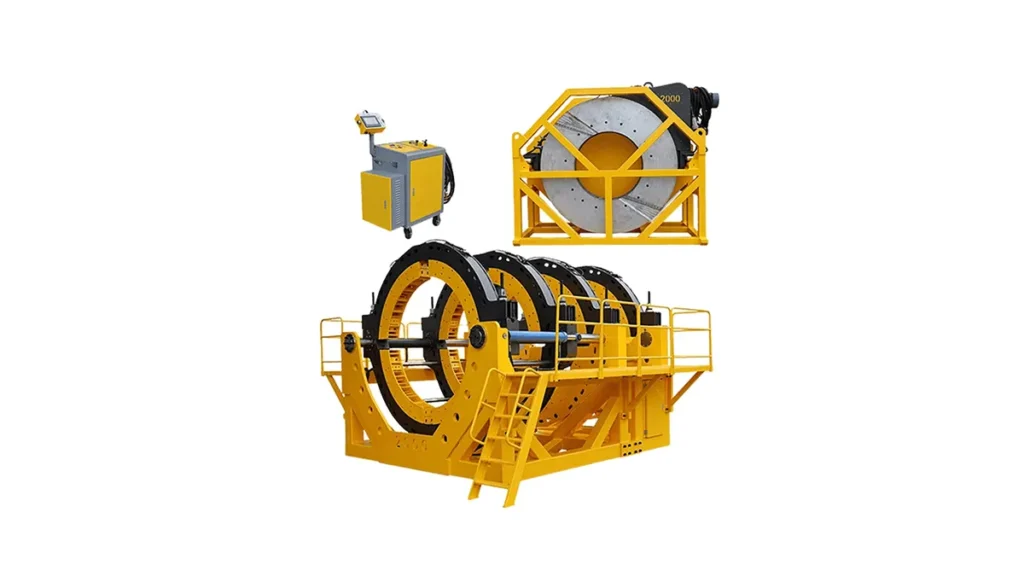
HDPE welding is the process of joining high-density polyethylene pipes and fittings into a single, continuous system. In practical pipeline work, the quality of the joint determines the safety, pressure resistance, and service life of the entire line. That is why understanding the language of welding matters just as much as understanding the machine itself. Whether you are working on water supply, gas distribution, mining, or industrial pipelines, the right terminology helps teams communicate clearly, reduce mistakes, and achieve reliable results.
★ Key point: HDPE welding is not only about heating plastic. It is a controlled engineering process that depends on temperature, pressure, alignment, timing, and material preparation. Even small errors in terminology can lead to poor fusion, weak joints, and costly rework.
What HDPE Welding Means in Real Projects
HDPE stands for high-density polyethylene, a durable thermoplastic widely used in modern pipelines because it is corrosion-resistant, flexible, and long-lasting. Welding HDPE means joining two pipe ends or pipe-and-fitting sections so they fuse into one homogeneous structure. Unlike mechanical connections, a properly fused joint can become as strong as the pipe itself.
This is why many contractors rely on advanced butt fusion machine solutions for consistent and repeatable performance. In field construction, understanding terms such as fusion face, heating plate, bead, alignment, and cooling time helps operators follow procedures accurately and maintain product quality across every weld.
Core HDPE Welding Terminology Explained
Butt fusion is the most common HDPE welding method for joining straight pipe ends. The pipe faces are trimmed, heated against a plate, and then pressed together under controlled pressure. When done correctly, the materials melt and merge into one continuous joint.
Fusion face refers to the freshly trimmed pipe surface that will be heated and joined. A clean fusion face is essential because dirt, oxidation, or uneven trimming can prevent proper bonding.
Heating plate is the heated tool used to soften the pipe ends. Its temperature must stay within the specified range. If the plate is too cold, the joint may not fuse. If it is too hot, the material may degrade or deform.
Important: In professional welding, temperature accuracy is not optional. Stable heating plates and well-calibrated machines improve consistency, especially on large-diameter pipelines where joint quality is critical.
Bead is the raised ring of melted material that appears around the joint after fusion. A uniform bead often indicates proper heating and pressure, while irregular bead formation may suggest misalignment, contamination, or inconsistent timing.
Bead-up pressure is the initial pressure applied after the pipe ends contact the heating plate. It forms the first bead and ensures the pipe ends are properly seated against the plate.
Soak time is the period when the pipe ends remain against the heating plate to absorb enough heat. This stage must be long enough to create proper melt depth, but not so long that the surface overheats.
Changeover time is the short interval between removing the heating plate and bringing the melted pipe ends together. This time should be minimized to avoid heat loss, because temperature drops can weaken the bond.
Joining pressure is the force used to press the softened pipe ends together. It must be controlled carefully. Too little pressure can create a weak joint; too much pressure may squeeze out too much molten material and distort the pipe.
Cooling time is the required waiting period after the joint is made. During this stage, the welded area solidifies and gains strength. Moving or stressing the pipe too early can damage the joint before it fully sets.
Why Alignment Matters So Much
Alignment is one of the most important concepts in HDPE welding. If pipe ends are not perfectly centered in the clamps, the final joint may be uneven. Misalignment can create stress points that reduce the performance of the pipeline over time. For that reason, experienced operators always check clamp alignment before heating begins.
Operator note: Alignment is especially important in large pipeline jobs where long pipe sections can shift during setup. A small error at the beginning can become a serious problem after fusion.
Another related term is clamp pressure, which refers to how firmly the pipe is held in the machine. Stable clamping prevents movement during trimming, heating, and joining. Professional machines are designed to keep clamp alignment consistent, which improves weld repeatability in both small and large projects.
The Role of Trimming and Surface Preparation
Facing, also called trimming, is the process of removing a thin layer from the pipe ends to create clean, parallel surfaces. This step removes oxidation and minor surface defects. Without proper facing, the weld may not be fully fused.
Oxidation layer is the thin outer film that naturally forms on polyethylene surfaces when exposed to air. It must be removed before welding because it can block proper molecular fusion.
Cleanliness is another essential term in HDPE welding. Dust, oil, moisture, and debris all reduce weld quality. In field conditions, operators should use approved cleaning materials and avoid touching prepared surfaces with bare hands.
Best practice: Always inspect the pipe ends after trimming. A smooth, even surface is a strong sign that the joint is ready for heating and fusion.
Common Welding Methods and Their Terminology
Although butt fusion is the most widely used method, the HDPE industry also uses other techniques depending on pipe size, project type, and joint requirements. Each method has its own terminology and equipment needs.
Electrofusion
Electrofusion uses special fittings with embedded heating coils. When electrical current passes through the coils, the fitting and pipe surfaces melt and fuse together. Key terms include electrofusion fitting, barcode scanning, and fusion cycle. This method is especially useful in repair work and confined spaces.
Socket Fusion
Socket fusion is used mainly for smaller diameter pipes. The pipe exterior and fitting interior are heated and then joined together. Important terms include insertion depth and heating socket.
Multi-angle pipe fitting welding
This method is used for complex fittings and non-standard layouts. It often requires more precise fixture control and careful terminology around angle setting, pipe orientation, and joint positioning.
How Machine Quality Affects Welding Terminology in Practice
In real construction work, the meaning of welding terms becomes much clearer when the machine performs reliably. For example, temperature accuracy, hydraulic pressure stability, and clamp alignment are not abstract ideas; they directly affect whether the operator can achieve the required fusion parameters.
That is why many pipeline contractors prefer equipment from experienced manufacturers. JQ-Fusion focuses on manual, hydraulic, and CNC automatic solutions designed for different pipe diameters and project scales. Their products are widely used in water supply systems, gas networks, mining projects, and industrial installations.
In a professional workshop or job site, terms such as hydraulic control, CNC automation, welding parameter, and pressure stability help teams choose the right model and set up the process correctly. This reduces human error and improves overall productivity.
Why it matters: A machine with stable output makes technical terms easier to apply in the field. Consistent equipment supports consistent welds, and consistent welds support safer pipelines.
Terminology Used in Quality Control
Quality control is a critical part of HDPE welding, and it introduces its own set of terms. Visual inspection is the first check, where the bead shape, alignment, and surface condition are reviewed. Traceability refers to recording machine settings, operator details, and job data for future reference.
Some projects also require pressure testing, weld log sheets, and inspection reports. These documents help verify that the pipeline meets project standards and can operate safely under real conditions.
Internationally, certified machines and validated procedures make a major difference. When tools are calibrated correctly and operators understand the terminology, project teams can maintain consistent standards across different countries and site conditions.
Choosing the Right Equipment for Reliable Fusion
A strong welding result begins with the right machine. For contractors and distributors, product choice is often based on pipe diameter range, automation level, voltage requirements, and project environment. A reliable butt fusion machine supports stable welding performance, fast setup, and long service life.
JQ-Fusion offers a product range that includes hydraulic butt fusion welding machines, automatic butt fusion welding machines, electrofusion welding machines, and multi-angle pipe fitting welding machines. With strong OEM and ODM capability, customers can also request custom machine sizes, colors, branding, voltage, and functional configurations for project-specific needs.
Why Understanding Terminology Helps Your Business
For engineers, buyers, and site supervisors, HDPE welding terminology is more than technical vocabulary. It improves communication between procurement teams, machine operators, and project managers. It also helps reduce misunderstandings when discussing machine functions, spare parts, delivery schedules, and maintenance support.
When everyone uses the same terms, training becomes easier, troubleshooting becomes faster, and project quality becomes more predictable. That is one reason global contractors value suppliers who provide not just equipment, but also technical guidance and after-sales support.
With more than 20 years of industry experience, JQ-Fusion emphasizes stable stock supply, fast shipping, strict quality assurance, and global technical service. This support structure is especially valuable for buyers who need both reliable machines and clear technical language to manage demanding pipeline projects.
Frequently Asked Questions
Q1: What is the most common HDPE welding method?
Butt fusion is the most common method because it creates strong, permanent joints for straight pipe connections.
Q2: Why is cooling time important?
Cooling time allows the fused joint to solidify properly. If the pipe is moved too soon, the weld may weaken or deform.
Q3: What causes a poor HDPE weld?
Common causes include dirty pipe surfaces, incorrect temperature, misalignment, wrong pressure, and insufficient heating or cooling time.
Q4: Is electrofusion better than butt fusion?
Neither method is universally better. The right choice depends on pipe size, site conditions, fitting type, and project requirements.
Q5: Why do contractors care about machine certification?
Certification supports confidence in safety, performance, and consistency, especially in international pipeline projects.



