
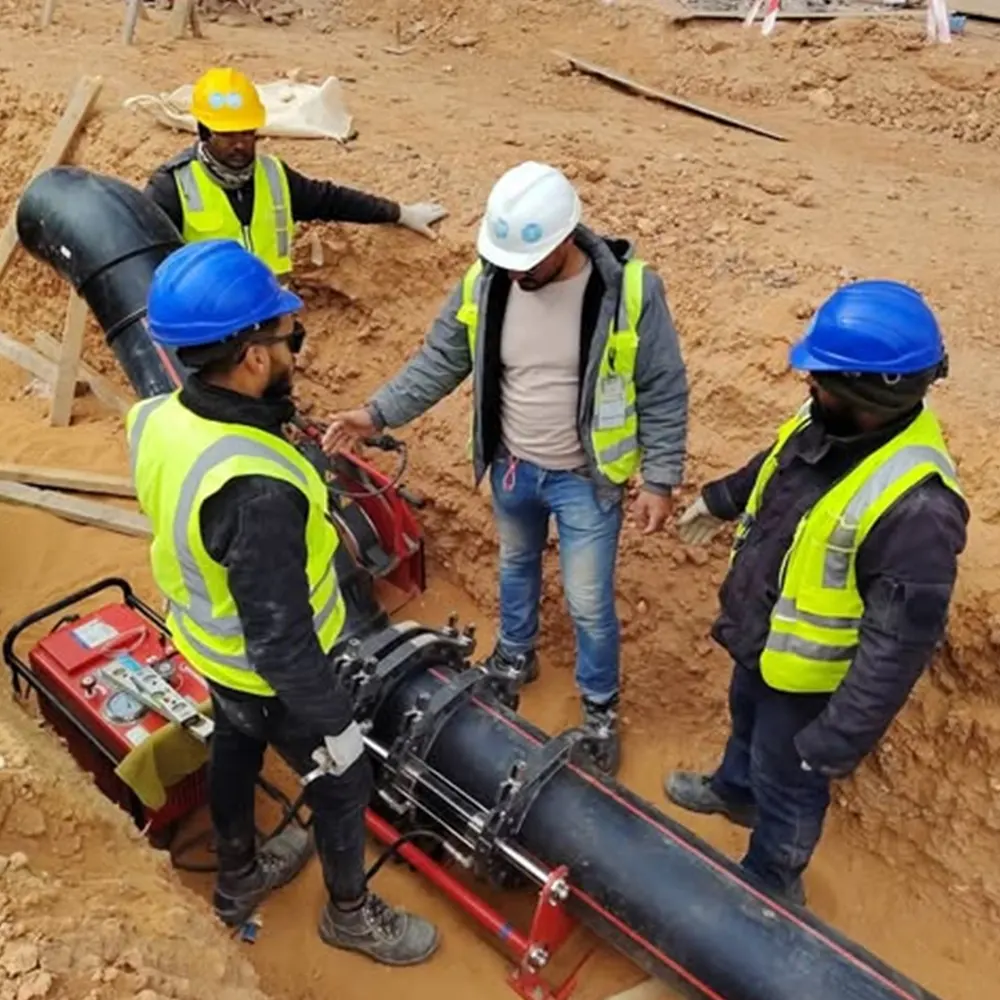
In modern pipeline construction, weld quality is not only a matter of speed or convenience—it is a matter of safety, durability, and long-term reliability. As industrial standards continue to rise, operators increasingly rely on smarter equipment to ensure that every joint meets strict performance requirements. One of the most important advancements in this field is digital control in fusion welding. By replacing manual guesswork with precise electronic management, digital systems help create stronger, more consistent welds across a wide range of pipe sizes and project conditions.
Fusion welding is widely used for HDPE and other thermoplastic piping systems in water supply, gas distribution, mining, and industrial pipelines. The process depends on carefully controlled heating, pressure, and cooling. When these parameters are maintained accurately, the welded joint becomes a continuous structure with excellent sealing performance. Digital control improves this process by monitoring each stage in real time and reducing the risk of human error. For contractors, distributors, and project managers, that means better efficiency, fewer defects, and more dependable outcomes.
What Digital Control Means in Fusion Welding
Digital control refers to the use of electronic systems, sensors, and software to regulate the key welding parameters in a fusion welding machine. Instead of relying only on manual adjustments, the machine uses programmed settings to manage temperature, hydraulic pressure, heat plate timing, and cooling cycles. This creates a more stable and repeatable process. In practical terms, digital control helps the operator follow the correct welding procedure without constantly estimating values by eye or experience alone.
In a traditional setup, even a skilled operator may face variations caused by temperature drift, pressure instability, or inconsistent timing. Digital control reduces these risks by keeping the process within a narrow tolerance range. That consistency is especially important for large-scale infrastructure work, where hundreds or thousands of joints may be completed under changing field conditions.
Key idea: digital control does not replace the operator, but it gives the operator a much more accurate and reliable toolset for producing high-quality welds.
Why Weld Quality Depends on Control Accuracy
The strength of a fusion weld depends on how well the pipe ends are prepared, heated, pressed together, and cooled. If any stage is incorrect, the final joint may be weak, uneven, or prone to failure. For example, insufficient heat can prevent proper molecular bonding, while excessive pressure may distort the joint. Likewise, unstable cooling may create internal stress that reduces long-term performance.
Digital control helps prevent these issues by ensuring that each parameter follows a predetermined value. This is especially valuable in projects that require strict compliance with engineering standards. When a machine can automatically maintain target temperature and pressure, the resulting welds are more uniform and easier to inspect. That uniformity also supports traceability, which is increasingly important in professional pipeline construction.
Important: weld quality is determined by repeatability. Digital control improves repeatability by eliminating many of the small variations that occur in manual operation.
Main Ways Digital Control Improves Weld Quality
1. More Accurate Temperature Regulation
Temperature is one of the most critical factors in fusion welding. A digital system can continuously monitor the heating plate and adjust output to keep the temperature stable. This helps prevent underheating or overheating, both of which can compromise weld integrity. Stable temperature control is especially useful when working outdoors, where wind, humidity, and ambient temperature may change throughout the day.
2. Consistent Hydraulic Pressure
Pressure must be controlled precisely during alignment, heating, and joining. Digital pressure management allows the machine to apply the correct force at the right moment. This improves joint symmetry and helps ensure the melted surfaces fuse evenly. With reliable pressure feedback, operators can avoid the common issue of over-compression, which may squeeze out too much molten material and weaken the connection.
3. Better Timing and Process Synchronization
Every fusion weld requires the correct sequence and duration of actions. Digital controllers make it easier to synchronize heating, transition, and cooling times. Even small timing errors can affect the molecular bond between pipe ends. By guiding the user through each stage, the machine helps ensure that the process is completed with the correct timing every time.
4. Reduced Human Error
Field welding often involves pressure, deadlines, and changing site conditions. Under these circumstances, manual mistakes can happen. Digital control reduces the risk of incorrect parameter selection, missed steps, and inconsistent operation. Some systems also provide alarms, prompts, or automatic correction functions that further support the operator.
5. Improved Traceability and Quality Records
Many digital welding systems can record process data such as temperature, pressure, and duration. These records are useful for project documentation, inspections, and quality audits. Traceability is a major advantage in critical pipeline applications because it helps contractors demonstrate compliance and diagnose issues if repairs are ever needed later.
How Digital Control Supports Different Welding Applications
Digital control is valuable across a wide variety of fusion welding applications. In water supply networks, it helps create leak-resistant joints that can withstand long-term pressure. In gas distribution systems, consistency and traceability are essential for safety, so controlled fusion welding provides a clear advantage. In mining and industrial pipelines, machines must perform reliably under heavy-duty conditions, where stable weld quality helps prevent costly shutdowns.
This is why many project teams look for advanced equipment from experienced manufacturers. A dependable butt fusion machine can make a major difference in daily productivity and final weld quality. When digital features are paired with durable mechanical design, the result is a practical solution for both small installations and large infrastructure projects.
Tip: digital control is most effective when the machine is also built with stable clamps, precise alignment components, and reliable hydraulic systems.
The Role of Machine Design in Digital Welding Performance
Digital technology delivers the best results when it is integrated into a well-engineered machine. A strong frame, accurate clamp alignment, and durable heating components all contribute to welding stability. If the mechanical platform is weak, even advanced electronics cannot fully compensate. This is why leading manufacturers invest not only in control systems but also in precision machining, quality testing, and overall structural reliability.
For example, professional suppliers such as JQ-Fusion focus on producing manual, hydraulic, and CNC automatic butt fusion welding machines for diverse pipe diameters and project needs. Their experience in HDPE pipe welding equipment reflects the importance of combining digital control with practical industrial design. The right machine platform helps the digital system perform accurately in real working environments.
Benefits for Contractors, Distributors, and End Users
For contractors, digital control means faster setup, fewer rejected joints, and better productivity. For distributors, it means offering equipment that meets modern market expectations for reliability and automation. For end users, it means safer pipelines and lower maintenance costs over the service life of the system. These combined benefits make digital-controlled fusion welding a strong investment for companies that want to remain competitive in global infrastructure markets.
Another important advantage is training efficiency. Because the machine guides the operator more clearly, new users can learn the process more quickly while still following professional standards. This is especially valuable for growing teams that need to expand output without sacrificing quality.
Strong advantage: digital control helps companies standardize results across different crews, projects, and work sites.
Why JQ-Fusion’s Approach Matters
JQ-Fusion is positioned as a professional butt fusion welding machine manufacturer with more than 20 years of industry experience. Its product range includes hydraulic and automatic welding machines, and its support for OEM and ODM customization makes it easier for customers to match equipment with specific project demands. In a market where welding quality and delivery time are both critical, this type of manufacturer support becomes highly valuable.
The company’s emphasis on strict testing, stable stock supply, and global technical support reflects the broader requirements of modern pipeline work. Whether a project involves water systems, gas networks, or industrial piping, customers need equipment that performs consistently under pressure. That is exactly where digital control and high manufacturing standards work together to produce dependable results.
Practical Factors to Consider Before Choosing a Digital Fusion Welding Machine
Before selecting a machine, buyers should evaluate the pipe diameter range, voltage requirements, automation level, and service environment. They should also consider whether the machine offers clear display interfaces, stable pressure control, data recording, and easy maintenance. For global projects, logistics support and after-sales service are also important because downtime can be expensive.
In addition, quality certifications matter. Machines manufactured in compliance with international standards and verified by organizations such as SGS provide added confidence in safety and performance. For professional users, these details are not optional—they are part of ensuring that the machine can support demanding project schedules and long-term infrastructure reliability.
Conclusion
Digital control has transformed fusion welding from a process that depends heavily on experience into one that can be managed with much greater precision. By improving temperature stability, pressure consistency, process timing, and traceability, digital systems help deliver stronger and more reliable welds. In industries where pipe failure can lead to serious operational and safety problems, this improvement is not just useful—it is essential.
As pipeline projects become more complex and quality requirements become stricter, the value of digital control will continue to grow. Companies that invest in advanced welding equipment and dependable manufacturing support can achieve better results, lower risk, and greater efficiency across every stage of construction.
FAQs
What is the main purpose of digital control in fusion welding?
Its main purpose is to regulate temperature, pressure, and timing more accurately so the weld quality remains consistent and reliable.
Does digital control completely eliminate operator skill requirements?
No. Operator skill still matters, but digital control reduces errors and makes it easier to achieve correct welding results.
Is digital control useful for large pipeline projects?
Yes. It is especially valuable in large projects because it improves repeatability, speeds up quality control, and supports traceable records.
Why is stable temperature so important in fusion welding?
Stable temperature ensures proper melting and bonding of the pipe ends. If the temperature is too low or too high, the joint quality may be affected.
What should buyers look for in a digital butt fusion machine?
Buyers should look for accurate control, durable construction, suitable pipe range, clear operation interface, reliable support, and compliance with international standards.



