
When engineers talk about HDPE pipeline installation, one document quietly controls the quality of the entire jointing process: the Welding Procedure Specification, or WPS. For HDPE butt fusion work, a WPS is more than a formality. It is the practical guide that defines how two pipe ends should be prepared, heated, fused, and cooled so the finished joint performs like a continuous pipe. In real projects, where water supply networks, gas distribution lines, mining pipelines, and industrial systems must operate safely for years, this document becomes a critical part of risk control and quality assurance.
A well-written WPS tells operators exactly what to do and what to avoid. It brings consistency to the job site, reduces human error, and supports repeatable results across different crews and project locations. That is especially important for HDPE, because thermoplastic fusion depends on controlled heat, pressure, alignment, and timing. If one factor is off, the joint may look acceptable on the surface but fail under load, pressure, or long-term environmental stress.
Key idea: A WPS is the written standard that defines how an HDPE weld must be made, inspected, and controlled to ensure dependable performance.
What Is a Welding Procedure Specification for HDPE?
A Welding Procedure Specification for HDPE is a controlled document that describes the approved method for producing a fusion joint. It usually includes pipe material grade, outer diameter, wall thickness, heating plate temperature, heating time, changeover time, fusion pressure, cooling time, bead appearance criteria, and operator responsibilities. In other words, it is the technical map that turns theory into a repeatable field process.
For butt fusion work, the WPS is closely connected to the machine settings and the pipe manufacturer’s requirements. It ensures the fusion cycle is not based on guesswork. Instead, every stage follows an approved sequence. That matters because HDPE does not join through adhesives or mechanical bonding; it joins through molecular fusion. If temperature or pressure is outside the required range, the molten material may not form a strong homogeneous joint.
⚠ HDPE fusion quality depends on controlling heat, pressure, cleanliness, and alignment together—not separately.
Why the WPS Matters So Much
The most important reason is safety. A bad joint can lead to leakage, reduced pressure resistance, or complete failure. In water systems, that can mean service interruptions and costly repairs. In gas systems, the consequences are much more serious because leakage can create safety hazards. In mining or industrial pipelines, a failed joint can stop operations and damage equipment. The WPS helps prevent these outcomes by standardizing the method used to create each weld.
It also improves productivity. Crews can work faster and with more confidence when they are following a clear procedure. Instead of adjusting settings based on personal habits, they can rely on approved parameters. That reduces rework, helps new operators learn more quickly, and creates better consistency across multiple shifts or project sites.
A good WPS also supports compliance. Many projects require documentation that proves welding work was carried out according to accepted standards. This is especially true for regulated infrastructure projects and international contracts. When a contractor can present a WPS, it demonstrates process control, professionalism, and traceability.
Core Elements Usually Found in an HDPE WPS
Although formats vary by company and project, most HDPE WPS documents contain similar essential details. These details are what allow a fusion joint to be reproduced with consistent quality.
- Pipe material and grade: Confirms the HDPE resin type and compatibility.
- Pipe size and wall thickness: Determines pressure and heating requirements.
- Heating plate temperature: Defines the target temperature for the fusion surface.
- Bead-up, heating, changeover, and cooling times: Controls the complete fusion cycle.
- Fusion pressure: Helps form the correct interface and bead shape.
- Alignment and clamping requirements: Ensures the pipe ends remain concentric and stable.
- Inspection and acceptance criteria: Defines what a qualified joint should look like.
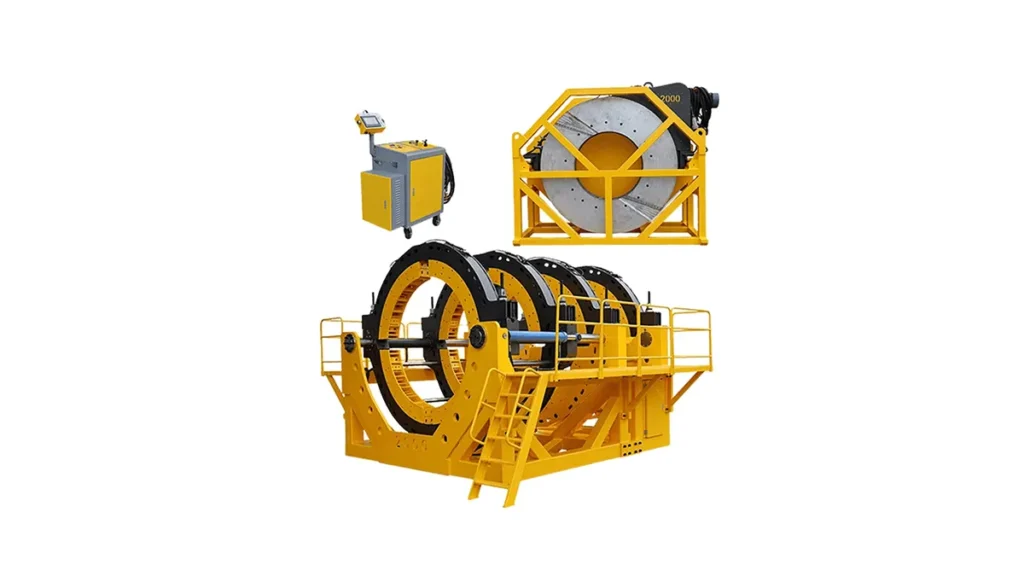
These items are not isolated. They work together. For example, a pipe with a larger diameter may require different heating time and higher machine capability than a smaller pipe. That is why many contractors pair their procedure documentation with reliable equipment and accurate controls. If you want to understand the role of fusion equipment in real projects, you can review this butt fusion machine resource.
How the WPS Supports Better Butt Fusion Results
HDPE butt fusion is a process that rewards precision. The pipe ends must be clean and square. The heating plate must be at the proper temperature. The operator must remove the pipe from the heater and join it within the correct changeover time. The pressure must be maintained throughout the fusion and cooling stages. If any stage is too short, too long, too hot, or too cold, the weld quality can be compromised.
This is where the WPS becomes invaluable. It removes uncertainty from the worksite. Instead of relying on memory or experience alone, operators can check the approved procedure and follow exact parameters. In practice, that means fewer weak joints, fewer failed inspections, and less downtime. It also helps different teams achieve similar results even when project conditions change.
Tip: The best fusion outcomes come from combining a clear WPS with well-maintained equipment and properly trained operators.
The Connection Between WPS and Equipment Quality
A procedure is only as effective as the equipment used to execute it. If the machine cannot maintain accurate pressure, stable alignment, or consistent temperature, even the most carefully written WPS will not deliver the expected result. This is why professional projects often rely on machines with reliable controls, strong clamping systems, and stable hydraulic performance.
Manufacturers like JQ-Fusion focus on this relationship between procedure and machine performance. Their hydraulic, manual, and CNC automatic butt fusion welding machines are designed for different project needs, from smaller utility work to large pipeline installations. With more than 20 years of industry experience, such manufacturers support contractors who need dependable equipment, OEM and ODM customization, and fast delivery for global projects.
When a project uses high-quality fusion equipment, the WPS can be executed with greater precision. This reduces variability and improves the overall reliability of the pipeline. In practical terms, that means fewer repair calls, fewer delays, and stronger long-term system performance.
How a WPS Helps Different Stakeholders
For operators, it provides step-by-step guidance. For supervisors, it creates a method for checking workmanship. For quality inspectors, it offers a reference point for acceptance. For project owners, it provides confidence that the installation was completed under controlled conditions. Each group benefits in a different way, but all depend on the same core idea: a documented process makes results more predictable.
Important: A WPS is not just paperwork. It is a quality tool that supports training, inspection, accountability, and final performance.
Best Practices for Creating and Using an HDPE WPS
A useful WPS should be clear, practical, and based on real application needs. It should reflect the pipe specification, the machine capabilities, and the project environment. It should also be reviewed and updated when pipe material, diameter range, or work conditions change. A procedure written for one project may not fit another if the conditions are significantly different.
Training is equally important. Even the best WPS will fail if workers do not understand it. Teams should know how to prepare the pipe, clean the surfaces, set up the machine, read the cycle parameters, and inspect the final bead. They should also know what abnormal results look like and when to stop work for correction.
Inspection and record keeping complete the loop. A fusion joint should not be treated as a one-time action with no follow-up. Job records, operator logs, machine checks, and visual inspections help prove that the procedure was followed properly. Over time, this documentation also helps identify patterns and improve future work.
Where WPS Fits in Modern HDPE Pipeline Projects
Modern pipeline projects are more demanding than ever. Contractors are expected to work efficiently, meet strict technical requirements, and maintain quality across long distances and difficult environments. This is true in urban water networks, remote mining sites, gas infrastructure, and industrial facilities. The WPS helps keep the welding process controlled even when schedules are tight and conditions are challenging.
It also supports standardization across countries and markets. International contractors and distributors often operate with different teams, regulations, and expectations. A well-structured procedure helps bridge these differences by providing a common technical language. That is one reason professional equipment suppliers place so much emphasis on technical support, customization, and quality assurance.
For companies working with global buyers, the ability to align equipment performance with procedure requirements can be a major competitive advantage. This is why manufacturers that offer stable stock supply, full support, and certification-backed products are often preferred on serious projects.
Conclusion
A Welding Procedure Specification for HDPE is important because it turns a complex fusion process into a controlled, repeatable, and verifiable method. It protects pipeline integrity, supports operator performance, strengthens compliance, and improves long-term system reliability. In short, it is one of the most important quality documents in HDPE butt fusion work.
Whether a project involves a small utility line or a large industrial network, the combination of a clear WPS, skilled operators, and dependable fusion equipment creates the foundation for success. When these elements work together, the result is not just a joint, but a durable pipeline system designed to perform safely for years.
FAQ
1. Is a WPS required for every HDPE butt fusion project?
In professional work, yes, because it defines the approved process and supports consistent quality control.
2. What happens if the welding procedure is not followed?
The joint may be weak, inconsistent, or non-compliant, which can lead to leakage or failure.
3. Can the same WPS be used for all pipe sizes?
Not always. Different diameters and wall thicknesses often require different parameters.
4. Who should write or approve the WPS?
It should be prepared by qualified technical personnel and approved according to project or company requirements.
5. Does equipment quality affect the WPS result?
Yes. Reliable machines are essential for accurately executing the procedure and achieving consistent fusion quality.



