
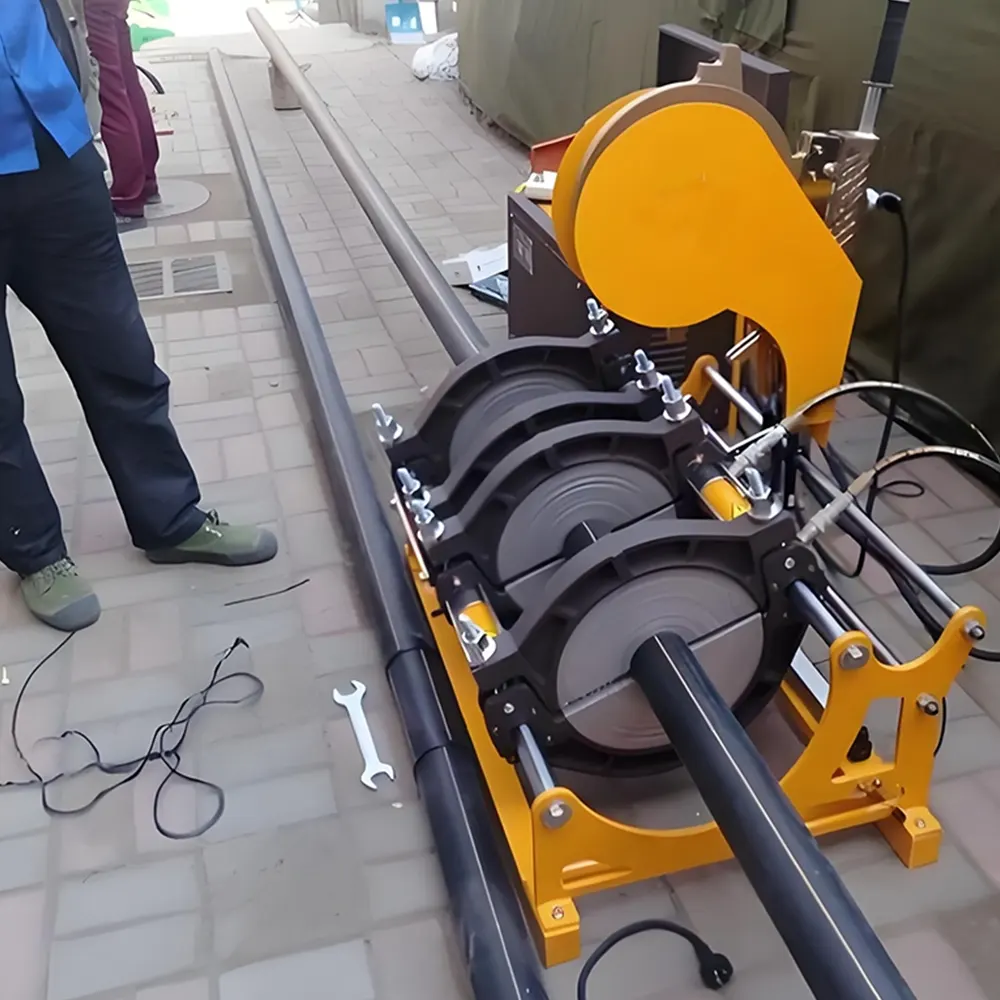
When buyers start comparing welding equipment for polyethylene pipe systems, one question comes up again and again: what affects butt fusion machine and electrofusion machine pricing the most? For many contractors, distributors, and project managers, the answer is not simply “the machine itself.” The final price reflects a combination of technology, capacity, build quality, control systems, brand support, and long-term operating value. Understanding these factors helps you avoid overpaying for features you do not need, while also preventing the much more expensive mistake of buying equipment that cannot meet project requirements.
Electrofusion machines are widely used in gas distribution, water supply, municipal pipeline repairs, and industrial HDPE installations. Compared with other pipe-joining methods, they offer precise heat control, strong joint quality, and efficient operation. However, the market includes many models at very different price points. Some are compact and affordable for small-site use, while others are advanced, fully automated systems designed for demanding infrastructure projects. If you know what drives the cost, you can choose equipment that matches both your budget and your jobsite needs.
One of the biggest pricing factors is the machine’s technical capability. Basic electrofusion machines usually provide standard voltage output, simple parameter input, and limited data recording. These models are often suitable for smaller projects or users who need straightforward operation. In contrast, more advanced machines may include intelligent control systems, barcode scanning, automatic recognition of fitting parameters, fault alarms, welding history records, and USB or printer output. Each added function increases production complexity and component cost, which is reflected in the price.
Tip: If your team works on repeat jobs with the same pipe sizes and fittings, a mid-range machine may deliver the best return. If you handle public utility or large-scale infrastructure work, investing in higher automation can reduce errors and improve productivity.
Another major factor is welding range and output capacity. Electrofusion machines are built to support different fitting sizes and power demands. A machine designed for small-diameter pipes will naturally cost less than one built to handle larger diameters and higher power output. This is because larger-capacity equipment requires stronger internal components, more robust power electronics, and better thermal control. When evaluating price, always check whether the machine can cover your actual pipe range. Buying a low-priced model that cannot handle future projects may cost more in the long run.
Build quality also plays a central role. A machine with a durable housing, premium wiring, stable output board, and high-quality connectors usually performs better over time. In many cases, lower-priced machines save money by using lighter materials or less advanced protection systems. That may be acceptable for occasional use, but not for continuous operation on critical pipeline projects. Well-made equipment can resist dust, vibration, transport stress, and rough site conditions. In the welding industry, reliability is often worth more than a small upfront discount.
Control accuracy is another point that affects pricing. Electrofusion welding depends on precise voltage and time management. If the output is unstable, the joint quality may be compromised, leading to leakage or costly rework. Machines with more accurate controllers, better temperature compensation, and tighter output tolerance are generally more expensive because they require more sophisticated electronics and testing. This is especially important for projects that demand consistent performance across many welds.
The level of automation can change the price significantly. Manual-entry machines tend to be less expensive because operators input the welding parameters themselves. Semi-automatic models may include assisted input, memory functions, or digital verification. Fully automatic versions can read fitting codes, identify welding settings, and complete the cycle with minimal user intervention. Automation reduces human error and improves efficiency, but it also raises the machine’s cost. For companies with trained crews and high-volume work, automation may save labor costs and improve quality control.
Brand reputation and manufacturing experience are also built into the price. Established manufacturers often invest more in R&D, production consistency, and post-sale support. That does not mean every well-known brand is overpriced, but it does mean the cost often includes trust, service stability, and lower risk. For example, JQ-Fusion is known for professional HDPE welding equipment, strict quality control, and OEM/ODM flexibility, which can add value beyond the machine body itself. Buyers often pay a bit more for dependable support and fewer operational surprises.
High-value machines are not always the most expensive ones. The best choice is often the model that balances stable output, suitable capacity, practical features, and long service life. A lower initial purchase price may be outweighed by repairs, downtime, and training issues later.
Customization requirements can also increase price. Many buyers need specific voltages, plug standards, casing colors, control languages, branding, or project-specific software settings. Some may request ruggedized enclosures or transport cases for remote job sites. OEM and ODM customization is particularly relevant for distributors who want to build private-label product lines. Customized machines require additional engineering, setup, and production coordination, so the price will usually be higher than that of standard stock units.
Accessories and package contents matter too. A machine sold with only the main unit may appear cheaper at first glance. But if the kit includes output cables, connection clamps, scanning tools, printer support, or protective cases, the total value may be much better. Some suppliers also offer calibration documents, manuals, and training materials as part of the package. Before comparing prices, confirm exactly what is included. Otherwise, you may end up paying separately for items that should have been part of the initial quote.
Certification and compliance add another layer to pricing. Machines manufactured in compliance with international standards and tested by recognized third parties, such as SGS, generally cost more than uncertified alternatives. That is because certification often involves additional material checks, testing procedures, and documentation. For projects in regulated markets, certification is not optional; it is part of the procurement requirement. In those cases, a certified machine is often the only practical choice, even if it costs more.
Supply chain conditions can influence price as well. Raw material costs, electronic component availability, labor expenses, shipping fees, and currency fluctuations all affect the final market rate. During periods of high logistics pressure, even standard machines may rise in price. Buyers should consider not only the listed unit price but also packaging, lead time, freight, import duties, and possible after-sales service costs. A low factory quote may look attractive until shipping and customs are added.
Important: Fast delivery can be worth paying for if your project schedule is tight. Delays in welding equipment delivery can stop installation crews and create far higher losses than the difference between two machine quotes.
After-sales support is another hidden part of price. A machine from a supplier that offers technical guidance, troubleshooting, spare parts, and responsive communication often represents better long-term value than a cheaper machine with no service backup. In pipeline work, downtime is expensive. If a machine fails on site and there is no support channel, the savings from a lower purchase price can disappear quickly. This is why many professional buyers look beyond the sticker price and evaluate supplier reliability carefully.
Training and ease of use also affect total ownership cost. A machine with an intuitive interface, clear display, and simple parameter settings may reduce operator mistakes and training time. That can be very valuable for companies with rotating crews or subcontractors. More complex machines can be worth the higher price if they provide better control, but only when the team is prepared to use them properly. In many cases, the “cheapest” machine becomes expensive when operators struggle to use it correctly.
When comparing electrofusion machine prices, it helps to think in terms of project fit rather than just budget size. A water utility contractor, a gas pipeline installer, and a distributor serving multiple regions may all need different specifications. A machine that is perfect for one buyer may be overpriced or underpowered for another. The right question is not “Which machine costs less?” but “Which machine delivers the best value for my application?” That is the mindset that leads to smarter procurement.
For buyers who also purchase other HDPE welding equipment, it is useful to compare product categories within the same supplier’s range. A manufacturer that offers manual, hydraulic, automatic, and electrofusion solutions can often provide better technical consistency and service coordination. If your projects include different joining methods, working with one trusted supplier may simplify maintenance, training, and spare-part planning. Explore more options through the supplier’s product ecosystem, including butt fusion machine solutions and other pipe welding equipment.
JQ-Fusion, for example, has over 20 years of industry experience and focuses on durable, customizable welding equipment for global pipeline projects. Its manufacturing capability, strict quality control, and support for OEM and ODM make it attractive for contractors and distributors who need dependable performance and flexible configuration. For international buyers, these strengths can reduce procurement risk and improve lifecycle value.
In practical terms, the main factors affecting electrofusion machine price can be grouped into six areas: technical features, welding capacity, build quality, automation level, certifications, and supplier support. If a quote is lower than expected, there is usually a reason. Sometimes the machine is a basic model with limited functions. Other times the price excludes essential accessories, shipping, or support. The safest approach is to compare full specifications, not just the headline number.
When you are ready to request a quote, prepare a clear list of project requirements: pipe diameters, fitting types, voltage standard, site conditions, operator experience, and expected workload. This information helps suppliers recommend the correct machine and prevents unnecessary overspending. A good supplier will not only sell equipment but also help you match performance with application.
Bottom line: Electrofusion machine price is shaped by performance, durability, automation, certification, and service. The best investment is usually the machine that meets your real job demands with consistent quality and reliable support.
FAQ 1: Why do some electrofusion machines cost much more than others?
The difference usually comes from automation, output accuracy, larger welding range, better components, certification, and supplier support. More advanced machines require more engineering and testing, which increases the price.
FAQ 2: Is a cheaper electrofusion machine always a bad choice?
Not always. A basic model can be suitable for smaller projects or occasional use. The key is to make sure it has the capacity, stability, and safety features required for your application.
FAQ 3: Does certification really affect the price?
Yes. Certified machines usually cost more because they go through stricter testing and compliance checks. For regulated projects, certification is often necessary rather than optional.
FAQ 4: Should I pay more for automation?
If your team handles frequent welding jobs or needs to reduce operator error, automation can be worth the extra cost. It often improves efficiency, consistency, and record-keeping.
FAQ 5: What should I check before comparing quotes?
Confirm the voltage standard, pipe size compatibility, included accessories, warranty terms, lead time, and after-sales support. Comparing only the machine price can be misleading.



