
In pipeline construction, water supply systems, gas distribution networks, mining projects, and industrial installations, the quality of each welded joint can determine the safety and lifespan of the entire system. That is why the question butt fusion machine training requirements matters so much. A welding machine operator is not only someone who presses buttons and sets temperatures. This role requires technical knowledge, hands-on skill, safety awareness, and the discipline to follow exact procedures every time.
For employers, contractors, and distributors, understanding welding machine operator training requirements helps reduce project risks, improve weld quality, and protect workers. For operators, proper training creates confidence and consistency. For project owners, it reduces costly rework, leaks, and equipment failure. In modern HDPE pipeline work, where fusion quality directly affects long-term performance, professional training is not optional—it is essential.
Why Training Matters for Welding Machine Operators
Welding machine operators work with equipment that must deliver precise heat, pressure, alignment, and timing. Even small errors in any of these factors can create weak welds. A weak weld in a pipeline may not fail immediately, but it can become a serious problem over time under pressure, vibration, or environmental stress.
Training ensures that operators understand not only how to use the machine, but also why each step matters. They learn how material type, pipe diameter, ambient temperature, and machine condition affect the fusion result. They also learn to identify unsafe conditions before they lead to accidents. In short, training turns machine operation into a controlled professional process rather than a guess-based task.
Key point: A trained operator protects both weld quality and site safety. The machine may be advanced, but the operator’s knowledge determines the final result.
Basic Educational Requirements
Most welding machine operator roles do not require a university degree, but a basic educational foundation is important. Operators should be able to read instructions, understand numerical settings, follow procedural documents, and record job data accurately. In many cases, a high school education or equivalent is preferred because the job involves technical measurement and equipment operation.
Reading comprehension is especially important when operators must follow machine manuals, safety rules, welding charts, and site-specific procedures. They should also be comfortable with basic math, such as interpreting pressure values, timing cycles, pipe dimensions, and temperature settings. These skills help operators set the machine correctly and avoid mistakes that could affect the weld.
Core Technical Training Areas
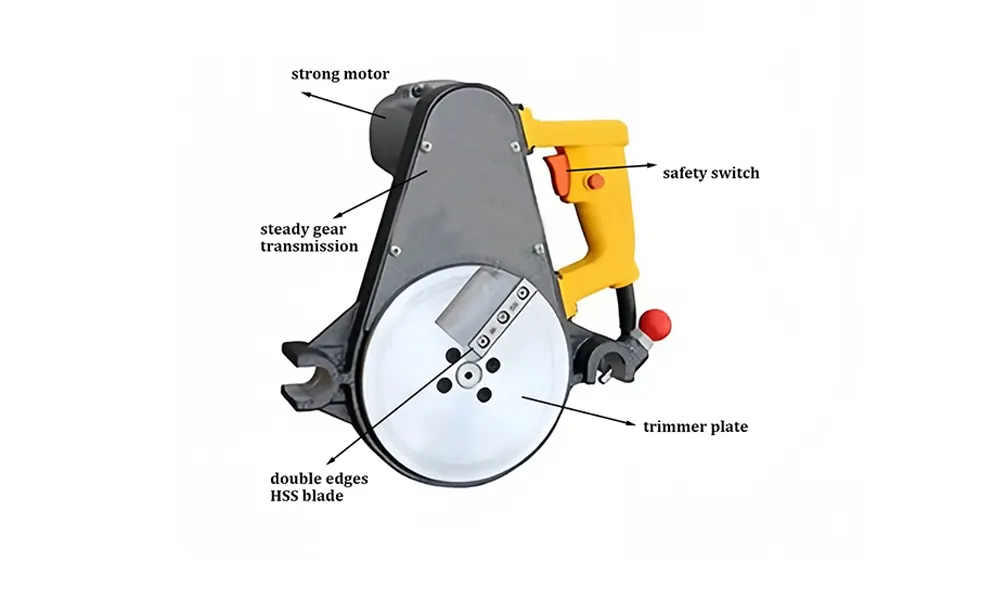
Operator training usually begins with machine fundamentals. Whether the equipment is manual, hydraulic, or CNC automatic, the operator must understand the main components and functions. This includes the heating plate, clamps, pressure system, control panel, hydraulic unit, and trimming tools.
One major training area is material knowledge. HDPE pipe fusion requires operators to understand the characteristics of polyethylene materials, including how they soften, melt, and bond under heat and pressure. They also need to know how to inspect pipe ends, clean surfaces, and prepare the fusion zone correctly.
Another important area is process control. Operators must learn the full fusion sequence: pipe setup, facing, alignment, heating, changeover, cooling, and inspection. They should know how to apply the correct pressure at the correct time and how to prevent contamination during the process. Many projects also require operators to maintain records, so training should include documentation and traceability procedures.
For projects involving advanced equipment, operators may also need training in digital controls, data logging, and alarm response. This is especially relevant when working with an automatic butt fusion welding machine, where programmable settings and electronic monitoring can improve consistency but still require skilled supervision.
Important skills include: pipe preparation, temperature control, pressure management, joint alignment, cooling discipline, and inspection after welding.
Safety Training Requirements
Safety is a major part of operator qualification. Welding machines involve heated surfaces, moving parts, hydraulic pressure, electrical systems, and heavy pipe sections. Operators must know how to work safely around all of these hazards.
Safety training should cover personal protective equipment, such as gloves, safety shoes, eye protection, and heat-resistant clothing. It should also include lockout procedures, emergency shutdown methods, and safe handling of hot tooling. Operators must understand how to protect themselves and others during pipe handling, machine movement, and heating operations.
In addition, operators should be trained to identify unsafe work conditions. These may include unstable ground, damaged cables, leaking hydraulic fluid, poor ventilation, incorrect power supply, or unqualified personnel entering the work zone. Good safety awareness prevents incidents and supports more efficient operations.
When a project uses an hydraulic butt fusion welding machine, safety training becomes even more important because pressure systems require careful handling and proper maintenance to operate reliably.
Hands-On Practice and Supervised Field Training
Theoretical knowledge alone is never enough. A qualified welding machine operator must also complete supervised practical training. This part of the learning process allows operators to practice real procedures under the guidance of experienced trainers or supervisors.
During field training, operators learn how to set up the machine on site, position the pipes, check alignment, prepare the ends, and run a complete fusion cycle. They also learn how to respond when something goes wrong, such as temperature fluctuation, pressure instability, or a pipe that does not fit properly. This experience is valuable because real job sites rarely match ideal classroom conditions.
Supervised training also builds confidence. New operators often need repeated practice before they can work independently. By working on different pipe sizes and in different weather conditions, they develop the judgment needed to produce consistent welds across many types of projects.
Practical training should include: setup, calibration, weld execution, troubleshooting, cleanup, and final inspection.
Certification and Competency Validation
In many industries, training is followed by a competency assessment or certification process. This may include a written exam, practical test, or both. The purpose is to confirm that the operator can use the machine correctly and safely without constant supervision.
Certification requirements vary by region, employer, and project specification. Some clients require documented training records, while others ask for third-party verification. In international projects, it is common for contractors to request evidence that operators are qualified for the specific type of welding work being performed.
Competency validation is especially important in global pipeline projects where standards may differ from one country to another. A certified operator gives project managers greater confidence that welds will meet technical expectations and quality requirements.
Machine-Specific Training for Different Equipment Types
Not all welding machines are the same. Operators must be trained on the exact equipment they will use. A manual machine requires strong procedural discipline and close attention to timing. A hydraulic model adds pressure control and system maintenance responsibilities. A CNC automatic machine adds digital interfaces, parameter input, and often more advanced monitoring.
That is why generic training is not enough. Operators should receive instruction tailored to the machine model, its controls, and its performance features. They should also understand the recommended pipe diameter range, power requirements, and maintenance schedule for that specific equipment.
If a company uses a range of products, such as a multi-angle pipe fitting welding machine, operators must also learn how different joint geometries affect setup, heating, and alignment.
Maintenance Awareness and Daily Equipment Checks
A skilled operator does more than run the machine. They also perform routine checks that help keep the equipment in good condition. Training should include daily inspection habits such as checking the heating plate, cleaning the clamps, verifying pressure readings, and examining hydraulic hoses or electrical cables for wear.
Operators should know the difference between a minor issue that can be corrected on site and a serious fault that requires technical support. They should also understand basic maintenance tasks, including cleaning, safe storage, and reporting abnormal machine behavior. These habits reduce downtime and extend equipment life.
In well-managed projects, operator training and maintenance training go hand in hand. This helps ensure the machine remains accurate and dependable, especially when projects rely on tight timelines and high-volume production.
Communication, Documentation, and Quality Control
Modern welding operations require more than technical operation. Operators often work with supervisors, inspectors, and project managers who depend on accurate reporting. Training should therefore include communication skills and basic documentation practices.
Operators may need to record fusion parameters, job numbers, pipe sizes, weather conditions, and inspection results. These records help with quality assurance and traceability. If a problem occurs later, accurate documentation can help identify the cause and prevent repeat issues.
Quality control training teaches operators how to evaluate finished welds, recognize surface defects, and follow rejection criteria. They should know when a weld must be redone, when to pause work, and when to ask for inspection support. This is especially valuable in critical infrastructure projects where reliability is non-negotiable.
Quality control reminder: a weld is only successful when it meets both visual and technical requirements. Good documentation supports consistent results.
Soft Skills That Improve Operator Performance
Technical training is critical, but soft skills also matter. A good operator must be patient, focused, and willing to follow procedures exactly. Attention to detail is essential because fusion welding leaves little room for improvisation. Operators also need discipline to repeat the same high standard across many welds.
Teamwork is another important skill. On job sites, operators often coordinate with helpers, supervisors, and inspection staff. Clear communication helps avoid delays and reduces the chance of errors during pipe alignment and movement. Adaptability is also useful because work conditions can change quickly, especially on outdoor or remote projects.
Companies such as JQ-Fusion support these needs by offering equipment and technical support for different project environments, helping users achieve stable performance across a wide range of pipeline applications.
How Employers Can Build an Effective Training Program
An effective training program should combine classroom learning, practical demonstration, supervised practice, and periodic reassessment. Employers should start with machine fundamentals, then move into safety, process control, and quality checks. Once operators show basic competence, they should practice on real pipe sizes and real project conditions.
Training should not end after the first certificate. Regular refresher sessions help operators stay updated on equipment changes, project standards, and improved welding methods. This is especially important when companies introduce new machines or new work procedures.
Employers should also keep training records for each operator. These records help track who is qualified on which machine and can support compliance during audits, inspections, or client reviews.
Conclusion
Welding machine operator training requirements are built around education, technical understanding, hands-on experience, safety knowledge, certification, and ongoing improvement. An operator must know how to prepare the pipe, control the machine, follow the correct process, and inspect the result. Just as importantly, the operator must understand how to work safely and communicate clearly on the job site.
For organizations working on HDPE pipeline systems, training is an investment in quality, safety, and efficiency. With the right program, operators can produce strong, repeatable welds and help ensure the success of every project. Whether the work involves manual, hydraulic, or automatic equipment, the principle remains the same: skilled operation creates reliable fusion performance.
FAQ
Q1: Do welding machine operators need formal certification?
In many projects, yes. Certification may be required by employers, clients, or industry standards to prove that the operator can work safely and correctly.
Q2: How long does operator training usually take?
The duration varies depending on the machine type, the operator’s experience, and the project requirements. Basic training may take days, while full competency can take longer with supervised practice.
Q3: Can an operator train on one machine and use another model immediately?
Not safely. Each machine model has its own controls, settings, and procedures, so model-specific training is recommended before independent use.
Q4: What is the most important skill for a welding machine operator?
Attention to detail is one of the most important skills, because proper alignment, timing, pressure, and temperature control all depend on careful execution.
Q5: Why is refresher training necessary?
Refresher training helps operators maintain quality, adapt to new equipment or standards, and reduce the risk of errors over time.



