
Selecting the right pipe material and corresponding welding method is a critical decision for any pipeline project, impacting long-term performance, installation costs, and maintenance requirements. Two of the most common materials used across industries are High-Density Polyethylene (HDPE) and steel. While both are robust, their welding techniques differ fundamentally, leading to distinct advantages and considerations.
Fundamental Welding Processes: A Side-by-Side Look
The core distinction lies in the material science. Steel welding is a fusion of metals through intense heat, while HDPE welding is a fusion of thermoplastics through controlled heating and pressure.
HDPE Pipe Welding Methods
HDPE welding relies on heating the pipe material to a molten state and fusing it together. The two primary methods are:
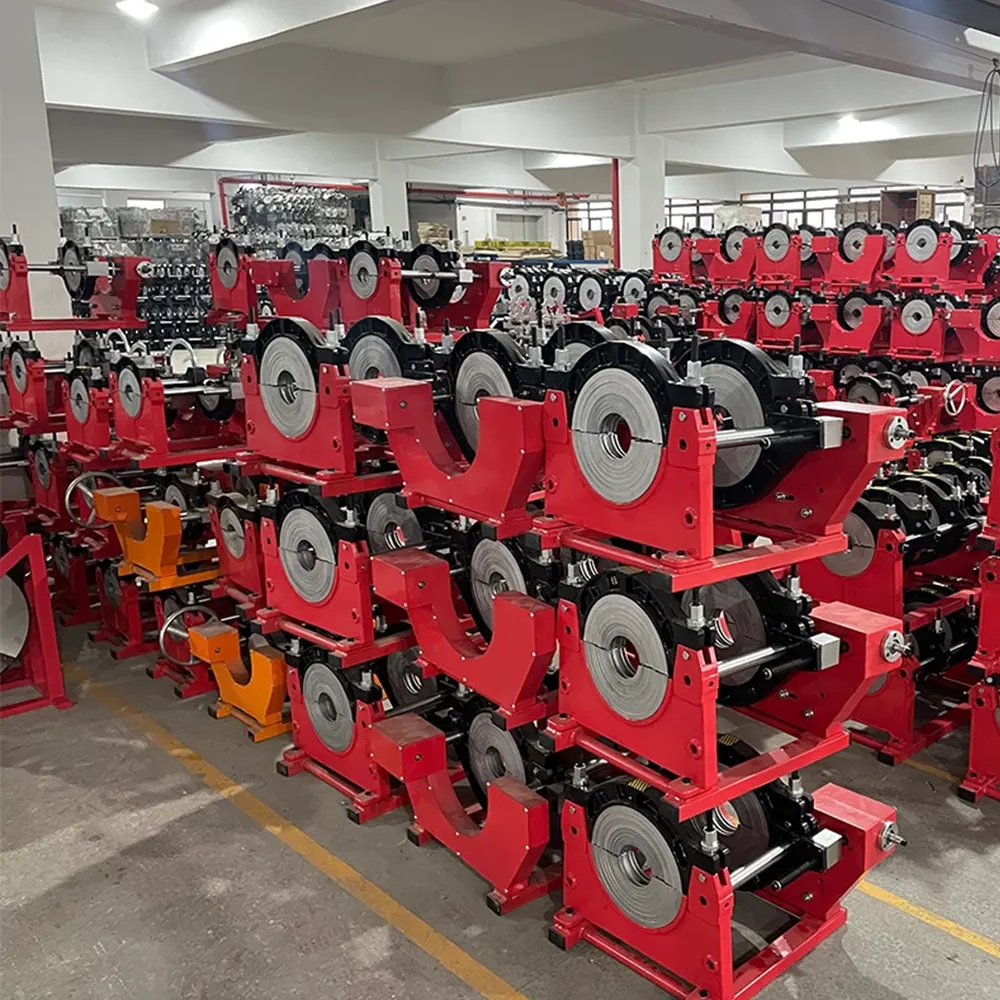
Butt Fusion Welding: This is the most common method for joining straight sections of HDPE pipe. The pipe ends are heated with a hot plate, removed, and then pressed together under controlled pressure. The result is a seamless, homogeneous joint as strong as the pipe itself. This process requires a specialized butt fusion machine, which can range from manual to fully automated CNC units.
Electrofusion Welding: Used for fittings, repairs, or complex connections. A fitting with integrated heating wires is placed over the pipe ends. When an electrical current is applied, the wires heat up, melting the interface between the fitting and the pipe to create a strong bond.
Steel Pipe Welding Methods
Steel welding involves melting the base metal and often adding a filler material to form the joint. Common techniques include:
Shielded Metal Arc Welding (SMAW) or “Stick Welding”: A versatile and widely used method suitable for various field conditions.
Gas Tungsten Arc Welding (GTAW/TIG): Offers high precision and clean welds, often used for critical applications or thinner walls.
Gas Metal Arc Welding (GMAW/MIG): Provides high deposition rates and is efficient for longer production runs.
Key Comparative Factors: HDPE vs. Steel Welding
Skill & Labor Requirements
Steel welding is a skilled trade requiring extensive training and certification to master techniques, interpret weld quality, and manage variables like heat input and filler material. In contrast, operating a modern butt fusion machine is highly procedural. Once parameters (heat time, pressure, cool time) are set for the pipe specification, the process is largely automated, reducing the dependency on highly skilled welders and increasing consistency.
Joint Integrity & Inspection
A properly executed HDPE butt fusion joint is monolithic—it becomes the strongest part of the pipeline, resistant to leaks and corrosion. Inspection is often visual (checking bead rollover) and procedural. Steel welds, while extremely strong, are heterogeneous (a mix of base and filler metal) and can be susceptible to defects like porosity, cracking, or incomplete fusion. Inspection is more rigorous, often involving non-destructive testing (NDT) like X-ray or ultrasonic examination, adding time and cost.
Environmental & Site Conditions
HDPE welding can be performed in most weather conditions, including light rain, and does not produce open flames or toxic fumes. Steel welding requires a dry environment to prevent hydrogen-induced cracking, is affected by wind (shielding gas disruption), and involves significant hot work permits and safety protocols for sparks and UV radiation.
Equipment & Mobility
Steel welding rigs are generally more portable but require power sources, gas cylinders, and ventilation. HDPE fusion equipment, especially for larger diameters, can be bulky but is often designed for field deployment. The choice of equipment, such as a hydraulic or automatic butt fusion machine, depends on project scale and required precision.
Speed and Total Installed Cost
For diameter-for-diameter comparisons, HDPE fusion can be faster for long runs as it avoids beveling, pre-heating, and multi-pass welds. The total installed cost often favors HDPE when considering lower labor skill costs, no need for corrosion protection, and reduced long-term maintenance. Steel may have a lower material cost upfront but higher lifetime costs due to coating, cathodic protection, and potential repair.
Which is Better for Your Project? A Decision Framework
The “better” method is entirely project-dependent. Use this framework to guide your choice:
Choose HDPE and Its Welding Methods If:
✔ The application involves water, slurry, chemicals, or natural gas where corrosion resistance is paramount.
✔ The project has a tight timeline and benefits from rapid, weather-resistant installation.
✔ Long-term lifecycle cost is a higher priority than initial material cost.
✔ The terrain requires flexibility and trenchless installation methods like directional drilling.
✔ You have access to reliable fusion equipment and trained operators.
Choose Steel and Its Welding Methods If:
✔ The project requires extremely high temperature or pressure ratings beyond thermoplastic limits.
✔ Structural rigidity and minimal deformation under load are non-negotiable.
✔ The pipeline is exposed to constant UV radiation or requires fire resistance.
✔ You have abundant access to highly certified welders and NDT inspection teams.
✔ Existing infrastructure or industry standards mandate the use of steel.
The Critical Role of Equipment Quality
For HDPE welding, success hinges on the quality and precision of the fusion equipment. A poorly calibrated or unreliable machine can lead to cold welds, bead defects, and joint failure. Partnering with an experienced manufacturer like JQ-Fusion, which offers rigorously tested and customizable butt fusion machines, is an investment in project reliability. Their focus on strict quality control and technical support ensures that the welding process itself does not become a project risk.
Frequently Asked Questions (FAQs)
Can HDPE and steel pipes be welded together?
No, they cannot be directly welded due to their incompatible material properties. Connections between HDPE and steel systems require mechanical fittings, such as flanged adapters or transition fittings specifically designed for this purpose.
Is HDPE welding as strong as steel welding?
In the context of the joint itself, a correctly made HDPE butt fusion joint is as strong as or stronger than the pipe body in terms of tensile strength and pressure rating. However, steel as a material has a higher overall tensile strength and modulus of elasticity, making it stiffer and suitable for different mechanical loads.
Which welding method is more cost-effective?
HDPE welding often has a lower total installed cost for non-extreme applications. It saves on skilled labor, corrosion protection, and joint inspection. Steel may have lower material costs initially, but the costs for skilled labor, welding consumables, inspection, and maintenance (like repainting) add up over the project’s life.
What is the main risk with HDPE butt fusion welding?
The primary risk is operator error or equipment malfunction leading to a “cold weld.” This occurs when insufficient heat, pressure, or alignment prevents full molecular intertwining, creating a weak joint that may fail under pressure. Using well-maintained, quality equipment from trusted suppliers is the best mitigation.
How do I choose the right size and type of fusion machine?
Selection depends on your most common pipe diameter range, project site conditions (requiring hydraulic or electric power), and desired level of automation. Consulting with an experienced manufacturer who can provide customized solutions based on your specific pipeline requirements is highly recommended to ensure optimal performance and value.



