
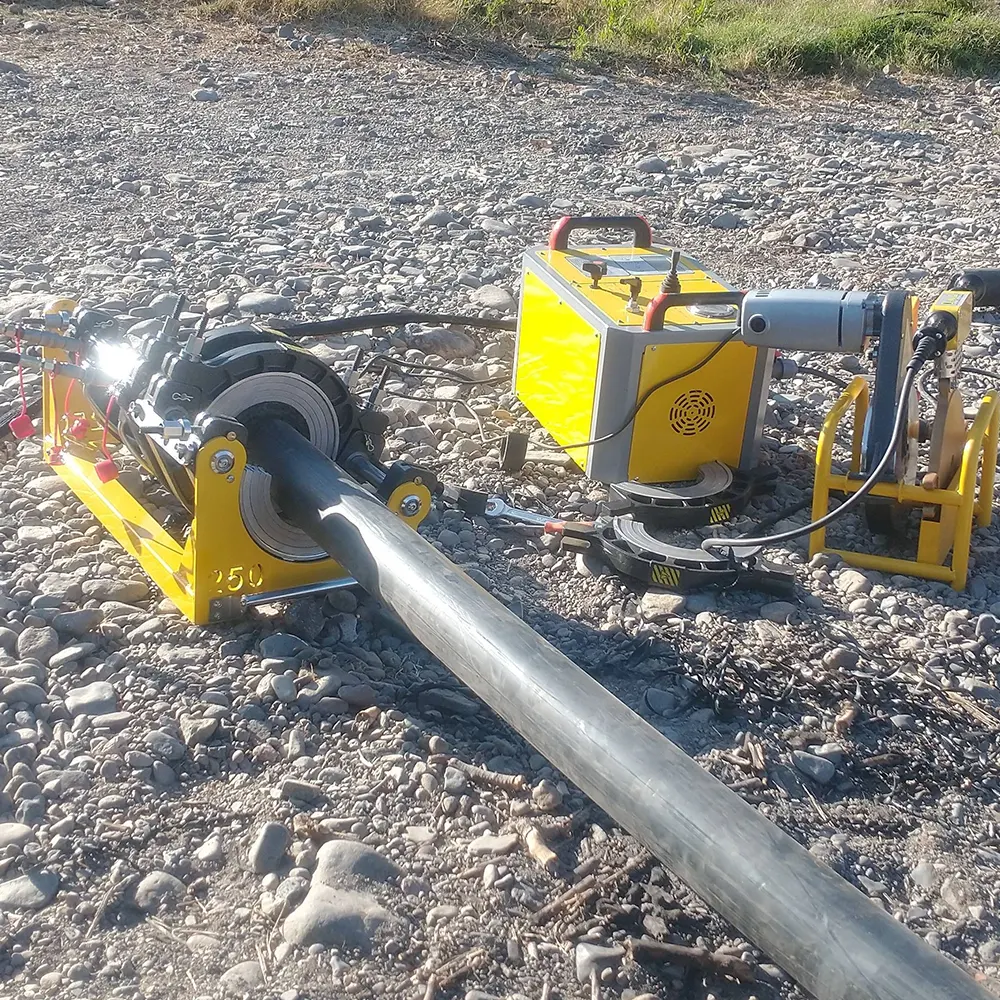
HDPE pipe welding plays a critical role in modern pipeline construction, especially in water supply, gas distribution, mining, and industrial systems. When the welding process is done correctly, the joint can be as strong and durable as the pipe itself. However, even small mistakes during heating, alignment, pressure control, or cooling can lead to defects that reduce performance and shorten service life.
Understanding what the common HDPE pipe welding defects are and why they happen is essential for contractors, technicians, and project managers who want to improve weld quality and reduce costly rework. This article explains the most frequent defects in butt fusion welding, their root causes, prevention methods, and practical inspection tips. If you are evaluating equipment or learning more about fusion joining, you can also explore a professional butt fusion machine supplier for reliable project support.
1. Why HDPE Pipe Welding Quality Matters
HDPE piping systems are valued for flexibility, corrosion resistance, long service life, and excellent chemical stability. But these advantages depend heavily on the quality of the weld joint. A defective fusion joint may not fail immediately, yet it can create long-term risks such as leakage, pressure loss, deformation, or complete pipeline shutdown.
In many engineering projects, the welded joint is the weakest point only when the process is poorly controlled. A strong weld requires the correct combination of temperature, time, pressure, pipe preparation, and cooling. For this reason, welding quality is not just a manufacturing issue; it is a system safety issue.
Key point: A high-quality HDPE fusion joint should show uniform bead formation, proper alignment, stable fusion pressure, and no visible contamination or overheating signs.
2. Common HDPE Pipe Welding Defects
2.1 Misalignment
Misalignment occurs when the two pipe ends are not positioned on the same centerline before or during welding. This defect can create uneven stress distribution across the joint and reduce the load-bearing capability of the pipeline.
Common causes: poor clamp setup, inaccurate pipe cutting, insufficient pipe support, pipe movement during heating or cooling, and operator inexperience. In large-diameter projects, even a small angular deviation can become a major structural issue over time.
2.2 Contamination in the Fusion Zone
Contamination is one of the most damaging welding defects because HDPE fusion depends on clean, molecular-level contact between surfaces. Dirt, oil, moisture, dust, and even small plastic shavings can interfere with bonding and create weak spots.
Important: Cleaning is not only a visual task. The pipe ends must be properly scraped, wiped, and protected from recontamination before fusion begins.
Common causes: poor site cleanliness, failure to wipe pipe surfaces, use of dirty tools, windy outdoor conditions, and touching prepared surfaces with bare hands.
2.3 Underheating
Underheating happens when the pipe ends are not heated enough to reach the proper fusion temperature. As a result, the material does not soften adequately, and the polymer chains cannot merge fully. The weld may appear acceptable at first but can fail under pressure or thermal cycling.
Common causes: low heating plate temperature, insufficient heating time, incorrect machine settings, cold weather conditions, or removing the pipe from the heater too early.
2.4 Overheating
Overheating is the opposite problem. If the temperature is too high or the heating time is too long, the material may degrade, become brittle, or produce excessive melt flow. This often weakens the internal structure of the bead and can create a brittle joint.
Common causes: excessive heater temperature, prolonged heating time, delayed changeover, and poor process control. Overheating is especially risky when using equipment without stable temperature accuracy.
2.5 Excessive or Insufficient Bead Formation
In butt fusion welding, a visible bead is normal and often used as a sign that fusion has occurred. However, the bead should be even and consistent. If the bead is too large, too small, or irregular, it may indicate pressure or temperature problems.
Common causes: improper fusion pressure, incorrect heating time, heater temperature fluctuation, poor pipe alignment, or inconsistent operator technique. Bead shape is one of the easiest visual clues for spotting process instability.
⚠️ Attention: Do not judge weld quality by bead appearance alone. Internal bonding quality must also be supported by correct process parameters and inspection records.
2.6 Cold Weld
A cold weld is a joint that looks fused but has not bonded properly due to insufficient heat or pressure. This defect may not be obvious externally, which makes it particularly dangerous. A cold weld can separate under stress, especially in pressurized systems.
Common causes: low fusion pressure, insufficient heating, premature removal from the heater, contaminated surfaces, or operator rushing the cycle to save time.
2.7 Burn Marks or Material Degradation
Burn marks or visible discoloration may indicate that the pipe material has been overheated or exposed to direct heat for too long. This can lead to surface brittleness, rough bead texture, and long-term failure risk.
Common causes: heater plate malfunction, poor temperature control, incorrect process settings, or repeated rework on the same joint.
2.8 Ovality and Improper Pipe End Preparation
Pipe ovality refers to a pipe end that is not perfectly round. If the pipe ends are not trimmed, faced, or prepared correctly, the fusion surfaces may not meet evenly. This reduces contact area and can create weak or uneven joints.
Common causes: poor cutting tools, incorrect pipe storage, deformation during transport, insufficient facing, and failure to inspect the pipe end before clamping.
3. Root Causes Behind Welding Defects
Most HDPE welding defects do not happen randomly. They are usually the result of poor control in one or more of the following areas:
1. Equipment condition: unstable heater temperature, inaccurate hydraulic pressure, worn clamps, or poor alignment accuracy can directly affect weld consistency.
2. Operator skill: experienced operators know how to handle pipe preparation, timing, pressure adjustment, and changeover speed. Inexperienced workers often make errors during these steps.
3. Site environment: wind, dust, rain, low temperature, or unstable working platforms can all influence weld quality.
4. Material handling: exposed pipe ends, poor storage, transport damage, or surface contamination can reduce the effectiveness of fusion.
5. Process deviation: even when the equipment is good, the wrong temperature, pressure, or heating time can create poor results.
A reliable welding process requires both the right machine and the right discipline. This is why many contractors choose stable, well-tested equipment and trained technicians rather than relying on guesswork.
4. How to Prevent HDPE Welding Defects
4.1 Use Proper Machine Settings
Before welding starts, verify that the machine is configured for the correct pipe diameter, wall thickness, voltage, temperature, and pressure range. Any mismatch can cause an unstable fusion cycle.
Best practice: always follow the recommended welding parameters for the specific pipe and fitting material.
4.2 Maintain Clean Pipe Ends
Clean pipe ends are essential for strong fusion. After facing and scraping, the surfaces should be free from dust, water, grease, and plastic debris. Do not delay the fusion cycle after cleaning, because contamination can return quickly in outdoor conditions.
4.3 Control Heating and Cooling Time
Heating time, changeover time, and cooling time must be controlled carefully. Rushing the process often creates weak joints, while excessive heating can damage the material structure. Cooling should also be completed without moving or stressing the joint.
Pro tip: Record every welding cycle in a log sheet. Process records make troubleshooting much easier when a defect is found later.
4.4 Inspect the Alignment Before Heating
Pipe alignment should be checked before the heater plate is inserted. A stable clamping system helps keep the pipe ends centered and reduces the risk of misalignment during the fusion cycle.
4.5 Train Operators Regularly
Even the best machine cannot fully compensate for poor operator technique. Regular training should cover pipe preparation, machine operation, parameter selection, defect recognition, and safety procedures.
Many professional suppliers also provide technical support, training, and commissioning guidance. For global projects, this can significantly improve consistency and reduce startup issues. In large-scale operations, choosing a dependable partner with experience in butt fusion technology can improve both weld quality and project efficiency. You can learn more from a trusted butt fusion machine provider that supports different project requirements.
5. Inspection Methods for Detecting Welding Problems
To reduce pipeline risk, welded joints should be inspected immediately after cooling and, when necessary, tested further before the system is put into service.
Visual inspection: check bead symmetry, pipe alignment, discoloration, and surface contamination signs.
Dimensional inspection: confirm that the joint meets project requirements for bead size, alignment, and overall geometry.
Process review: compare recorded time, pressure, and temperature values with the recommended welding procedure.
Non-destructive evaluation: in critical projects, additional testing may be used to verify joint integrity before commissioning.
6. The Role of Reliable Equipment in Preventing Defects
Equipment stability has a direct impact on weld quality. A machine with accurate temperature control, smooth hydraulic pressure, and precise alignment support reduces the chance of human error and process drift. This is particularly important in demanding environments where conditions change quickly.
Professional manufacturers invest in testing and quality control because stable performance matters in real projects. Advanced production capability, strict inspection, and dependable after-sales support all help contractors achieve better results. For this reason, many buyers compare machine reliability, customization flexibility, and technical service before making a purchase decision.
✅ Remember: A good weld starts with clean preparation, correct settings, and consistent machine performance.
7. Conclusion
HDPE pipe welding defects are usually preventable when the process is managed carefully. Misalignment, contamination, underheating, overheating, cold welds, and poor bead formation all point to issues in equipment, environment, or operator practice. By improving preparation, training, process control, and machine reliability, project teams can greatly increase weld strength and pipeline durability.
In practical engineering work, the goal is not only to complete the weld, but to create a joint that remains dependable for years of service. That is why process discipline and quality equipment must work together. Whether the project is for water, gas, mining, or industrial transport, strong fusion performance begins with informed decisions and careful execution.
FAQ
Q1: What is the most common HDPE pipe welding defect?
Misalignment and contamination are among the most common issues because they directly affect joint contact and fusion quality.
Q2: Can a cold weld be identified by appearance alone?
Not always. A cold weld may look normal outside, so process records and proper inspection are important.
Q3: Why does overheating damage an HDPE joint?
Excessive heat can degrade the polymer structure, making the joint brittle and less reliable under pressure.
Q4: How can welding defects be reduced on site?
Use clean pipe ends, accurate machine settings, proper alignment, trained operators, and stable environmental control whenever possible.
Q5: Why is machine quality important for butt fusion welding?
Stable temperature, pressure, and clamp alignment help produce consistent, strong, and repeatable welds across different projects.



