
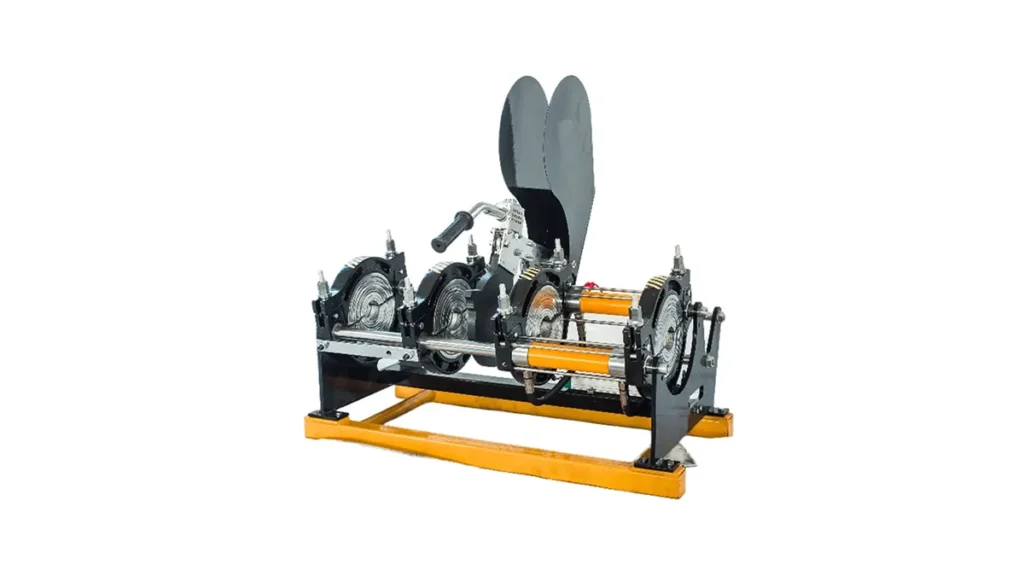
When pipeline contractors, distributors, and project owners search for a butt fusion machine, one term that often appears in procurement discussions is SGS certification. For buyers who need dependable, repeatable welding performance, SGS certified welding machines are often seen as a stronger and safer choice. But what does SGS certification actually mean, and why should it matter to your business?
In the welding industry, performance is not judged by appearance alone. A machine may look robust on the outside, yet still fail to deliver stable temperature control, proper clamp alignment, or consistent pressure during fusion. These details directly affect joint quality, pipe service life, and project safety. That is why many engineers and purchasing teams prefer equipment that has been inspected and certified under recognized standards by SGS.
SGS is known globally as an inspection, verification, testing, and certification company. When welding machines are SGS certified, it indicates that the product has passed defined quality and safety checks according to applicable standards. For customers working on water supply systems, gas distribution networks, mining infrastructure, and industrial pipe installations, this certification can reduce procurement risk and improve confidence in long-term use.
Key point: SGS certification does not replace good engineering, but it adds an extra layer of trust by confirming that the machine has been tested for quality, safety, and performance consistency.
What Does SGS Certification Mean for Welding Machines?
SGS certification generally means a welding machine has undergone testing or evaluation against certain technical requirements. Depending on the product category and market, this may involve safety checks, material verification, electrical performance review, temperature accuracy, pressure stability, or structural inspection. The exact scope depends on the certification program, but the core idea remains the same: the product is independently assessed rather than only self-declared by the manufacturer.
For buyers, this matters because welding machines are used in environments where failure can be costly. A poor-quality weld may cause leakage, rework, downtime, or even operational hazards. Certified equipment helps reduce these risks by demonstrating that the manufacturer follows a disciplined production and testing process.
In practice, SGS certification can also improve procurement efficiency. Many international buyers require third-party certification before approving supplier lists. If a machine is SGS certified, it can help buyers move faster through technical evaluation, compliance review, and import planning.
Why Quality Control Matters in Butt Fusion Welding
Butt fusion welding is widely used for HDPE pipe systems because it creates strong, leak-resistant joints. However, the process is highly dependent on machine accuracy. The heater plate must reach and maintain the correct temperature. The hydraulic system must apply stable and even pressure. The clamps must align the pipes precisely. If any of these elements are inconsistent, the weld quality can be compromised.
That is why manufacturers with strict quality control procedures are often preferred. A reliable machine should be tested for temperature accuracy, hydraulic pressure stability, and clamp alignment before shipment. These checks are especially important for larger projects where dozens or hundreds of joints are made under time pressure.
At JQ-Fusion, for example, quality assurance is part of the production process, not an afterthought. Each unit is inspected to support stable welding performance in real project conditions. This type of disciplined manufacturing is one reason why SGS certification can be so valuable: it reflects a system that prioritizes consistency.
Tip: If a supplier cannot clearly explain how temperature, pressure, and alignment are tested, that is a warning sign. A serious manufacturer should be able to describe its quality process in detail.
Advantages of Choosing SGS Certified Welding Machines
1. Better confidence in product quality — Certification provides an external signal that the machine has been evaluated. This is especially useful for project teams that cannot inspect every unit personally.
2. Reduced project risk — In pipeline construction, a small defect can become a major issue later. Certified equipment can help reduce the chance of poor welds caused by unstable machine performance.
3. Easier compliance review — Many governments, EPC contractors, and distributors prefer suppliers with third-party certification because it simplifies technical approval and documentation.
4. Stronger market credibility — If you are a distributor building your brand, certified products can improve customer trust and support your sales position.
5. More stable long-term operation — Well-tested machines are more likely to maintain consistent output over time, which supports productivity and reduces maintenance surprises.
These benefits become even more important when the machine is used across multiple site conditions, different pipe sizes, or demanding climates. Whether the project is in municipal water infrastructure, gas pipeline installation, or industrial process piping, reliability is a direct business advantage.
How SGS Certified Machines Support Different Project Needs
Not every project has the same requirements. A small urban water project may need a compact manual machine, while a large industrial line may require hydraulic or CNC automatic equipment. SGS certified welding machines are attractive because they can support a wide range of applications while maintaining a clear standard of performance.
For smaller pipe diameters, manual butt fusion units offer simplicity and affordability. For medium and large diameters, hydraulic machines provide better force control and operator efficiency. For high-volume or precision-focused projects, CNC automatic machines can improve repeatability and reduce dependence on manual judgment.
JQ-Fusion offers multiple product categories, including hydraulic butt fusion welding machines, automatic butt fusion welding machines, electrofusion welding machines, and multi-angle pipe fitting welding machines. This broad range allows buyers to choose equipment based on actual project conditions rather than using a one-size-fits-all solution.
Customization is another major factor. Voltage requirements, branding, machine color, functional upgrades, and size configurations may vary by market. A manufacturer with flexible OEM & ODM capabilities can deliver products better aligned with local demand and project standards.
Important: The best machine is not always the most expensive one. It is the one that matches the pipe diameter, welding method, project schedule, and site environment while still providing verified quality.
What Buyers Should Check Before Purchasing
Before selecting a welding machine, buyers should look beyond certification alone. A smart purchase decision usually includes several factors:
• Technical specifications — Confirm pipe diameter range, voltage, heater performance, hydraulic capacity, and compatibility with your standard.
• Manufacturing experience — Suppliers with many years in the field are usually better able to understand real project challenges and provide practical guidance.
• Quality testing process — Ask whether the machine is tested for temperature accuracy, pressure stability, and clamp alignment before delivery.
• After-sales support — Reliable technical support can save time during installation, training, and troubleshooting.
• Delivery capacity — For urgent projects, fast shipping and sufficient stock can be just as important as product quality.
These details are especially important for global buyers who work with strict project deadlines. A machine that arrives late or lacks support can create more cost than a slightly higher initial price ever would.
Why JQ-Fusion Is a Strong Example of a Reliable Manufacturer
With more than 20 years of industry experience, JQ-Fusion focuses on HDPE pipe welding machines for global pipeline projects. Its production capabilities cover manual, hydraulic, and CNC automatic butt fusion machines, serving diverse industries and pipe sizes. This experience matters because manufacturing welding equipment is not only about assembly; it is about understanding heat, pressure, mechanical stability, and real-world operating demands.
The company emphasizes advanced manufacturing technology, strict quality control, flexible customization, and reliable global support. These strengths are relevant for international customers because they address the full lifecycle of a machine: design, production, shipment, installation, and use.
For distributors, this can create a practical market advantage. For contractors, it can mean fewer interruptions and more predictable welding results. For end users, it can mean stronger joints, better safety, and lower maintenance risk over time.
SGS certification adds additional reassurance to these strengths. When certification is combined with strong engineering and responsive support, buyers are more likely to receive equipment that performs as expected under real project conditions.
The Role of Reliable Support After Purchase
Even the best welding machine requires proper setup, training, and maintenance. That is why technical support is a major factor in supplier selection. A manufacturer should be able to guide customers on machine operation, parameter setting, troubleshooting, and basic upkeep. This is particularly important for international projects where local service access may be limited.
Fast response, technical guidance, and efficient logistics can make a meaningful difference when a project is moving quickly. If a supplier can deliver both certified equipment and dependable support, the buyer gains far more than a machine; they gain a workable solution.
In many cases, the long-term value of a welding machine depends on the manufacturer’s willingness to stay involved after the sale. That is why global buyers often prefer suppliers with proven export experience and a clear service structure.
Remember: A certified machine is only part of the equation. Reliable training, documentation, spare parts, and technical guidance are equally important for successful field performance.
Conclusion
SGS certified welding machines are a smart choice for buyers who value quality, safety, and consistent performance. In butt fusion welding, where precise temperature, pressure, and alignment are essential, certification offers useful third-party reassurance. It helps reduce procurement risk, supports compliance, and improves confidence in the machine’s ability to perform in real project environments.
For companies working on water, gas, mining, or industrial pipeline projects, choosing certified equipment can protect both project quality and long-term operating efficiency. When SGS certification is combined with solid manufacturing experience, strict testing, and strong support, the result is a more dependable investment.
That is why many professionals choose manufacturers like JQ-Fusion, which combine broad product coverage, customization ability, and quality-driven production. If your project depends on stable welds and reliable delivery, certification is not just a label; it is part of a smarter buying strategy.
FAQ
Q1: Are SGS certified welding machines better than non-certified ones?
They are generally more trustworthy because they have passed independent testing or evaluation. While certification alone does not guarantee perfection, it does provide an important quality signal and lowers the risk of buying unreliable equipment.
Q2: Does SGS certification mean the machine is suitable for every pipe project?
No. Certification supports confidence in quality and safety, but buyers still need to match the machine to the correct pipe diameter, material, voltage, and welding method for their specific project.
Q3: Why do contractors prefer certified butt fusion machines?
Because certified machines can help ensure stable performance, simplify compliance review, and reduce the likelihood of weld defects that may lead to expensive rework or downtime.
Q4: What should I ask a supplier before buying?
Ask about certification, testing procedures, machine specifications, customization options, stock availability, after-sales support, and whether they can provide technical guidance for installation and operation.
Q5: Can a reliable manufacturer still offer OEM and ODM customization?
Yes. In fact, strong manufacturers often provide OEM and ODM services so buyers can adapt machine size, voltage, color, branding, and technical features to their local market needs.



