
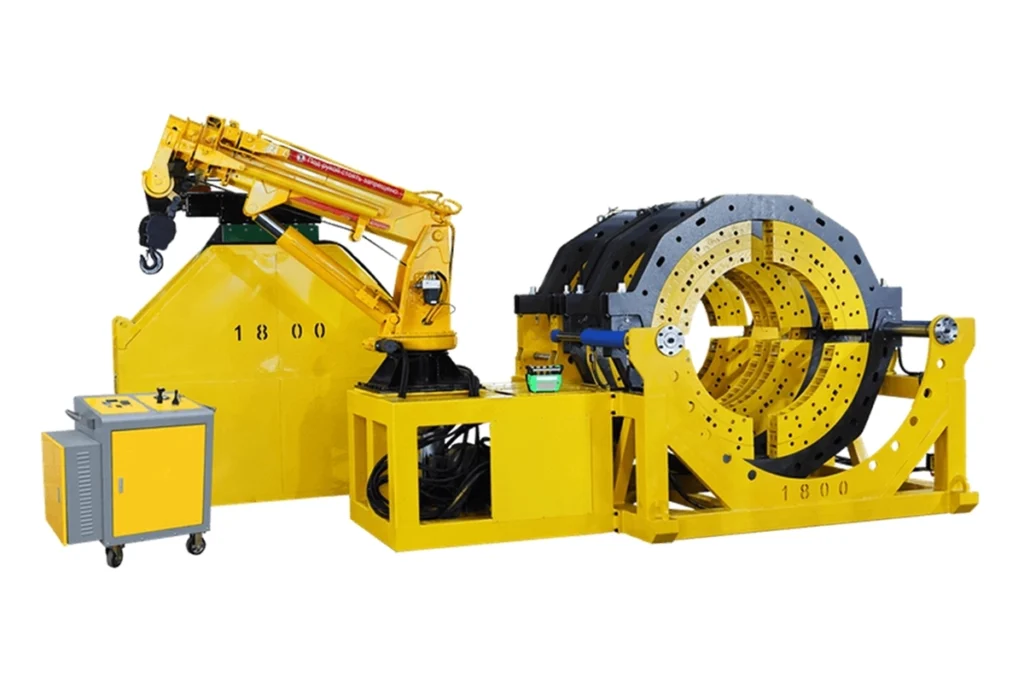
Joining thermoplastic pipes effectively is the cornerstone of modern utility and industrial infrastructure. Whether you’re managing a municipal water supply project, laying gas distribution lines, or installing mining slurry pipelines, the integrity of the fusion joint determines the long-term performance of the entire system. Mastering thermoplastic pipe fusion equipment is not just about having the right machine; it’s about understanding the precise technology behind butt fusion welding processes, operator skill, and adherence to international standards.
Understanding the Core Fusion Technologies
Not all pipe joining methods are created equal. The selection of thermoplastic pipe fusion equipment hinges on pipe diameter, material grade, and site conditions. The two primary techniques — butt fusion and electrofusion — dominate the industry, each with distinct operational advantages. While butt fusion uses precisely controlled heated plates to melt pipe ends under pressure, electrofusion relies on embedded heating coils within specialized fittings. For complex assemblies, multi-angle pipe fitting machines offer segmented solutions for fabricating elbows, tees, and Y-branches directly in the field.
Manual Butt Fusion Machines: Simplicity on Site
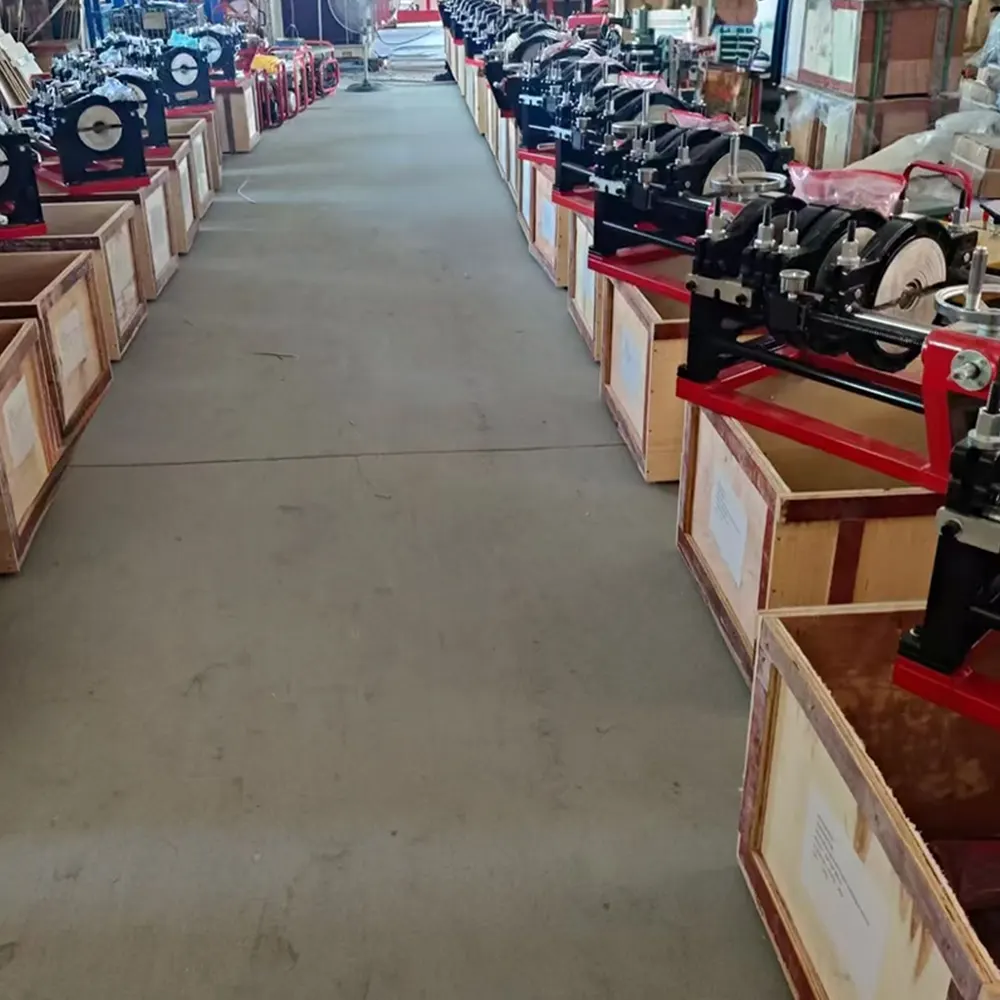
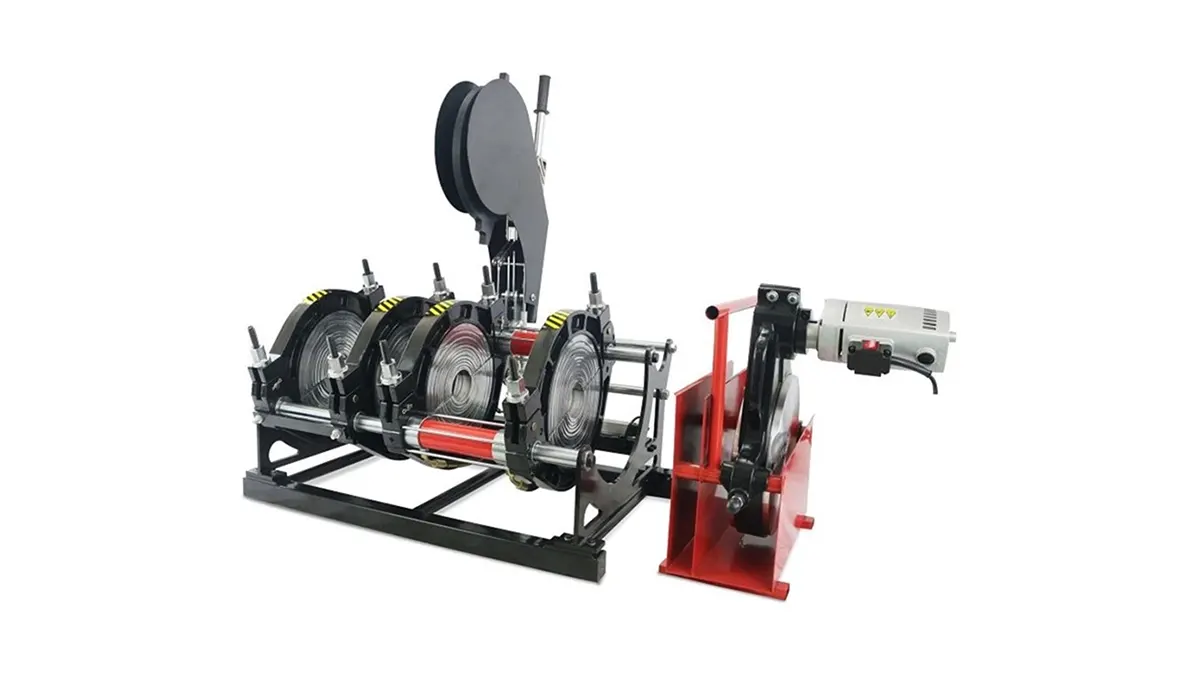
For smaller diameter pipes typically ranging from 20mm to 315mm, manual butt fusion welding machines provide a robust and cost-effective entry point. These units require the operator to manually set the alignment clamps and physically pull the hydraulic lever to apply fusion pressure. Despite their mechanical simplicity, high-quality manual machines incorporate precision-machined jaws and coated heating plates to ensure consistent heat distribution.
Key features to look for in manual thermoplastic pipe fusion equipment include:
- Rigid steel frame: Prevents deflection during high-pressure clamping.
- Non-stick PTFE coated heating plate: Ensures clean separation without residue.
- Quick-lock cam handles: Allows for rapid pipe loading and unloading.
While manual machines are ideal for rural water supply or small-scale plumbing, operators must strictly follow the ISO 21307 butt fusion procedures to avoid cold joints or misalignment. Proper trimming depth and soaking time are absolutely critical.
Hydraulic Butt Fusion Equipment for Large Diameters
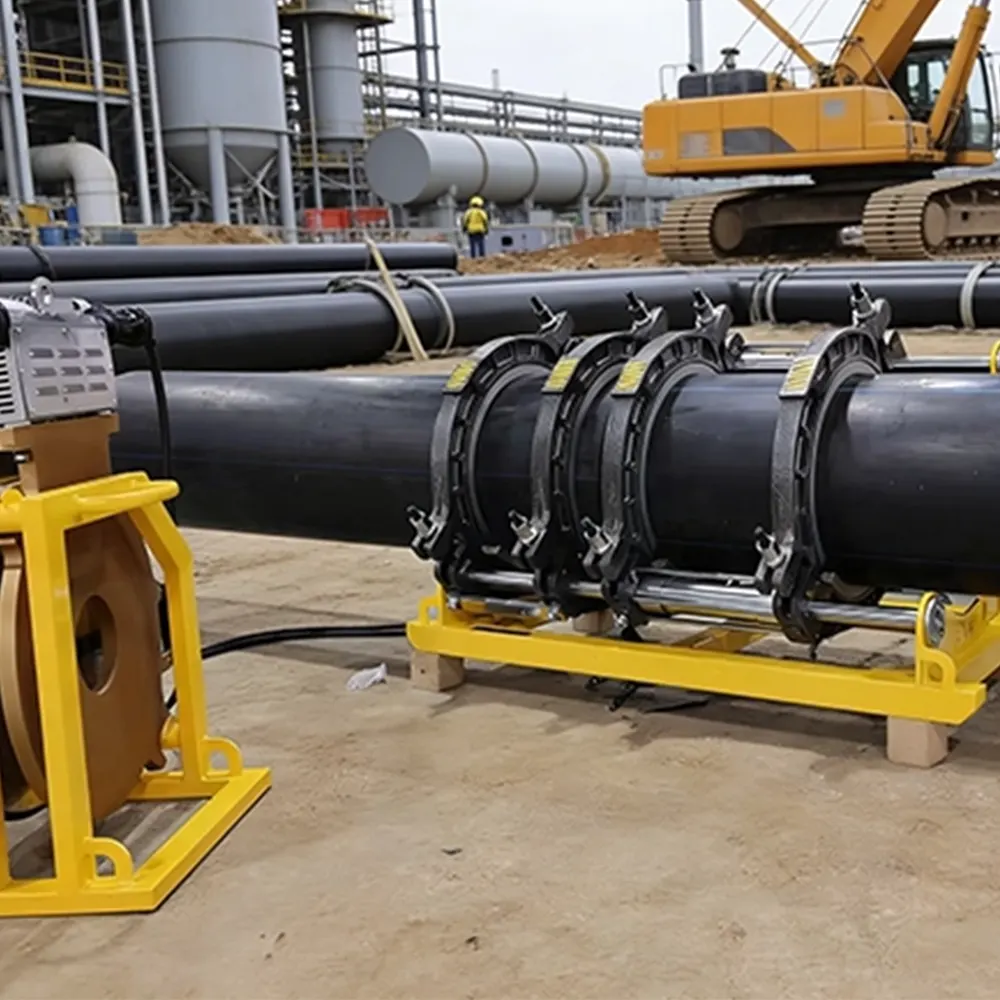
When engineering large-scale transmission pipelines, hydraulic power becomes non-negotiable. Hydraulic butt fusion welding machines remove the physical strain from the operator, using controlled hydraulic cylinders to move the heavy pipe segments into position and apply the exact interfacial pressure required. These machines are the workhorses for HDPE pipes spanning 90mm up to 2,500mm in diameter.
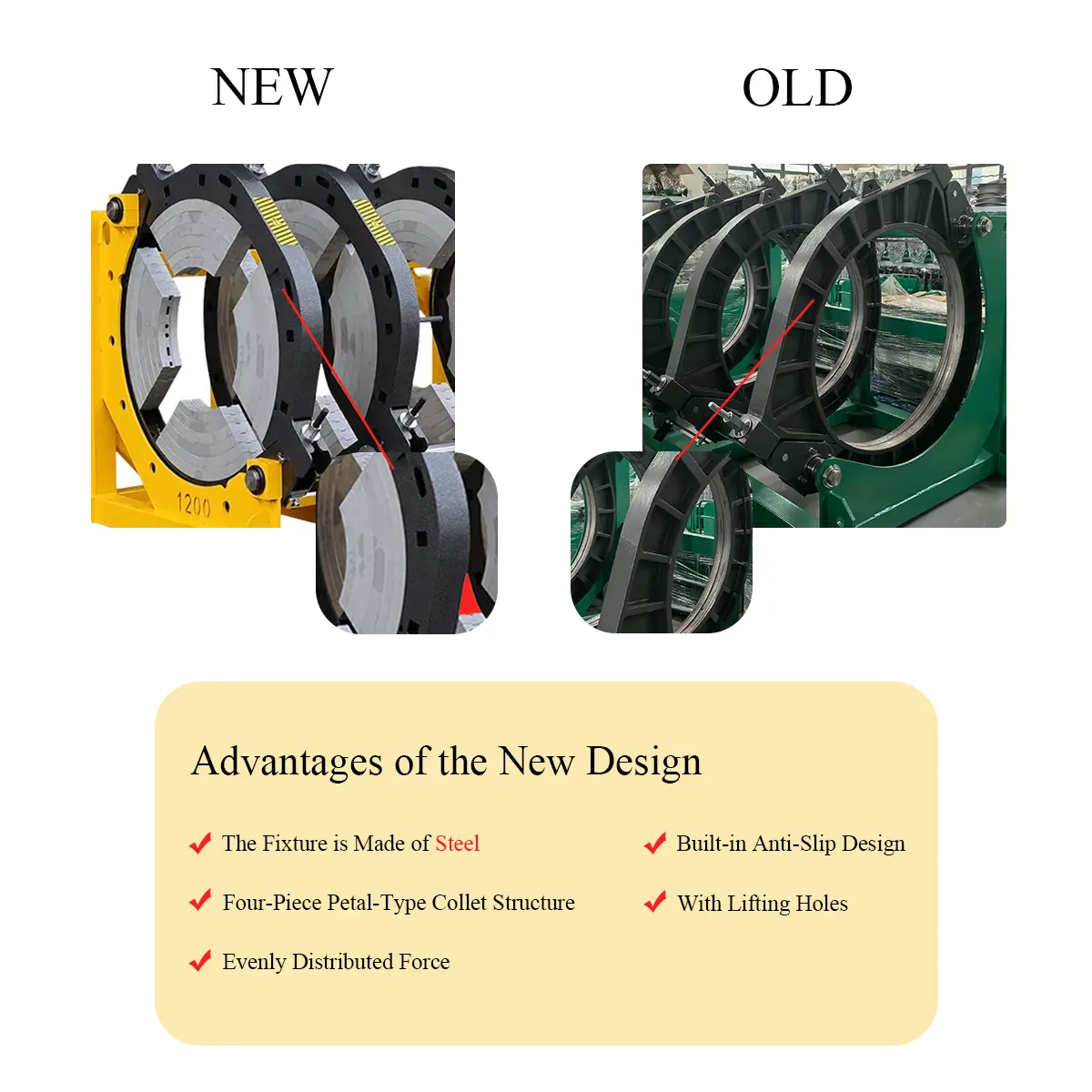
The latest generation of this thermoplastic pipe fusion equipment distinguishes itself through automation of the critical parameters. Advanced models log crucial data such as temperature, pressure, and drag force, ensuring compliance with rigorous specifications. The structural integrity of the frame is vital; look for models featuring aluminum clamps that resist corrosion while providing lightweight mobility on rugged terrain. Choosing a reliable manufacturer with a comprehensive hydraulic machine lineup ensures you can cover every diameter in your project scope.
| Machine Type | Typical Range | Primary Application | Control Level |
|---|---|---|---|
| Manual | 20mm – 315mm | Site utilities / Plumbing | Operator dependent |
| Hydraulic | 90mm – 2500mm | Water/Gas mains | Semi-automatic |
| CNC Automatic | 160mm – 630mm | High-spec commercial | Fully monitored |
| Electrofusion | 20mm – 1200mm | Repairs / Tight trenches | Barcode driven |
CNC Automatic Fusion: Eliminating Human Error
For gas distribution networks and nuclear-grade water systems where documentation is paramount, CNC automatic butt fusion welding machines represent the gold standard. These units fully automate the heating, soaking, and cooling cycles, virtually eliminating operator variability. A built-in data logger records the entire welding trace, providing a digital fingerprint for every joint. When inspecting field results, technicians rely on the PE butt fusion equipment standard to validate that the equipment adheres to required performance benchmarks and traceability coding for fusion operations.
Electrofusion: Precision in Confined Spaces
Electrofusion is the go-to solution for repair scenarios, tie-ins, and areas where pipe movement is impossible. The process uses specialized fittings embedded with heating wires that melt the interface when current is applied. The processor automatically reads a barcode on the fitting, setting the exact energy required. This makes it exceptionally safe, as the fusion parameters are strictly controlled by the thermoplastic pipe fusion equipment rather than the operator’s judgment. Consistent clamping and pipe scraping remain essential preparation steps to ensure a leak-free electrofusion joint.
Multi-Angle Pipe Fitting Fabrication
Moving beyond simple straight-line connections, the fabrication of segmented bends and junctions demands specialized multi-angle pipe fitting welding machines. These units hold segments of pipe at precise calculated angles, facilitating the manufacture of large-diameter sweep elbows directly on the construction site. This capability drastically reduces reliance on expensive injection-molded factory fittings and allows engineers to customize directional changes quickly, optimizing the hydraulic flow of the system.
Global Applications Driving Equipment Demand
The versatility of thermoplastic pipe fusion equipment has fueled adoption across diverse sectors. In water supply, high-density polyethylene (HDPE) pipes fused with reliable machinery are the preferred choice for desalination plants and raw water transfer lines because the seamless joints prevent root intrusion and leakage. In the gas distribution sector, critical safety guidelines require fusion equipment compliant with stringent operator qualification programs. Furthermore, in the mining industry, large-diameter hydraulic machines are used to join thick-walled pipes capable of withstanding abrasive slurry flows at high pressures.
Essential Buying Guide for Pipe Fusion Equipment
Investing in thermoplastic pipe fusion equipment requires a strategic approach that balances immediate budget constraints with long-term reliability. Here is a structured checklist to guide procurement managers and contractors:
- Pipe Range Compatibility: Ensure the machine supports the maximum SDR (Standard Dimension Ratio) and diameter you typically install.
- Traceability and Data Logging: For regulated work, verify that the equipment stores and transfers jointing reports via USB or cloud. The industry is moving toward mandatory PE fusion traceability to map every joint to a specific time, date, and operator certification.
- Mobility and Site Conditions: Off-road terrain requires tracked or wheeled chassis. A lightweight fusion machine may be perfect for a trench side, but a self-propelled crawler is necessary for cross-country pipelines.
- After-Sales Support: From technical assistance to global customer support, the availability of spare parts and service teams cannot be overstated.
Operational Standards and Safety Compliance
Quality fusion is non-negotiable. Operators must be trained on the specific model of machine they are using. Regular maintenance of the heating plate surface is vital; a distorted or contaminated coating will result in uneven heat transfer and a weak bond. Adhering to protocols such as high-pressure leak testing ensures the integrity of the installed network. JQ-Fusion is a professional manufacturer specializing in HDPE pipe welding machines, providing reliable butt fusion solutions for these exacting global infrastructure projects, with a focus on durable construction and customizable configurations to match specific project requirements.
Maintaining Your Fusion Equipment Investment
Regular calibration and storage significantly affect the lifespan of your thermoplastic pipe fusion equipment. The heating plate must be checked daily with a digital pyrometer to verify surface temperature uniformity. The trimmer blades, which prepare the pipe ends, must be sharp and clean; dull blades can cause hairline fractures in the polymer and lead to joint failure under stress. Hydraulic hoses and quick-connect couplings should be inspected for leaks well before the machine is mobilized to the right-of-way.
Key Takeaways for Decision Makers
Selecting the correct thermoplastic pipe fusion equipment is a technical decision that shapes the safety, efficiency, and longevity of critical pipeline assets. By matching the machine type—manual, hydraulic, CNC, or electrofusion—to the project scope and by insisting on international standard compliance and digital traceability, stakeholders can mitigate risk and drastically reduce the total cost of ownership over the pipeline’s lifecycle.



