
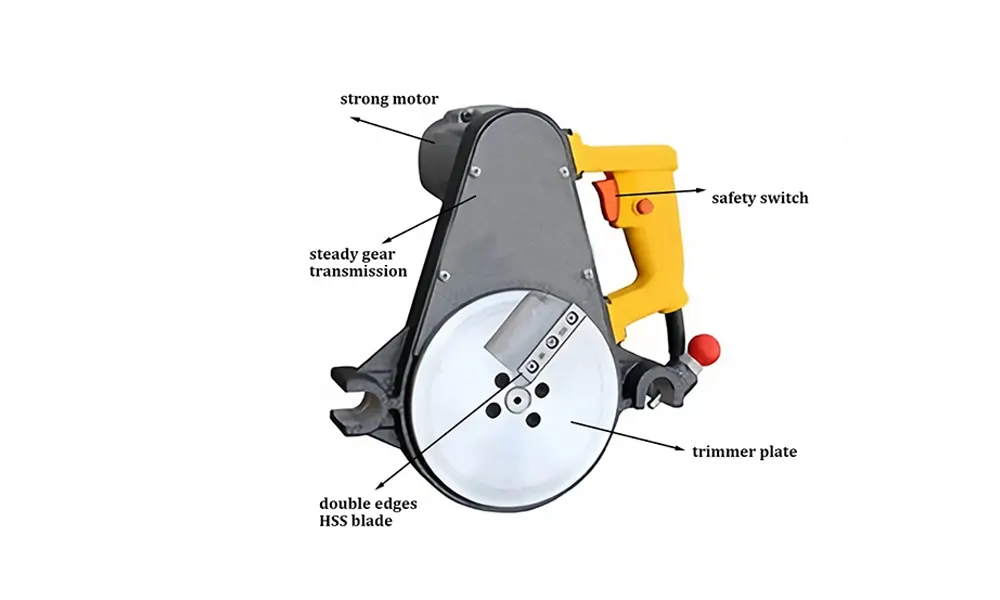
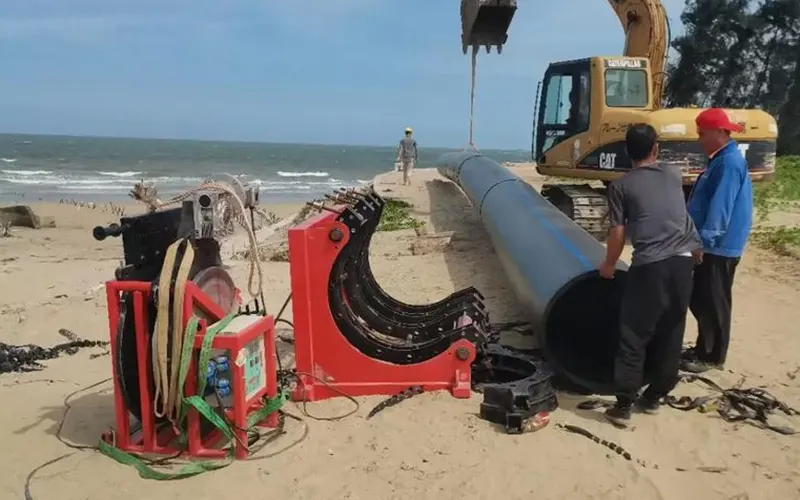
Ensuring reliable pipeline integrity starts with mastering the poly pipe fusion machine troubleshooting process. Whether you are working on municipal water mains or gas distribution networks, a malfunctioning butt fusion welding machine can lead to catastrophic joint failures. This comprehensive guide identifies the most frequent mechanical and procedural issues, their root causes, and step-by-step solutions to keep your project on track.
1. Heating Plate Malfunctions
The heating plate is the heart of the fusion process. Consistent temperature control is non-negotiable for achieving proper melt pressure.
| Problem | Cause | Solution |
|---|---|---|
| Temperature fluctuation | Faulty thermocouple or damaged heating element | Verify with a calibrated pyrometer; replace the defective sensor or element |
| PTFE coating damage | Rough scraping or insufficient cleaning | Clean with non-abrasive cloth; replace or re-coat the heating plate surface |
| Heater fails to start | Blown fuse, open circuit, or electrical fault | Check power supply, replace fuses, test circuit continuity |
2. Pipe Misalignment and Clamp Issues
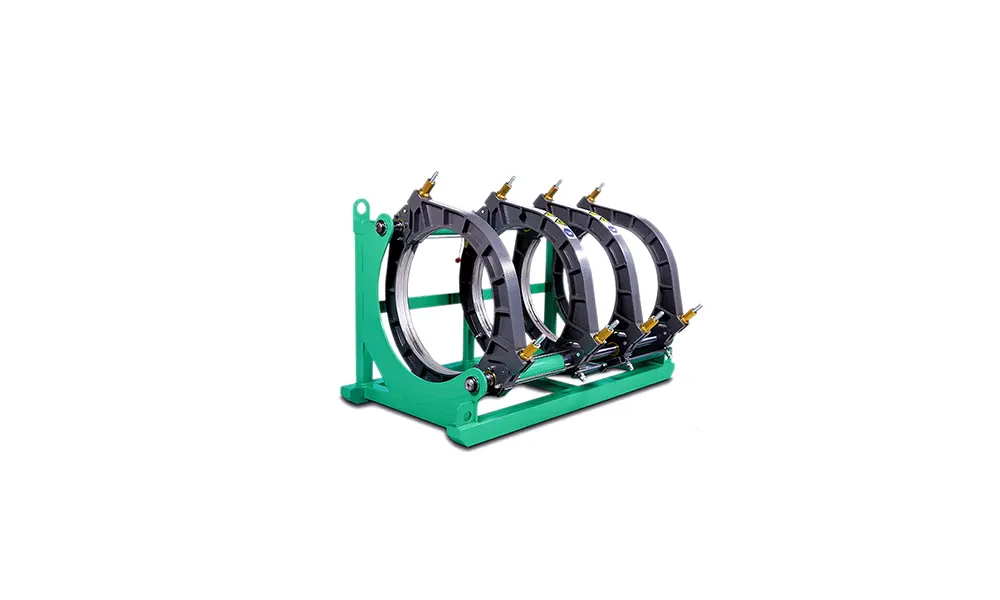
High axial misalignment creates uneven hydraulic butt fusion machine welds. Modern hydraulic butt fusion welding machines rely on rigid clamps to hold pipes securely during the fusion cycle.
| Problem | Cause | Solution |
|---|---|---|
| High low mismatch | Worn clamp inserts or out-of-round pipe ends | Adjust clamp tightness, re-round pipe ends, replace worn jaws |
| Pipe slipping under pressure | Contamination on clamps or insufficient hydraulic pressure | Clean clamp surfaces, inspect hydraulic cylinder seals, check pressure gauge |
| Inconsistent drag pressure | Debris in guide rails or lack of lubrication | Clean and lubricate carriage rails, verify moving carriage freely |
3. Hydraulic System Troubleshooting
Hydraulic systems on butt fusion welding machines must deliver consistent force. When troubleshooting a poly pipe fusion machine, never overlook the power unit.
- Symptom: Slow carriage movement or inability to build pressure
Root Cause: Low hydraulic fluid level or air in system.
Action: Check fluid reservoir, bleed air from lines, and inspect for external leaks at fittings. - Symptom: Erratic pressure drops during soak phase
Root Cause: Internal cylinder bypass or worn directional control valve.
Action: Perform cylinder leak-down test, rebuild or replace the cylinder if necessary. - Symptom: Noisy hydraulic pump
Root Cause: Cavitation due to clogged suction filter or cold fluid.
Action: Allow fluid to warm up, replace filter element, ensure proper oil viscosity per manufacturer catalog.
4. Facet, Trimmer, and Joint Quality Defects
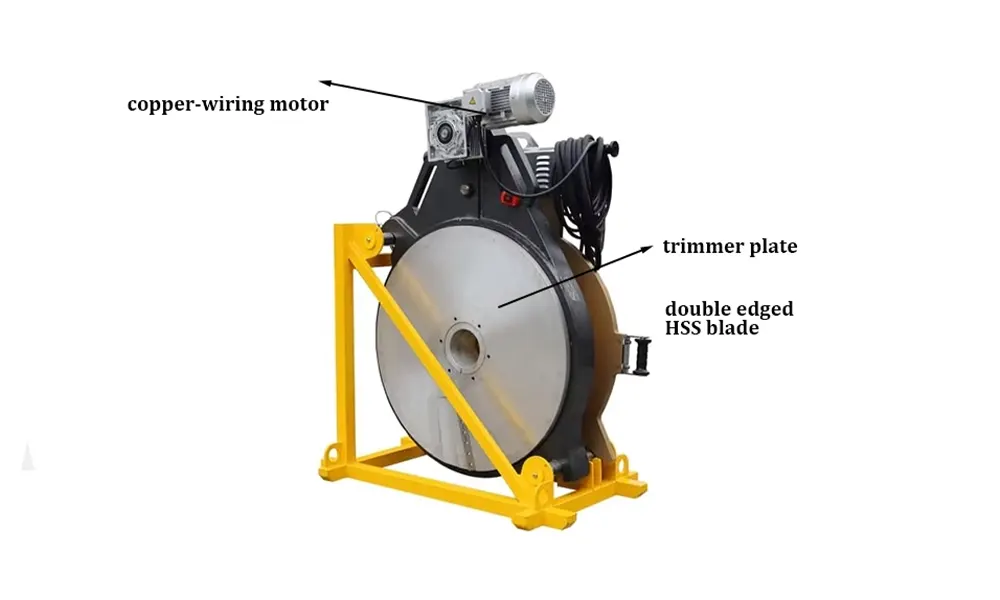
Poor joint integrity often signals poly pipe fusion machine troubleshooting is required on the trimmer or facing tool. A dull trimmer creates micro-roughness, preventing proper melt bead formation.
Common Weld Defect Patterns
- Insufficient bead size: Inadequate soak time or control parameter error. Verify fusion pressure matches the ISO 21307 butt fusion procedures standard.
- Voids or contamination in bead: Dirty heating plate or pipe ends not cleaned with approved solvent. Always wipe with lint-free cloth and isopropyl alcohol.
- Non-uniform bead color: Indicates temperature gradient across plate. Check individual heating zones with infrared thermometer.
Blade maintenance is critical. Rotate or replace trimmer blades if the cutting sound changes or if shavings become irregular. Reference the ASTM F2620 heat fusion standard for acceptable pipe end squareness tolerances.
5. Electrical and Control System Diagnostics
Modern CNC automatic butt fusion machines store weld logs. When anomalies appear, immediately retrieve the data to identify deviations in weld pressure or temperature profiles.
- Display screen blank: Check emergency stop engagement, control transformer output, and battery backup on data loggers.
- Error codes persistence: Note the code, power cycle, and consult the technical manual. If unresolved, contact support with your machine serial number.
- Inaccurate sensor readings: Recalibrate pressure transducers and temperature probes periodically to maintain PE butt fusion equipment standard compliance.
About JQ-Fusion
JQ-Fusion is a professional manufacturer specializing in HDPE pipe welding machines, providing reliable butt fusion solutions for global infrastructure projects. We design and produce manual, hydraulic, and CNC automatic butt fusion welding machines for pipe diameters ranging from small to large, widely used in water supply, gas distribution, mining, and industrial systems. Our equipment is built for precise performance and long-term durability, supported by rigorous quality control and a responsive global service team.
Quick Reference: Key Resources
Contact Information
Email: info@jq-plasticpipe.com | Phone: +86 15093385787 | Address: Zhengzhou, Henan, China



