
Pipeline welding equipment automatic inspection technology is transforming how contractors, utilities, and fabricators ensure weld integrity on HDPE and other thermoplastic pipelines. By combining advanced sensors, non-destructive testing (NDT), and data analytics, automatic inspection systems reduce rework, improve safety, and help projects meet strict regulatory standards while speeding up installation timelines.
Why Automatic Inspection Matters
Automatic inspection minimizes human error and provides consistent, repeatable measurements across thousands of butt-fusion and electrofusion joints. For large infrastructure projects—water supply, gas distribution, mining, and industrial pipelines—early detection of cold welds, voids, or misalignments prevents costly failures and downtime. Modern inspection workflows also support digital traceability and third-party certification requirements.

Latest Trends Driving Inspection Technology
- AI and Machine Learning: Automated defect classification from visual or acoustic data speeds decision-making and reduces manual review.
- Sensor Fusion: Combining ultrasonic, thermal, and visual sensors improves detection sensitivity compared to single-method inspections.
- Robotics and Portable Platforms: Autonomous crawlers and drone-assisted scans for difficult-to-access pipelines.
- Cloud Analytics & Digital Twins: Centralized data storage enables predictive analytics and lifecycle tracking of welds across projects.
- On-Machine In-line Monitoring: Integrated inspection modules in automatic butt fusion units provide real-time quality assurance during welding cycles.
AI-powered Visual and Acoustic Analysis
Computer vision systems trained on large datasets can spot surface irregularities, flash, and misalignment with high precision. Acoustic emission and guided wave analysis add a layer of subsurface assessment for early-stage fault detection. These combined approaches increase first-pass acceptance rates and feed models for continuous improvement.
Key Inspection Methods for Pipeline Welding
- Phased Array Ultrasonic Testing (PAUT): High-resolution imaging of weld fusion zones and internal voids – ideal for HDPE butt-fusion joints when precision is required.
- Conventional Ultrasonic Testing (UT): Reliable for thickness and bond verification; commonly used on-site with portable units.
- Electromagnetic & Eddy Current Testing: Used for conductive materials and for detecting surface cracks in fittings and metal components of welding apparatus.
- Infrared & Thermal Imaging: Detects uneven heating during fusion cycles and locates heat-affected zones or cold spots.
- Automated Visual Inspection (AVI): High-speed cameras and AI detect surface defects and alignment issues immediately after welding.
- Pressure and Leak Testing: Final system-level validation to confirm joint integrity under operating conditions.
Integration with Welding Equipment
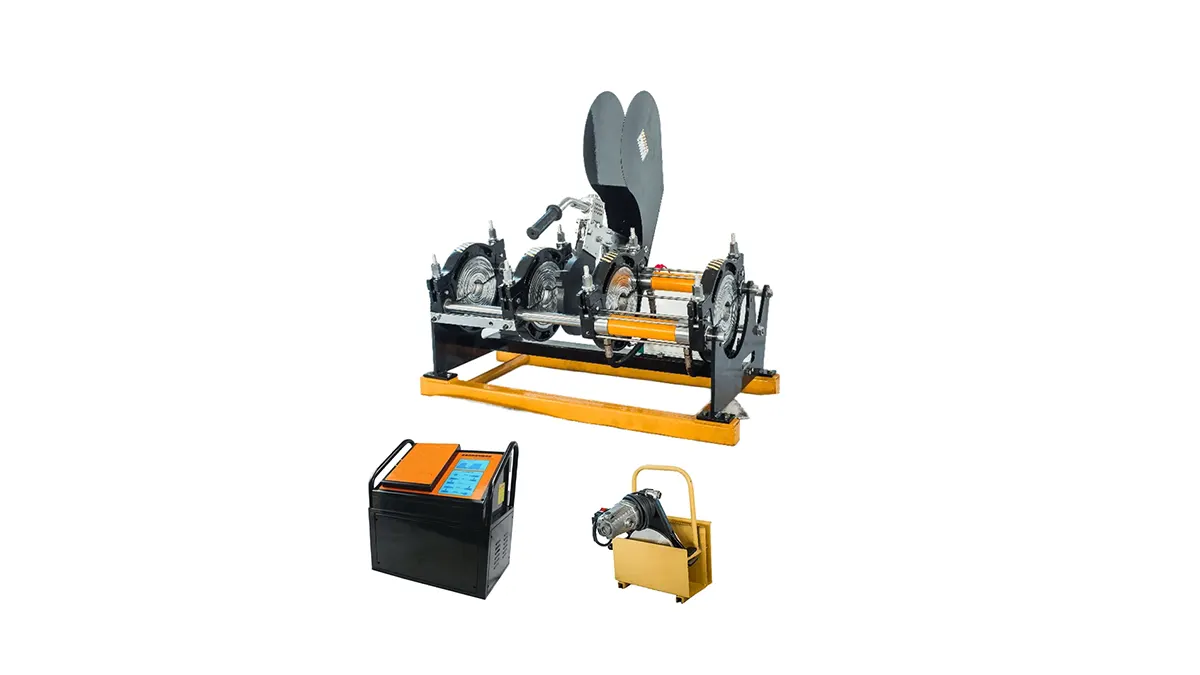
Modern automatic butt fusion machines increasingly include ports for sensors, time-stamped log outputs, and communication protocols (Modbus, Ethernet, or CAN). In-line inspection modules can monitor heater plate temperature profiles, axial alignment, and applied pressures during the weld cycle. This real-time feedback enables automated pass/fail decisions and creates an auditable weld record for compliance.
Inspection Performance Snapshot
| Method | Typical Detection Sensitivity | On-site Throughput | Best For |
|---|---|---|---|
| Phased Array UT | High (sub-mm features) | Moderate (scan time per joint) | Critical pipeline sections, high-risk projects |
| Ultrasonic (UT) | Moderate to High | High (portable units) | Routine weld verification |
| Automated Visual + AI | Surface-level; improving with AI | Very High (real-time) | Flash, misalignment, surface defects |
| Thermal Imaging | Detects thermal anomalies | Very High | Heating uniformity, cold welds |
Applications and Use Cases
Automatic inspection is widely applied in municipal water networks, natural gas distribution, mining tailings pipelines, and large industrial plants. Project owners benefit from faster commissioning and reduced maintenance costs through early defect detection. For manufacturers and contractors working with HDPE systems, embedding inspection in the welding workflow improves reliability across long pipeline runs.
Practical Implementation & Best Practices
- Standards & Certification: Align inspection protocols with ISO, ASTM, and local regulations. Maintain digital logs for audit trails.
- Calibration & Traceability: Regularly calibrate sensors and maintain reference standards to ensure consistent readings.
- Training & Operator Competence: Combine automated systems with skilled technicians to interpret edge cases and perform corrective actions.
- Data Management: Centralize inspection data, tag with GPS and job identifiers, and feed records into project QA systems.
Cost & ROI Considerations
Initial investment in automatic inspection hardware and analytics yields ROI through reduced rework, fewer unplanned shutdowns, and lower warranty claims. Projects with high safety or environmental risk see the fastest payback.
Future Outlook
Expect tighter integration between welding machines and inspection platforms: predictive maintenance, digital twins for weld lifecycle simulation, and augmented reality (AR) for guided repairs. As AI models mature, automated inspection will increasingly move from detection to prescriptive recommendations, enabling smarter construction and faster commissioning.
Manufacturer Spotlight
JQ-Fusion is a professional manufacturer specializing in HDPE pipe welding machines, providing reliable butt fusion solutions for global infrastructure projects. With a focus on manual, hydraulic, and CNC automatic butt fusion welding machines across a wide range of diameters, their equipment commonly supports inspection-ready integrations for on-machine monitoring and data logging: https://jq-fusionwelding.com/
Getting Started
When planning to deploy automatic inspection, start with a pilot on a representative pipeline segment, validate sensors under field conditions, and iterate using AI models trained on your project data. This phased approach reduces risk and accelerates measurable quality gains across the entire pipeline lifecycle.



