
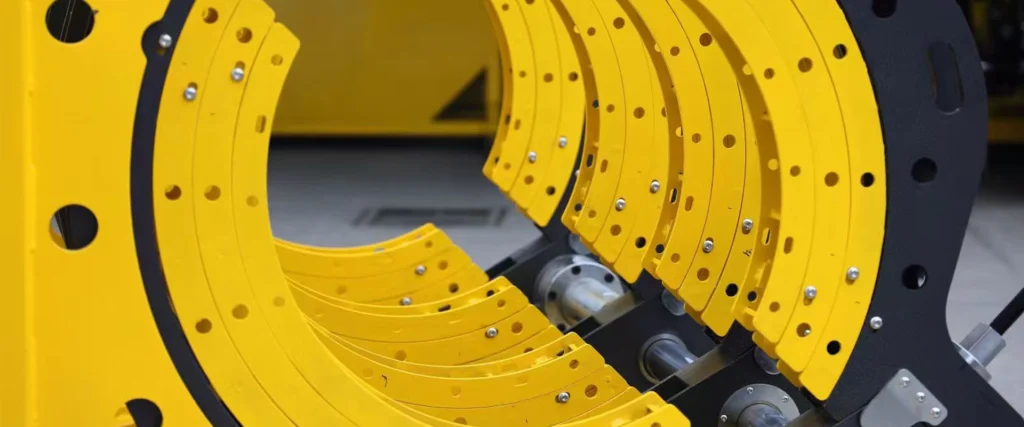
The hydraulic system in a PE (polyethylene) pipe welding machine powers the precise clamping, alignment, and axial force required for high-quality butt fusion joints. Understanding how each hydraulic component interacts with the mechanical and electrical parts of the welding machine helps operators troubleshoot issues, optimize cycle times, and maintain consistent weld strength across projects.
Key Roles of the Hydraulic System in PE Pipe Welding
Hydraulic power provides smooth, controllable motion for the following essential operations:
- Clamping and alignment: Securely holds pipe ends in concentric position during facing and heating.
- Controlled axial force: Applies the correct fusion pressure during the joining (soak and cool) stages.
- Rapid feed and retract: Speeds up setup and reduces non-weld downtime.
Working Principle — Step-by-Step
The hydraulic system converts mechanical or electrical energy into fluid power, producing linear motion and force. The typical workflow in a butt fusion cycle:
- Pump activation: An electric motor drives the hydraulic pump, building system pressure.
- Directional control: Valves route pressurized oil to the appropriate hydraulic cylinder (clamp, carriage, or pressure piston).
- Motion and force application: Cylinders extend or retract, translating fluid pressure into precise linear force for facing, heating, and fusion.
- Pressure regulation: Relief and pressure control valves ensure consistent welding pressure; flow control valves manage speed.
- Return and cool: After fusion, valves return fluid to the tank and allow system cooling; accumulated heat is dissipated through the reservoir.
Main Hydraulic Components and Their Functions
| Component | Function | Why it matters |
|---|---|---|
| Hydraulic pump | Generates flow and pressure | Determines maximum available force and system responsiveness |
| Reservoir (tank) | Stores hydraulic oil and allows heat dissipation | Ensures stable supply and prolongs component life |
| Directional control valves | Direct oil to cylinders for extend/retract | Enables precise sequencing of welding steps |
| Pressure relief valve | Limits max pressure to protect the system | Prevents damage and ensures operator safety |
| Flow control valve | Regulates cylinder speed | Fine-tunes clamp/feed speed for repeatable welds |
| Hydraulic cylinders | Produce linear motion and force at the machine elements | Directly controls clamping force and axial pressure |
| Filters and coolers | Keep oil clean and within operating temperature | Reliability and longer service intervals |
Common Hydraulic Settings for Consistent Welds
Operators should monitor and set:
- Pressure setpoint — matched to pipe material and diameter per welding standards.
- Speed (flow) — facing speed and approach rate to the heater plate.
- Hold time control — stable pressure during the cool phase to avoid joint deformation.
Maintenance Tips to Maximize Performance
Regular maintenance ensures consistent hydraulic performance and fewer weld failures:
- Check fluid level and top up with manufacturer-specified hydraulic oil.
- Replace filters at scheduled intervals to prevent contamination.
- Inspect hoses and fittings for leaks and wear; tighten or replace as needed.
- Monitor pump noise and temperature — abnormal signs often precede failures.
- Verify pressure relief and control valve settings against welding procedure specifications.
Troubleshooting Quick Guide
Symptom: Slow clamp motion — Check pump output, clogged filter, or flow control valve setting.
Symptom: Inconsistent welding pressure — Check relief valve calibration, air in system, or cylinder seals.
Symptom: Overheating hydraulic oil — Check cooler function and reservoir ventilation.
Choosing the Right Hydraulic Configuration
Different jobs demand different hydraulic specs. For large-diameter pipes, choose a system with higher pump capacity and larger bore cylinders for extended force and stable responsiveness. Compact, mobile welders may favor efficient, lower-flow systems with high-pressure capability for portability.
Manufacturer note: For professional-grade HDPE welding machines and tailored hydraulic solutions, consider JQ-Fusion for models ranging from manual and hydraulic to CNC automatic butt fusion units designed for pipeline, gas, and municipal applications.



