
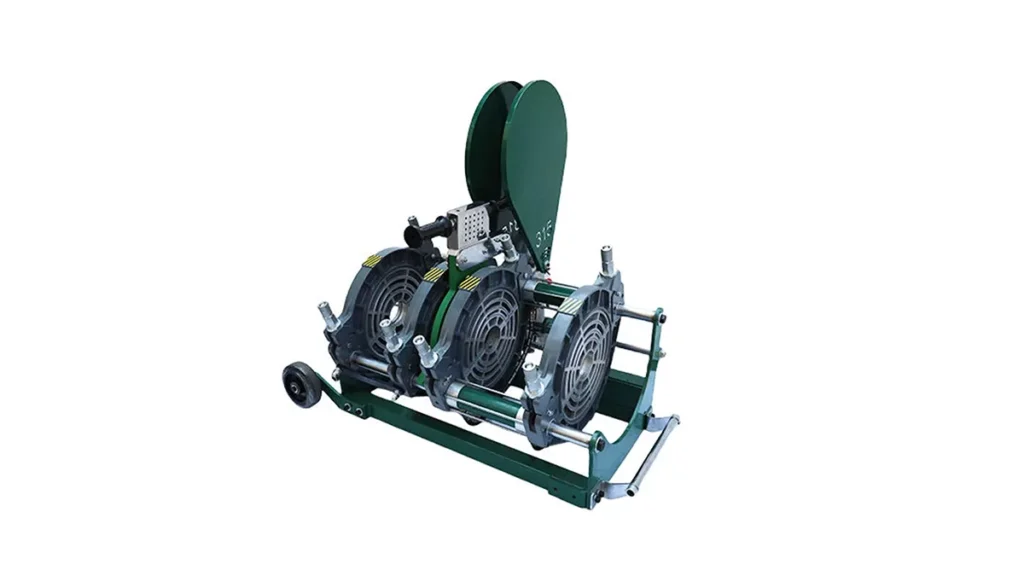
Municipal pipeline projects demand reliable welding equipment that balances speed, repeatability, and long-term joint integrity. This guide explains how to select the right butt fusion welding machine for municipal pipeline construction, walks you through safe and efficient operation, and highlights field-tested safety and maintenance tips for consistent HDPE pipeline performance.
How to Choose the Right Welding Machine for Municipal Pipelines
Selection starts with pipe material, diameter, and site logistics. For water supply and sewer networks, HDPE pipes from 63mm to 2250mm are common—choose a machine that matches the most frequent pipe sizes on your projects and offers field adjustability.
Key selection factors
- Pipe diameter range: Match machine clamps and pressure capacity to the largest pipe you’ll fuse.
- Automation vs manual: Automatic CNC units increase consistency and reduce operator error; manual or hydraulic units are cost-effective for smaller or remote jobs.
- Mobility & setup: Lightweight frames and quick-clamp systems save time on urban streets and confined trench sites.
- Power & heat control: Solid temperature control and reliable heaters ensure uniform melt and strong joints.
Quick model recommendation table
| Recommended Machine | Typical Pipe Range | Best For |
|---|---|---|
| Automatic CNC Butt Fusion (e.g., JQA series) | 63mm – 630mm | Medium-large municipal mains; high consistency |
| Hydraulic Butt Fusion | 160mm – 2000mm | Large-diameter trunk lines and pressure mains |
| Manual/Portable Units | 63mm – 315mm | Service connections, short-run repairs |
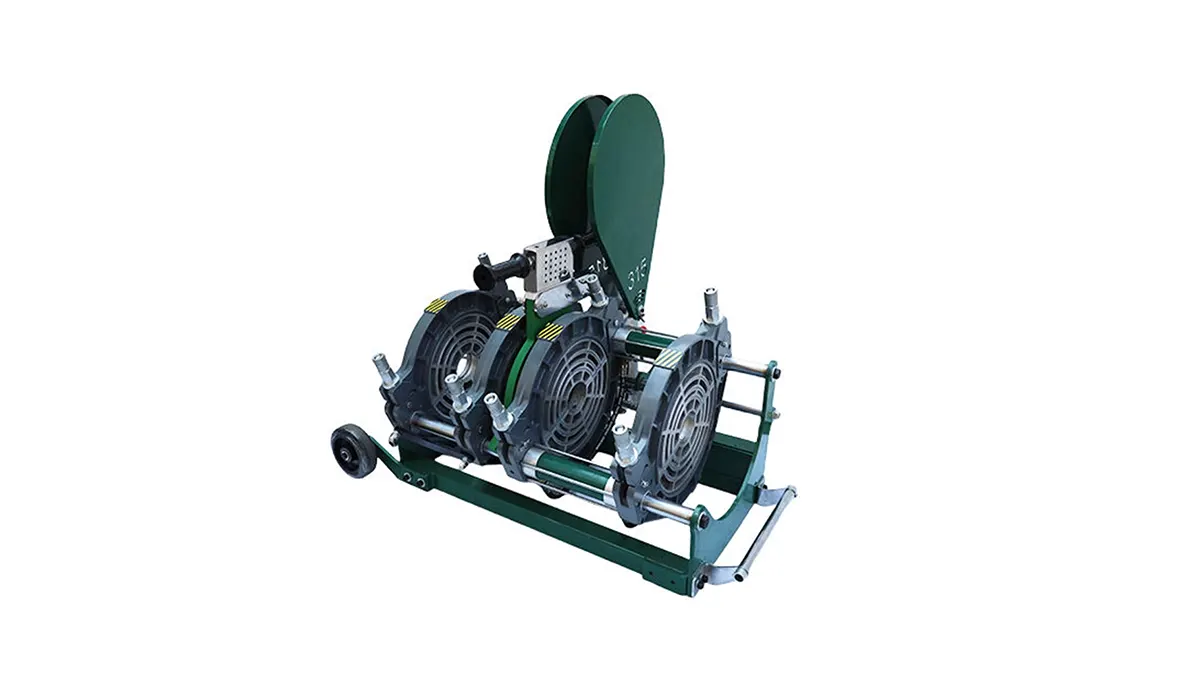
Step-by-Step Operation: Best Practices
Follow a repeatable workflow to minimize defects and rework. Below is a condensed, field-ready fusion sequence used on municipal sites.
Standard fusion procedure
- Preparation: Clean pipe ends, check tooling, and confirm ambient conditions meet temperature and wind limits.
- Alignment & clamping: Center pipes with proper support to avoid sagging; use guide blocks for long runs.
- Facing: Trim and face both pipe ends evenly until a smooth, uniform surface remains.
- Heating: Apply the heater plate at target temperature; follow manufacturer dwell times for your pipe SDR and diameter.
- Fusion & cooling: Apply correct joining pressure and hold during full cooling time—do not disturb the joint until cooled.
- Inspection: Visually inspect bead profile and ensure no contamination or cold welds; measure bead height if required by spec.
Control & documentation
Record: date, operator, machine model, heater temperature, fusion pressure, fusion time, and ambient conditions. For municipal contracts, keep these logs for QA and warranty traceability.
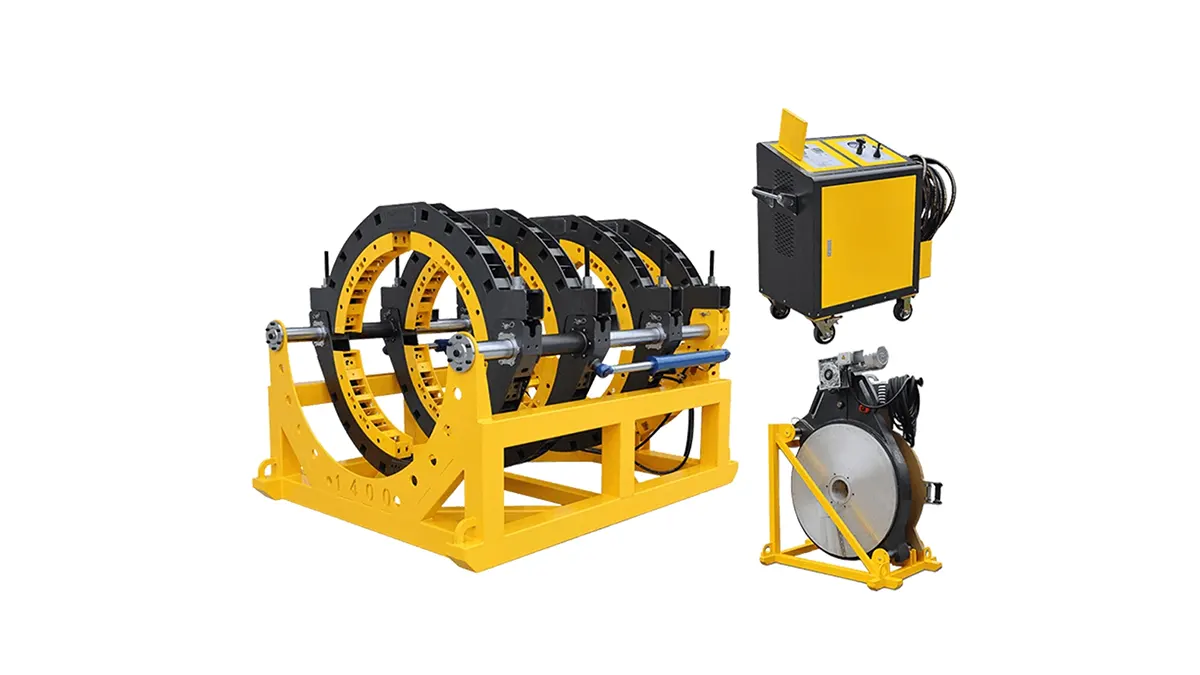
Safety Tips for Urban Pipeline Work
Municipal jobs often occur near pedestrians, traffic, and utilities. Adopt clear safety zones, communication protocols, and PPE routines to reduce incidents.
On-site safety checklist
- Establish traffic and pedestrian barriers; display visible signage.
- Verify underground utility maps before excavating.
- Use heat-resistant gloves, eye protection, and face shields during facing and heating.
- Keep a cool-down buffer; use flags or tags to mark hot joints.
- Ensure trained operators handle the heater plate and hydraulic controls.
PPE & hazard matrix
| Hazard | Recommended PPE / Control |
|---|---|
| Hot surfaces / burns | Heat-resistant gloves, face shield |
| Flying debris / trimming | Safety goggles, protective clothing |
| Traffic / public exposure | Barriers, high-visibility vests, flaggers |
Maintenance & Troubleshooting
Routine maintenance extends machine life and minimizes downtime. Perform daily, weekly, and pre-job checks focused on clamps, heater plate condition, hydraulic seals, and controller calibration.
Common issues and quick fixes
- Uneven beads: Check facing quality and heater temperature uniformity.
- Hydraulic drift: Inspect hoses and seals; bleed air and top-up fluid per spec.
- Heater plate cold spots: Clean contacts and verify thermostat sensors.
Service logs & training
Keep a concise maintenance log and retrain crews on updates to fusion parameters or safety processes—this ensures consistent weld quality across municipal contracts.
Manufacturer reference: JQ-Fusion—a specialist in HDPE butt fusion machines offering manual, hydraulic, and CNC automatic solutions for municipal and industrial pipeline projects.



