
The Mechanics of Large Diameter Thermoplastic Fusion
Large diameter HDPE pipeline engineering demands high-precision thermodynamic control and massive structural rigidity to deliver homogeneous, leak-free joints under high operational pressure.
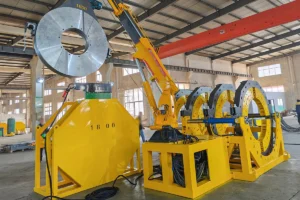
When welding polyolefin systems with outer diameters (OD) exceeding 630mm up to 2250mm, conventional manual techniques and low-tonnage equipment are entirely insufficient. A true large diameter pipe fusion machine operates as an integrated electro-hydraulic workstation engineered to handle pipe sections weighing several metric tons while maintaining sub-millimeter axial alignment.
The fundamental science behind butt fusion involves heating two prepared thermoplastic pipe ends to their molten state and fusing them under strictly monitored hydraulic pressure. As detailed in the PE butt fusion process standards, successful fusion requires precise control over three interrelated variables: interfacial pressure, plate temperature, and cooling duration.
Critical Physics Note: In large diameter pipelines, pipe wall thicknesses can exceed 80mm (SDR 9 to SDR 11). Thermal diffusion through these thick profiles requires controlled soak cycles to ensure uniform melt flow without thermal degradation of the outer resin layers.
Modern infrastructure projects across municipal water grids, mining tailings, maritime outfalls, and industrial chemical transmission rely on high-grade resins like PE100 and PE100-RC. Selecting an adequately sized butt fusion system ensures that the welded interface delivers equal or superior tensile strength compared to the native parent pipe.
International Fusion Standards: ISO 21307 vs. ASTM F2620
Large-scale pipeline projects require strict adherence to international standardizations. Understanding variations in heating plate temperature, bead-up criteria, and cooling cycles is paramount for project compliance.
Modern heavy-diameter operations must comply with rigorous guidelines set by international bodies. The two governing frameworks worldwide are ISO 21307 butt fusion procedures and North America’s ASTM F2620 heat fusion standard. Both standards specify clear formulas for converting nominal interfacial pressure into machine-specific gauge pressure.
| Fusion Parameter | ISO 21307 (Single Low Pressure) | ISO 21307 (Single High Pressure) | ASTM F2620 / PPI TR-33 Standard |
|---|---|---|---|
| Target Heating Temperature | 220°C ± 10°C (428°F) | 225°C ± 5°C (437°F) | 204°C – 232°C (400°F – 450°F) |
| Interfacial Pressure ($P_{int}$) | 0.17 ± 0.02 N/mm² | 0.50 ± 0.05 N/mm² | 0.41 – 0.62 N/mm² (60-90 psi) |
| Bead-Up Pressure Application | $P_{drag} + P_{int}$ until initial bead formed | $P_{drag} + P_{int}$ until initial bead formed | Maintain until bead size corresponds to OD |
| Heat Soak Phase ($P_{soak}$) | Contact pressure reduced to $le 0.02$ N/mm² | Contact pressure reduced to $le 0.05$ N/mm² | Zero gauge pressure + drag hold |
| Cooling in Machine Clamps | Full pressure applied until weld < 80°C | Accelerated cooling under high pressure | Full interfacial pressure held for duration |
| Primary Application Scope | Global municipal, water & industrial PE100 | High wall thickness gas & industrial lines | US Infrastructure, ASTM D2513 PE gas pipe |
In addition to welding parameters, machine hardware must strictly conform to PE butt fusion equipment standard ISO 12176-1. This standard governs frame rigidity, hydraulic cylinder seal durability, heating plate surface flatness, and thermal regulation tolerances across large surface areas.
Core Mechanical & Electrical Subsystems
Large diameter fusion machinery consists of four heavy-duty integrated sub-assemblies built to withstand hundreds of kilonewtons of clamping and pulling forces.
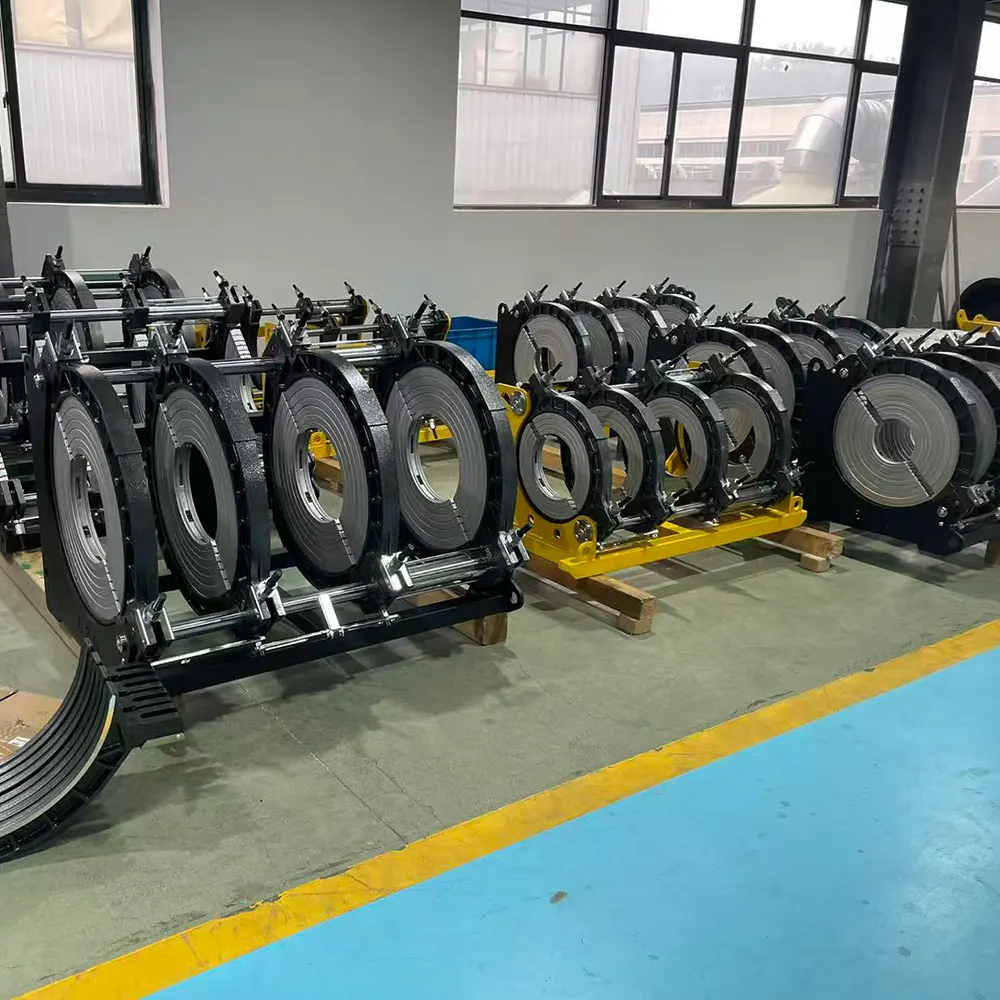
Rigid 4-Clamp Machine Chassis
Constructed with high-tensile cast alloy and reinforced structural steel. The four-clamp configuration allows independent clamping, ovality correction, and seamless axial alignment of long, heavy pipe strings.
Electric Planer / Facing Unit
Equipped with reversible dual-edge tungsten carbide blades and high-torque enclosed gear drives. Provides synchronized chip removal to produce mirror-flat pipe end faces perpendicular to the pipe centerline.
PTFE-Coated Heating Mirror
High-grade cast aluminum heating plates coated with heavy-duty PTFE. Integrated multi-zone PID temperature controllers guarantee consistent surface heat uniformity within ±3°C across massive surface areas up to 2250mm.
Electro-Hydraulic Power Unit (HPU)
High-pressure hydraulic stations with pressure-retaining accumulators. Delivers steady, pulse-free cylinder pressure during the entire cooling phase even during unexpected job site power fluctuations.
CNC Automation & Data Logging
Available on CNC Automatic butt fusion machines. Fully automates dragging, facing, heating, and cooling while archiving traceability logs per ISO 12176-4 standards.
Overhead Hoist & Stand
Integrated crane attachment brackets and heavy-duty storage stands ensure swift, safe positioning of heavy planers and heating mirrors, reducing critical changeover time to prevent molten joint oxidation.
Step-by-Step Large Diameter Butt Fusion Procedure
Field execution of mega pipeline joints requires mathematical rigor and strict procedural timing. Any deviation in drag calculation or open time results in defective joints.
To ensure accurate interfacial force between pipe ends, hydraulic cylinder area and pipeline sliding friction (drag pressure) must be factored in:
P_gauge = [ ( (OD – t) × t × π × P_interfacial ) / Total_Cylinder_Area ] + P_dragWhere: OD = Pipe Outer Diameter (mm), t = Wall Thickness (mm), P_interfacial = Specified Standard Pressure (N/mm²), P_drag = Measured Frictional Drag Pressure (bar).
Pipe Rigging, Cleaning & Clamping
Secure both pipe segments into the four main machine clamps using high-strength aluminum insert reduction collars. Thoroughly clean the inner and outer diameters of the pipe ends with lint-free wipes and isopropyl alcohol to eliminate dust, dirt, moisture, and hydrocarbons.
Planer Facing & Radial Alignment
Insert the electric planer between the pipe ends and face both surfaces simultaneously until continuous ribbon shavings are produced from both sides. Inspect visual gap clearance and confirm radial high-low mismatch is under 10% of pipe wall thickness (maximum 2mm for mega diameter pipes).
Dynamic Drag Pressure Measurement
Actuate the hydraulic carriage to advance the movable pipe section slowly toward the fixed clamp. Record the exact pressure required to overcome sliding friction on ground rollers and support stands. Add this P_drag value directly to calculated fusion pressures.
Controlled Heating & Heat Soak Cycle
Insert the calibrated heating plate. Apply the bead-up pressure ($P_{gauge}$) until uniform melt beads form around the entire circumference. Promptly release pressure down to soak level ($P_{drag}$) and allow conductive heat flow to plasticize the resin deeply into the core wall thickness.
Plate Removal & Rapid Dwell (Changeover)
Retract the movable carriage, remove the heating plate, and immediately bring molten pipe faces into smooth contact. This changeover duration must not exceed standard limits (typically 8 to 20 seconds depending on size) to prevent premature surface cooling and oxidation.
Fusion Fusion & Controlled Cooling Phase
Smoothly ramp pressure up to the specified fusion joining pressure. Lock the hydraulic accumulator circuit and allow the joint to cool undisturbed under full pressure. Never attempt artificial quenching with water or forced air, as this disrupts crystalline molecular alignment.
Featured Large Diameter Pipe Fusion Equipment
Discover our field-tested hydraulic and multi-angle butt fusion systems engineered for massive diameter thermoplastic pipes in challenging civil and industrial environments.
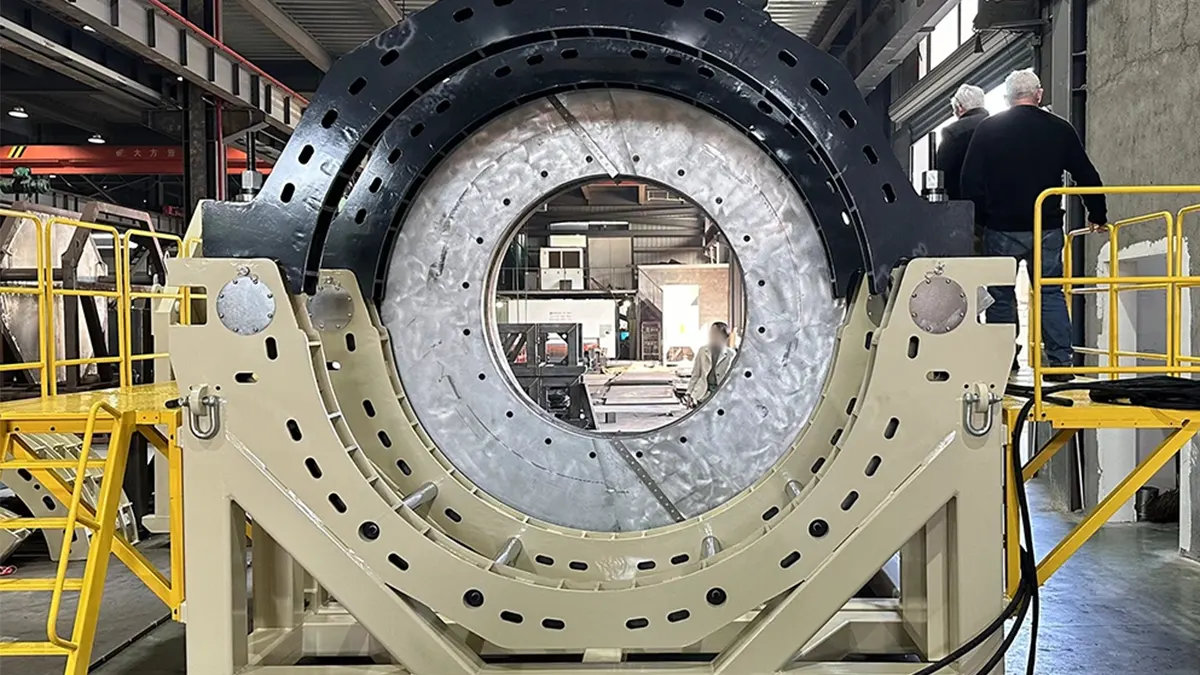
JQH2250mm Hydraulic Butt Fusion Machine
Welding Range: 1400mm – 2250mm. Built for extra-large deep water outfall, municipal water transmission, and large-scale industrial pipeline networks.
View Specifications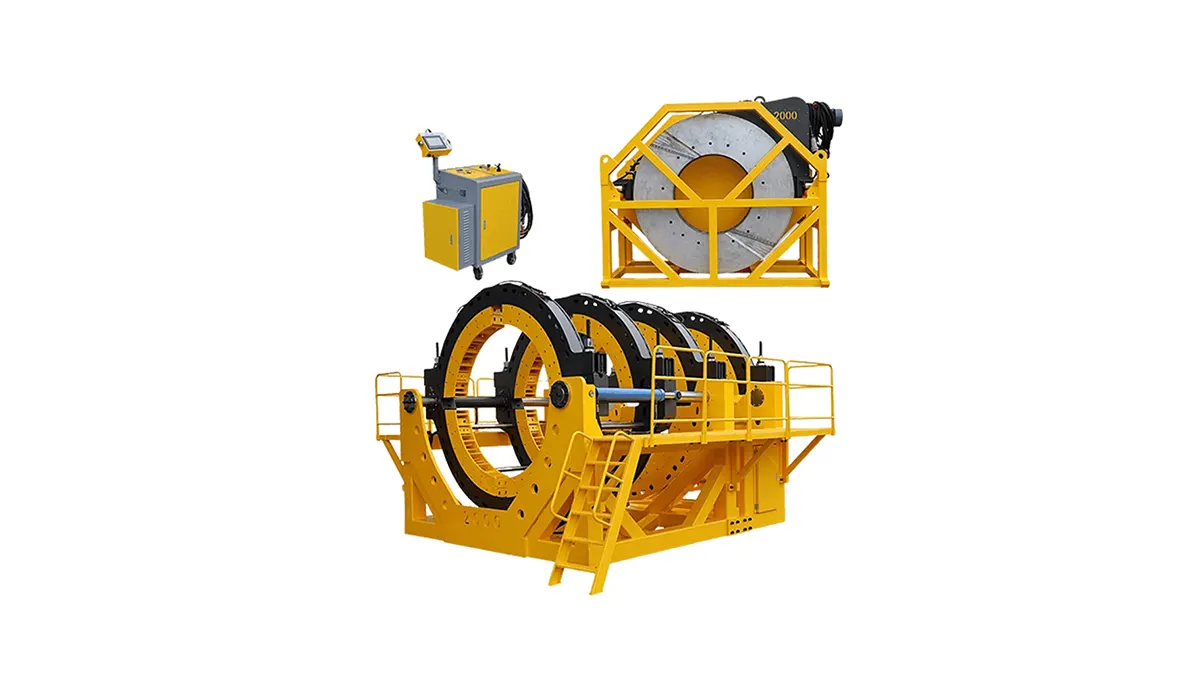
JQH2000mm Hydraulic Butt Fusion Machine
Welding Range: 1200mm – 2000mm. Features high-tonnage hydraulic cylinders with dual-valve safety locks and automated pressure maintenance.
View Specifications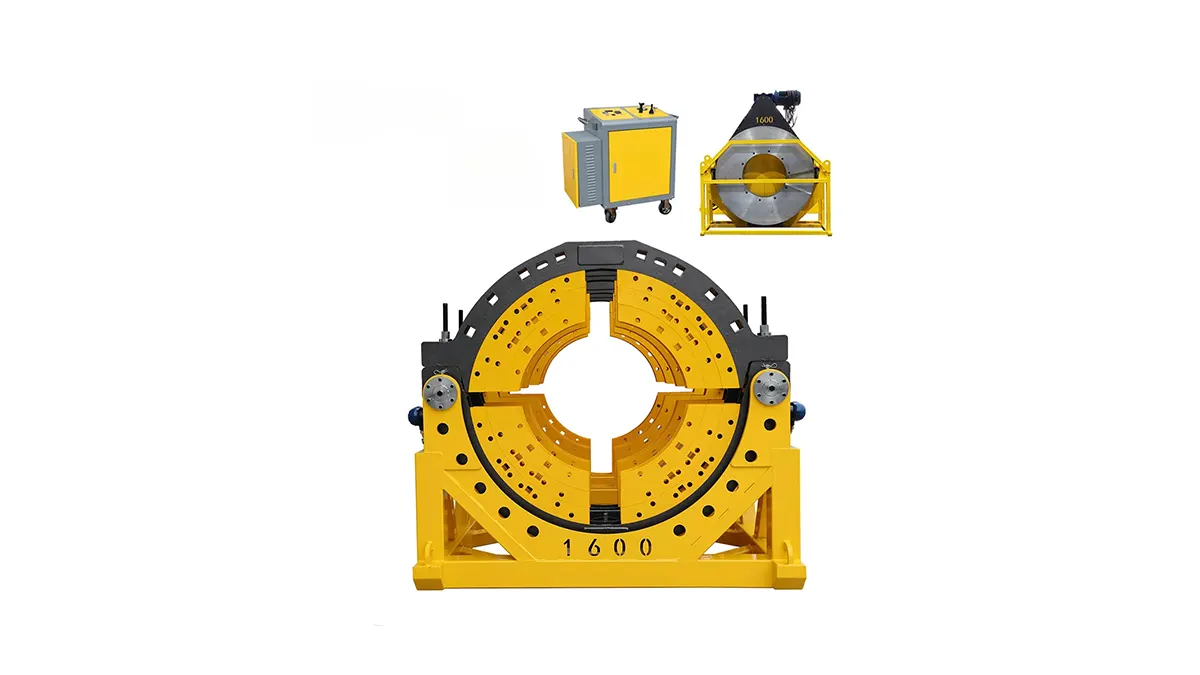
JQH1600mm Hydraulic Butt Fusion Machine
Welding Range: 1000mm – 1600mm. Heavy-duty construction tailored for intensive mining slurry pipelines and mega desalination intake projects.
View Specifications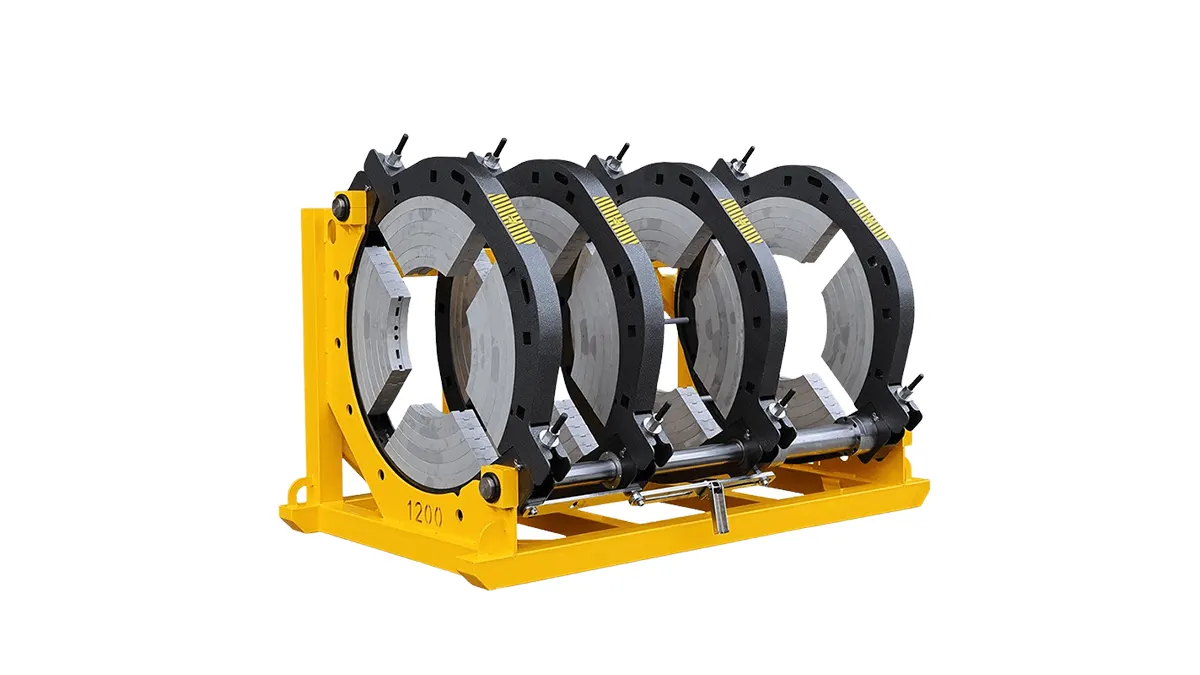
JQH1200mm Hydraulic Butt Fusion Machine
Welding Range: 630mm – 1200mm. Standard field unit with aluminum inserts, high-efficiency facing planer, and multi-zone heating distribution.
View Specifications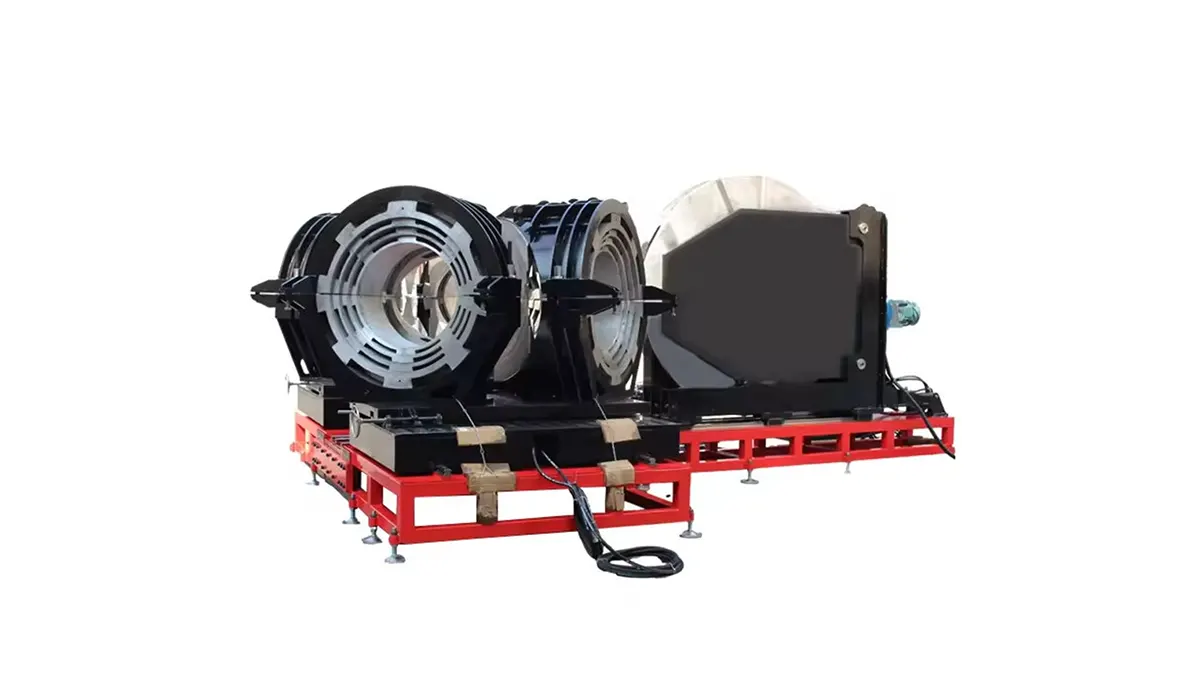
JQMA1600 Multi-Angle Fitting Machine
Workshop fitting fabrication machine for manufacturing segmented elbows, tees, crosses, and wyes up to 1600mm OD.
View Specifications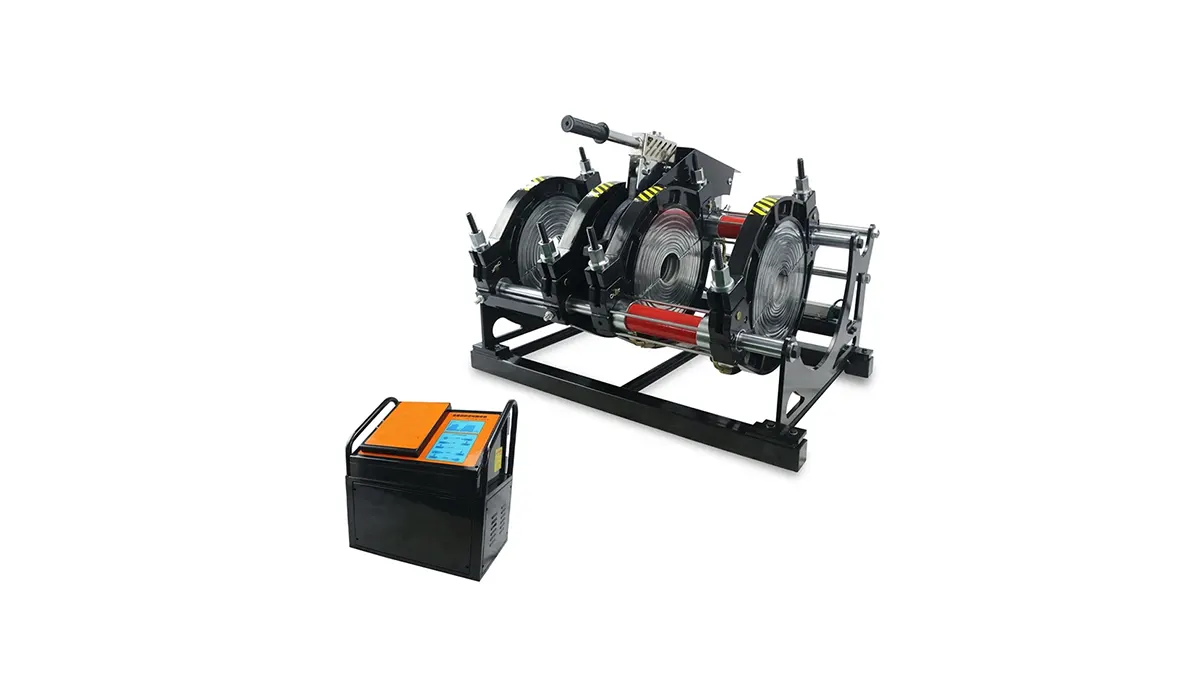
JQA630mm CNC Automatic Fusion Machine
Welding Range: 315mm – 630mm. Fully automated CNC control system with barcode scanner integration and complete data logging capabilities.
View SpecificationsNon-Destructive Testing & Joint Verification
Large diameter fusion failures carry massive financial and environmental risks. Implementing strict quality assurance protocols ensures 100% joint confidence.
Visual Bead Morphology Assessment
Inspect the external weld bead for uniform width, height, and root rollover around 360°. A rollover v-groove depth exceeding allowable limits indicates insufficient heating or premature cooling. Bead removal tools allow external bead bend testing to confirm ductile matrix behavior.
Ultrasonic Phased Array Testing (PAUT)
PAUT provides cross-sectional imaging of the weld interface without destroying the pipe. Ultrasonic testing detects planar flaws, cold fusions, particulate contamination, and micro-voids inside thick-walled PE joints before field backfilling.
Hydrostatic Pressure Validation
Field pressure validation according to PE pipe hydrostatic leak testing ASTM F2164. The pipeline is pressurized up to 1.5× operating pressure to verify structural integrity under prolonged tensile hoop stress.
Traceability Data Archiving
Adhere to PE fusion traceability protocols. Every joint generated by automatic CNC units records pipe batch numbers, operator IDs per ISO 12176-3, GPS coordinates, peak pressures, and ambient temperatures for permanent asset management.
About JQ-Fusion
JQ-Fusion is a professional manufacturer specializing in HDPE pipe welding machines, providing reliable butt fusion solutions for global infrastructure projects. With years of industry experience, we focus on the development and production of manual, hydraulic, and CNC automatic butt fusion welding machines, covering pipe sizes from small service lines up to 2250mm mega-diameters.
- Reliable Welding Performance: Stable heating and precise clamp alignment ensuring consistent joint strength.
- Tailored Custom Solutions: Full OEM/ODM services for machine frames, voltage configurations, and hydraulic capabilities.
- Rigorous Quality Assurance: Every unit undergoes 100% hydraulic seal pressure testing and thermal accuracy calibration.
- Extensive Ready Inventory: Large stock guarantees prompt dispatch for urgent infrastructure and mining timelines.
International Quality Certifications
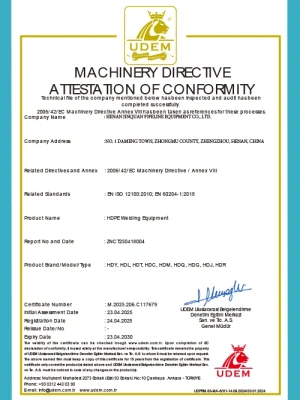 CE Compliance Certificate
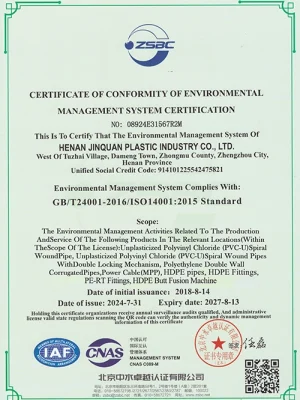 ISO 9001:2015 Management System
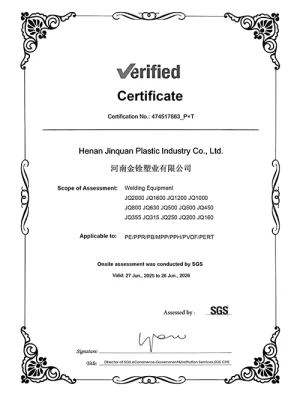 SGS Verification Audit
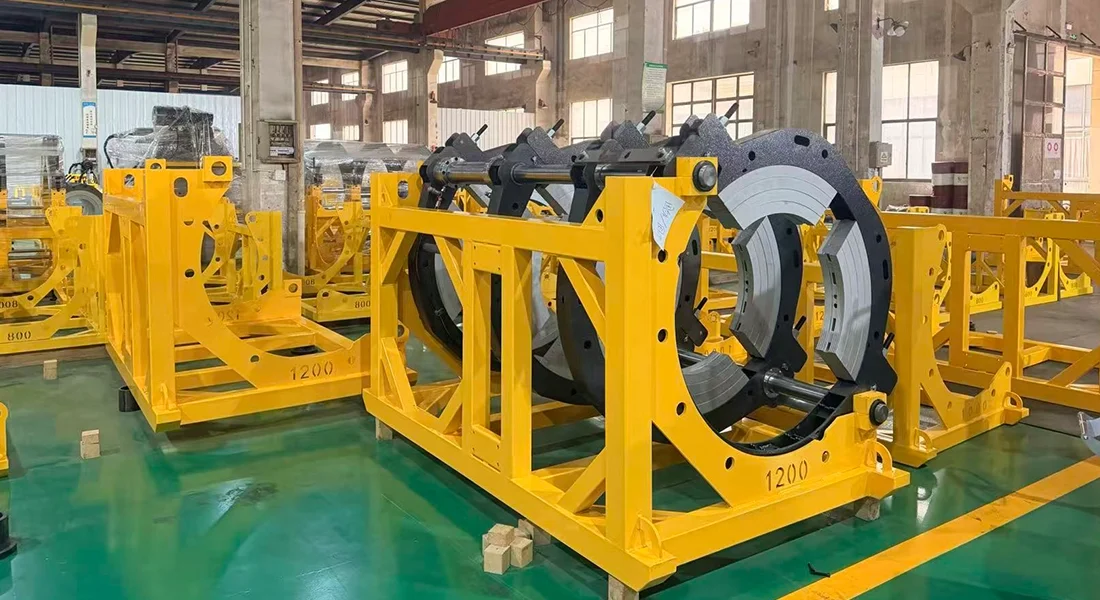
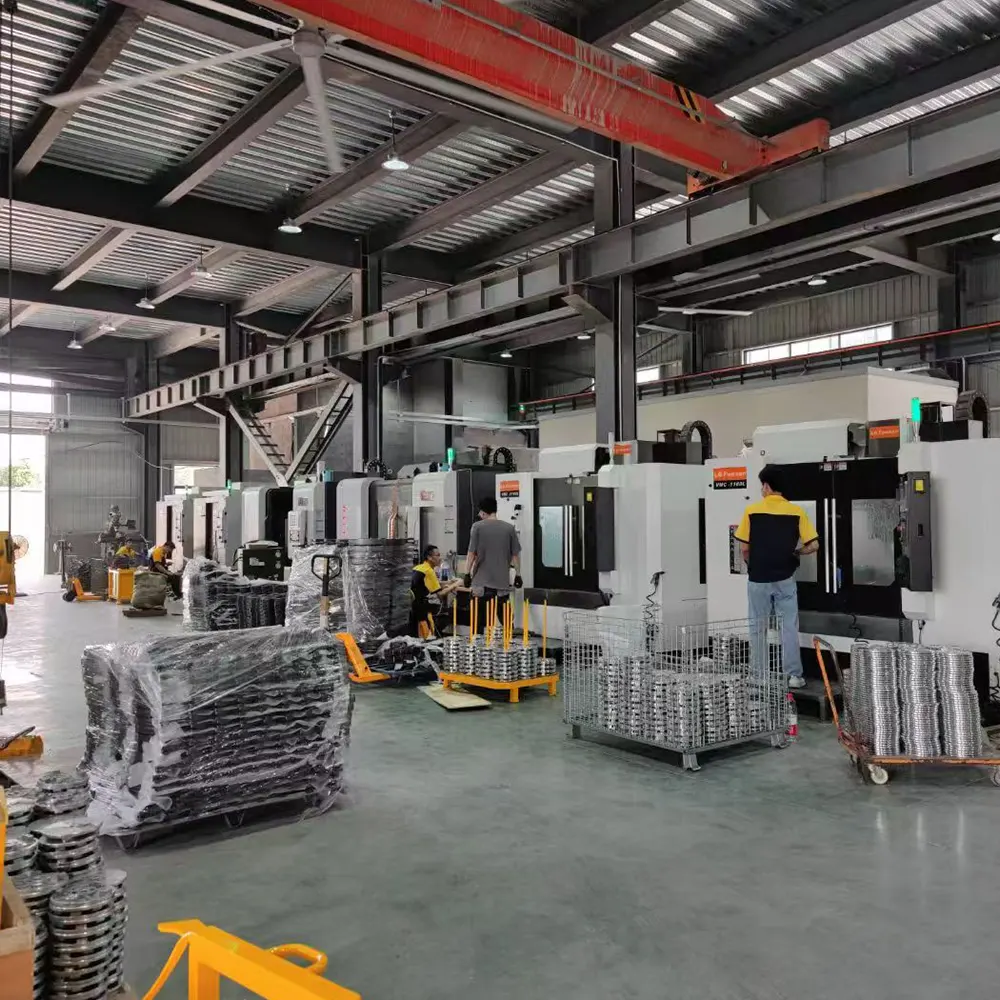
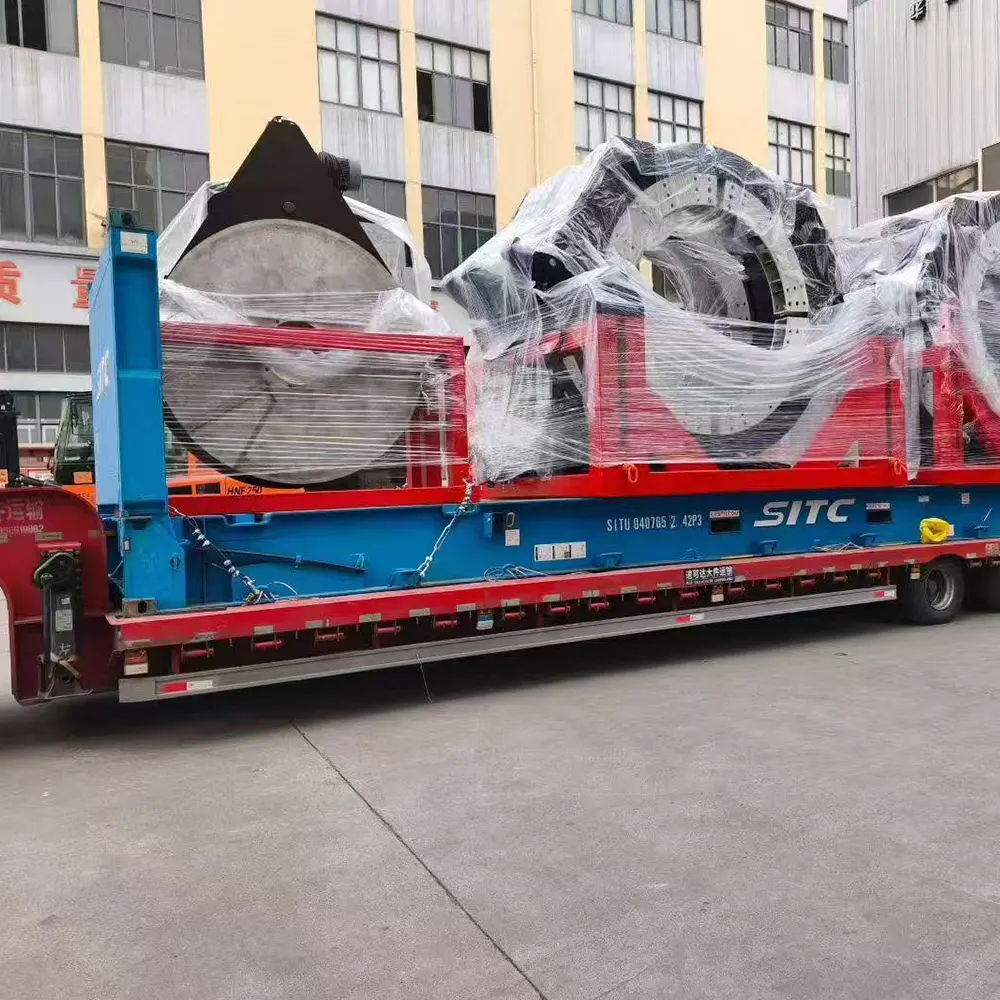
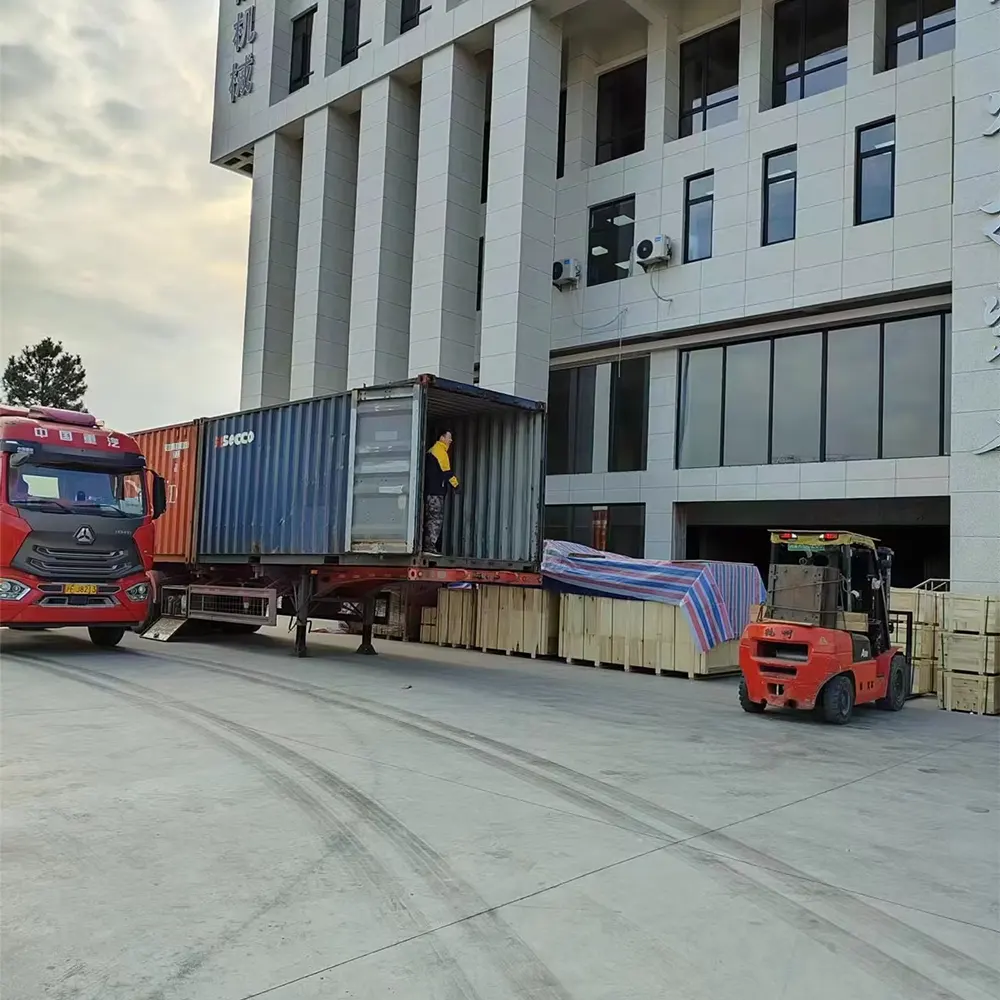
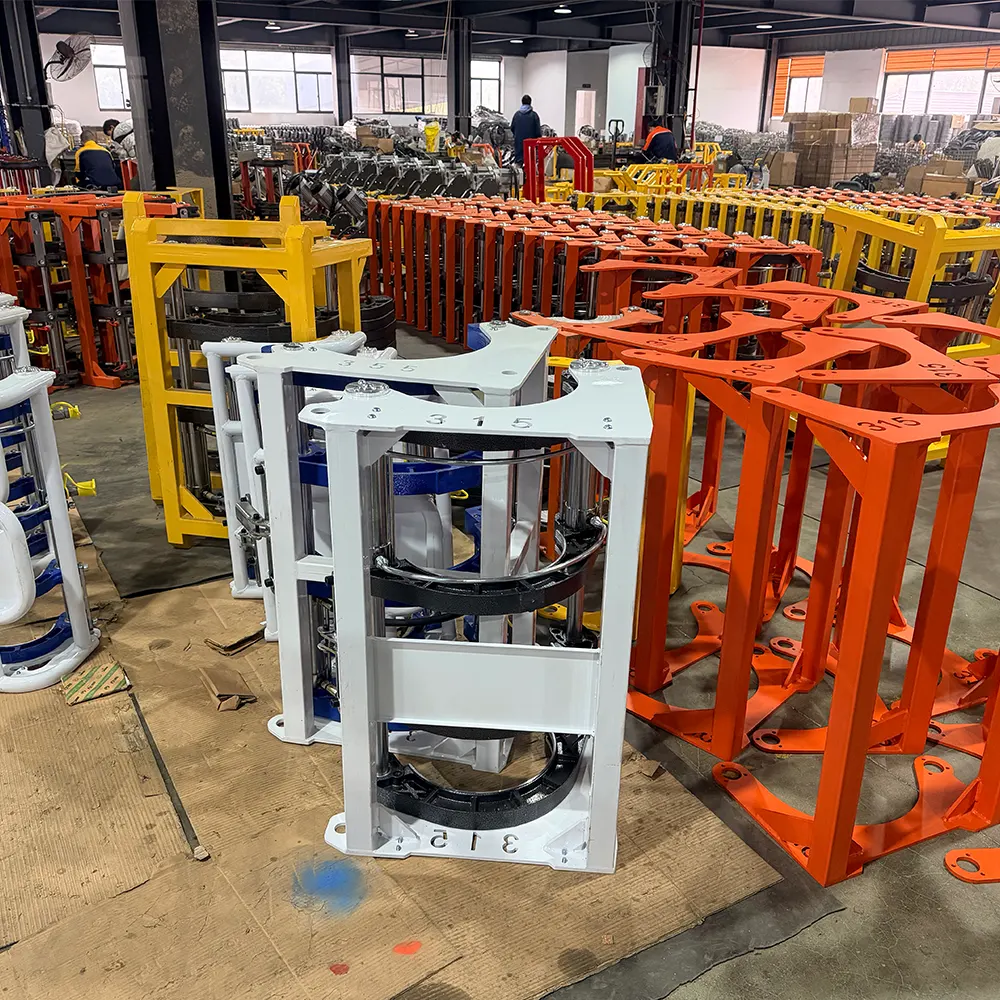
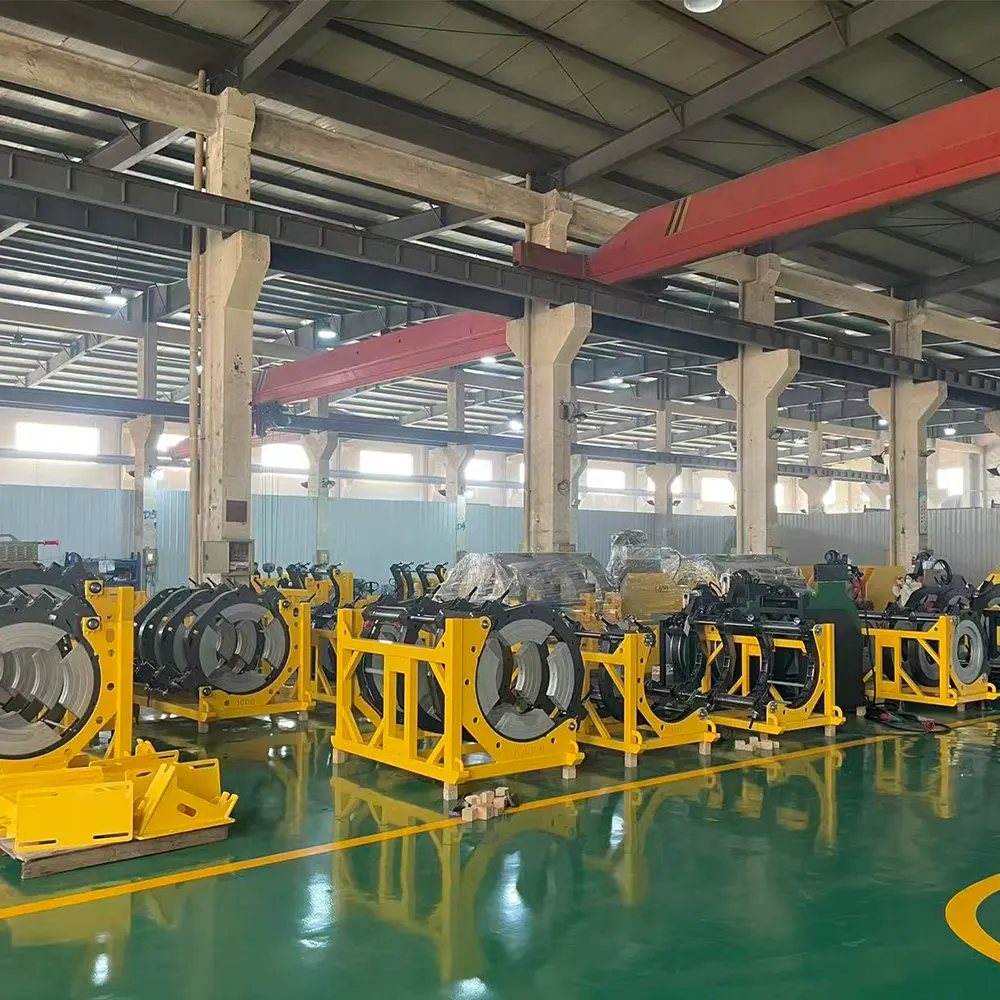
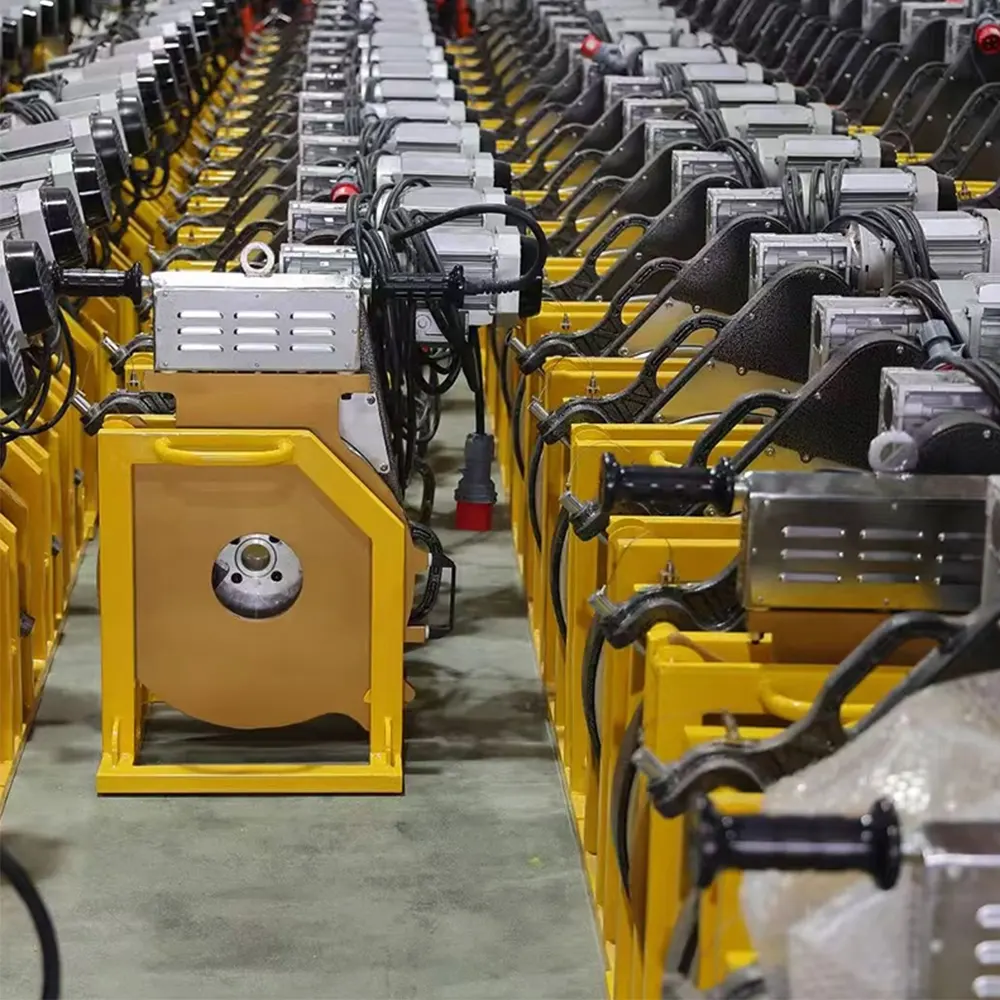
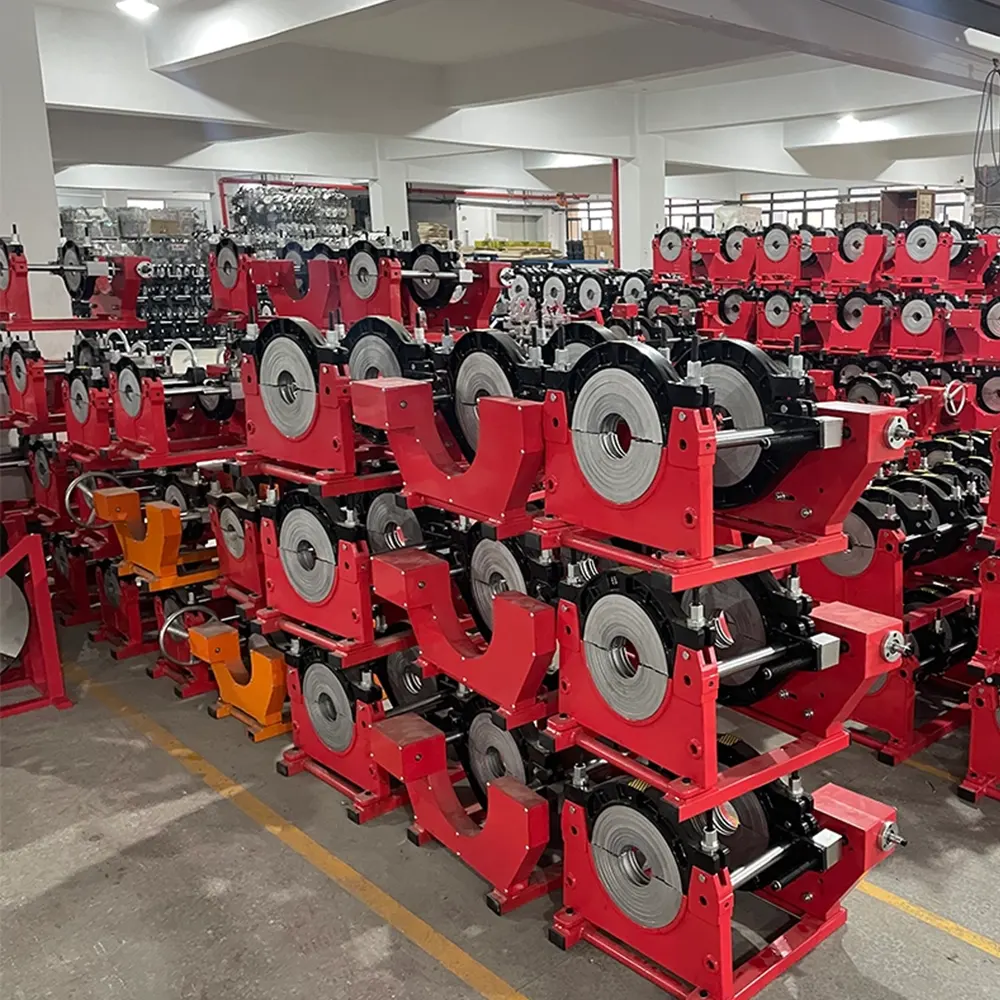
Production Center & Ready Stock
Frequently Asked Questions on Large Diameter Fusion
Common operational, standard, and machinery sizing questions answered by our certified technical support engineering team.
Why is dynamic drag pressure measurement critical for large diameter pipes?
Pipes above 630mm diameter weigh thousands of kilograms per segment. The friction generated as the movable clamp pulls the pipe across soil or rollers creates significant resistance. Failing to measure and add this drag pressure to the hydraulic gauge setting will cause the actual interfacial force to fall below required standards, leading to incomplete polymer entanglement and cold joints.
Can pipes with different SDR ratings or wall thicknesses be butt fused together?
Standard butt fusion procedures require equal wall thicknesses at the joint interface. If pipes with different Standard Dimension Ratios (SDR) must be joined, the thicker pipe must be internally machined or transitioned according to PPI butt fusion procedure guidelines (maximum 1:3 taper angle) to prevent severe localized stress concentrations.
How does ambient weather impact the heating and cooling cycle?
In cold or high-wind field environments, convective heat loss from the heating mirror and exposed molten pipe ends accelerates dramatically. In accordance with PE pipe jointing best practices, weather shelters, protective end caps, and thermal blankets must be deployed to ensure consistent soak temperatures and eliminate thermal shock.
When should contractors choose CNC Automatic over standard hydraulic machines?
For critical municipal water mains, offshore outfalls, or regulated gas distribution projects governed by ASTM F2620 pipeline safety mandates, CNC machines eliminate operator error by automating pressure ramps, monitoring dwell times, and generating tamper-proof PDF weld logs for quality audits.
