
Understanding the plastic pipe welding machine working principle is essential for professionals in water supply, gas distribution, and industrial piping. At its core, butt fusion welding is a thermofusion process that joins two thermoplastic pipe ends by heating them to a molten state and pressing them together under controlled pressure. This creates a homogeneous, leak-proof joint that is often stronger than the pipe itself. The entire sequence relies on precise temperature, time, and pressure parameters to ensure a reliable bond that meets international standards.
The Core Physics Behind HDPE Pipe Welding
The working principle leverages the viscoelastic properties of high-density polyethylene (HDPE). When heated above its crystalline melting point (typically around 200°C to 220°C / 392°F to 428°F), the polymer chains become mobile. Applying axial pressure causes these chains to interdiffuse across the joint interface, entangling and forming a co-crystalline microstructure upon cooling. This fusion process eliminates the need for solvents, adhesives, or mechanical couplings, resulting in a monolithic pipeline system that resists external leakage and internal corrosion. For a deeper understanding of material specifications, refer to the ISO 21307 butt fusion procedures.
The 5 Critical Stages of Butt Fusion
A successful weld follows a strict sequence governed by the plastic pipe welding machine working principle. Skipping or shortening any phase can lead to joint failure. The stages include:
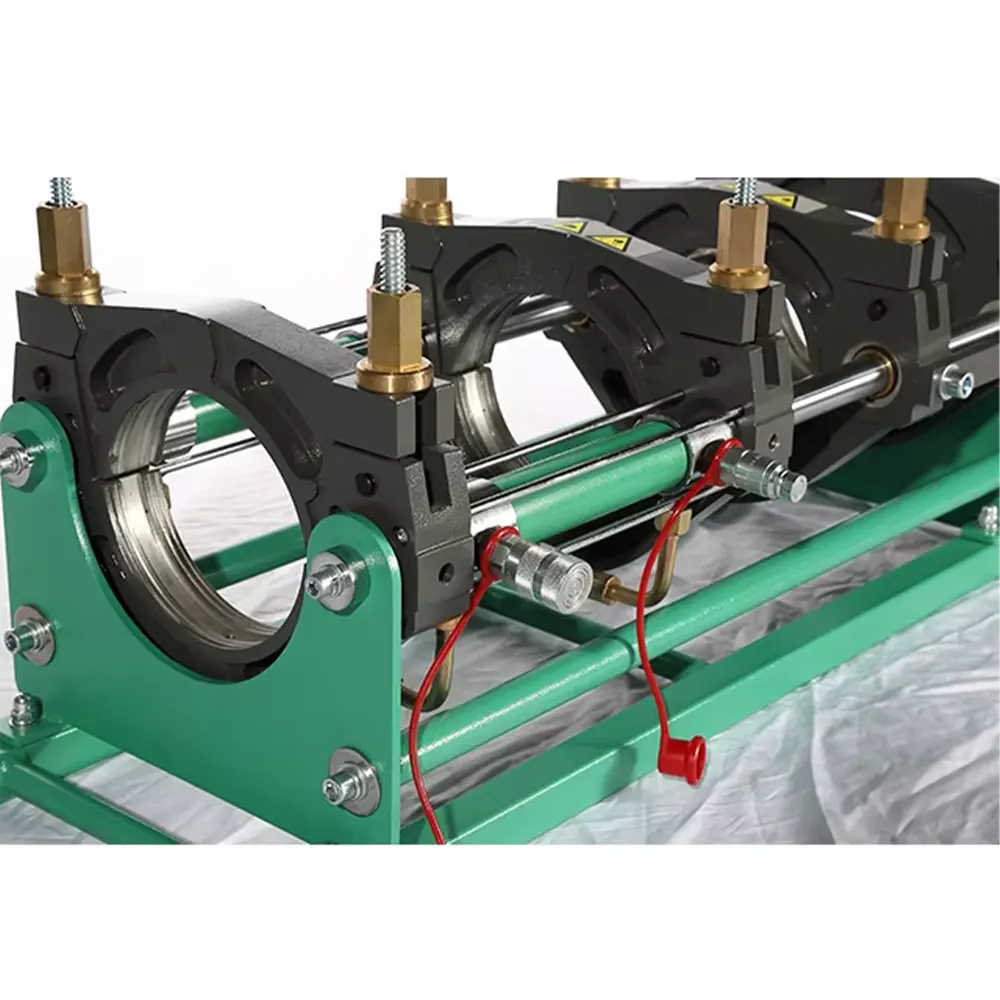
- 1. Clamping & Alignment: The pipe ends are secured in the machine’s jaws to eliminate angular misalignment and ensure concentricity.
- 2. Facing: A rotating planing tool trims the pipe ends simultaneously, creating smooth, parallel surfaces perpendicular to the pipe axis.
- 3. Heating: A non-stick heating plate is inserted between the pipe faces. A controlled bead-up pressure forces the pipes against the hot plate to form a uniform melt bead.
- 4. Heater Removal & Fusing: The heater is swiftly removed, and the molten ends are brought together under fusion pressure, allowing intermixing of the polymer.
- 5. Cooling Under Pressure: The joint is held immobile under pressure until it cools below the melting point, locking in the homogeneous bond.
Machine Components That Execute the Welding Principle
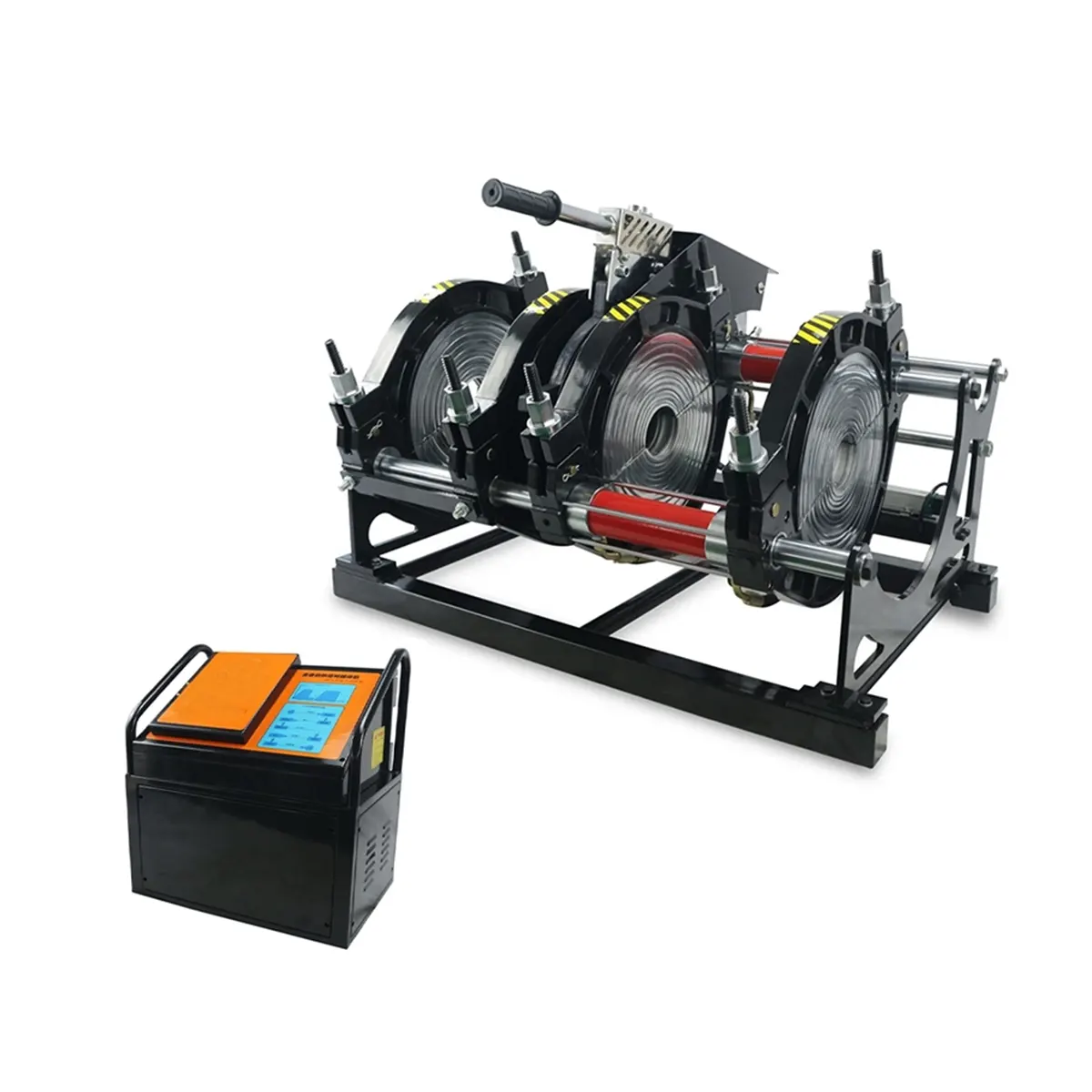
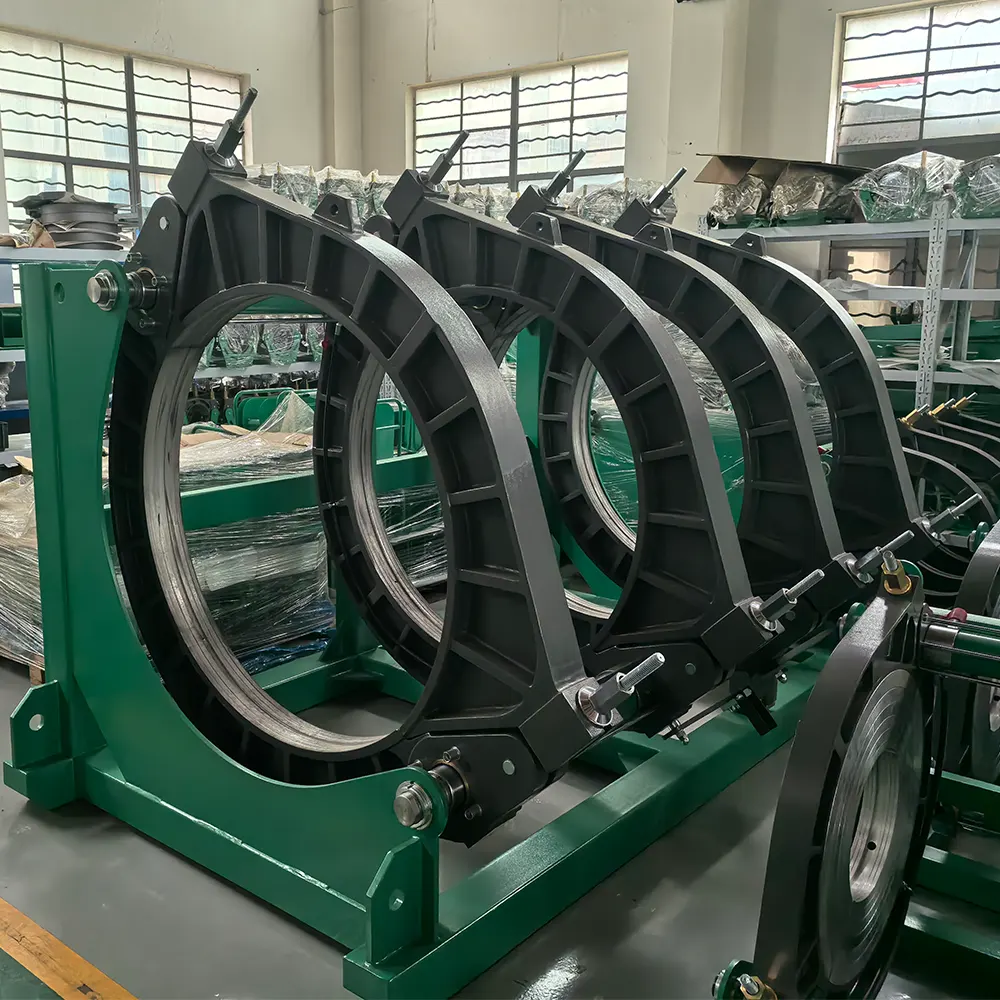
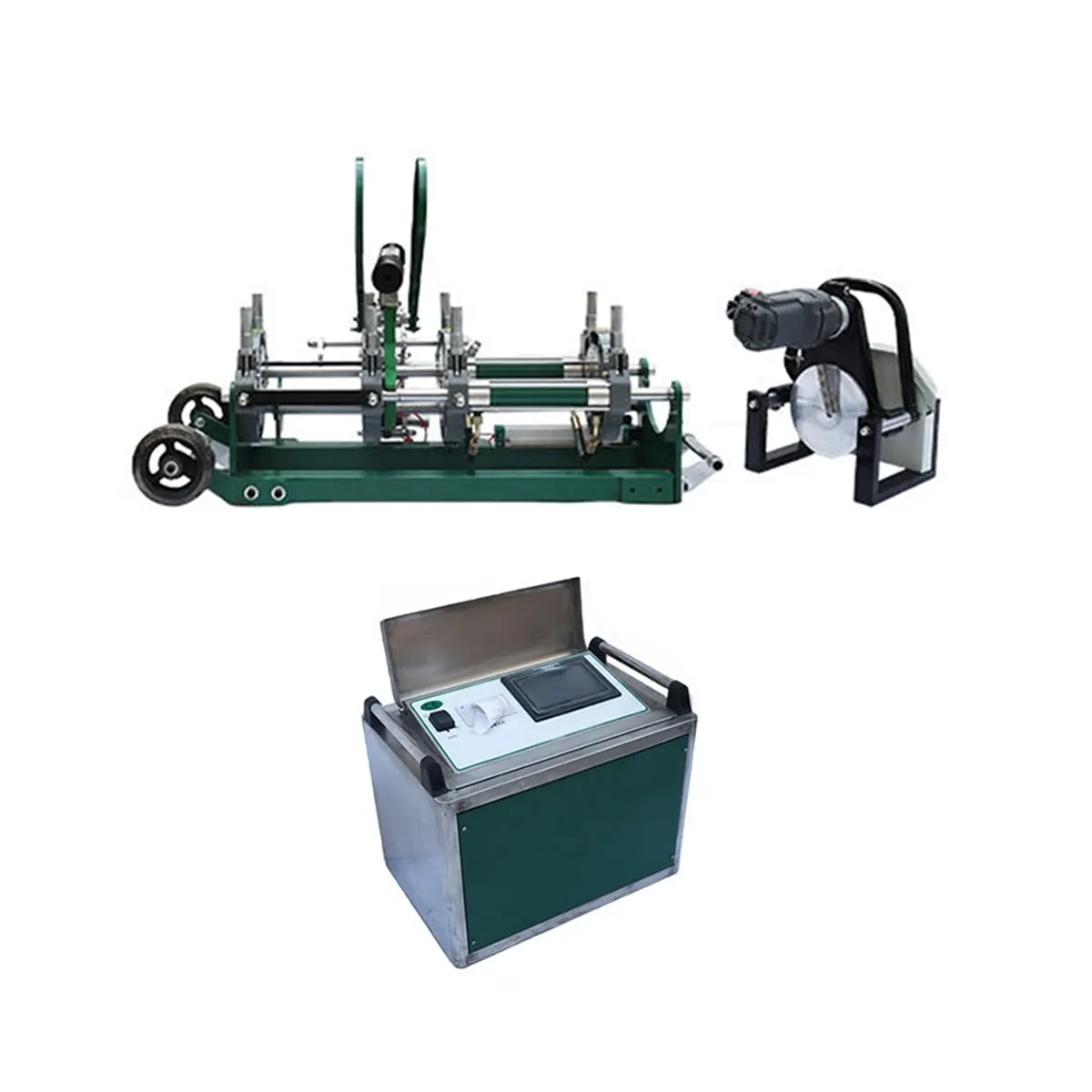
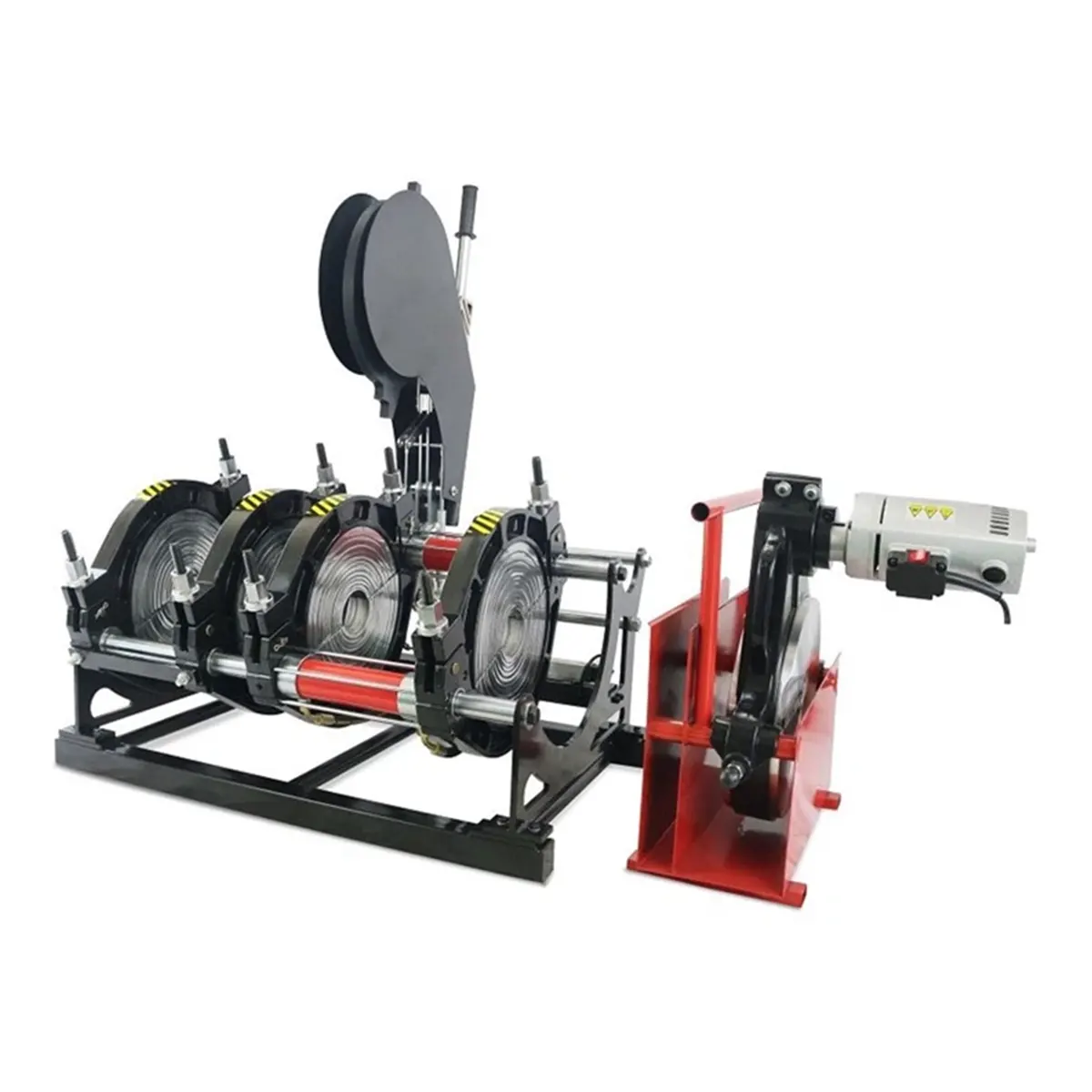
To translate the working principle into practice, a plastic pipe welding machine consists of several critical subsystems. Whether manual, hydraulic, or CNC automatic, the following components work in harmony:
| Component | Function | Operating Principle |
|---|---|---|
| Clamp System | Secures and aligns pipes | Mechanical gripping to prevent slippage during axial force application |
| Hydraulic Power Unit | Generates controlled force | Converts hydraulic pressure into linear motion for pipe movement |
| Heating Plate | Melts pipe surfaces | Electrically heated with non-stick PTFE coating; maintains precise temperature |
| Facing Tool (Trimmer) | Planes pipe ends | Rotating twin-sided planer ensures square, contaminant-free surfaces |
| Control System | Monitors and logs parameters | PLC or manual gauges regulate time, temperature, and pressure per standards |
Manual vs. Hydraulic vs. CNC Automatic Machines
While the fundamental plastic pipe welding machine working principle remains identical, the method of applying force and controlling parameters varies significantly across machine types. Choosing the right type depends on pipe diameter, project scale, and required PPI technical guidance compliance.
Manual Butt Fusion
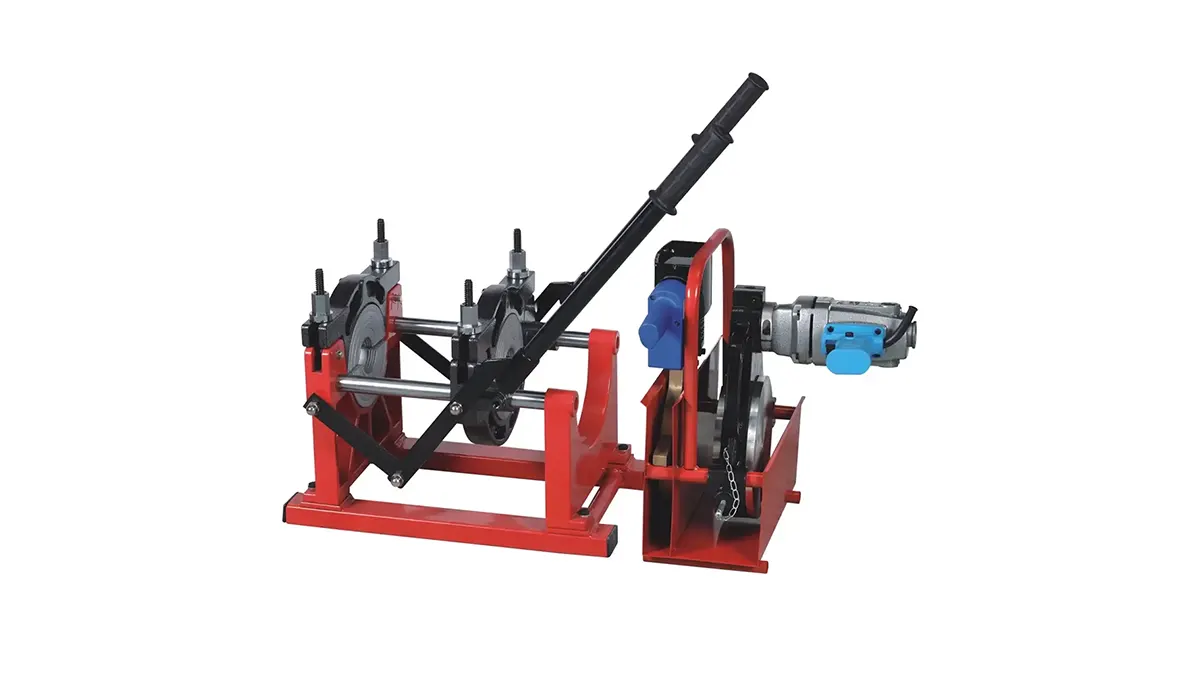
Operates with a lever mechanism for clamping and a hand-pump for pressure. Ideal for small diameters (under 200mm) and field repairs where portability is key. Requires skilled operators to maintain consistent gauge pressure, as there is no automated data logging.
Hydraulic Butt Fusion
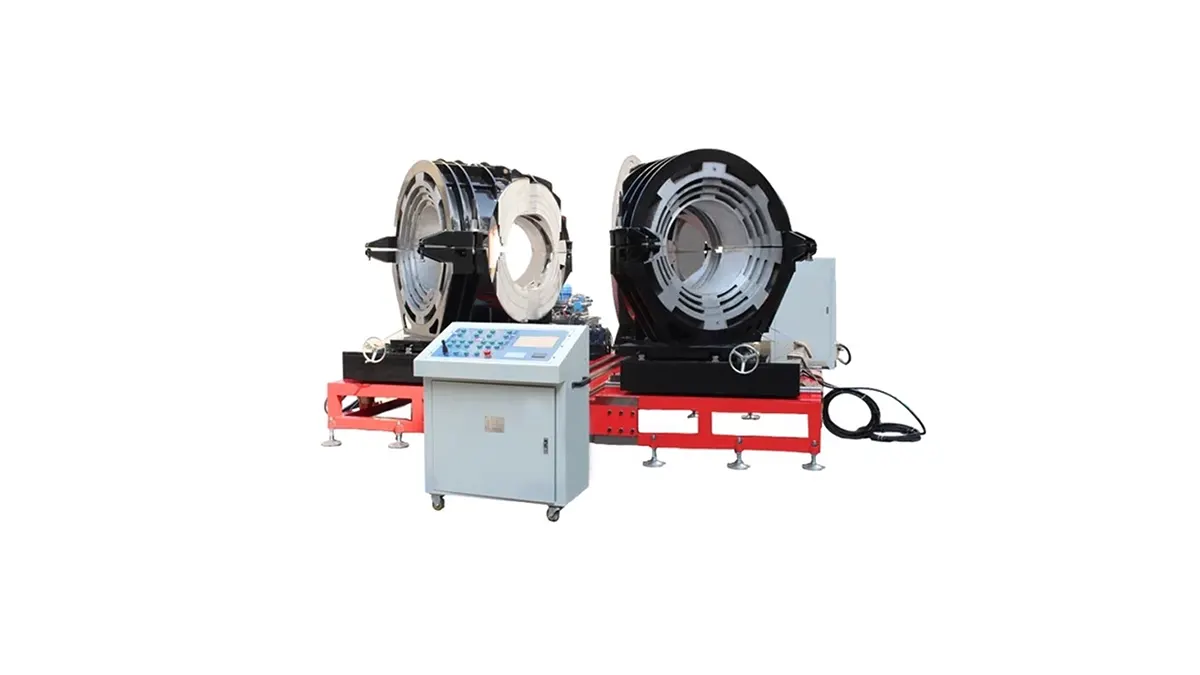
Uses a hydraulic power pack to drive the movable clamp carriage. This provides consistent, high-force welding for medium to large diameter pipes (up to 2500mm). Hydraulic models often feature pressure regulators that semi-automatically compensate for drag and pipe weight, ensuring the correct interfacial pressure as outlined in the PE butt fusion equipment standard.
CNC Automatic Fusion
Fully automated machines where a Programmable Logic Controller (PLC) manages every stage. The operator simply inputs the pipe material and diameter; the machine calculates and executes the exact bead-up, heat soak, and fusion pressures. Automatic units generate comprehensive weld reports for ISO 12176-4 traceability, making them essential for nuclear, gas, and critical water infrastructure projects.
Key Parameters Influencing the Welding Process
The integrity of an HDPE joint is only as good as the parameters controlling the physical principle. Even the most advanced hydraulic pipe fusion equipment requires strict adherence to the following variables:
- Interfacial Pressure: The specific force (typically 0.15 to 0.20 N/mm²) applied during heating and fusion. Insufficient pressure prevents polymer chain entanglement, while excessive pressure squeezes out molten material.
- Heater Surface Temperature: Must be uniformly maintained between 200°C and 230°C. Cold spots cause lack of fusion; hot spots degrade the polyethylene.
- Heat Soak Time: The duration required to conduct heat through the pipe wall to form adequate melt beads, which varies based on wall thickness and ambient conditions.
- Cooling Time: Critical for re-crystallization. Removing the joint from the machine clamps too early introduces bending stresses that cause cracks.
The Role of Drag Pressure in Hydraulic Systems
A nuanced but critical aspect of the plastic pipe welding machine working principle is compensating for drag pressure. This is the force needed to overcome the friction of moving the pipe carriage and the pipe itself across the rollers. In hydraulic machines, the operator must measure this gauge pressure prior to heating and add it to the theoretical fusion pressure. Failure to account for drag results in a low actual interfacial force, leading to a weak, potentially dangerous cold joint. This is a standard requirement in the ISO 21307 protocols.
Industry Standards That Validate the Working Principle
The theoretical principles of heat fusion are codified into strict international standards that manufacturers and contractors must follow. A plastic pipe welding machine must be capable of adhering to these procedures to produce a legally compliant joint. Key documents include:
| Standard | Scope | Key Parameter Covered |
|---|---|---|
| ISO 21307 | Butt fusion jointing procedures | Single low-pressure, dual low-pressure, and single high-pressure cycles |
| ASTM F2620 | Heat fusion joining of PE pipe | Heater temperature tolerance, bead dimensions, and cooling time |
| ASTM F3190 | Operator qualification | Ensures the person running the machine understands the working principle |
| PPI TR-33 | Generic butt fusion procedure | Practical field guide for implementing the theoretical principle |
Practical Applications of the Welding Principle
The plastic pipe welding machine working principle is universally applied across various sectors. In potable water systems, the homogeneous joint prevents bacterial growth at seams. In gas distribution, the leak-tight seal eliminates the risk of methane emissions. For mining applications, the monolithic assembly can withstand ground shifts and abrasive slurries better than flanged connections. Modern machines from JQ-Fusion are designed to deliver these consistent results across all these challenging environments, ensuring that the physical principle translates directly into long-term operational safety.
Why Consistent Drag Compensation Matters
Even with a perfect understanding of the working principle, the primary cause of field failures is incorrect interfacial pressure. In hydraulics, the gauge pressure (P1) must equal the fusion pressure (P2) plus the drag pressure (Pd). Machines equipped with digital data loggers automatically calculate this differential, making them preferable for high-integrity pipelines. This is why understanding the physics behind the procedure is just as important as operating the machine itself.
If you are looking to equip your team with machinery that faithfully executes this precise thermal principle, explore the range of solutions available at JQ-Fusion. With a focus on durable engineering and strict adherence to ASTM and ISO parameters, we help ensure your infrastructure projects stand the test of time.



