
When people ask, how do you weld HDPE pipe correctly? the answer is not just about heating two pipe ends and pressing them together. Correct HDPE welding is a controlled process that depends on preparation, alignment, temperature, pressure, timing, and cooling. If any one of these steps is ignored, the joint can become weak, uneven, or unsafe for long-term service.
HDPE pipe is widely used in water supply, gas distribution, mining, and industrial piping systems because it is lightweight, corrosion-resistant, and durable. But these advantages only become fully reliable when the pipe is fused correctly. A poor weld may pass a quick visual check and still fail later under pressure, soil movement, vibration, or temperature changes.
That is why weld quality matters so much. A properly made HDPE fusion joint can perform as a single continuous pipe section, offering excellent leak resistance and long service life. For contractors, installers, and distributors, understanding the correct welding procedure is essential for reducing rework, improving project safety, and protecting system performance.
What Makes HDPE Pipe Welding Different?
HDPE does not behave like metal. It is a thermoplastic, which means it softens when heated and returns to a solid state when cooled. Instead of using filler material or mechanical joining alone, HDPE pipes are usually joined by fusion, creating a molecular bond between pipe sections.
This is why the welding process must be precise. The pipe ends must be clean, square, and properly heated to the correct range. If the temperature is too low, fusion will be weak. If it is too high, the material may degrade. If the pipe ends are misaligned, the final bead and joint strength may be compromised.
Important: HDPE welding is not a “force it together” process. It is a controlled heat-and-pressure operation that must follow the pipe material, diameter, wall thickness, and machine specifications.
Main Methods Used for HDPE Pipe Welding
There are several common methods used for HDPE pipe joining, and the correct choice depends on the project type and pipe size.
Butt fusion welding is the most common method for straight pipe-to-pipe connections. The pipe ends are trimmed, heated with a fusion plate, and pressed together under controlled force. This technique is used for water mains, gas lines, and many industrial applications.
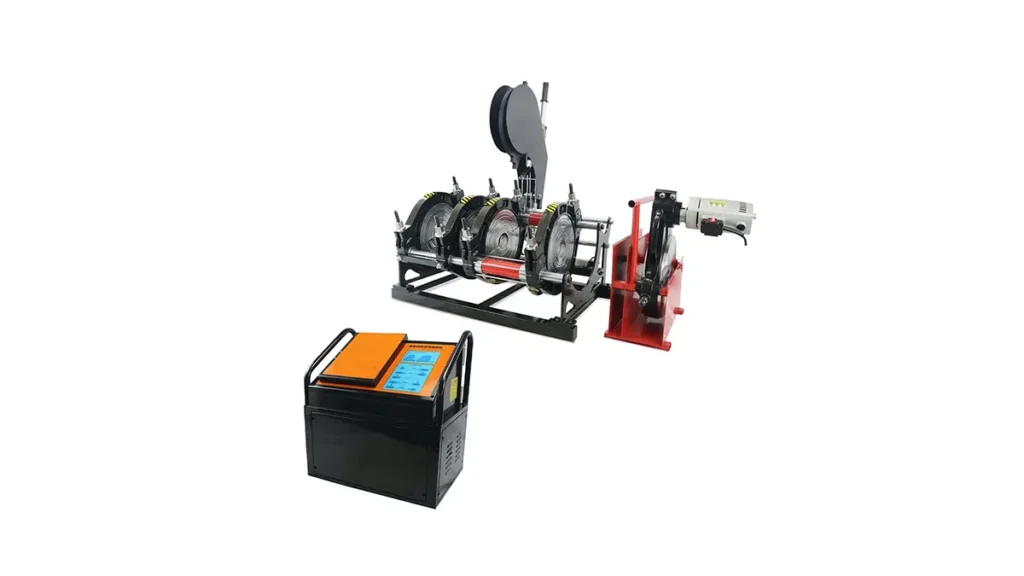
Butt fusion machine systems are designed to help operators control alignment, temperature, and pressure with greater consistency. For large pipeline projects, this method is often preferred because it produces strong, continuous joints with high reliability.
Electrofusion is another method. It uses special fittings with embedded heating coils. When electrical current is applied, the fitting melts and bonds to the pipe surface. This method is useful for tight spaces, repair work, and complex connections.
Socket fusion is generally used for smaller diameters. The pipe and fitting are heated and joined using matching sockets and spigots. It is practical for specific systems, though it is less common for larger infrastructure projects.
Equipment You Need Before Welding
Correct HDPE welding starts with the right tools. A clean workspace and suitable machine are just as important as the operator’s experience. Before beginning, make sure the following items are available:
Key equipment checklist
• Butt fusion machine or appropriate joining equipment
• Pipe facing tool
• Heating plate with stable temperature control
• Clamps and alignment system
• Clean, lint-free cloths
• Alcohol or recommended cleaning solution
• Measuring tools
• Safety gloves and protective gear
Using well-maintained equipment improves the quality of every weld. Machines with accurate hydraulic pressure and stable heating control help reduce operator error and deliver more consistent joints. This is especially important on large or high-pressure projects where every connection must perform over many years.
Step 1: Inspect the Pipe and Prepare the Work Area
Before welding begins, the pipe ends and surrounding work area should be checked carefully. The pipe should be free from cracks, deep scratches, contamination, and deformation. If the pipe end is damaged, the weld quality may be affected even if the rest of the process is done correctly.
The work area should also be dry, clean, and protected from wind, rain, dust, and extreme temperature changes. Poor environmental control can interfere with heating and surface cleanliness. In field installations, this is one of the most overlooked causes of weak fusion joints.
Use a measuring tool to confirm that the pipe sections are the correct size and that the machine setup matches the pipe diameter and SDR. Proper preparation reduces alignment issues and improves the final result.
Step 2: Clamp, Align, and Face the Pipe Ends
Once the pipe is prepared, place both ends securely in the machine clamps. Good alignment is critical. The pipe ends must sit straight and level so the fusion joint forms evenly across the full surface.
The pipe ends are then faced using a pipe facer. This removes oxidation, contamination, and surface irregularities, creating a fresh, smooth surface for heating. Facing is one of the most important steps in achieving a proper bond.
Tip: After facing, do not touch the prepared pipe surfaces with bare hands. Oil, dust, and moisture can reduce fusion quality.
After facing, check whether the two pipe ends are parallel and meet the machine’s alignment requirements. Misalignment can create uneven bead formation and internal stress in the joint.
Step 3: Clean the Surfaces Thoroughly
Cleaning is a small step with a big impact. Even a thin layer of dust or grease can reduce the quality of the weld. Wipe the faced pipe ends with a clean, lint-free cloth and the correct cleaning solution if required by the project specification.
Allow the surfaces to dry fully before moving to the heating stage. Never use dirty cloths or materials that leave fibers behind. Clean surfaces support stronger molecular bonding and better fusion consistency.
For critical projects, some teams perform a double-check before heating begins. This extra inspection can prevent avoidable weld failures and project delays.
Step 4: Heat the Pipe Ends Correctly
The heating stage is where many welds succeed or fail. The pipe ends must be heated to the correct temperature using a stable heating plate. The goal is to soften the surface uniformly without overheating it.
Temperature, heating time, and environmental conditions all matter. If the plate is too cool, the pipe ends will not fuse properly. If it is too hot, the material may become damaged or form an unstable bond. Operators should follow the machine manual and the pipe manufacturer’s recommendations closely.
Best practice: Allow the heating plate to stabilize before use, and verify the surface temperature with approved tools. Do not rely on guesswork.
Step 5: Join Under Proper Pressure
After heating, remove the plate quickly and bring the pipe ends together under controlled pressure. Timing is important here. The join must happen within the recommended transfer window so the softened surfaces bond correctly.
The initial pressure should be applied according to the fusion procedure. Too much force can squeeze out molten material and weaken the joint. Too little force may leave gaps or poor contact. The operator must maintain the correct pressure during the fusion stage so the bead forms evenly around the pipe.
Well-controlled pressure is one of the strongest indicators of a quality joint. In professional pipeline work, machines that offer stable hydraulic performance are often preferred because they reduce pressure fluctuation and improve repeatability.
Step 6: Hold and Cool Without Disturbance
Once the pipe ends are joined, the fusion joint must cool under steady conditions. Do not move, bend, or load the pipe during this period. Premature disturbance can weaken the bond before it fully stabilizes.
The cooling time depends on pipe size, wall thickness, ambient conditions, and the fusion procedure. Larger pipes require longer cooling periods. Patience at this stage helps protect the strength of the joint and reduces the risk of hidden defects.
Reminder: A weld that looks finished is not always ready for service. Full cooling is part of the welding process, not an optional extra.
How to Check Whether the Weld Is Good
After cooling, inspect the weld visually and, when needed, with additional testing methods. A good butt fusion joint usually shows a consistent bead around the circumference, proper alignment, and no signs of scorching, gaps, or contamination.
The bead shape should be even and symmetrical. While bead appearance alone does not guarantee perfect internal quality, it is a useful first indicator. For critical applications, more advanced testing or project-specific inspection standards may be required.
If the weld looks uneven, underheated, or contaminated, it should be reviewed before the pipeline is put into service. Repairing a questionable joint early is far better than dealing with a failure after installation.
Common Mistakes to Avoid
Many HDPE welding problems come from a few repeat mistakes. Understanding them can help operators avoid costly errors.
Poor surface preparation is a major issue. If the pipe is not properly faced or cleaned, the fusion bond may be weak.
Incorrect temperature can damage the pipe or prevent proper bonding. Always verify the heating plate before use.
Misalignment leads to uneven joints and unnecessary stress. Use the machine clamps carefully and check the pipe position before heating.
Rushed cooling can ruin an otherwise good weld. Let the joint stabilize fully before moving the assembly.
Operator inconsistency often causes the biggest variation in weld quality. Training, standard procedures, and proper machine selection help reduce this risk.
Why Machine Quality Matters in HDPE Welding
The welding operator is important, but the machine matters just as much. A reliable fusion machine supports stable temperature control, accurate pressure application, and precise alignment. These factors are essential for producing repeatable welds across many joints.
For contractors managing large projects, machine performance can directly influence schedule, quality, and labor efficiency. A dependable machine reduces downtime, supports consistent output, and helps teams maintain quality standards from the first weld to the last.
That is why many buyers evaluate not only the welding method but also the manufacturer’s quality control, technical support, and customization capability. In global infrastructure work, a strong equipment partner can make a real difference in project success.
Applications Where Correct HDPE Welding Is Critical
Correct HDPE welding is essential in systems where leaks, pressure loss, or repair access are difficult. This includes potable water pipelines, gas distribution systems, mining slurry lines, industrial chemical transport, and long-distance municipal infrastructure.
In these environments, welded joints must withstand pressure changes, ground movement, vibration, and long service cycles. A properly fused pipe can help reduce maintenance costs and improve operational safety over time.
For this reason, professional installers often rely on proven joining equipment and trained operators rather than fast but unreliable shortcuts. In demanding projects, quality always outweighs speed.
Choosing the Right Partner for Fusion Projects
When selecting equipment and support for HDPE welding, it helps to work with a manufacturer that understands real-world pipeline needs. JQ-Fusion offers butt fusion solutions for different pipe sizes and project requirements, including manual, hydraulic, and CNC automatic systems.
The company’s experience in water supply, gas, mining, and industrial pipeline projects makes it a practical partner for contractors and distributors seeking stable performance and dependable after-sales support. With OEM and ODM customization, buyers can also adapt machine specifications to match market or project demands.
If your project requires dependable joining performance, choosing the right equipment is just as important as following the correct welding procedure. Reliable tools help turn good technique into consistent results.
Frequently Asked Questions
FAQ 1: Can HDPE pipe be welded in cold weather?
Yes, but the work area should be managed carefully. Cold conditions can affect heating time, cooling time, and surface cleanliness, so operators should follow the procedure recommended for the pipe and machine.
FAQ 2: How long does an HDPE weld need to cool?
Cooling time depends on pipe diameter, wall thickness, and environmental conditions. Larger pipes need longer cooling periods. Always follow the manufacturer’s or project specification.
FAQ 3: What is the most common reason for weld failure?
Common causes include poor alignment, dirty surfaces, wrong temperature, incorrect pressure, and moving the pipe before full cooling. Preparation and process control are the best prevention.
FAQ 4: Is butt fusion better than electrofusion?
Neither method is universally better. Butt fusion is widely used for straight pipe connections and large-diameter pipelines, while electrofusion is useful for tight spaces, repairs, and certain fittings.
FAQ 5: How can I improve welding consistency on site?
Use well-maintained equipment, trained operators, clean surfaces, accurate temperature control, and a standard fusion procedure. Consistency comes from controlling each step, not from speed alone.



