
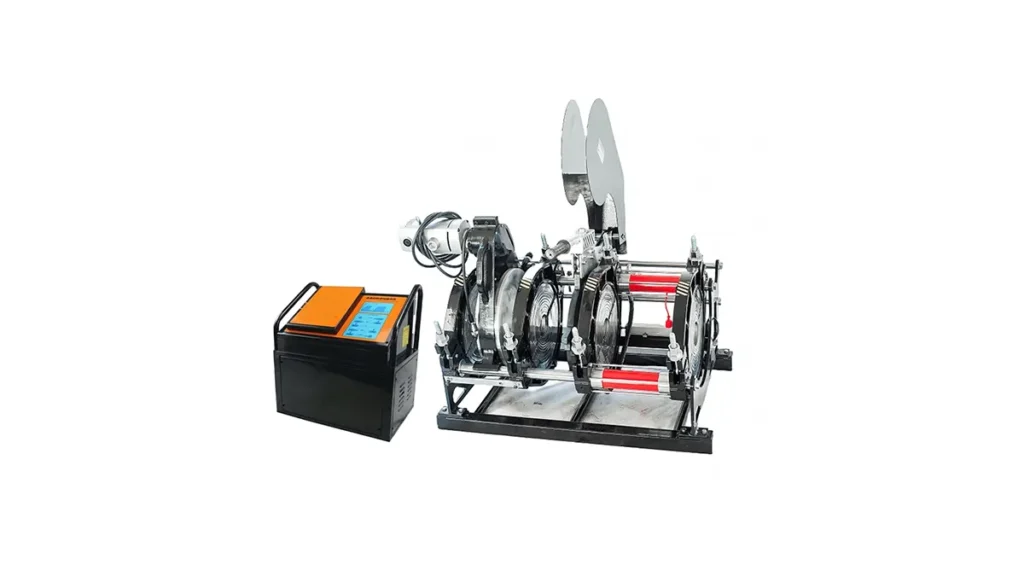
When an HDPE welding machine stops performing as expected, the problem is rarely one single fault. In most cases, the issue comes from a combination of temperature inconsistency, hydraulic pressure fluctuation, poor pipe alignment, contaminated heating surfaces, or incorrect operator settings. The good news is that most common failures can be diagnosed quickly if you follow a clear troubleshooting process.
For contractors, installers, and distributors working on water supply, gas distribution, mining, or industrial pipeline projects, downtime can be costly. That is why learning how to troubleshoot an HDPE welding machine is an essential skill. Whether you use a manual model, a hydraulic unit, or a CNC automatic system, the core principles of inspection and correction remain the same.
As a professional butt fusion machine manufacturer, JQ-Fusion has seen how small operational mistakes can affect weld quality. This guide explains the most common problems, practical solutions, and maintenance habits that can help you restore stable performance and produce strong, consistent fusion joints.
Understanding the Working Principle Before Troubleshooting
Before checking any fault, it helps to understand how an HDPE welding machine works. The process generally includes pipe clamping, facing, heating, changeover, and fusion under pressure. If any one of these stages is unstable, the final joint may be weak or inconsistent. Troubleshooting becomes much easier when you identify which stage is failing.
In a well-functioning system, the pipe ends should be aligned precisely, the heating plate should reach and maintain the correct temperature, and the hydraulic system should apply steady pressure during the fusion and cooling stages. If the machine cannot maintain one of these elements, the weld may appear uneven, under-heated, or over-compressed.
Important: Most welding failures are not caused by a defective machine alone. Operator habits, poor preparation, and routine maintenance issues often create the same symptoms as mechanical failure.
Problem 1: The Heating Plate Does Not Reach the Correct Temperature
One of the most common complaints is that the heating plate is too cold, too hot, or unstable during operation. This can lead to weak fusion, excessive melting, or a rough bead formation. Temperature inconsistency is especially dangerous because the weld may look acceptable at first, but fail later under pressure.
Possible causes include a damaged temperature controller, loose sensor connection, low-quality power supply, or a heating plate that has not been cleaned properly. In some cases, old heating plates also develop hot spots that cause uneven heating across the pipe surface.
Fix: Check the power input first, then verify the controller reading with an external thermometer. Clean the heating surface with a soft, non-abrasive cloth, and inspect the sensor wiring for looseness or damage. If the temperature remains unstable, the thermostat or heating element may need replacement.
Operators should also allow sufficient preheating time. Starting the fusion cycle before the plate reaches the required temperature is a frequent mistake, especially on job sites where schedule pressure is high. A few extra minutes of waiting can prevent a failed weld and save hours of rework.
Problem 2: Hydraulic Pressure Fluctuates or Drops
Hydraulic instability can create several visible issues, including uneven bead formation, poor joint consistency, or incomplete fusion. When pressure rises and falls during the process, the pipe ends may not bond evenly across the full circumference.
The most likely causes are low hydraulic oil level, air in the hydraulic circuit, worn seals, blocked valves, or a faulty pressure gauge. On automatic systems, incorrect software settings can also produce pressure errors, especially if the machine is not calibrated for the pipe size being welded.
Fix: Inspect the hydraulic oil level and refill if needed. Bleed any trapped air from the system, then test the pressure under idle and working conditions. If the gauge display is unreliable, replace it immediately because inaccurate readings can mislead the operator and damage the weld.
Hydraulic hoses should also be checked for cracks, leaks, or loose fittings. Even a small oil leak can reduce system performance enough to affect the final weld. Regular inspection of the hydraulic unit is one of the simplest ways to avoid unexpected downtime.
Problem 3: Pipe Alignment Is Not Accurate
Poor alignment is one of the easiest problems to see and one of the most serious to ignore. If the pipe ends are not clamped evenly, the melted surfaces will not meet correctly. The result can be an offset joint, excessive flash on one side, or a visible gap after fusion.
Misalignment usually comes from worn clamps, improper pipe positioning, damaged guiding rails, or operator error during setup. Large-diameter pipes are especially sensitive to this problem because even slight deviation can affect the structural integrity of the welded section.
To solve this issue, clean the clamps, inspect the jaws for wear, and make sure the pipe is supported correctly on both sides of the machine. The clamp pressure should be firm but not excessive. If the pipe slips during facing or heating, the alignment must be reset before continuing.
Tip: Always check alignment from more than one angle. A joint that looks centered from the front may still be offset vertically or horizontally.
Problem 4: The Facing Tool Produces Uneven Surface Cuts
The facing stage prepares the pipe ends for fusion by creating smooth, parallel surfaces. If the facings are uneven, the pipe ends will not meet uniformly, and air pockets or weak areas may appear in the joint.
Uneven cuts often result from dull blades, low cutting speed, improper clamping, or contamination on the pipe ends. On older machines, the facing tool itself may be slightly out of square, which causes repeated errors across multiple jobs.
The solution starts with blade inspection. Replace or sharpen dull cutters and verify that the facing unit is seated correctly. Make sure the pipe is firmly clamped before starting the facing operation. After cutting, remove all chips and dust from the pipe ends so the heating plate can contact a clean surface.
If the surface is still irregular after these checks, the facing unit may need adjustment or servicing. A small defect at this stage can lead to a failed joint later, so it is worth correcting immediately.
Problem 5: The Weld Bead Looks Too Small or Too Large
Bead appearance is often used as a visual indicator of fusion quality. While bead size alone does not prove a weld is good or bad, unusual bead formation can reveal an underlying problem. A bead that is too small may suggest insufficient heat or pressure, while an oversized bead may indicate overheating or excessive force.
The main causes include wrong temperature settings, incorrect fusion timing, inaccurate pressure control, or poor pipe preparation. Material condition also matters. Cold pipe walls, wet surfaces, or dirty ends can all distort the melt flow and affect bead shape.
Fix: Recheck the welding parameter chart for the specific pipe diameter and wall thickness. Make sure the heating plate, pressure level, and changeover time all match the recommended values. Dry and clean the pipe ends before repeating the cycle.
It is also important to keep detailed records of successful welds. Comparing bead appearance across different jobs helps operators spot problems faster and adjust settings before quality is affected.
Problem 6: The Machine Starts Slowly or Fails to Power On
If the machine does not start, the problem may have nothing to do with welding parameters at all. Power supply faults, damaged cables, loose plugs, or internal electrical issues can prevent the unit from operating.
First, confirm that the power source matches the machine voltage requirement. Then inspect the fuse, switch, main cable, and connectors. On some models, a protective circuit may shut the machine down if it detects overload, overheating, or abnormal input voltage.
If the machine still refuses to start, a qualified technician should examine the internal electrical components. Never bypass safety devices just to keep production moving. That may create a much larger failure later.
Problem 7: The Control Panel Shows an Error or Irregular Reading
Modern CNC automatic welding machines rely on control systems to manage timing, temperature, and pressure. When the panel shows an error code or unstable reading, the cause may be a sensor failure, communication problem, calibration issue, or software mismatch.
Start by noting the exact error code and checking the manual. Many faults can be traced to a simple cause such as a disconnected sensor, dirty terminal, or unstable voltage supply. Restarting the unit may help in some cases, but repeated errors should be investigated thoroughly.
Recommended action: Keep the control cabinet clean and dry, verify all sensor cables, and update the operating parameters only under proper technical guidance. For advanced systems, factory support is often the fastest solution.
A Practical Troubleshooting Workflow for Job Sites
To save time, use a structured workflow rather than checking parts randomly. Begin with the easiest and most visible issues first: power supply, cleanliness, alignment, temperature, and pressure. Then move on to hydraulic, electrical, and control-system components if the fault remains unresolved.
A simple sequence can help:
1. Confirm power and voltage stability.
2. Clean the pipe ends and heating plate.
3. Check clamp alignment and pipe support.
4. Verify temperature and pressure settings.
5. Inspect hydraulic oil, hoses, and seals.
6. Review control panel codes or alarms.
7. Test again with one controlled welding cycle.
This method reduces guesswork and helps operators isolate the fault more quickly. It also prevents unnecessary replacement of parts that may still be functioning correctly.
Why Maintenance Matters as Much as Repair
Many machine failures can be avoided through routine maintenance. Regular cleaning, lubrication, calibration, and inspection keep the system stable and extend service life. In field work, dust, moisture, vibration, and heavy-duty cycling all place extra stress on the machine. Without maintenance, even a high-quality system will gradually lose precision.
JQ-Fusion focuses on stable performance, strict quality control, and long-term reliability because a good machine should support projects, not interrupt them. Whether you choose a hydraulic model or a CNC automatic system, preventive maintenance always costs less than emergency repair.
For companies handling multiple pipeline projects, it is also helpful to train operators on correct machine setup and daily inspection. A well-trained operator can detect a problem early, before it becomes a costly shutdown.
How Quality Equipment Reduces Troubleshooting Frequency
Not all HDPE welding machines are built to the same standard. A machine with stable clamping, accurate temperature control, consistent hydraulic output, and durable components will require fewer corrections during operation. This is why equipment quality matters just as much as operator skill.
JQ-Fusion offers manual, hydraulic, and CNC automatic butt fusion solutions for different project needs. With more than 20 years of industry experience, the company supports global customers with customized designs, technical guidance, and strong manufacturing capability. Products are used in water supply systems, gas distribution networks, mining projects, and industrial pipeline installations around the world.
When choosing equipment, look for clear calibration, sturdy construction, accurate control systems, and dependable after-sales support. Certified products tested for temperature accuracy, hydraulic stability, and clamp alignment give operators a better starting point and reduce the likelihood of recurring faults.
Key takeaway: Better machine quality does not eliminate troubleshooting, but it makes every diagnostic step more predictable and every repair more effective.
Best Practices to Prevent Future Problems
Prevention is always better than repair. To reduce the chance of repeat failures, operators should follow a consistent routine before every welding session. That routine should include checking cable condition, confirming voltage, cleaning the heating plate, inspecting clamps, and reviewing welding parameters for the pipe size being used.
It is also wise to keep spare consumables and basic replacement parts on hand, such as blades, seals, gauges, and connectors. On remote job sites, waiting for a small part can delay an entire project. Prepared crews stay productive and reduce wasted time.
Finally, document every issue and every correction. A troubleshooting log helps teams identify patterns, such as recurring pressure drops or repeated temperature drift. Over time, this record becomes a valuable maintenance tool.
Conclusion
Troubleshooting an HDPE welding machine becomes much easier when you approach it systematically. Start with the basics, including power, cleanliness, alignment, temperature, and pressure. Then inspect the hydraulic, electrical, and control systems if the issue continues. Most faults can be resolved quickly when the operator understands the machine’s working process and follows a careful inspection routine.
High-quality equipment, regular maintenance, and proper operator training all play a major role in reducing downtime. For contractors and distributors who need stable performance in demanding pipeline environments, choosing a reliable manufacturer is just as important as learning how to fix problems in the field.
Common Questions
Q1: Why does my HDPE welding machine show unstable temperature?
The most common reasons are a faulty sensor, poor electrical connection, dirty heating plate, or unstable power supply. Checking these items first usually solves the problem.
Q2: What should I do if the hydraulic pressure keeps dropping?
Inspect the oil level, look for leaks, bleed trapped air, and test the pressure gauge. If the system still cannot hold pressure, a valve or seal may need replacement.
Q3: How can I tell if pipe alignment is correct?
The pipe ends should sit evenly in the clamps with no visible offset. Check from multiple angles before facing and heating to make sure the alignment is truly accurate.
Q4: Can a dirty heating plate affect weld quality?
Yes. Dirt, residue, or scratches on the heating plate can cause uneven heat transfer and lead to weak or irregular fusion joints.
Q5: When should I ask for professional support?
If the machine shows repeated error codes, electrical faults, or control system problems that cannot be solved by basic checks, professional technical support is the safest option.



