
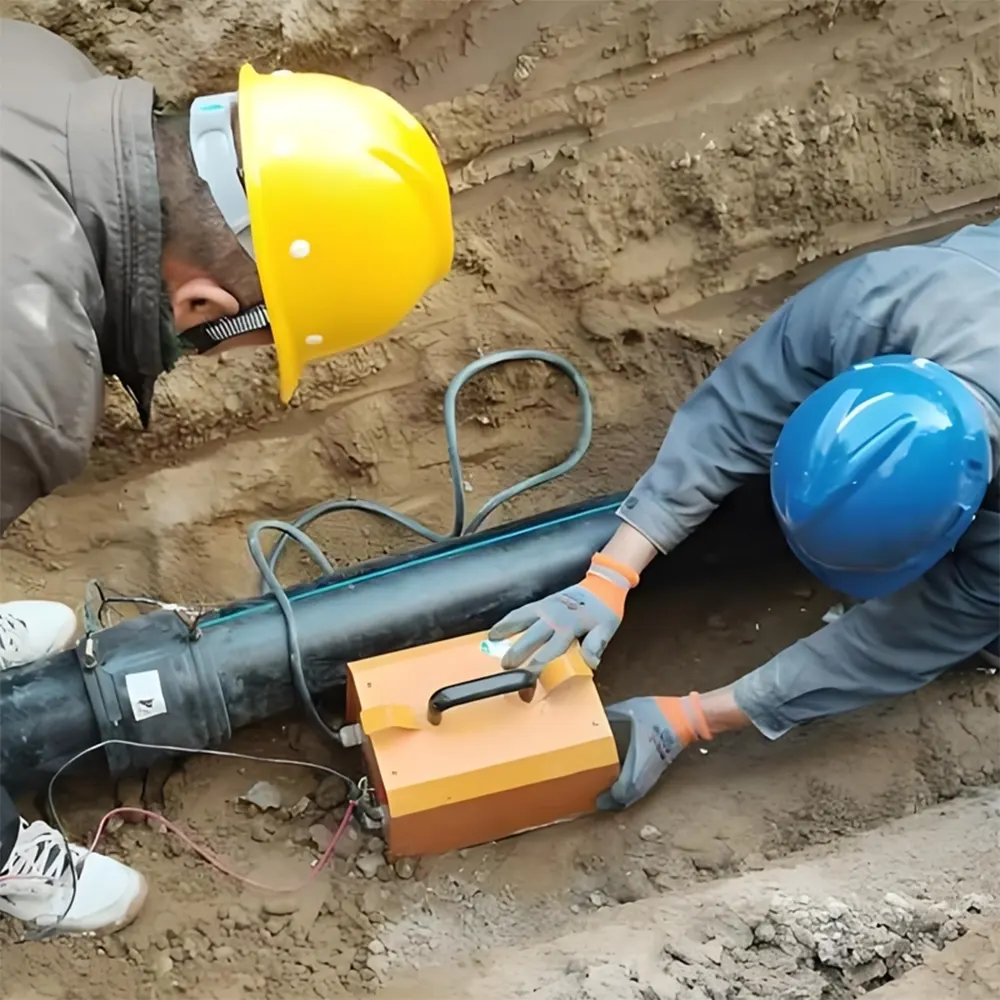
In the world of thermoplastic pipeline construction, the integrity of a joint often depends not just on the welding machine itself, but on the crucial components that hold the pipes in place. HDPE pipe welding machine clamps are the backbone of the butt fusion process, ensuring perfect alignment and preventing movement during the critical heating and cooling phases. Without properly designed and maintained clamps, even the most advanced hydraulic butt fusion machine cannot produce a reliable weld.
Understanding the Role of Clamps in HDPE Butt Fusion
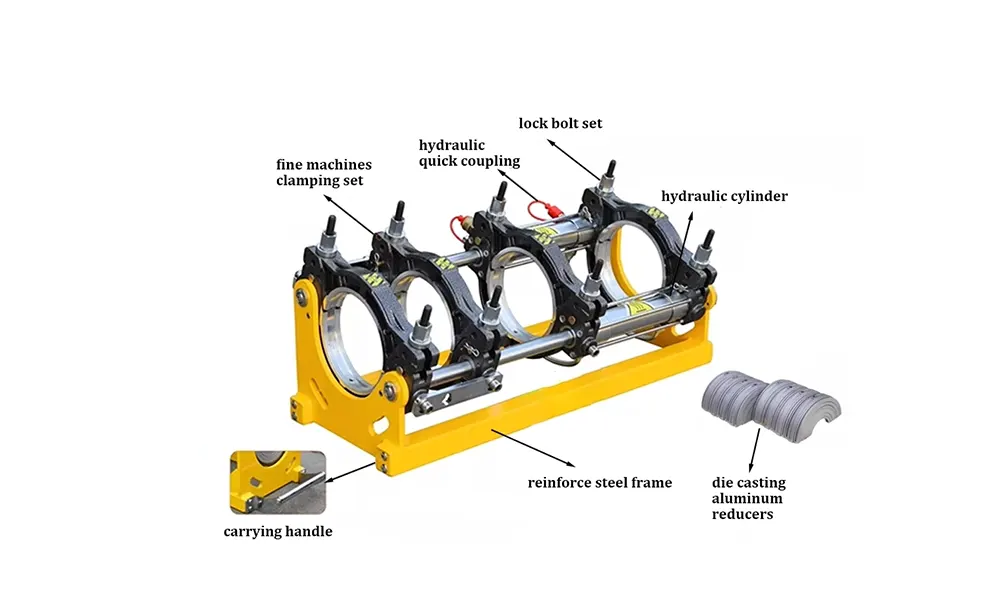
The primary function of HDPE pipe welding machine clamps is to secure the pipe ends during the butt fusion process. They must apply uniform pressure without deforming the pipe. In the butt fusion technique, two pipe ends are faced, heated, and then pressed together under controlled force. If the clamps are misaligned or apply uneven pressure, the resulting weld can suffer from internal bead defects, misalignment, or insufficient bonding, compromising the entire pipeline system.
Types of HDPE Pipe Welding Machine Clamps
Not all clamps are created equal. Depending on the machine type—manual, hydraulic, or CNC—and the pipe diameter, manufacturers employ different clamping mechanisms. Understanding these variations is key to selecting the right tool for your project.
Manual Clamps for Small-Diameter Pipes
For small-bore pipes (typically below 160mm), many manual butt fusion machines use simple mechanical lever clamps or screw-tightening mechanisms. These are lightweight, portable, and ideal for field repairs or low-volume installations. While cost-effective, they require significant operator skill to achieve the correct clamping force consistently.
Hydraulic Clamps for Medium and Large Pipes
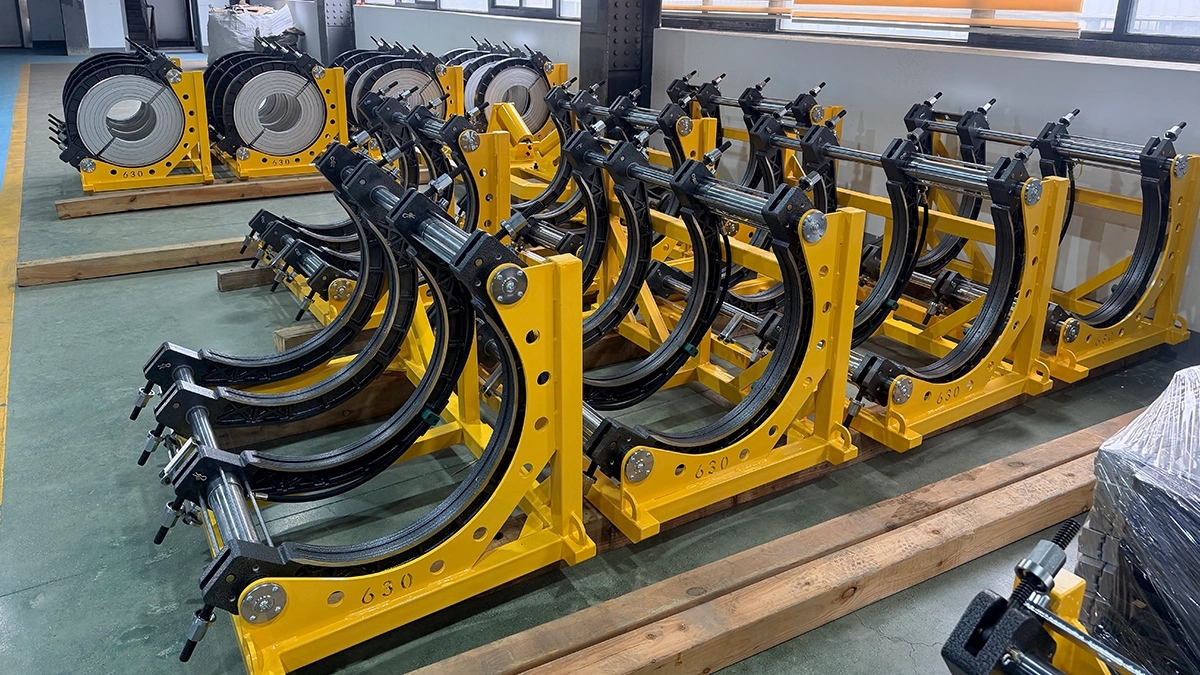
As pipe diameters increase, the force required to hold and move the pipes grows exponentially. Hydraulic clamp systems become essential. These HDPE pipe welding machine clamps use hydraulic cylinders to grip the pipe with immense, evenly distributed pressure. High-end models often feature an aluminum clamp design that reduces weight without sacrificing strength. The clamp blocks are typically replaceable, featuring grooves that dig into the pipe surface to prevent slippage without causing damage.
Fixed vs. Movable Clamp Arrangements
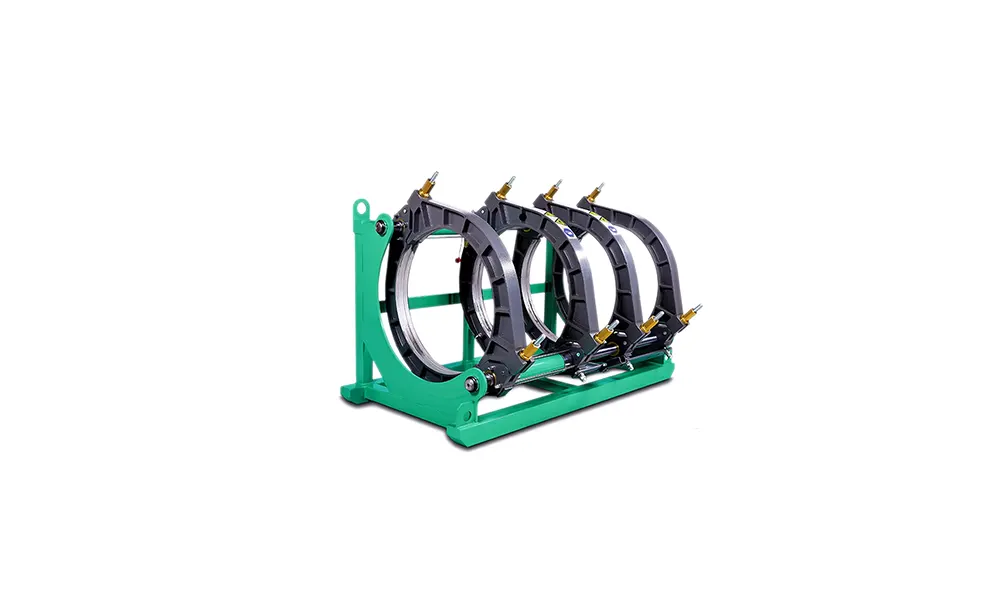
- Fixed Clamp (Clamping Jaw): This set of clamps holds one pipe segment stationary on the machine frame. The alignment is critical here; any deviation from the machine axis translates directly to weld misalignment.
- Movable Clamp (Carriage Clamp): Mounted on the movable carriage, these clamps slide along the guide rails. They must maintain perfect coaxial alignment with the fixed clamps while gliding smoothly. High-quality cast steel or reinforced aluminum alloys are common materials to ensure longevity.
- Reducer Inserts (Adapters): Many modern HDPE pipe welding machine clamps allow for interchangeable inserts. This allows a standard 630mm machine to securely hold a 400mm pipe by swapping the clamp inserts, greatly enhancing versatility.
Key Features of High-Performance Clamps
When evaluating the quality of clamps, look beyond the general description. The material composition and structural design define durability. Premium clamps are often precision-cast from ductile iron or aircraft-grade aluminum. Unlike steel, high-quality aluminum clamps offer excellent heat dissipation, which helps stabilize the temperature cycle during ISO 21307 compliant welding.
Pipe Compatibility and Protection
The contact surface of the clamp is equally important. The best designs incorporate a textured gripping surface with rounded edges. This prevents the “knife-edge” effect where the clamp cuts into the polyethylene under pressure, creating stress risers. For large-diameter HDPE pipe welding equipment, clamp protection pads made from softer materials are sometimes integrated to protect the pipe’s external bead.
Common Configurations Across Machine Models
The table below illustrates how clamp specifications shift based on the automation level of the butt fusion machine:
| Machine Type | Clamp Material | Typical Diameter Range | Key Advantage |
|---|---|---|---|
| Manual (Hand Lever) | Carbon Steel / Aluminum | 20mm – 160mm | Lightweight, no power required |
| Hydraulic (Standard) | Ductile Iron / Steel | 160mm – 800mm | High clamping force, durable |
| Hydraulic (Aluminum Body) | Cast Aluminum Alloy | 200mm – 2250mm | Reduced total weight, anti-rust |
| CNC Automatic | High-Grade Steel / Aluminum | 160mm – 630mm | Automated self-centering, precision |
How to Choose the Right Clamps for Your Project
Selecting the appropriate HDPE pipe welding machine clamps involves more than just matching the pipe diameter. It requires a careful analysis of the working environment and pipe material specifications.
Diameter and SDR Rating
The Standard Dimension Ratio (SDR) determines the pipe wall thickness. A clamp suitable for a 200mm SDR 11 pipe may not grip an SDR 26 pipe effectively without adapter inserts. Always check the clamping range specified by the manufacturer. A clamp that has to fully compress to hold a thin-wall pipe may not provide the required circularity (roundness) essential for a successful HDPE butt fusion weld.
Material Selection: Steel vs. Aluminum
- Steel Clamps: Extremely rigid and durable. They are the standard for stationary applications and harsh environments where the machine takes a beating. However, they are heavy and can rust if not properly coated.
- Aluminum Clamps: Significantly lighter, making them the preferred choice for mobile site work. As mentioned, reputable manufacturers design aluminum HDPE pipe welding machine clamps with robust structural ribs to match the rigidity of steel while easing the physical strain on operators.
Alignment and Centering Systems
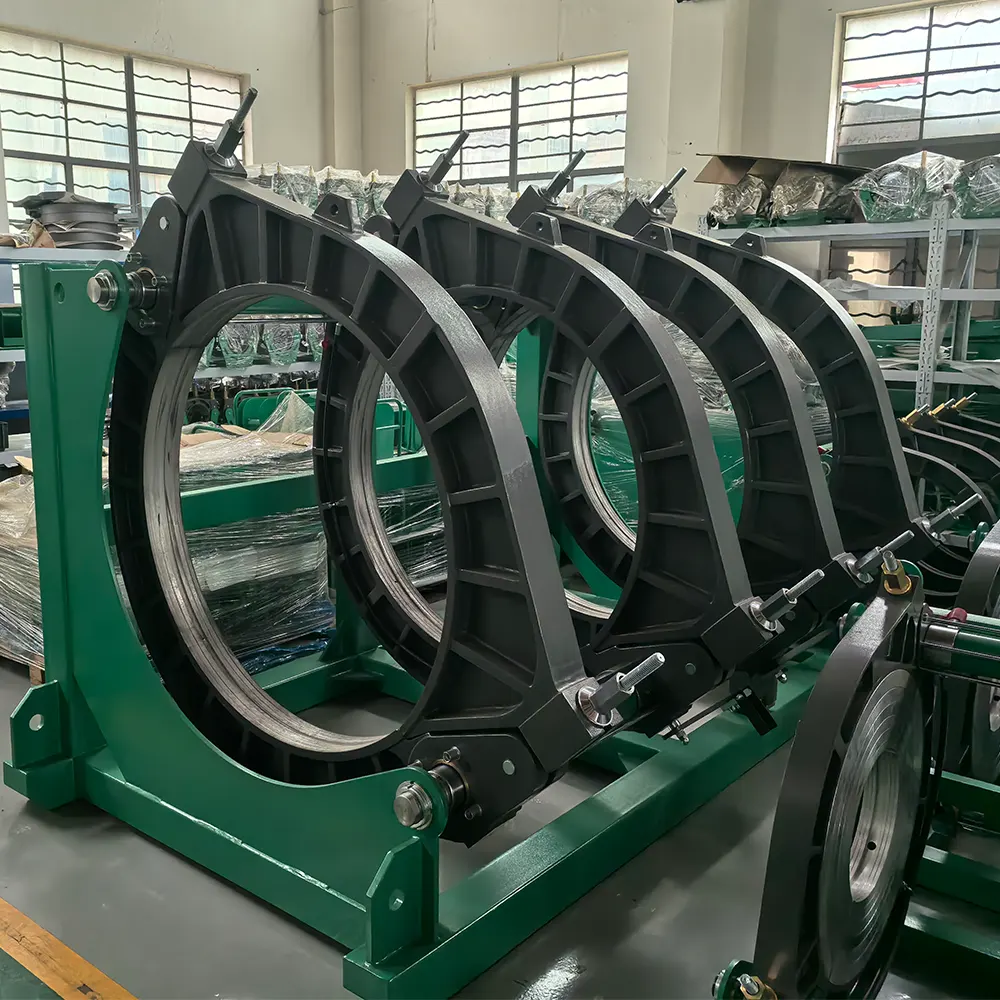
Misalignment is the primary cause of weld failure in the field. Look for clamp systems that feature independent height-adjustable jaws. This feature allows the operator to fine-tune the alignment of two pipes with slightly different thicknesses or out-of-round characteristics. Advanced multi-angle fitting machines use specialized side clamps to ensure perfect concentricity even for segmented elbows and tees.
Maintenance Tips for Long-Lasting Clamps
Even the most rugged HDPE pipe welding machine clamps require regular maintenance to perform accurately. Melted polyethylene can accumulate on the gripping teeth, reducing friction and forcing the operator to over-tighten. This can warp the clamp frame over time.
- Daily Cleaning: Use a brass brush to remove PE residue from the clamp inserts. Avoid steel brushes that might scratch the precision ground surfaces.
- Lubrication of Moving Parts: The pivot points and threaded rods (in manual clamps) must be lightly greased to prevent dry friction that leads to metal fatigue.
- Checking Jaw Parallelism: With the clamps closed, use a feeler gauge to verify that the jaws are parallel. A slight taper indicates worn linkage pins that need replacement.
- Replacing Worn Inserts: Do not run clamps with half-missing grip teeth. This concentrates pressure on a smaller area, potentially deforming the pipe and ruining the heat fusion joint.
Partnering with a Trusted Manufacturer
Whether you are working on a massive gas distribution network or a local water supply project, the quality of your final weld is only as good as the components you use. A reliable supplier ensures that every clamp is machined to match the machine frame perfectly. Poor-quality counterfeit clamps may initially fit but often suffer from casting voids that lead to cracks under high hydraulic pressure.
At JQ-Fusion, we specialize in the development and production of comprehensive butt fusion solutions, ensuring that our manual, hydraulic, and CNC machines are equipped with robust, precision-molded clamp systems. From small-radius manual clamps to large-diameter hydraulic aluminum blocks, we provide durable and customizable welding equipment to meet diverse project requirements. For contractors looking to upgrade their gear or explore tailored OEM/ODM solutions for HDPE pipe welding machine clamps, contacting our expert team is the first step toward flawless pipeline integrity.
Related Resources for Professionals:



