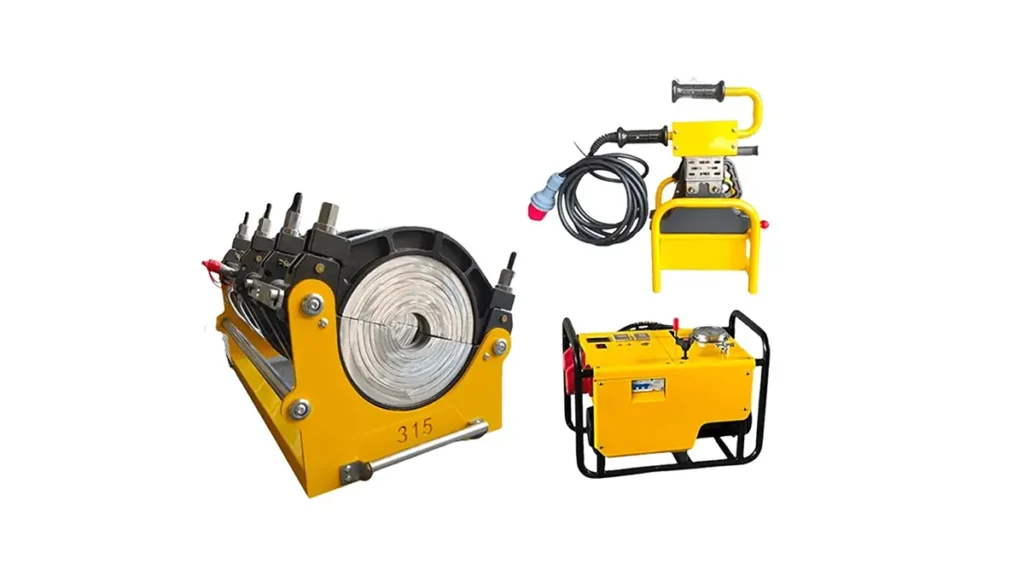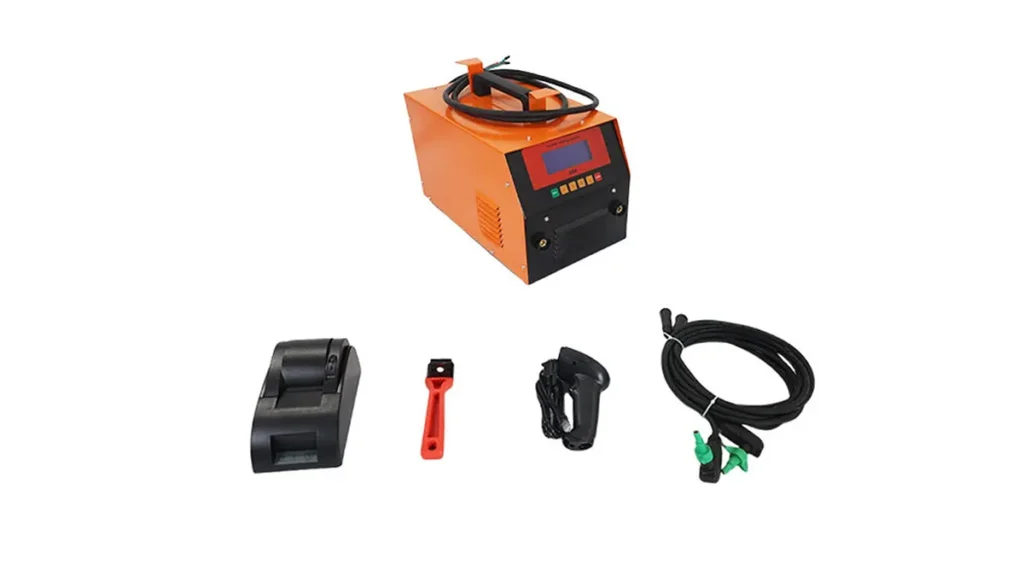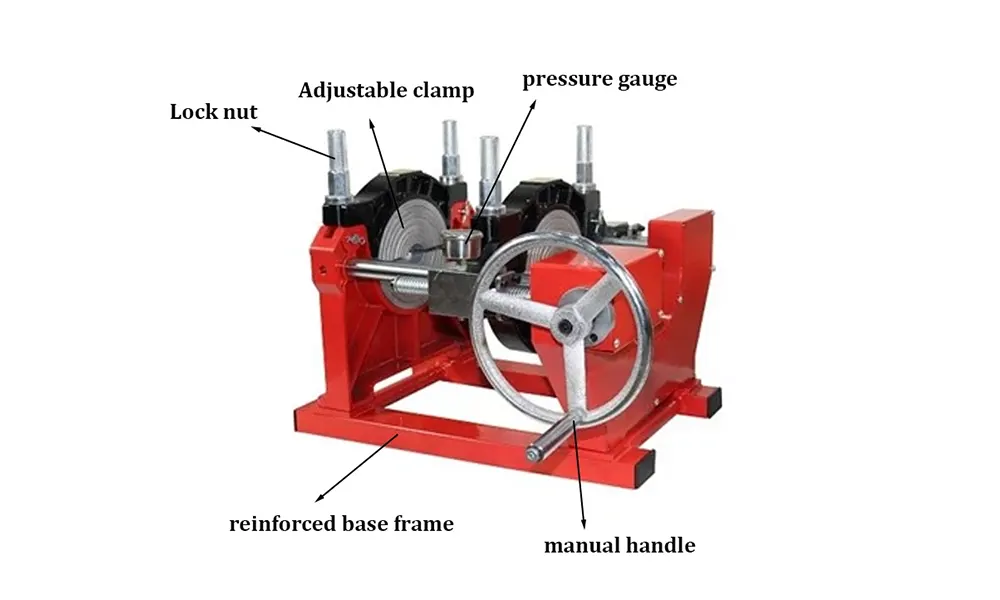
In HDPE pipe jointing machine safety, understanding that butt fusion welding involves high temperatures, powerful hydraulic forces, and precision alignment is the first step toward preventing workplace accidents. A well-maintained butt fusion welding machine operated under strict safety protocols not only protects the operator but also ensures joint integrity for water supply, gas distribution, and industrial pipeline systems.
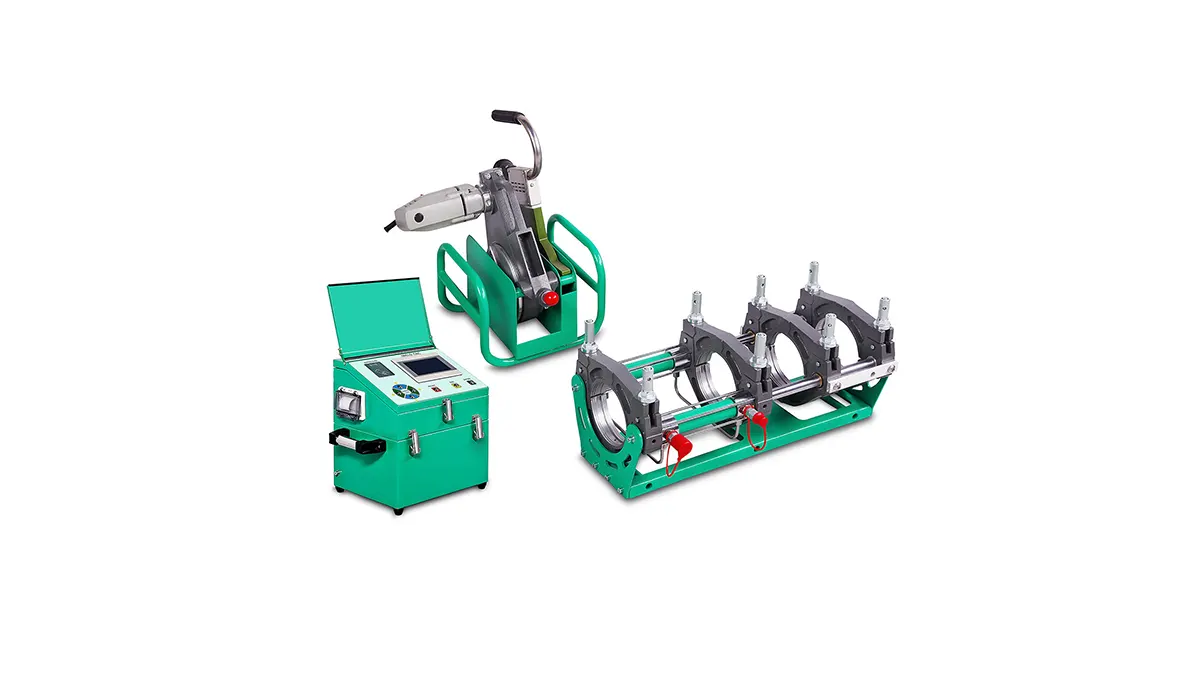
Pre-Operation Safety Checklist for HDPE Pipe Welding Machines
Before starting any fusion cycle, operators must conduct a systematic inspection. This routine directly impacts both personnel safety and weld quality. The following HDPE pipe jointing machine safety items should never be skipped:
- Inspect hydraulic hoses for cracks, leaks, or abrasion — pressurized fluid injuries are severe and preventable.
- Verify heater plate temperature against the pipe material specifications using a calibrated surface thermometer.
- Confirm that all emergency stop buttons are functional and clearly accessible from the operator’s position.
- Examine clamp inserts and jaws for debris that could compromise pipe grip during high-force phases.
- Ensure the worksite is free from standing water and that electrical connections are properly grounded.
Personal Protective Equipment: The Foundation of Operator Safety
No discussion of HDPE pipe jointing machine safety is complete without emphasizing PPE. The heated plate on a hydraulic butt fusion machine typically reaches temperatures above 200°C, and molten polymer can adhere to skin instantly. Operators should always wear:
- Heat-resistant gloves rated for the heater plate temperature range.
- Safety goggles with side shields to guard against unexpected polymer flash.
- Steel-toed boots when handling heavy pipe segments and machine components.
- Close-fitting work clothing that cannot catch on moving carriage parts.
Understanding the Danger Zones During Butt Fusion
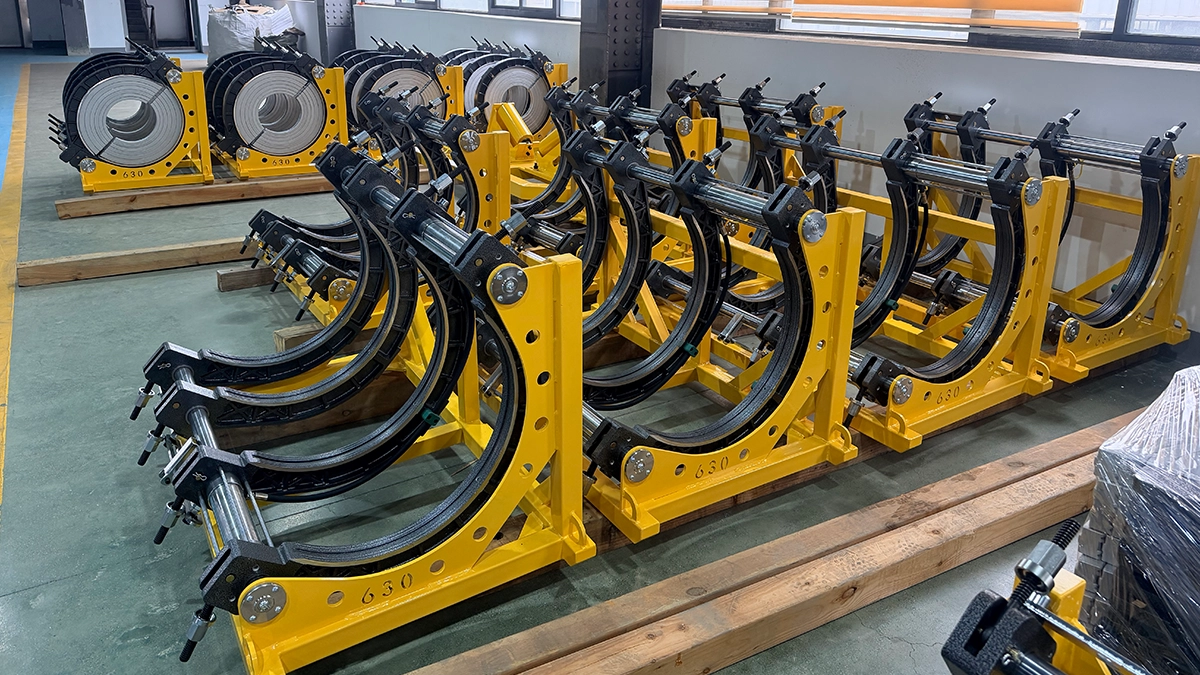
Every CNC automatic butt fusion welding machine has specific hazard areas that operators must recognize. The primary danger zones include the heater plate cavity, the pipe clamping and facing areas, and the hydraulic cylinder travel path. Keeping hands and loose objects away from these zones during automated cycles is a non-negotiable element of HDPE pipe jointing machine safety.
Heater Plate Handling Protocol
The heater plate should always be removed and placed into its insulated stand immediately after the heat soak phase. Leaving a hot plate exposed creates burn risks for the entire crew. HDPE pipe jointing machine safety protocols demand that the plate be stored with the coated surfaces facing inward toward the stand to prevent accidental contact.
Pipe Loading and Unloading Procedures
Manual handling of large-diameter HDPE pipes presents crush and strain hazards. When loading pipe into the machine frame, use mechanical lifting aids or a team-lift approach for pipes exceeding 25 kg. Confirm that clamps are fully engaged before releasing the lifting equipment. This is especially critical on manual butt fusion machines where operator force directly controls clamp tightness.
Electrical Safety for Fusion Equipment
Modern welding machines integrate sophisticated control systems, but the fundamentals of electrical HDPE pipe jointing machine safety remain constant. The machine must be connected to a properly rated power supply with functioning residual current protection. On wet trench sites, using an isolation transformer adds a vital layer of protection. Inspect power cables daily for insulation damage caused by dragging across rough terrain.
| Voltage Check Point | Recommended Action |
|---|---|
| Heater plate circuit | Test for ground continuity before each shift |
| Hydraulic power pack motor | Check phase balance on three-phase units weekly |
| Control panel enclosure | Verify IP rating seal integrity after transportation |
| Extension cables | Visually inspect full length; replace if outer jacket is damaged |
Site Conditions and Environmental Safety Factors
Trench work introduces unique challenges to HDPE pipe jointing machine safety. Adequate shoring and benching prevent wall collapse, while proper ventilation disperses any fumes from heated polyethylene. The fusion area should be clearly demarcated with barrier tape to keep non-essential personnel at a safe distance. Windshields are essential when welding in breezy conditions, as uneven cooling caused by drafts can lead to joint failure — a hidden safety risk that manifests during pressure testing or service.
Fusion Parameter Compliance and Documentation
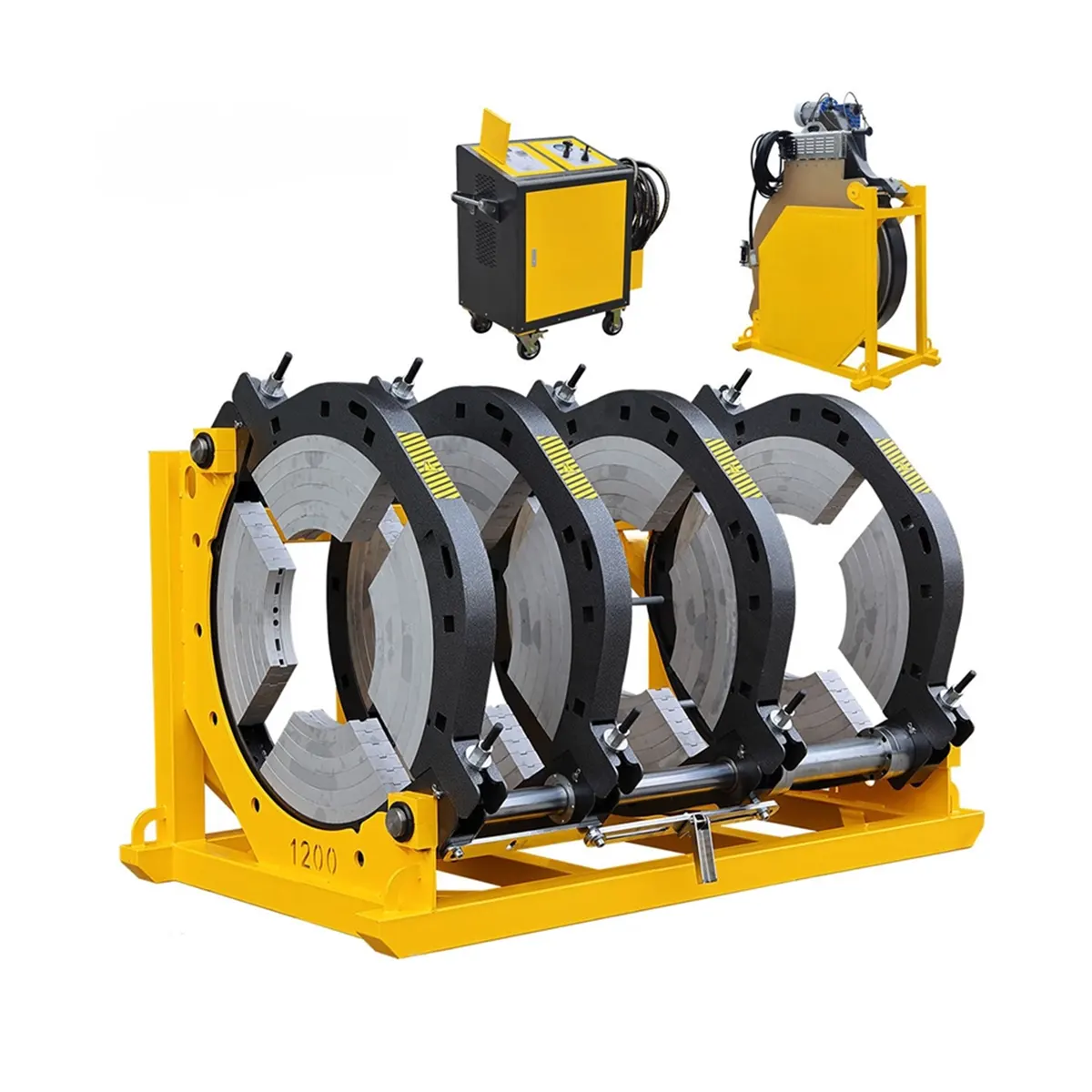
Following validated welding parameters is both a quality requirement and a safety imperative. Overheating can generate excessive fumes and degrade the pipe material, while insufficient heating may lead to brittle joints that fail unexpectedly. Standards such as ISO 21307 butt fusion procedures and ASTM F2620 heat fusion provide the framework for safe, repeatable welding protocols. Recording fusion data for every joint creates traceability and supports root cause analysis if safety incidents occur.
Maintenance Routines That Sustain Safety Performance
A machine that is mechanically compromised cannot be operated safely. HDPE pipe jointing machine safety extends into the maintenance workshop, where worn components must be identified and replaced before they fail in the field. Key maintenance touchpoints include:
- Hydraulic cylinder seals — slow drift during fusion indicates internal bypass leakage.
- Heater plate surface condition — pits or PTFE coating damage cause uneven heat transfer and hot spots.
- Facing tool blade sharpness — dull blades increase the force required and produce uneven pipe end surfaces.
- Carriage rail alignment — bent or worn rails force the hydraulic system to compensate, increasing stress on components.
Operator Training: The Cornerstone of HDPE Pipe Jointing Machine Safety
Even the most advanced welding machine cannot compensate for an untrained operator. Comprehensive training programs based on PE fusion operator requirements should cover equipment setup, parameter selection, fault recognition, and emergency shutdown procedures. Annual refresher training ensures that operators stay current with evolving safety practices and equipment updates. Companies like JQ-Fusion support their global distributor network with detailed operational manuals and on-site training resources to elevate safety standards across every project site.
| Safety Standard | Scope Coverage |
|---|---|
| ISO 12176-1 | PE butt fusion equipment standard |
| ASTM F3190 | heat fusion operator qualification |
| PPI TR-33 | PPI butt fusion procedure |
| PHMSA Update | ASTM F2620 pipeline safety |
Emergency Response Planning for Fusion Worksites
Despite rigorous HDPE pipe jointing machine safety measures, teams must be prepared for emergencies. A site-specific response plan should address burn injuries, hydraulic fluid injection wounds, crush incidents, and electrical shocks. First aid kits must include burn dressings, and at least one crew member per shift should hold current first aid certification. Emergency contact numbers and the worksite GPS coordinates should be posted visibly near the fusion station.
Common Safety Oversights and How to Avoid Them
Experience shows that many HDPE pipe jointing machine safety incidents stem from a handful of recurring mistakes. By proactively addressing these, contractors can significantly reduce their risk profile:
- Skipping the cool-down phase — removing pressure before the joint has crystallized causes immediate structural weakening.
- Using non-genuine spare parts — heater plates and hydraulic seals from unverified sources often lack critical safety certifications.
- Operating beyond the machine’s specified diameter range — this overstresses clamps and can cause sudden release under load.
- Ignoring warning lights or error codes on the control panel — these are early indicators of conditions that could escalate into dangerous failures.
Ultimately, building a culture of HDPE pipe jointing machine safety requires consistent leadership commitment and daily reinforcement. When every crew member from the newest helper to the most senior foreman prioritizes safe practices, fusion operations become not only compliant but also more efficient and reliable. For further guidance on selecting equipment that supports your safety objectives, explore the complete range at JQ-Fusion products.