
Finding the right HDPE pipe fusion equipment means balancing upfront cost, lifecycle value, and the specific demands of your pipeline projects. This guide breaks down realistic price ranges, key features, and practical buying tips so contractors, engineers, and procurement teams can make informed decisions.
Why HDPE Pipe Fusion Equipment Matters
HDPE butt fusion and electrofusion machines create leak-free joints essential for water supply, gas distribution, mining, and industrial piping. Choosing proper equipment improves weld consistency, reduces repair rates, and increases jobsite productivity—especially on long runs or high-pressure networks.
Typical Price Ranges (USD)
Prices vary by technology level, pipe diameter range, and automation. The estimates below reflect common market ranges for new machines:
| Equipment Type | Typical Price (USD) | Pipe Size Range | Best For |
|---|---|---|---|
| Manual butt fusion | $1,000 – $5,000 | 20–400mm | Small crews, tight budgets |
| Hydraulic butt fusion | $6,000 – $40,000+ | 63–2000mm | Frequent heavy-duty use |
| Automatic/CNC butt fusion | $25,000 – $200,000+ | 100–2500mm | Large-scale, precision projects |
| Electrofusion units | $800 – $6,000 | 20–630mm (fittings) | Service repair, fittings, tight spaces |
Factors That Drive Price
– Machine capacity: larger diameter capability increases cost.
– Automation level: automatic/CNC systems add sensors, PLCs, and controls.
– Build quality and materials: hardened clamps, precision frames, and branded hydraulics last longer.
– Accessories and tooling: heating plates, facing tools, clamps, frames, and transport cases add to package price.
– Support, training, and warranty terms: included commissioning or training affects value-for-money.
Key Features to Consider
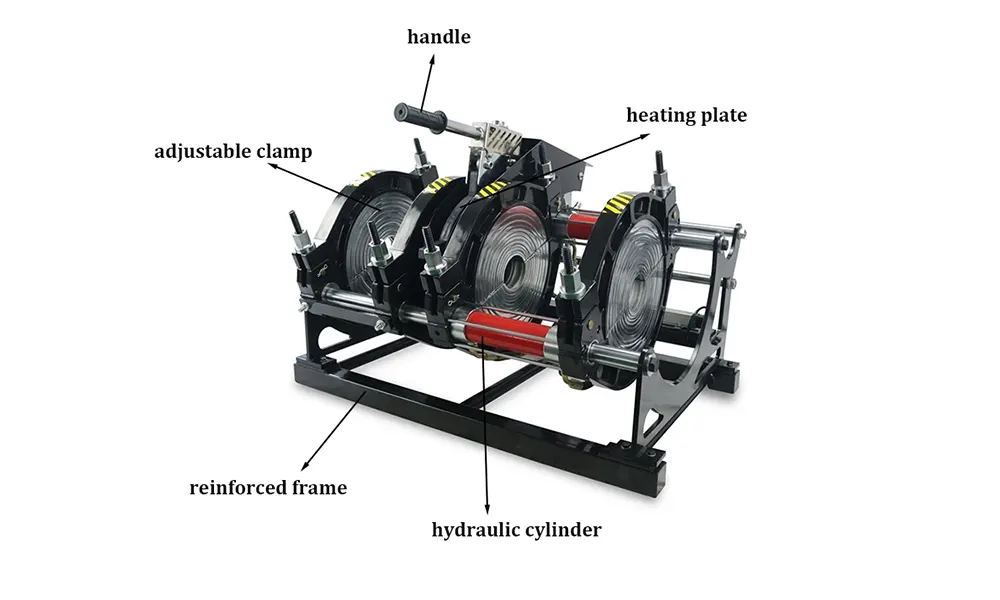
– Precise temperature control and uniform heating plate surfaces for consistent welds.
– Repeatable force/ram control and pressure monitoring for reliable fusion cycles.
– Interchangeable clamp sets and modular frames for multi-diameter flexibility.
– Portability versus on-site stability: choose foldable/manual units for remote work, heavy frames for plant or fixed lines.
– Data logging and traceability on automated models to meet regulatory or quality-assurance needs.
ROI, Operating & Long-Term Costs
Initial price is only part of ownership cost. Consider consumables (heating plates, filters), scheduled maintenance, calibration, and operator training. Higher initial investment in automation often reduces rework, speeds weld cycles, and lowers per-joint labor costs—improving ROI on medium to large projects.
Buying Tips & Checklist
– Define project scope: expected pipe diameters, site conditions, production targets.
– Ask for full packages: include clamps, facing tools, heating plates, transport frames, and calibration certificates.
– Compare warranties and local service availability—priority for remote deployments.
– Request reference weld reports or inspection records for similar projects.
– Confirm spare parts lead times and stock levels for critical components.
Warranty, Support & Certification
Verify machine certifications (CE, ISO where applicable) and that the supplier provides clear commissioning, operator training, and accessible technical support. Documentation for welding procedures (WPS) and traceable calibration records are essential for regulated projects.
Quick FAQ
Q: Can one machine cover all pipe sizes?
A: Many manufacturers offer modular clamps and frame extensions, but very large diameters usually require dedicated heavy-duty models.
Q: Manual vs automatic—which is better?
A: Manual for low-volume, low-cost needs; automatic for high-volume, high-consistency demands where traceability and speed matter.
For manufacturer partnerships or tailored equipment quotes, consider contacting JQ-Fusion via their website for model options and configuration advice: https://jq-fusionwelding.com/



