
Selecting the right gas line welder is a critical decision for contractors, utilities, and infrastructure teams working with HDPE and plastic pipelines. This guide walks through welding machine types, key specifications, safety and compliance considerations, and buying tips to help you choose a welding solution that delivers reliable, leak-free gas distribution systems.
Why the Right Gas Line Welder Matters
Gas distribution demands durable, consistent pipeline joints. A poor fusion can lead to leaks, costly repairs, and regulatory issues. Choosing a welder designed for HDPE gas piping—whether manual, hydraulic, or automatic—ensures consistent melt quality, correct fusion parameters, and traceable welding records. In many projects, a precision welding machine is as important as the pipe quality itself.

Main Welding Technologies for Gas Lines
Butt fusion and electrofusion are the dominant methods for joining HDPE gas pipes. Each has distinct advantages depending on pipe size, field conditions, and project scale.
Butt Fusion
Butt fusion heats two pipe ends and presses them together under controlled pressure and temperature. It is ideal for long continuous runs, offering strong, homogenous joints suitable for medium to large diameters.
Electrofusion
Electrofusion uses a coupler with embedded heating wires; it is frequently used for fittings, repairs, or when access and alignment make butt fusion impractical. Electrofusion provides predictable joint performance for smaller diameters and complex connections.
Types of Welders: Manual, Hydraulic, and Automatic
Understanding the three categories helps match the machine to your workflow and budget.
Manual Welders
Best for small crews and occasional use. Manual units are lightweight and portable but rely on operator skill for repeatability.
Hydraulic Welders
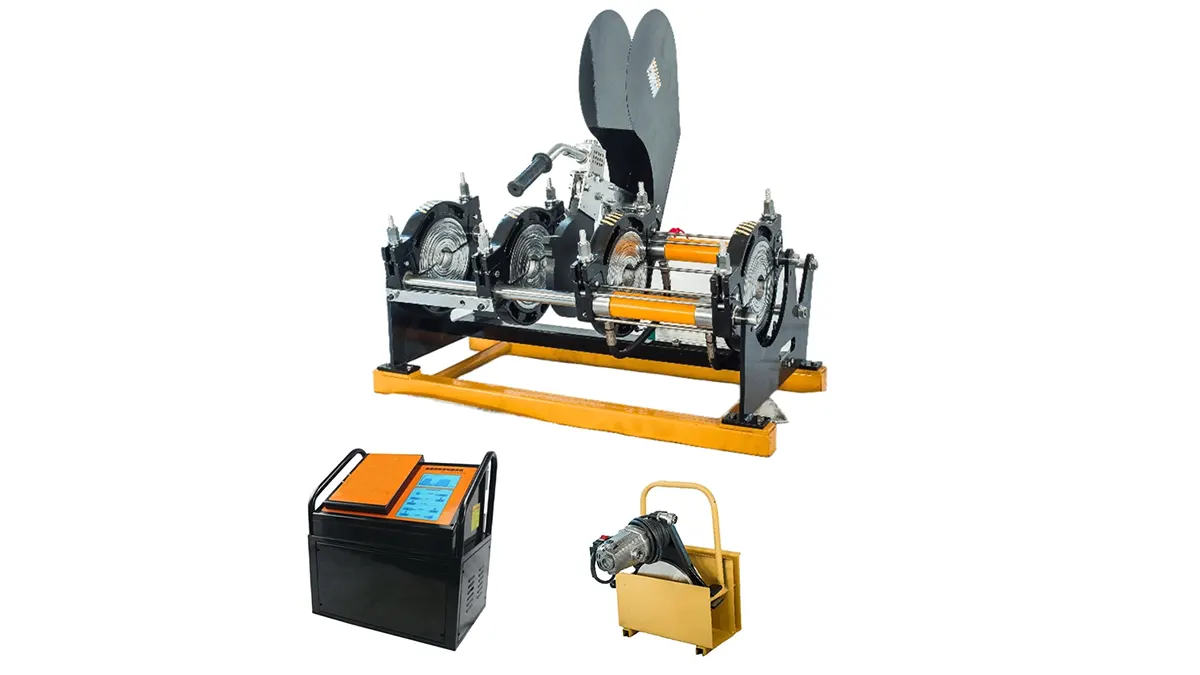
Hydraulic machines deliver consistent pressure with less operator fatigue, making them suitable for medium-to-high volume jobs and larger pipe diameters.
Automatic/CNC Welders
Automatic welders control heat, pressure, and timing with electronic precision. They are ideal for contractors who require high productivity, digital records, and minimal human variation.
Quick Comparison Table
| Type | Best For | Pipe Range | Key Benefits |
|---|---|---|---|
| Manual Butt Fusion | Small jobs, remote sites | 16mm–630mm | Low cost, portable |
| Hydraulic Butt Fusion | Frequent site work, larger pipes | 63mm–1800mm+ | Consistent pressure, durable |
| Automatic/CNC Butt Fusion | High-volume projects, quality records | 63mm–1600mm+ | Precision, traceability, speed |
| Electrofusion Machines | Fittings, repairs, confined spaces | 20mm–400mm (couplers vary) | Flexible, easy for fittings |
Key Specifications to Compare
When evaluating models, focus on the following attributes:
-
Pipe diameter capacity — match the machine to the largest pipe you’ll weld.
-
Control accuracy — digital temperature and pressure control reduce joint variation.
-
Record keeping — automatic logging of weld parameters helps with QA and regulatory compliance.
-
Portability and setup time — important for remote gas distribution projects.
-
Serviceability and parts availability — simplified maintenance reduces downtime.
Safety, Standards, and Certifications
Gas pipeline welders must comply with local and international codes. Look for machines and processes that meet:
-
ISO standards for fusion procedures and equipment validation
-
Manufacturer-supplied validation and traceability for weld parameters
-
Clear operator manuals and training support
Using certified procedures and logged weld records reduces risk and ensures long-term pipeline integrity.
Operational Tips for Reliable Gas Line Welding
Follow these best practices in the field:
-
Preheat and align pipes correctly to avoid cold zones.
-
Maintain clean surfaces; contamination reduces joint strength.
-
Use clamps and supports to control alignment during cooling.
-
Record all weld parameters and inspect joints per code requirements.
Budgeting and Total Cost Considerations
Initial price is only part of the cost equation. Consider:
-
Productivity gains with automatic machines versus labor costs for manual methods.
-
Replacement heating elements, calibration, and spare parts.
-
Training and certification expenses for weld operators.
Tip: For recurring large projects, automatic or hydraulic units often deliver lower cost per joint over time.
How to Choose: Quick Decision Flow
If you need a fast selection method:
-
If you weld occasional small-diameter pipes → choose a reliable manual or compact electrofusion machine.
-
If you handle moderate volumes and larger diameters → consider a hydraulic bench frame or mobile hydraulic system.
-
If you require high throughput, automated records, and consistency → choose an automatic/CNC butt fusion machine.
Where to Get Trusted Gas Line Welders
For high-quality butt fusion and electrofusion equipment with strong after-sales support, consider manufacturers that specialize in HDPE pipe welding systems. JQ-Fusion offers a broad range of manual, hydraulic, and automatic butt fusion welding machines designed for water, gas, mining, and industrial pipelines: https://jq-fusionwelding.com/
Final Notes
Choosing the right gas line welder boils down to pipe sizes, production volume, required traceability, and available budget. Prioritize machines that deliver repeatable fusion parameters, clear documentation, and reliable serviceability to keep gas distribution systems safe and leak-free.


