
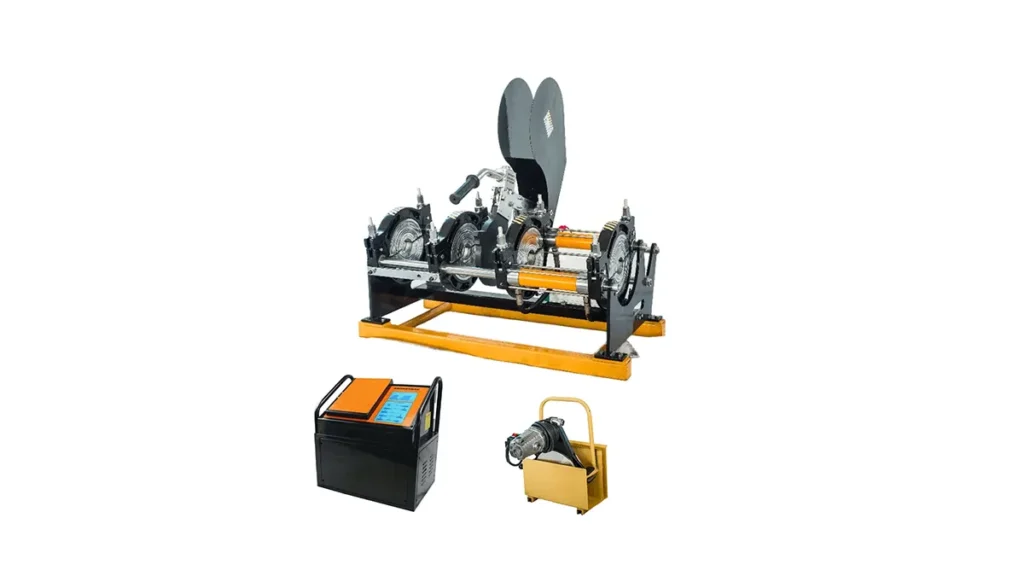
Fusion welding machines are the backbone of modern HDPE pipeline installation, enabling strong, leak-free joints for water, gas, mining and industrial systems. This guide explains the main types of fusion welding machines, where they’re used, the benefits they deliver, and a practical buying checklist to help procurement teams and contractors choose the right equipment.
Types of Fusion Welding Machines
The term “fusion welding” covers several joining methods for thermoplastic pipes. Each type of machine suits different pipe sizes, site conditions and production needs.
Manual Butt Fusion
Manual butt fusion machines are compact, affordable and ideal for small to medium-diameter HDPE pipes. Operators align pipe ends in clamps, preheat with a hot plate, then apply pressure to fuse the joint. Best for field repairs, small projects and contractors who need portability.
Hydraulic Butt Fusion
Hydraulic machines provide higher clamping and controlled pressure for medium to large diameters. They reduce operator fatigue and improve consistency on repetitive welds, making them a common choice for municipal water and gas distribution works.
Automatic / CNC Butt Fusion
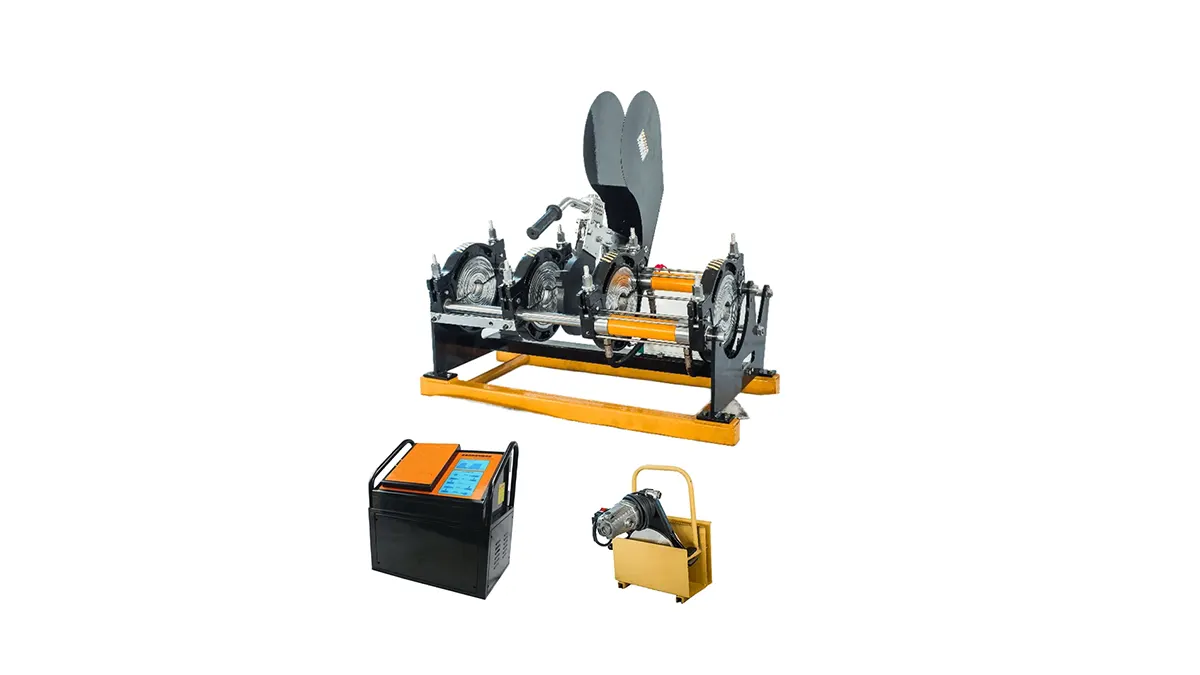
Automatic units (CNC-controlled) handle the full welding cycle with precise heating time, force control and cooling stages logged digitally. They are designed for high-volume production, pipeline fabrication yards and large infrastructure projects where traceability and repeatability matter.
Electrofusion Machines
Electrofusion uses preformed fittings with embedded heating coils. The machine controls current and time to melt the fitting and pipe surface. Electrofusion excels in repair work, complex fittings, and situations where mechanical access is limited.
Common Applications & Uses
Fusion welding machines are widely used in:
-
Municipal water and wastewater networks
-
Natural gas distribution pipelines
-
Mining slurry and tailings pipelines
-
Irrigation and agricultural systems
-
Industrial chemical and process piping
Key Benefits
Leak-free joints, long service life, and cost-effective installation are the main advantages. Fusion welding creates homogeneous joints with strength equal to or greater than the parent material, improving pipeline integrity and reducing maintenance costs over decades.
Buying Guide: How to Choose the Right Machine
Deciding factors include pipe diameter range, project scale, automation needs and budget. Below are practical checkpoints to evaluate before purchase.
1. Pipe Size Compatibility
Confirm the machine’s clamping range covers your target diameters. Manual units often handle up to medium sizes; hydraulic/automatic models support larger diameters and multi-range configurations.
2. Automation & Traceability
For high-volume work, choose automatic or CNC models that store welding parameters, generate reports and minimize operator error—important for regulated projects.
3. Power & Portability
Field jobs require machines that run on site power or generators and are easy to move. Fabrication yards value heavier, stationary machines with hydraulic power packs.
4. Accuracy & Control
Look for machines with stable heating plates, precise pressure control and quality sensors to ensure consistent welds and reduced scrap rates.
5. Support & Accessories
Availability of spare parts, training, on-site service and accessories—facing tools, heaters, clamps and carrying cases—can greatly reduce downtime.
| Type | Pipe Range | Key Benefit | Best For |
|---|---|---|---|
| Manual Butt Fusion | Small to Medium | Low cost, portable | Repair & small projects |
| Hydraulic Butt Fusion | Medium to Large | Stronger force, stable | Utility pipelines |
| Automatic / CNC | Wide (up to very large) | High repeatability, data logging | Large-scale fabrication |
| Electrofusion | Varies by fitting | Flexibility for fittings/repairs | Service taps & complex joints |
Maintenance, Safety & Quality Tips
Regular calibration of temperature controls, inspection of heating plates for flatness and timely replacement of hydraulic seals will keep downtime low. Always follow PPE, maintain clean pipe ends and store machines in dry conditions to prevent electrical or mechanical issues.
Choosing a Supplier
Evaluate manufacturer experience, available models, local service capability and references from similar projects. For HDPE pipe welding solutions that span manual, hydraulic and CNC automatic machines, consider suppliers with proven global installations and accessible support—JQ-Fusion provides a wide range of butt fusion welding machines and service options.
Selecting the right fusion welding machine reduces installation time, improves pipeline longevity and lowers lifetime costs. Match machine capability to project scope, prioritize quality control features, and confirm after-sales support to ensure reliable performance on every job.



