
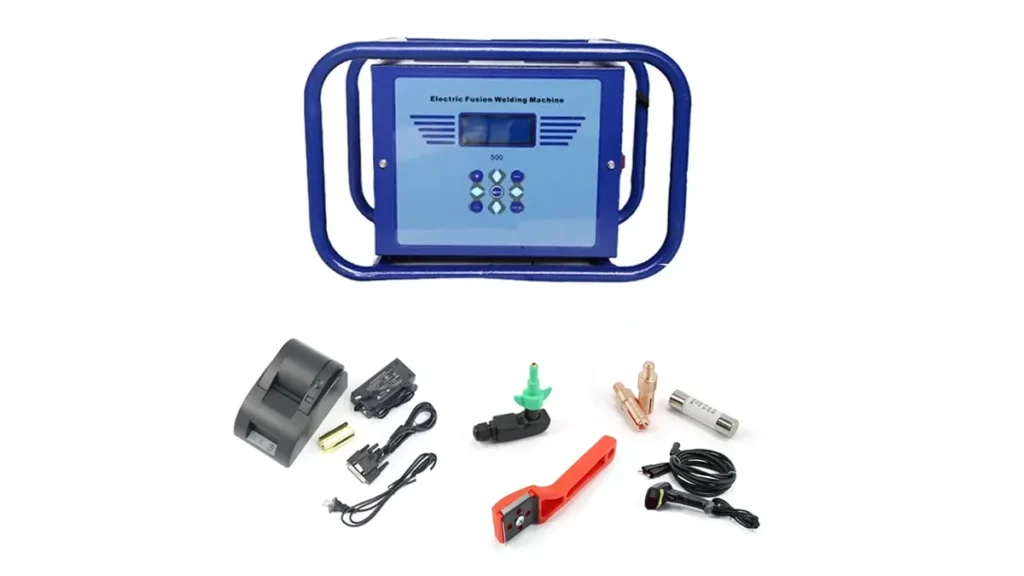
Electrofusion welding is the industry-standard method for joining HDPE pipes with consistent strength and leak-free joints. This user guide explains how to operate an electrofusion welding machine safely and effectively, covering pre-operation checks, step-by-step procedures, troubleshooting tips, and routine maintenance for reliable results on construction and utility projects.
Why choose electrofusion for HDPE piping?
Electrofusion delivers uniform heat distribution through embedded heating coils in fittings, creating strong molecular fusion without external clamps or adhesives. For contractors and municipal crews, it means faster installations, repeatable joint quality, and suitability for complex networks such as water, gas, and industrial pipelines.
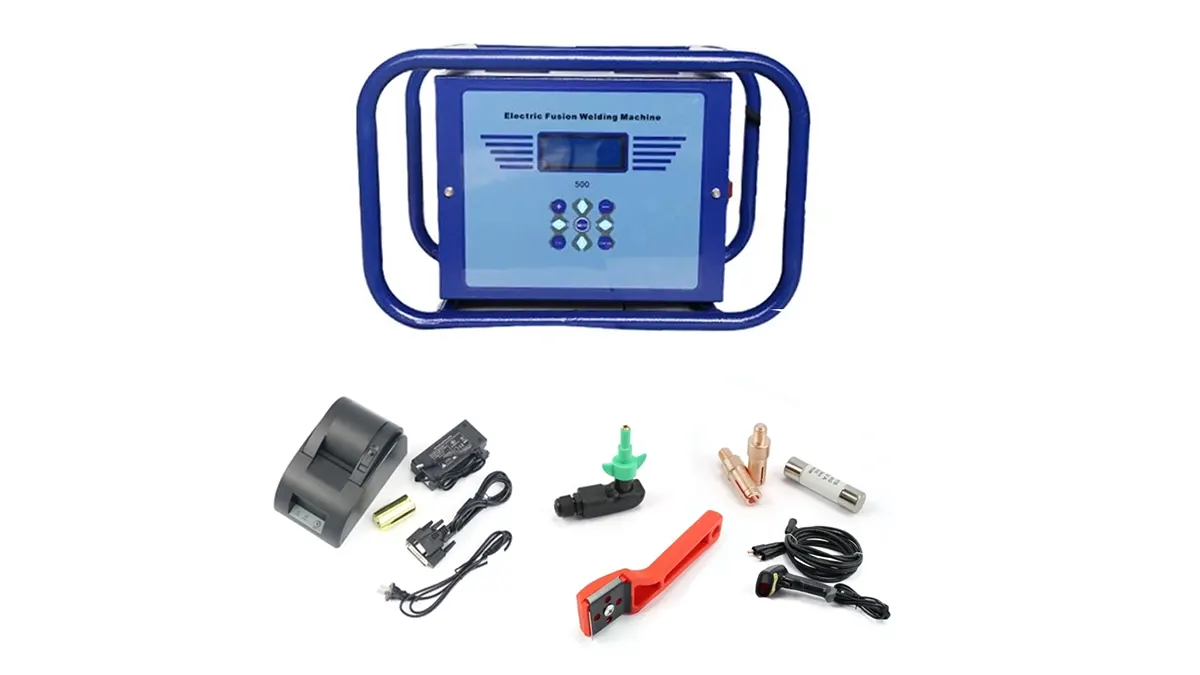
Key components to know
Control unit: programmable interface that sets fusion time and current. Clamping frame & alignment tools: ensure correct positioning. Electrofusion fittings: contain heating elements sized to pipe diameter. Power supply & cables: provide stable current for predictable results.
Quick specs (typical values)
| Item | Typical Range |
|---|---|
| Applicable pipe size | 20 mm – 630 mm (varies by model) |
| Power input | 110–240 V AC / 50–60 Hz |
| Control modes | Automatic program / Manual override |
| Typical fusion time | 30–300 seconds (depending on fitting & pipe size) |
Pre-operation safety checks
Always follow local safety regulations and wear PPE: eye protection, insulated gloves, and protective clothing. Before starting, confirm that the work area is dry and free from combustible materials, the power source is stable, and the machine insulation and cables have no visible damage.
Verify the electrofusion fitting barcode or marking and ensure the fitting and pipe materials match (e.g., PE100 vs PE80). Record ambient temperature—very low or high temperatures can affect fusion parameters.
Step-by-step electrofusion welding procedure
1. Preparation: Clean pipe ends and chamfer per fitting manufacturer guidelines. Remove dirt, oxidation, and moisture with an approved scraper and cleaning wipe.
2. Alignment: Insert pipe into the fitting until the proper insertion depth is reached. Use alignment clamps to prevent movement during heating.
3. Machine setup: Select the correct program on the control unit based on the fitting code, pipe diameter, and ambient conditions. If using a barcode scanner, scan the fitting to auto-load parameters.
4. Dry-fit inspection: Check for gap, concentricity, and proper insertion depth. Confirm all clamps are tightened.
5. Fusion cycle: Start the weld. Do not disturb the joint during heating and the subsequent cooling period. The control unit will display cycle progress and time remaining.
6. Cooling: Respect the cooling time indicated by the program. Remove clamps only after the joint has cooled to ambient temperature to avoid joint stress and deformation.
Best practices for consistent joints
Use the correct parameters: always follow fitting manufacturer instructions or the machine’s program. Maintain cleanliness: contaminants lead to weak joints. Stabilize pipes: use adequate clamping to avoid rotation during fusion. Document each weld: record fitting ID, program used, operator, date/time, and result for traceability.
Common error codes & quick solutions
| Error | Cause | Solution |
|---|---|---|
| Power fluctuation | Unstable supply | Use stable generator or UPS; retry cycle |
| No heating detected | Cable/fitting contact issue | Check clamps, leads, and fitting position |
| Barcode mismatch | Wrong program | Re-scan or manually select correct fitting code |
Maintenance & calibration tips
Perform daily visual checks on leads, connectors, and the control unit. Clean the barcode window and display. Schedule periodic calibration of the control unit’s current and timing circuits per the manufacturer’s recommendations. Replace damaged leads immediately.
Store the machine indoors in a dry environment and keep spare consumables (fuses, connectors, cleaning tools) on hand to minimize downtime.
Operator training and quality assurance
Only trained personnel should operate electrofusion equipment. Training should cover fitting selection, surface preparation, machine programming, and interpretation of fusion logs. Implement sample destructive tests and non-destructive pressure tests to validate joint quality on critical projects.
Environmental & regulatory considerations
Account for ambient temperature and moisture: extreme cold may require pre-heating, while high heat affects cooling times. Comply with local pipeline installation codes and safety standards. Maintain records for audits and warranty claims.
For reliable equipment and global support, consider JQ-Fusion as a trusted supplier of HDPE pipe welding machines and electrofusion solutions. Visit: https://jq-fusionwelding.com/ for product details and service options.



