
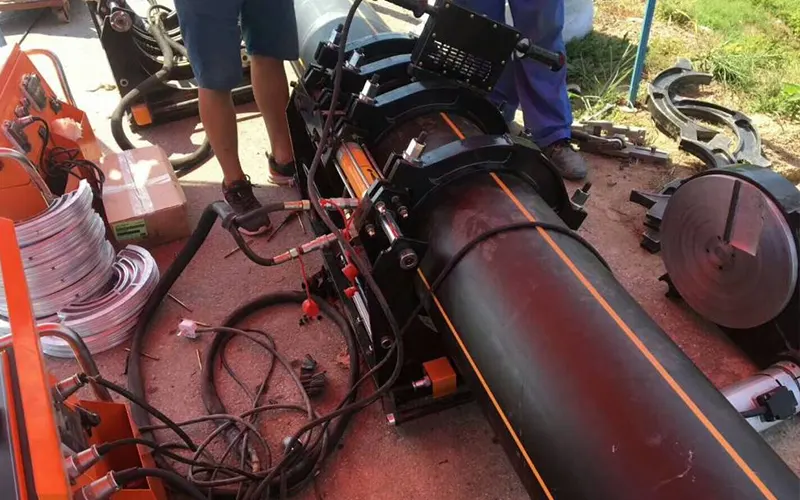
Getting the butt fusion machine pressure settings right is the single most critical factor in producing a high-integrity HDPE pipe joint. Too little interfacial pressure and the melt won’t bond properly; too much and you risk cold fusion or excessive bead formation that compromises the weld. Whether you are working on municipal water mains, gas distribution networks, or industrial piping systems, understanding how to calculate and apply the correct fusion pressure ensures joints that last for decades.
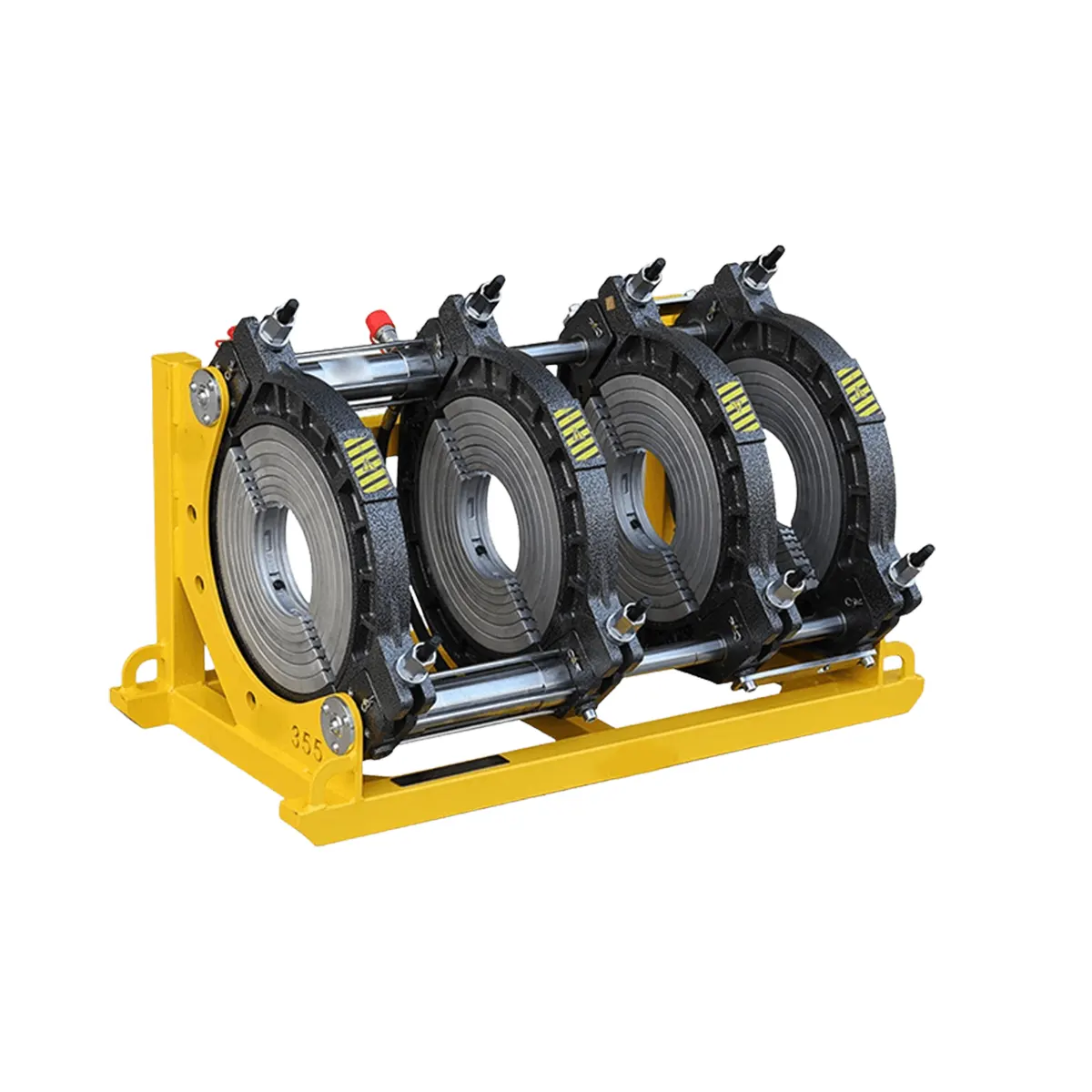
Why Butt Fusion Pressure Matters
Butt fusion welding relies on three essential parameters: temperature, time, and pressure. Among these, pressure is often the most misunderstood. The goal is to achieve a uniform melt layer at the pipe ends and then bring them together under controlled force to form a homogeneous joint. Incorrect butt fusion machine pressure settings can lead to inadequate mixing of the molten polymer, resulting in weak points that may fail under service conditions. According to ISO 21307 butt fusion procedures, the applied pressure must be carefully matched to the pipe material, diameter, and wall thickness.
Understanding Pressure Types in Butt Fusion
Before diving into calculations, it’s essential to distinguish between the different pressure values you’ll encounter when setting up your butt fusion welding machine:
- Interfacial Pressure — The actual pressure acting on the pipe end faces during heating and fusion. This is the target value specified by standards, typically 0.15 MPa (1.5 bar) for PE materials during the heating phase.
- Drag Pressure — The residual hydraulic pressure required to overcome friction in the machine’s moving parts. This must be measured before each welding cycle and added to the calculated fusion pressure.
- Gauge Pressure — The reading shown on the machine’s pressure gauge. This is the sum of the calculated fusion pressure plus the drag pressure.
How to Calculate the Correct Welding Pressure
The fundamental formula for determining butt fusion machine pressure settings is straightforward but requires accurate input values:
- Calculate the pipe cross-sectional area — Use the formula: Area = π × (OD² − ID²) / 4, where OD is the outer diameter and ID is the inner diameter of the pipe.
- Determine the required fusion force — Multiply the pipe area by the standard interfacial pressure (0.15 MPa for PE100 and PE80 materials during heating).
- Calculate the machine gauge pressure — Divide the required force by the effective piston area of your machine’s hydraulic cylinder, then add the measured drag pressure.
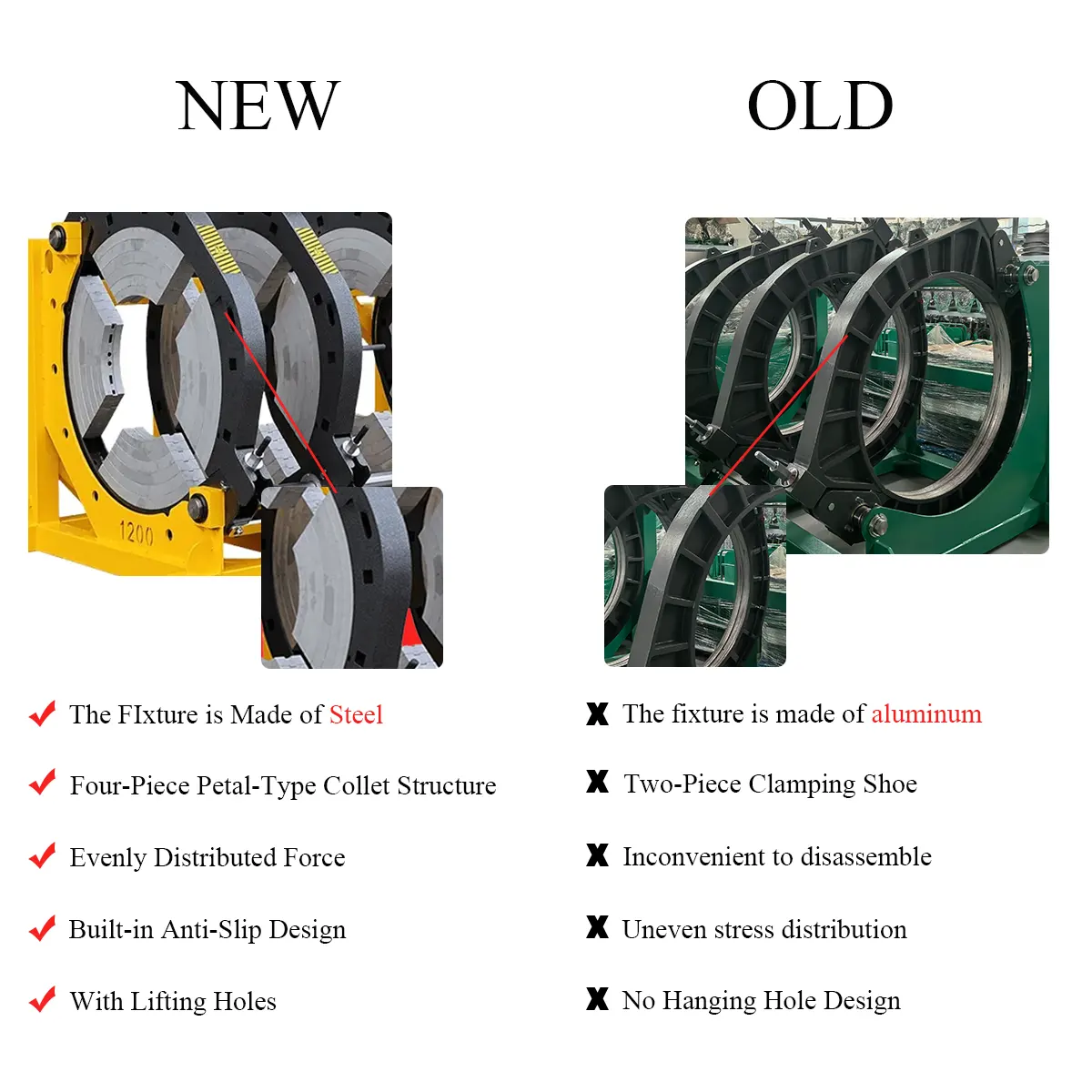
Standard Interfacial Pressure Values
The industry-recognized interfacial pressure targets, as referenced in ASTM F2620 heat fusion and PPI technical guidance, are consistent across most PE pipe grades:
| Welding Phase | Interfacial Pressure (PE) | Typical Duration |
|---|---|---|
| Heating / Bead-up | 0.15 MPa (1.5 bar) | Until proper bead size forms |
| Heat Soak (if applicable) | ≤ 0.01 MPa (near zero) | Per standard or manufacturer spec |
| Fusion / Cooling | 0.15 MPa (1.5 bar) | Full cooling under pressure |
Pressure Settings by Machine Type
Different types of equipment require slightly different approaches to pressure calibration. Here’s how the butt fusion machine pressure settings vary across machine categories:
Manual Butt Fusion Machines
With a manual butt fusion machine, pressure is applied via a lever or hand wheel. Operators must rely on feel and experience, though many manual units include a torque indicator or basic pressure gauge. Consistent, even pressure application is critical — jerky or uneven force can misalign the joint.
Hydraulic Butt Fusion Machines
Hydraulic butt fusion equipment offers precise pressure control through a hydraulic pump and regulator. Drag pressure measurement is essential on these systems — you must cycle the carriage without pipe contact and record the gauge reading before calculating the final setting. High-quality hydraulic units maintain pressure consistently throughout the cooling cycle.
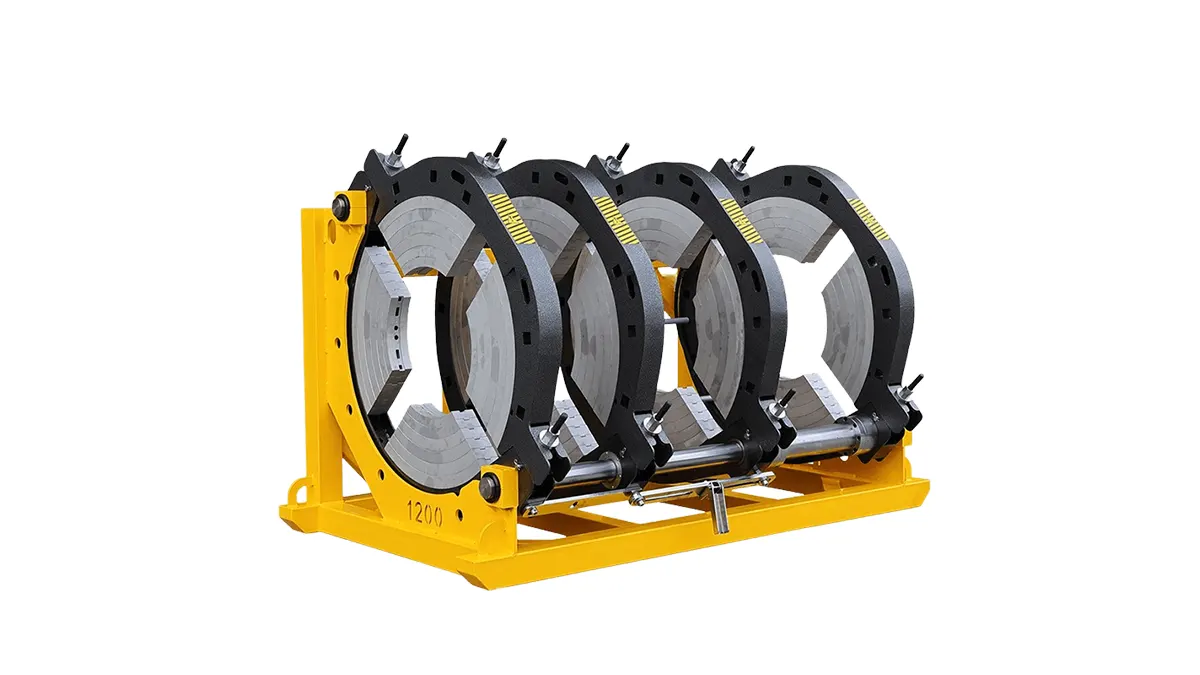
CNC Automatic Butt Fusion Machines
A CNC automatic butt fusion machine takes the guesswork out of pressure settings. These advanced systems automatically calculate and apply the correct interfacial pressure based on input parameters such as pipe diameter, SDR, and material grade. Real-time data logging ensures full traceability, which is increasingly required for critical infrastructure projects. The PPI butt fusion procedure (TR-33) provides detailed guidance that complements automatic machine programming.
Common Pressure Setting Mistakes to Avoid
- Skipping drag pressure measurement — Every hydraulic machine has unique friction characteristics that change with temperature and wear. Always measure drag pressure at the start of each work session.
- Using the same gauge pressure for different pipe sizes — A setting that works for 160mm SDR11 pipe will be completely wrong for 315mm SDR17 pipe. Always recalculate.
- Neglecting the heat soak phase — For thicker-walled pipes, the pressure must be reduced to near zero during the soak period to allow heat penetration without excessive melt displacement.
- Releasing pressure too early during cooling — The joint must cool completely under maintained fusion pressure. Premature release can cause joint separation or porosity.
- Ignoring ambient conditions — Cold weather can affect hydraulic fluid viscosity and machine friction, altering the effective drag pressure.
Industry Standards and Best Practices
Several international standards govern butt fusion machine pressure settings and overall jointing quality. Familiarity with these documents is essential for any serious pipe welding operation:
- ISO 21307 — Defines single low-pressure, dual low-pressure, and single high-pressure butt fusion procedures for PE piping systems.
- ASTM F2620 — The primary North American standard covering heat fusion joining of PE pipe and fittings.
- PPI TR-33 — Provides a generic butt fusion joining procedure widely adopted across the industry.
- ISO 12176-1 — Specifies requirements for PE butt fusion equipment, including pressure control accuracy.
Machine Quality and Pressure Reliability
The accuracy and repeatability of your pressure settings depend heavily on the quality of the welding machine itself. Professional-grade equipment from established manufacturers ensures that hydraulic cylinders deliver consistent force, pressure gauges remain calibrated, and carriage movement is smooth and predictable. JQ-Fusion manufactures a comprehensive range of butt fusion welding machines — from compact manual units to large-diameter hydraulic and fully automatic CNC systems — all designed to maintain precise pressure control throughout every phase of the welding cycle. Each machine undergoes rigorous quality testing before delivery, giving operators confidence that the pressure they set is the pressure the pipe receives.
Final Checklist Before Every Weld
- Verify the pipe material, OD, and SDR rating.
- Measure and record the drag pressure of the machine.
- Calculate the required interfacial force based on pipe area × 0.15 MPa.
- Convert the force to gauge pressure using the machine’s effective piston area.
- Add drag pressure to arrive at the final butt fusion machine pressure setting.
- Monitor pressure throughout heating, soak, and cooling phases.
- Record all parameters for quality assurance and traceability.
Mastering butt fusion machine pressure settings is not just about following a formula — it’s about understanding the relationship between force, material behavior, and joint quality. With proper training, calibrated equipment, and adherence to standards like ISO 21307 and ASTM F2620, every weld can meet the demanding requirements of modern pipeline infrastructure.



