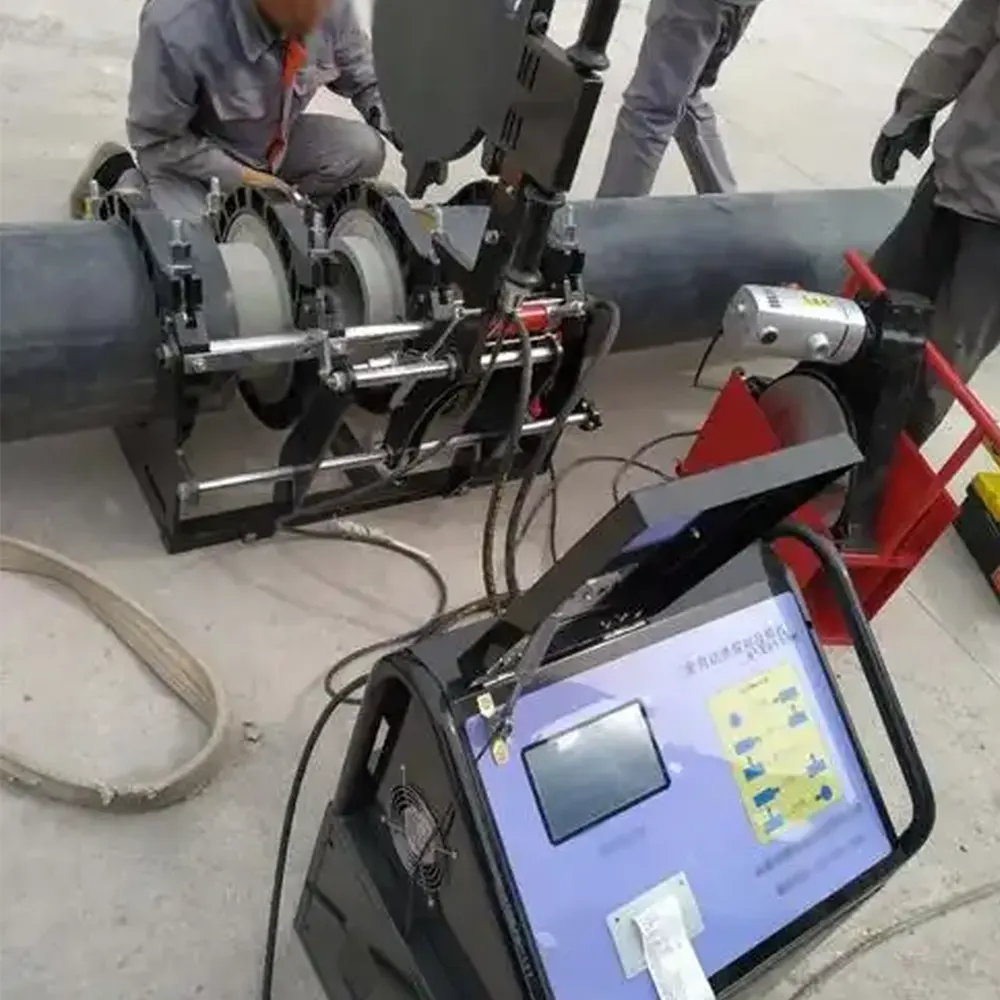
Joining large diameter HDPE pipes demands precision, power, and unwavering reliability. Whether you are laying municipal water mains, constructing mining slurry lines, or installing gas distribution networks, the integrity of the joint dictates the lifespan of the entire system. Selecting the right HDPE pipe jointing machine for large diameter pipes is not just a purchase; it is a critical engineering decision. This guide walks you through the essential features, machine types, and key considerations to help you invest in equipment that delivers consistent, high-strength HDPE butt fusion welds every time.
Why Standard Machines Fail on Large Diameters
Welding pipes above 315mm requires exponentially more force and control than smaller diameters. The physics of ISO 21307 butt fusion procedures dictates that misalignment by even a fraction of a degree can create stress points leading to premature failure. A dedicated large diameter HDPE pipe jointing machine mitigates these risks through reinforced frames, high-torque hydraulics, and precision guidance systems that standard manual machines simply cannot provide.
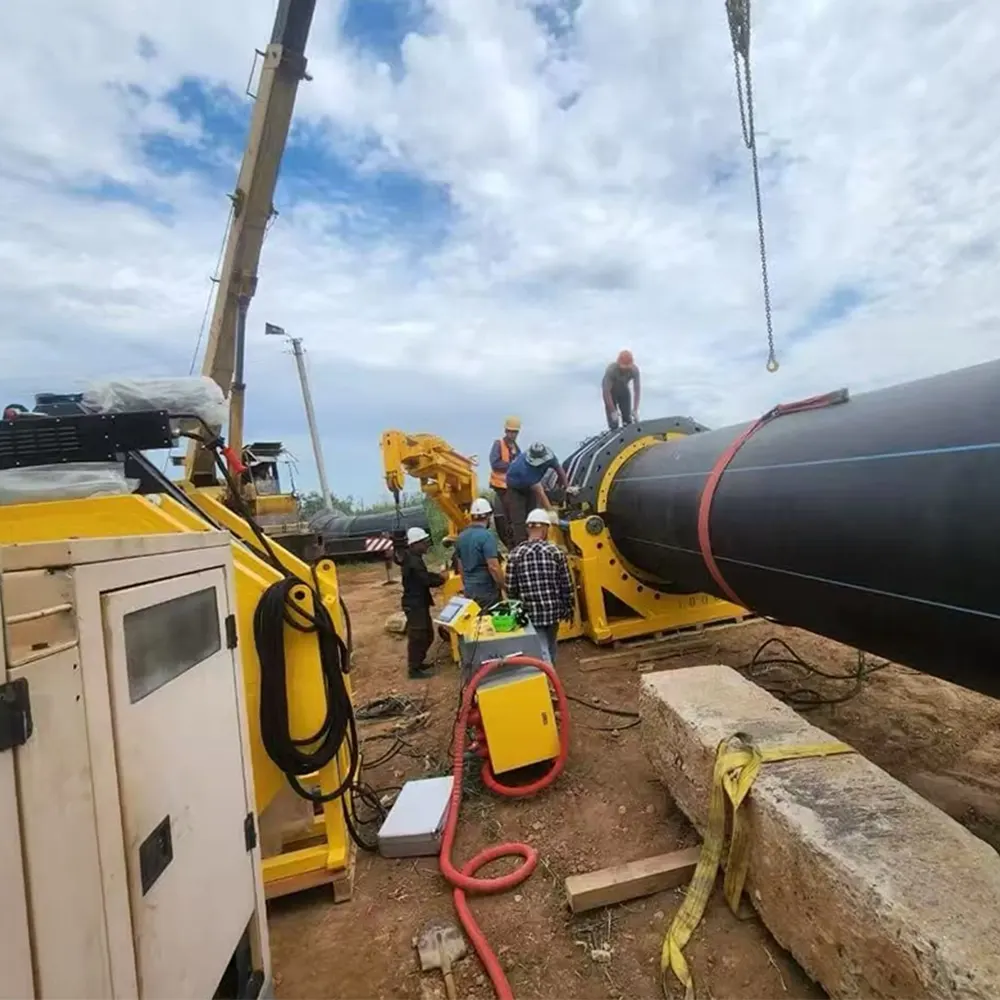
Types of Jointing Machines for Large Diameter Pipes
Understanding the core technologies helps you match the machine to your project’s scale and complexity. For large diameters, manual operation quickly becomes impractical due to the sheer weight and required force.
Hydraulic Butt Fusion Machines
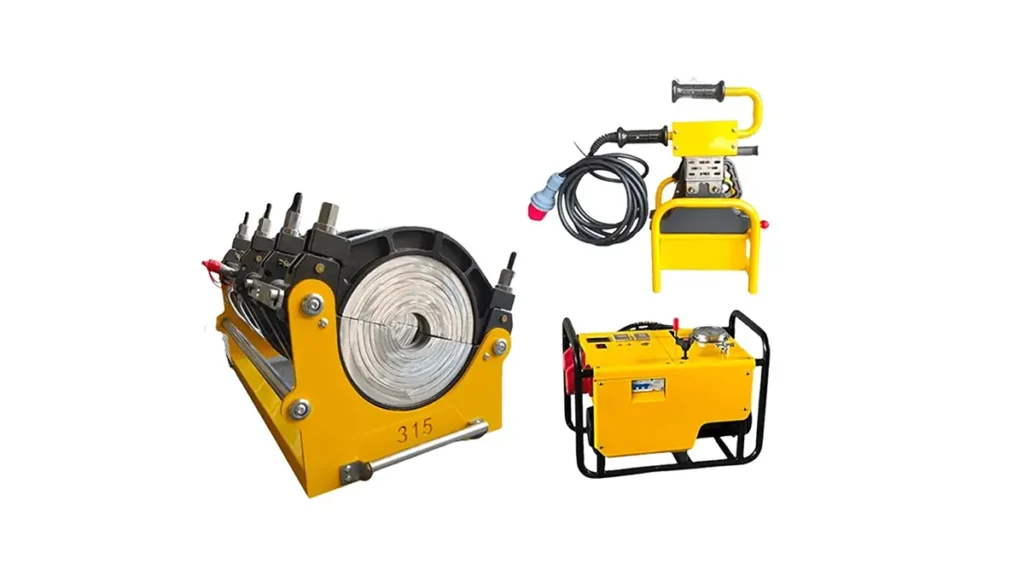
Hydraulic systems are the industry standard for pipes from 200mm up to 2250mm. They use a power pack to generate the high clamping and facing forces needed to move heavy pipe sections. Look for models with a rigid frame that resists deflection during the critical heating and fusion phases. A hydraulic HDPE pipe jointing machine should feature independent clamping control to manage pipe ovality, a common challenge in large diameters.
CNC Automatic Butt Fusion Machines
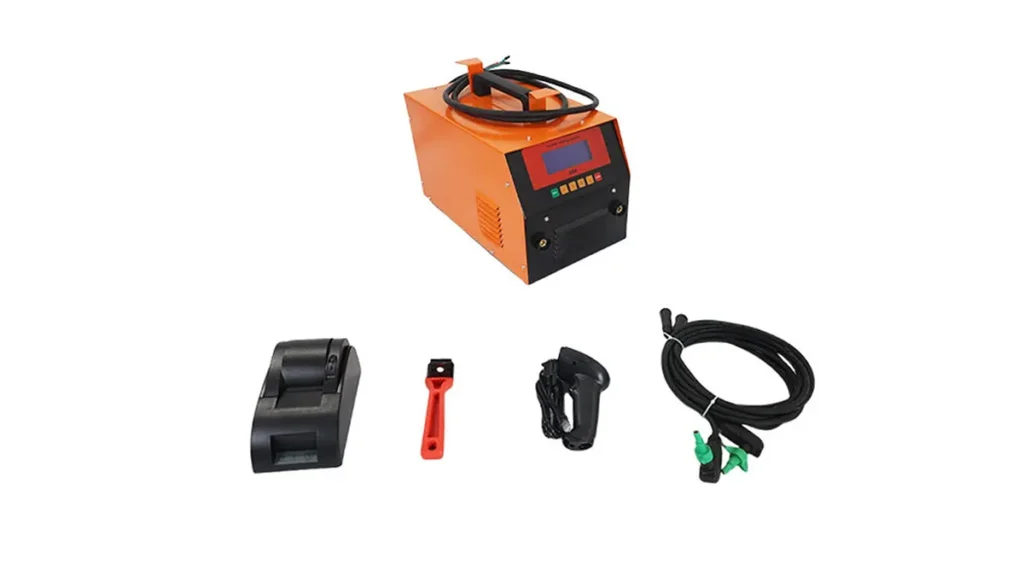
For contractors who demand repeatability and data records, CNC machines remove operator variability. These units automatically manage the entire PPI butt fusion procedure, controlling pressure profiles, soak times, and cooling cycles. This level of automation ensures every joint meets stringent project specifications, which is invaluable in nuclear cooling lines or high-pressure gas transmission.
Key Features to Evaluate Before Buying
Not all large diameter machines are created equal. Scrutinize these components to ensure long-term value and reliable performance on site.
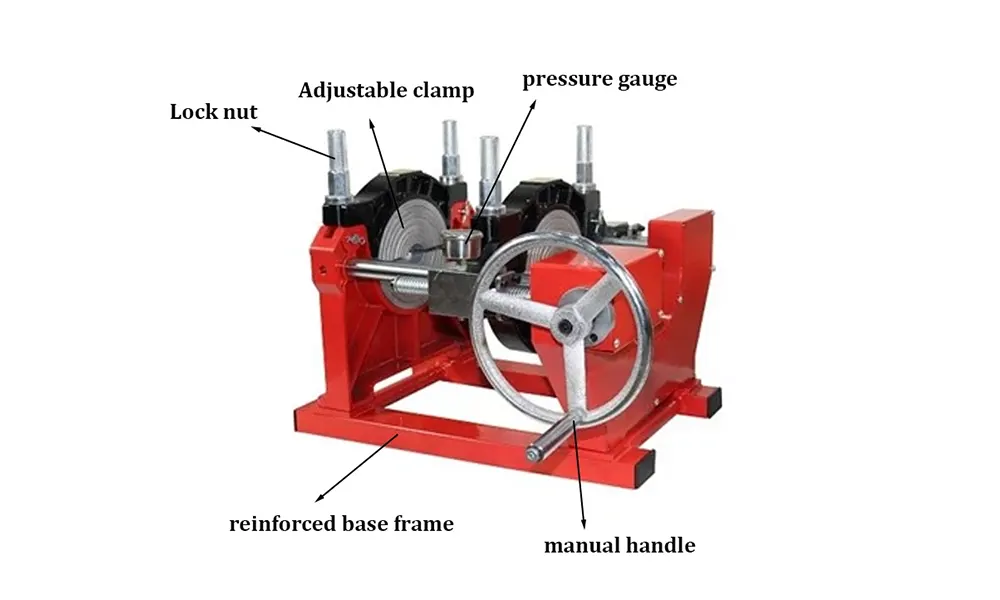
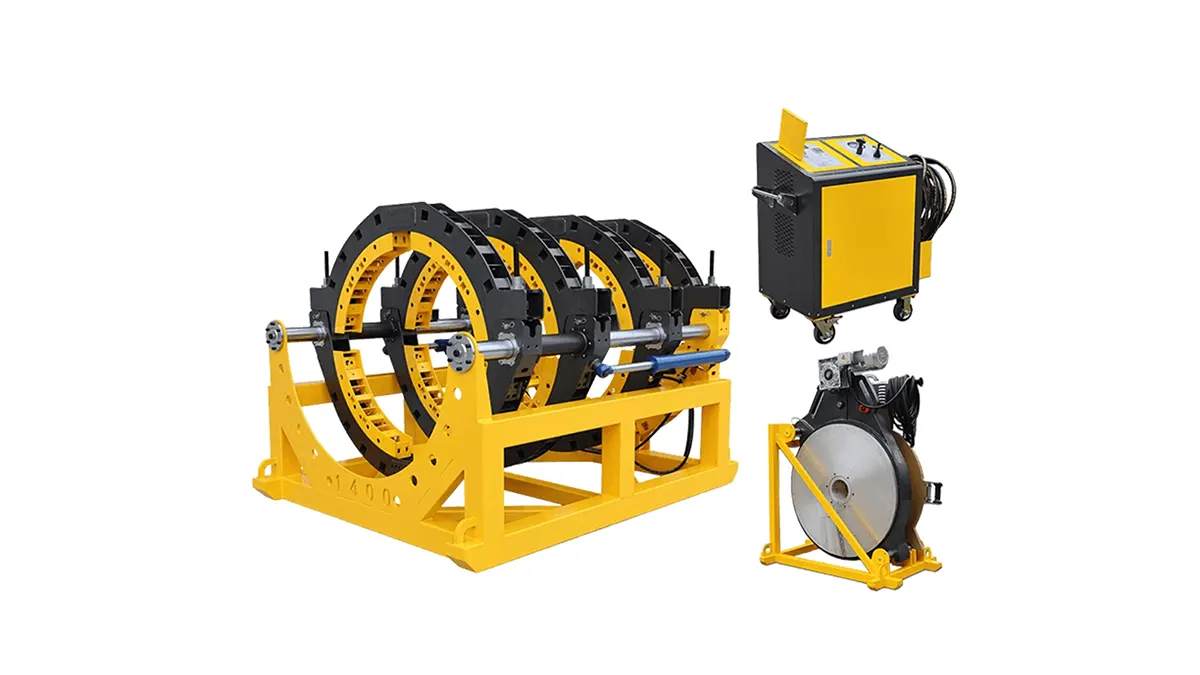
- Frame Rigidity and Guidance: The backbone of any HDPE pipe jointing machine for large diameter pipes. A heavy-duty steel frame with precision-machined guide rails prevents carriage sag, ensuring the pipe ends remain perfectly parallel throughout the welding cycle.
- Clamping Force Distribution: Large pipes often have significant ovality. Machines with multiple clamp segments or long, independent cylinder strokes can round the pipe effectively without causing localized stress damage.
- Heating Plate Temperature Control: Uniform temperature across the entire surface is non-negotiable. Digital controllers with surface probe monitoring, as outlined in PE butt fusion equipment standards, prevent cold spots that weaken the joint.
- Trimmer Performance: A robust, hydraulic-driven trimmer with sharp, non-stick coated blades ensures clean, parallel facing without smearing the material.
Material Quality and Construction Standards
The longevity of your investment hinges on build quality. Critical components like hydraulic cylinders, guide rods, and clamp inserts should be made from corrosion-resistant materials. For example, aluminum clamps offer a superior strength-to-weight ratio and resist chemical attack better than steel in aggressive environments. The frame itself must be stress-relieved to maintain dimensional accuracy after years of transport and use.
Configuration Options to Consider
| Configuration Feature | Benefit for Large Diameter Work |
|---|---|
| Base Frame with Wheels | Facilitates movement along the trench, reducing crane time. |
| Data Logging (USB/Printer) | Provides compliance records for ISO and ASTM quality audits. |
| Lifting Lugs and Tie-Downs | Essential for safe handling of heavy machine components on site. |
| Non-Stick Coated Heater | Prevents material adhesion and reduces cleaning maintenance. |
Choosing the Right Supplier
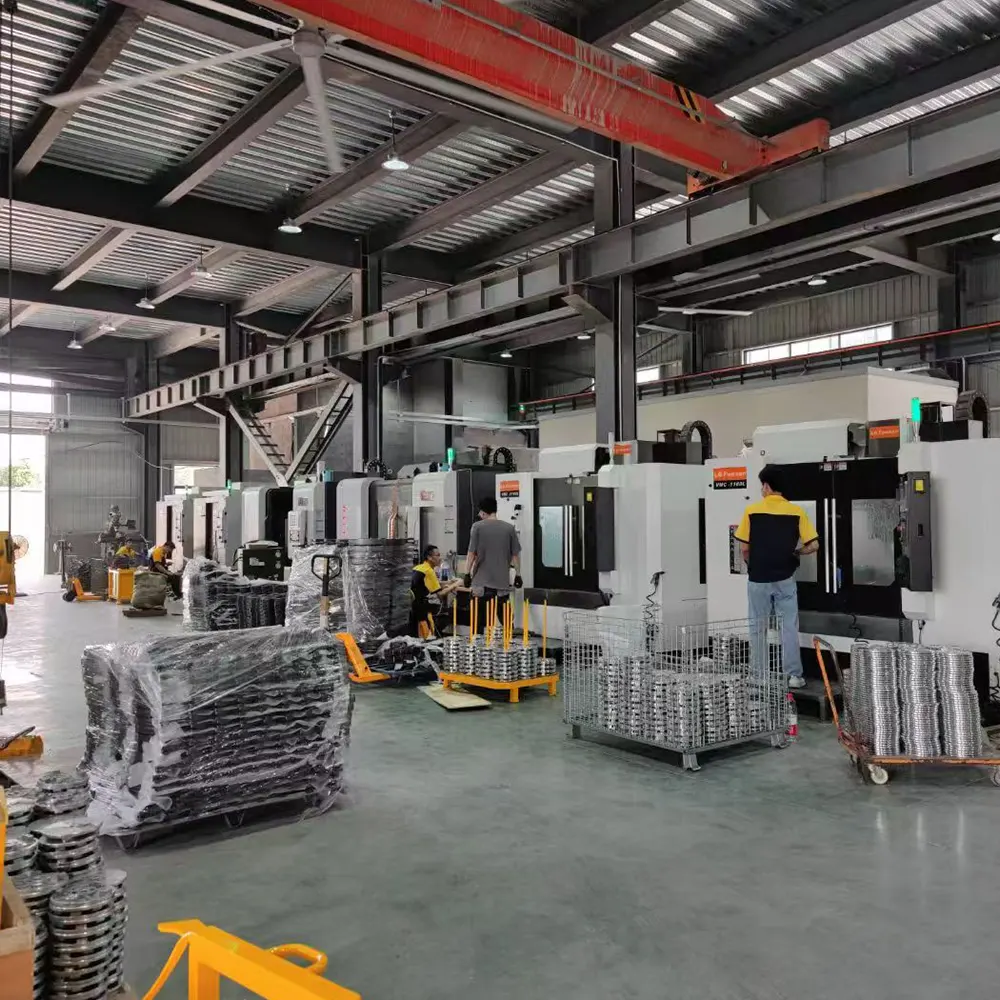
Your supplier’s engineering capability matters as much as the machine itself. JQ-Fusion specializes in manufacturing robust butt fusion solutions, from standard hydraulic models to fully customized CNC automatic systems. When evaluating vendors, prioritize those who offer rigorous quality assurance—every unit should undergo temperature accuracy and clamp alignment testing. Responsive technical support and ready availability of spare parts ensure your large-scale projects stay on track without costly delays. A partner with global distribution experience can also handle complex logistics for oversized equipment.
Common Questions When Buying Large Diameter Equipment
What diameter range should I target?
It’s wise to select a machine that covers your typical project scope but also allows for flexibility. A HDPE pipe jointing machine for large diameter pipes like a JQH800 or JQH1200 covers a broad range from 500mm to over 1200mm, often handling the majority of municipal water and industrial applications. Assess your future pipeline to avoid under-sizing this critical asset.
How important is operator training?
Even the most advanced machine requires skill. Proper training on heat fusion operator qualification protocols is essential. Look for suppliers who provide detailed operational guidance to help your team achieve certified welding proficiency.
Can these machines handle thick-walled pipes?
Yes, machines designed for large diameters inherently accommodate thicker walls. The key is ensuring the hydraulic system provides adequate sustained pressure during the soak and fusion phases, which are longer for high SDR values (thicker walls). Confirm the machine’s maximum pressure rating and carriage travel speed meet the demands of your specific pipe specifications.
Investing in the correct joining technology is fundamental to building pipeline infrastructure that lasts for generations. By focusing on structural integrity, control systems, and manufacturer reliability, you secure not just a machine, but a complete solution for flawless field welds on the world’s largest HDPE conduits.